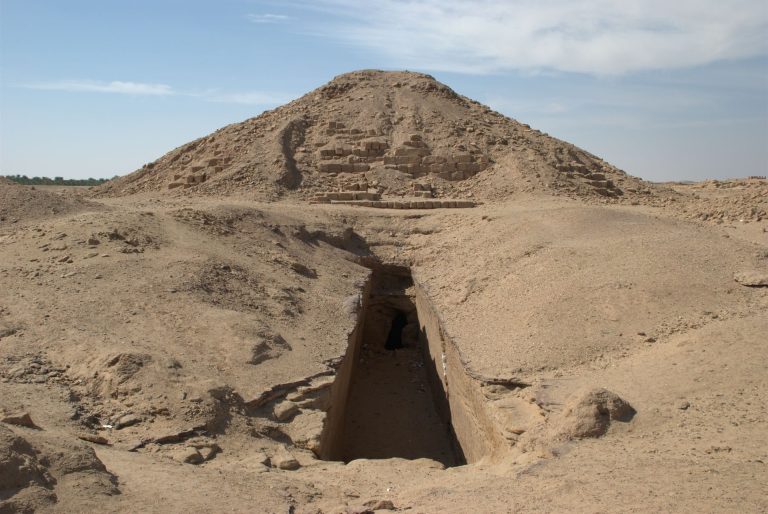
Temple of Amun at Jebel Barkal: An Egyptian and Kushite Sanctuary
Site at a Glance
- Popularity
- High
- Country
- Sudan
- Primary era
- Classical
- Eras represented
- Classical
- Civilizations
- Kushite
- Site type
- Religious
- Remains
- Temple
On this page16 sections
History
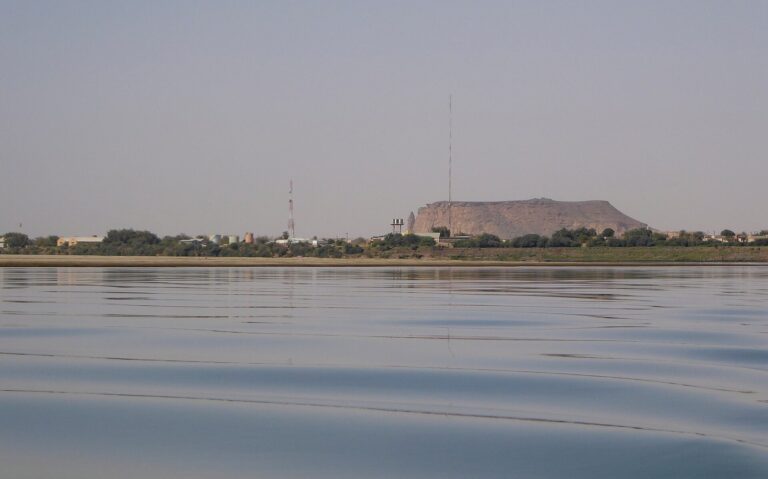
The Temple of Amun at Jebel Barkal is an ancient sanctuary near Karima in Sudan’s Nubian region. The complex is broadly dated to the 13th century BC and its development is associated with Thutmose III and Ramesses II, although its earliest sanctuary is attributed to Thutmose III’s reign. It became one of the largest temples at Jebel Barkal and an important religious center for Egyptians, Nubians, and the local population. Amun, a major Egyptian deity worshipped in Egypt and Nubia, was the focus of its worship.
Egyptian foundation and rebuilding
After a military campaign into Nubia, Thutmose III established the fortified city of Napata as Egypt’s southern limit. Napata probably arose on or near an earlier settlement. Jebel Barkal was believed to be a dwelling place of Amun, giving the nearby city religious importance. Another major center, the Precinct of Amun-Re, dedicated to a combined form of Amun and the sun god Ra, lay about six weeks’ boat journey from the Napata area.
During the reign of Amenhotep IV, later known as Akhenaten, a religious shift promoted worship of Aten, the sun disk, and sought to remove Amun’s cult. Work under Tutankhamun and Horemheb altered and enlarged the temple after Akhenaten’s death. Further additions followed during the Nineteenth Dynasty, a later Egyptian ruling house. Seti I is believed to have begun work later associated with Ramesses II.
Kushite royal center
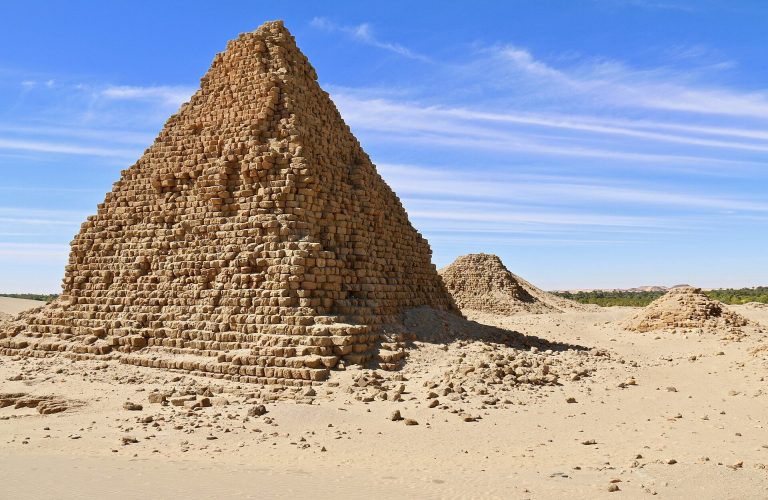
The temple gained particular importance in the Napatan period, an early phase of Kushite history centered on Napata. Piye and later Nubian pharaohs enlarged the complex, establishing it as a southern counterpart to the Amun temple at Thebes. Piye’s expansion commemorated his conquest of Egypt around 740 BC.
Jebel Barkal retained a royal role even after Meroe, a later Kushite royal center, became the capital. Government officials made a coronation journey to the temple, where the king entered the Holy of Holies, its innermost sacred area. A divine oracle, a means of conveying a deity’s response, confirmed him as king.
Roman invasion and Kushite repairs
In 25–24 BC, Roman forces commanded by Gaius Petronius invaded Nubia and captured Jebel Barkal from Amanirenas, a Kushite queen who held the title Kandake. The Romans destroyed the temple and razed Napata, but withdrew after failing to maintain control of their gains. Kushite king Natakamani later repaired Roman damage, enlarged the complex, and renovated the First Pylon and other sections in the temple’s final major building campaign.
Protection and archaeological work
Vandalism, destruction, and plundering continued until the site came under state protection in the mid-19th century. A Harvard University and Museum of Fine Arts, Boston expedition excavated artifacts there in 1916. Under Sudan’s colonial British-Egyptian government, the finds were divided and assigned to the Boston museum. In 2003, the temple was included in the UNESCO World Heritage inscription for Gebel Barkal and the Sites of the Napatan Region.
Remains
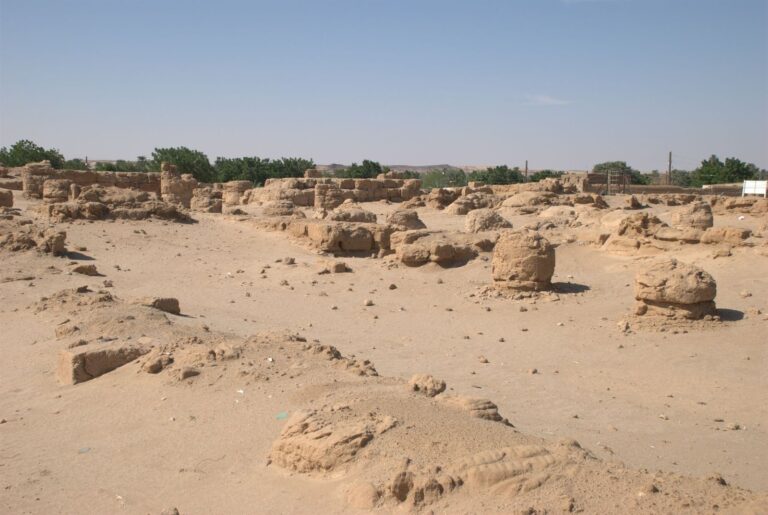
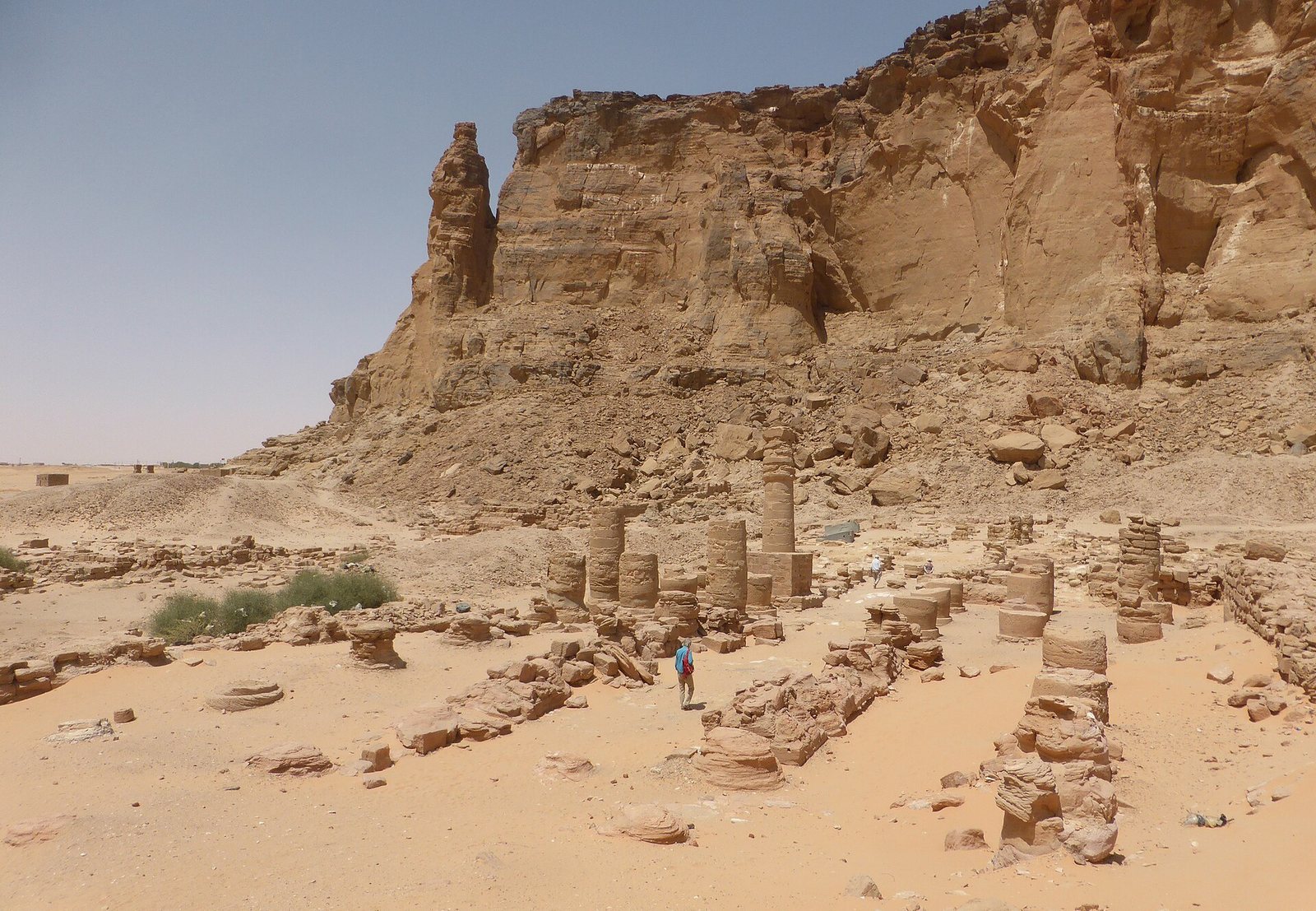
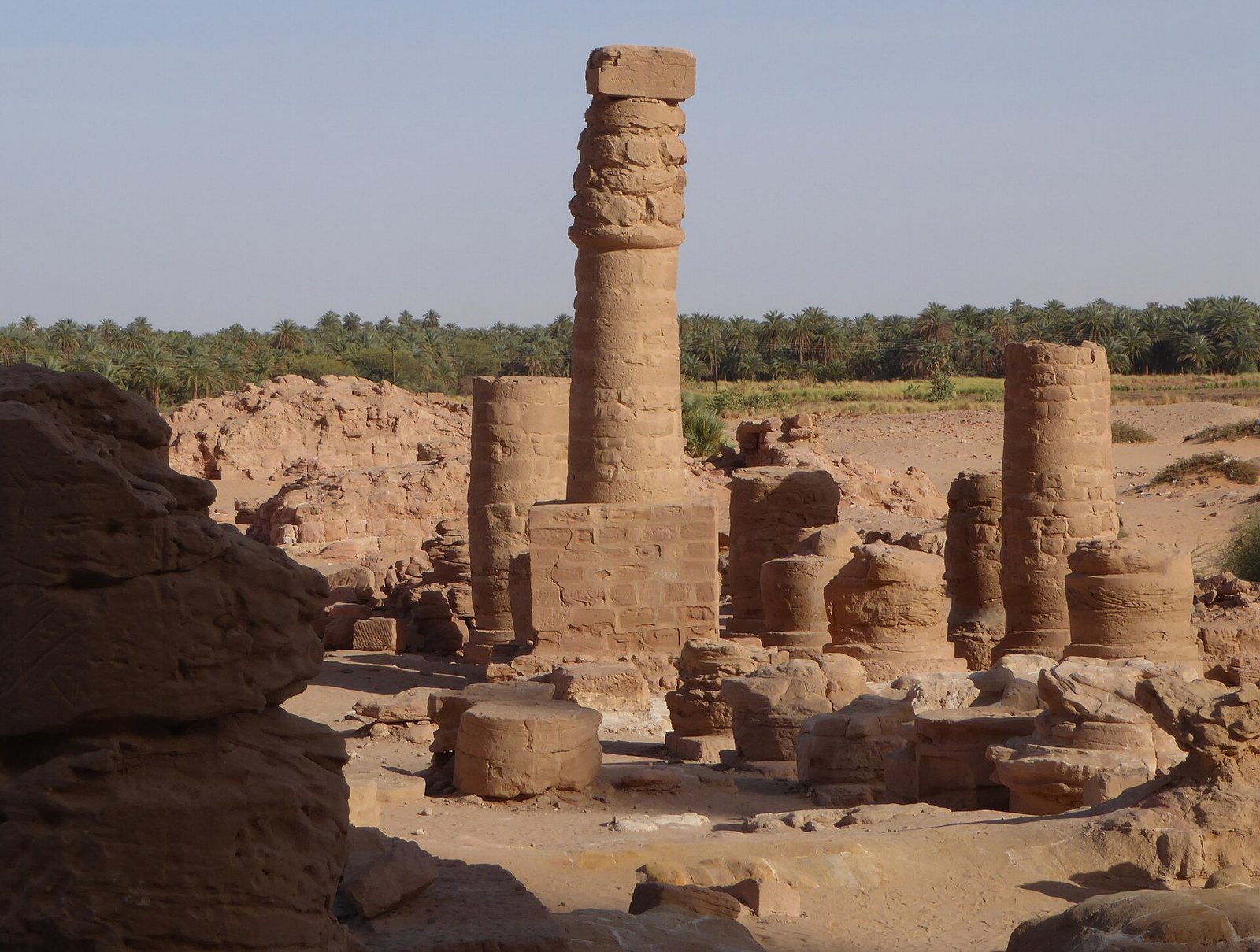
The temple’s remains reflect successive phases of mud-brick and stone construction, arranged around monumental gateways, open courts, columned halls, sanctuaries, and chapels. The complex stood near a large bend in the Nile. At its greatest extent under Piye, it stretched for more than 150 metres.
Early sanctuary and Egyptian construction
Mud-brick sanctuary and first stone phase
The earliest sanctuary was built of mud brick and later dismantled to make way for a stone temple. Its first arrangement included an antechamber, an open forecourt with ten faceted columns, and the First Pylon, a monumental temple gateway. A later construction phase added open-air sanctuaries, places for offerings, and roofless chapels.
Courts, gateways, and chapels
The temple was lengthened under Tutankhamun and Horemheb. The earlier gateway was replaced by one built of white sandstone talatat, small block-like stone units. An additional open court was added, and green glazed tiles covered the roof and the floor beneath the portico in front of the gateway. The temple’s stone expansion is also associated with Amenhotep IV’s reign, when talatat were used.
Ramesses II additions
Features associated with Ramesses II include the Second and Third Pylons, a hypostyle court, meaning a roofed hall supported by columns, a hall with annexes, a chapel, and a front chamber leading to the main sanctuary. Further additions included another temple behind a gateway, a courtyard probably without columns, and several chapels. Seti I is thought to have initiated this work and to have provided ten columns that replaced porticos.
Kushite enlargement and additions
Piye’s expanded complex
Piye’s enlargement proceeded in three stages. Builders first strengthened the older temple with a wall and small portico, then constructed a large hall with 50 columns, and finally added a broad area decorated with columns. Sandstone formed the hall’s pillars, foundations, and entrances, while its other walls were unbaked brick. Both the court and portico had a gateway.
Later Kushite features
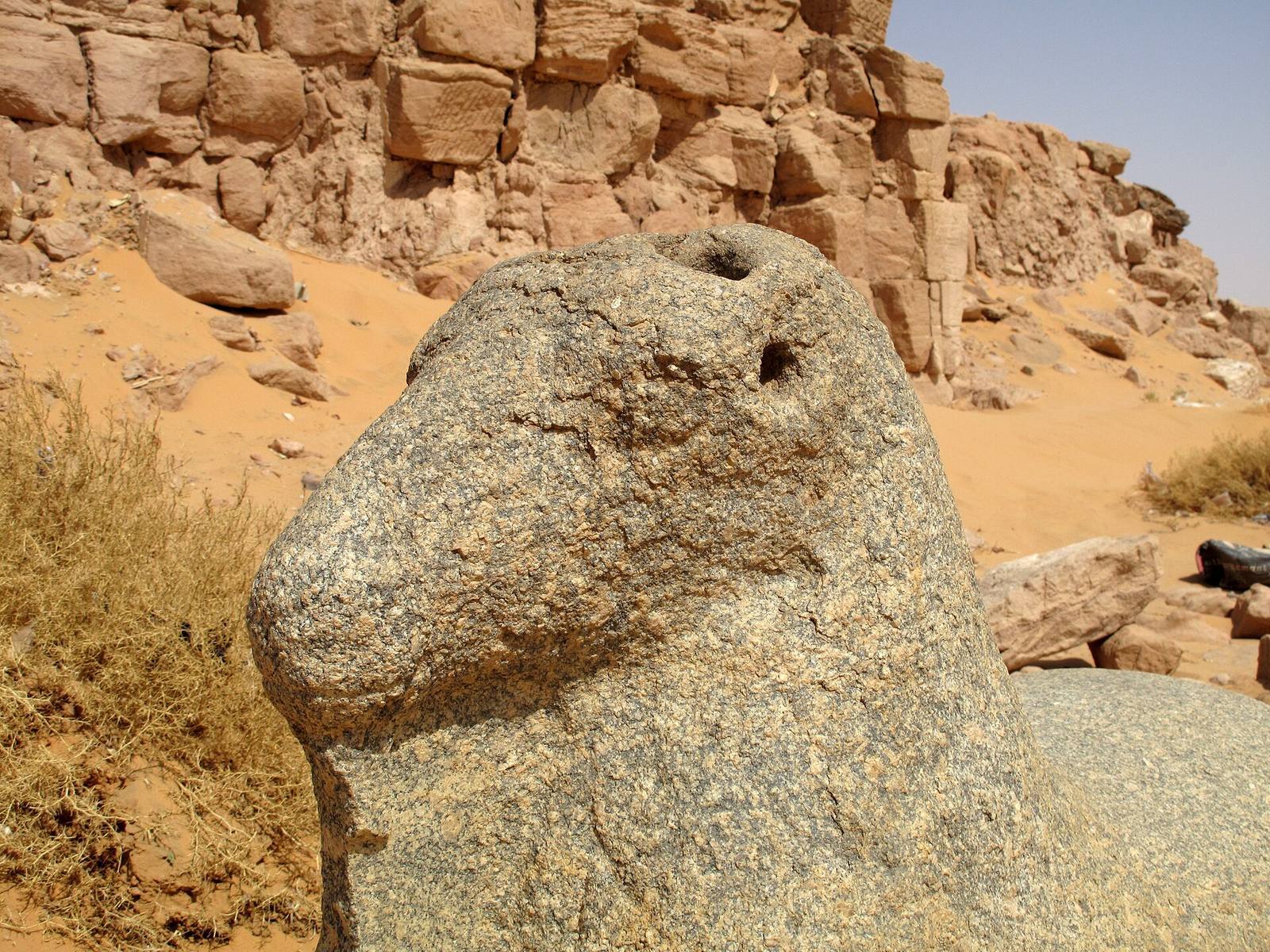
Ten colossal figures were erected under Taharqa. Tantamani built a small shrine in the portico, while columns in the First Courtyard are attributed to Piye and Harsiotef. Natakamani’s building work included repairs and enlargement of the complex, as well as renovation of the First Pylon.
Inscriptions and excavated finds
Stelae and inscriptions
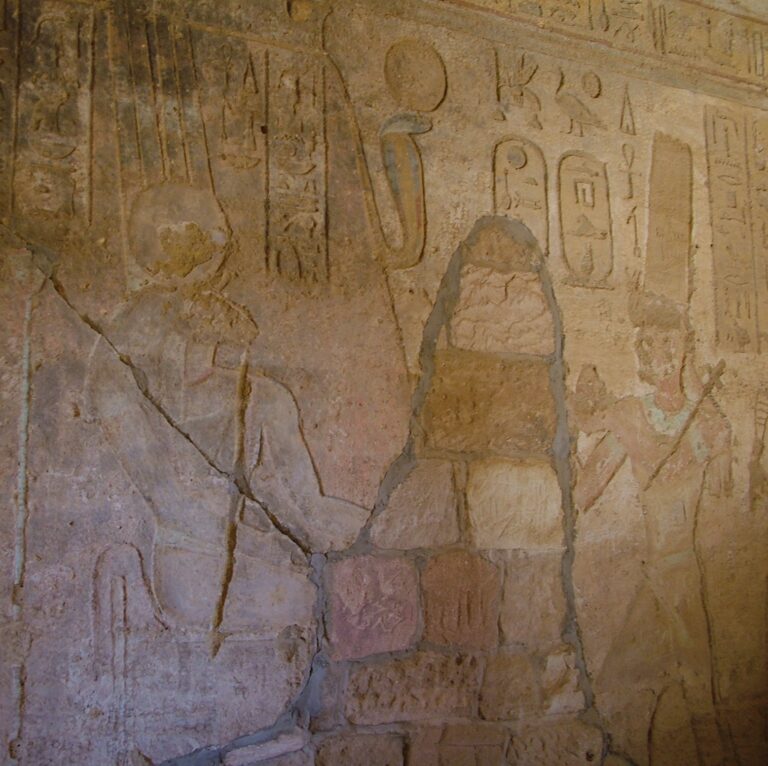
A stele of Thutmose III found at the temple gives its early name as Amun’s “Resting place of Eternity” and calls it the “Home of Amun and the Throne of the Two Lands.” Its inscription presents Thutmose as approved by Amun and recounts a battle in which Amun sent a “star” to aid him. The star has been interpreted as an omen or as divine intervention. The stele is now in the Museum of Fine Arts, Boston. Other stelae at the site are attributed to Horemheb and Seti I.
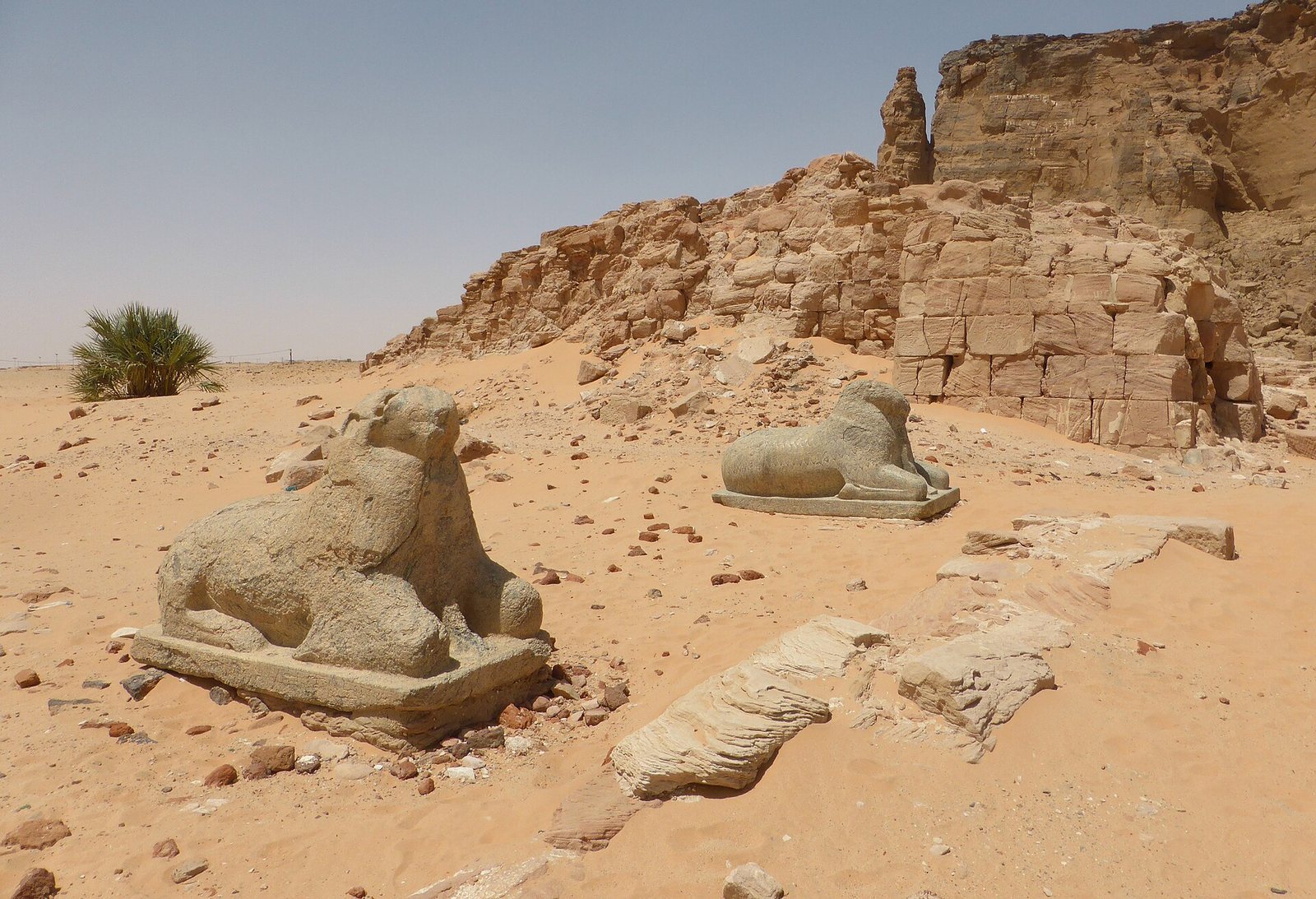
Statues
A cache of statues was excavated north of the First Pylon. It included a headless figure identified as Tantamani, also known by his Amun name, Tenutamon. Other finds include a colossal statue of Kushite king Aspelta, now identified with the Museum of Fine Arts, Boston, and a statue of Queen Amanimalil discovered in 1916.