Church of St Alkelda: The Parish Church of Giggleswick
Site at a Glance
- Popularity
- Medium
- Country
- United Kingdom
- Primary era
- Medieval
- Eras represented
- Medieval, Modern
- Civilizations
- British, English
- Site type
- Religious
- Remains
- Church
On this page9 sections
History
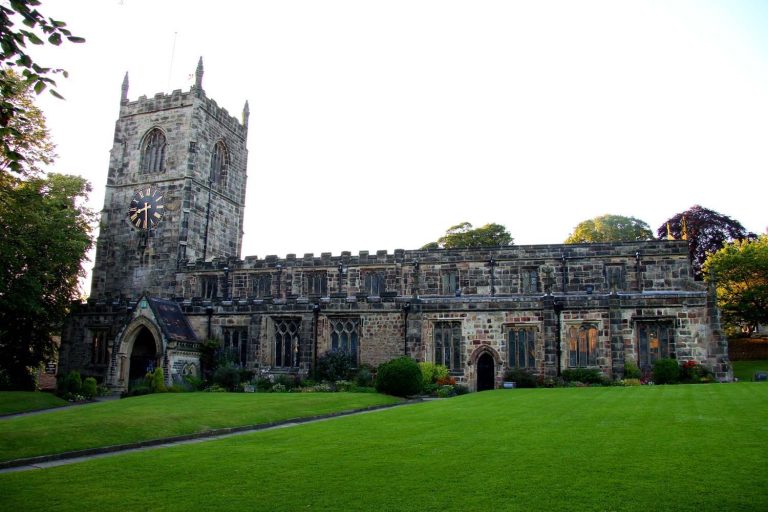
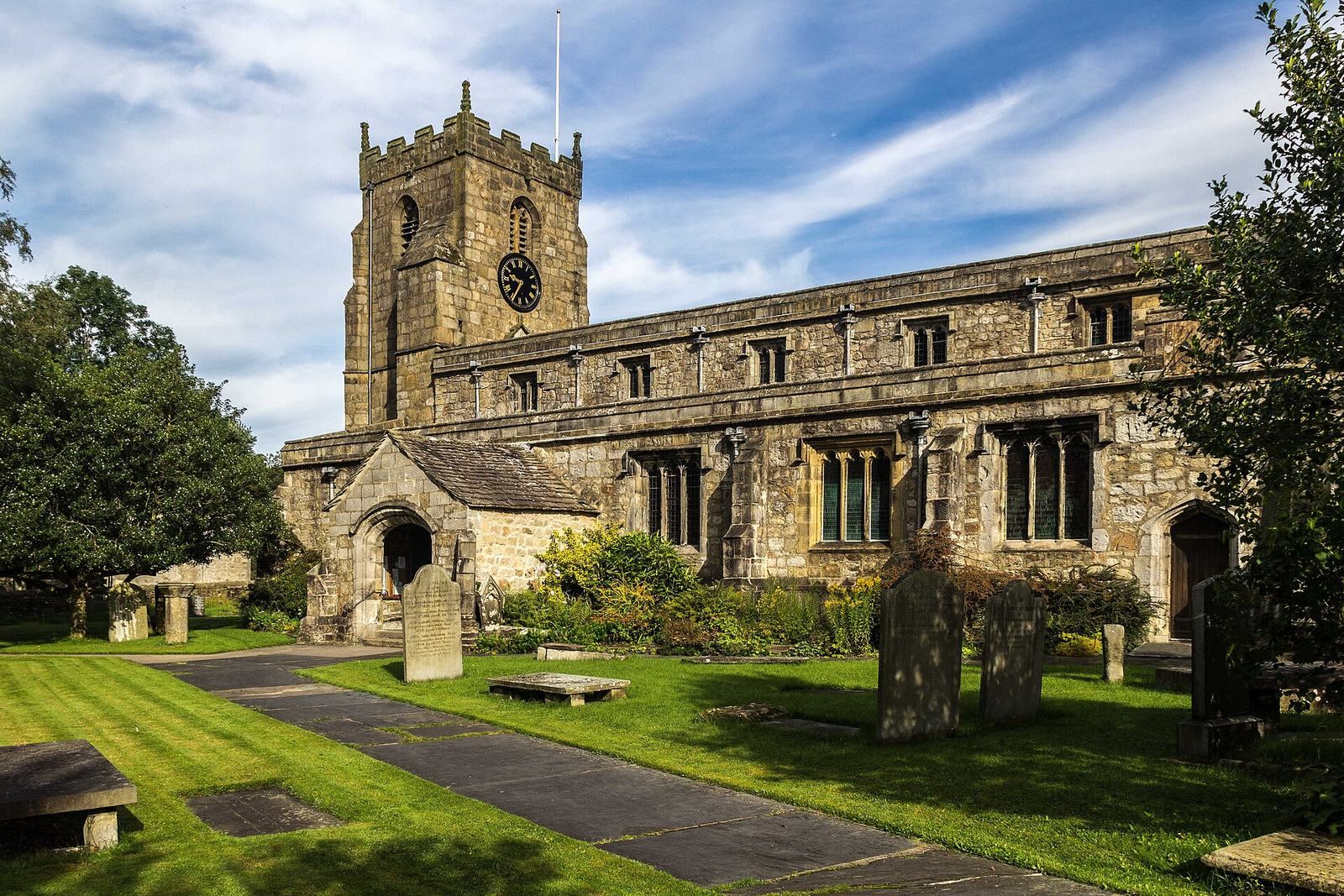
The Church of St Alkelda is an active Church of England parish church in Giggleswick, England. A church is believed to have stood on the site since Saxon times, while the present building is largely of the 14th and 15th centuries and spans Early English and Perpendicular Gothic styles. An earlier church is thought to have been destroyed by raiding Scots around 1319.
Early church and dedication
The first known written reference to a church at Giggleswick dates to 1160, when Laurence, its parson, mentioned it in a letter to William de Percy. St Alkelda’s is one of only two churches in England dedicated to Alkelda, the other being at Middleham. Tradition describes Alkelda as a Saxon princess strangled by two Danish women during the Viking invasions, and her burial at Middleham is also believed.
The reason for Giggleswick’s dedication is uncertain. The church may have begun as a dependent church of Middleham after Northumbrian kings took control of lands in Craven around 670. Other explanations connect the name Alkelda with Alchhild or with Halig Keld, a phrase associated with holy springs. A spring in Giggleswick may have influenced the dedication and fed the now-drained Giggleswick Tarn.
Patronage and parish
In 1200, Henry de Puteaco gave the church to the monks of Finchale, a medieval monastic house near Durham. A record from about three decades before the Dissolution of the Monasteries, the Crown’s suppression of religious houses in England, states that it remained in Finchale’s possession under the prior and convent of Durham.
St Alkelda’s served as the mother church, or principal church for a wider area, of an ancient parish covering more than 18,500 acres (about 7,500 hectares). Its parishes and settlements included Giggleswick, Langcliffe, Rathmell with Wigglesworth, Settle, and Stainforth. The church retained this role until the Church of the Holy Ascension opened at Settle in 1838. Langcliffe became a separate parish in 1851, followed by Settle in 1898.
School, burial ground, and later changes
In 1507, half an acre of land was granted for a boys’ grammar school. Pupils and staff of the neighbouring Giggleswick School attended services at St Alkelda’s. Gas lighting was installed for later-afternoon services when the school congregation grew large enough to overwhelm the local population. Pupils and former pupils contributed to a renovation in 1880; the arrangement ended when the school opened its own chapel in 1901.
The churchyard was the parish’s only official burial place until the early 19th century. Estimates suggest that thousands of people may have been buried there over the centuries. The parish belonged to the Diocese of York until 1836, then to Ripon and, from 1919, Bradford. In 2014 it transferred to the Diocese of West Yorkshire and the Dales, which became the Diocese of Leeds in April 2016. The church received Grade I listing in 1958, the highest listed-building category in England.
Remains
Architecture and interior
Church building and tower
The church is 132 feet (40 metres) long and has a square tower with battlements along its top. Its surviving architecture ranges from Early English forms to the vertically emphasized Perpendicular style.
Stained glass
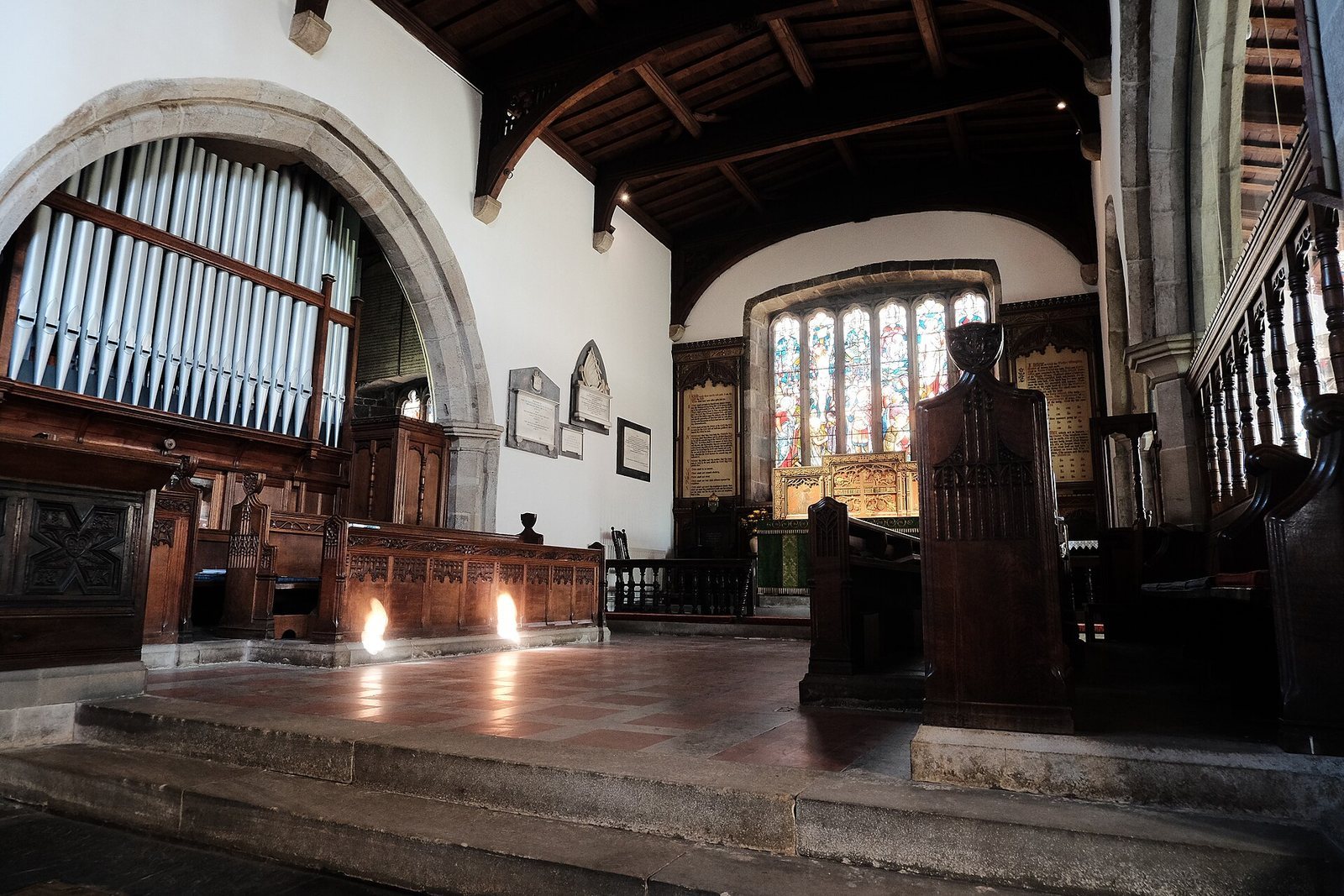
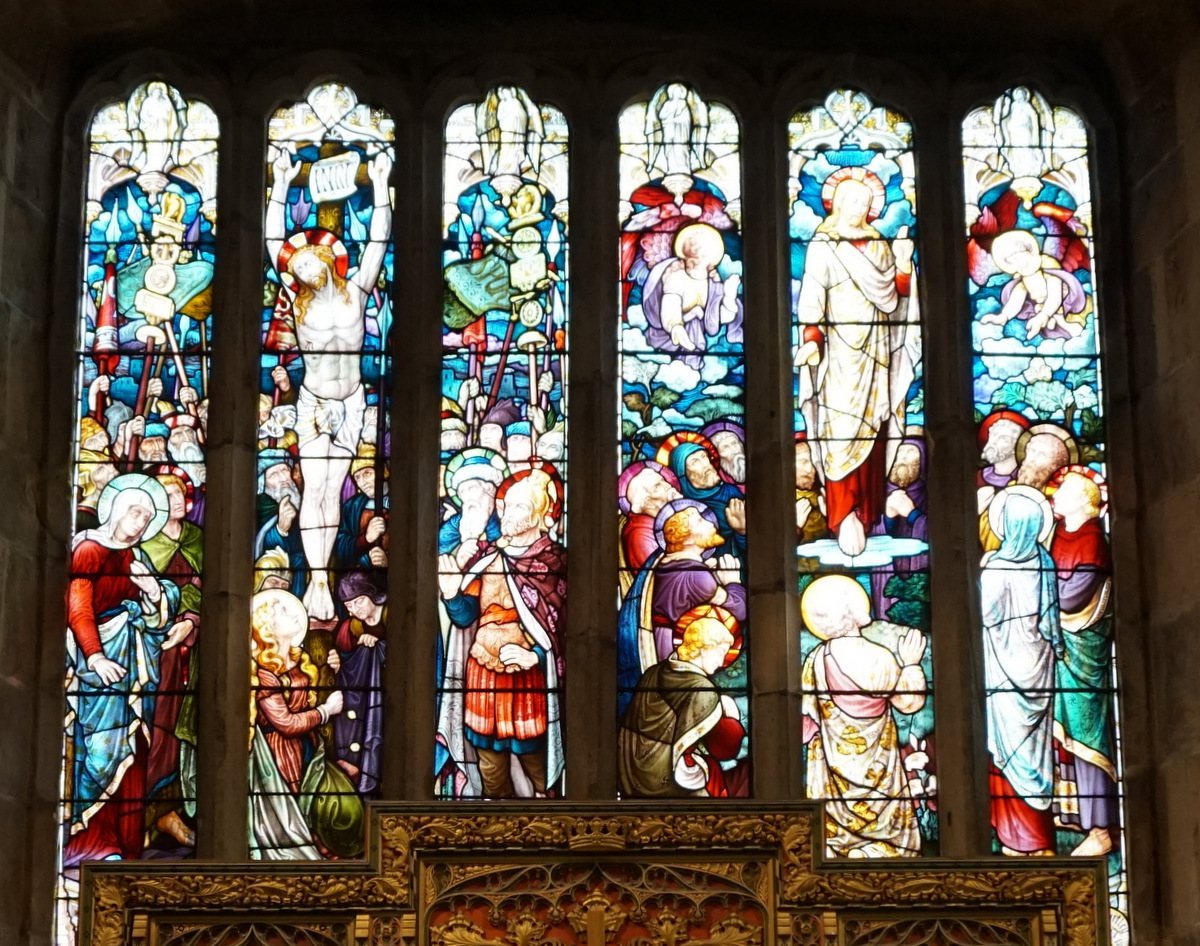
Most of the stained glass dates to the 15th century, with a further window added during the 2010s. Another window, dated to 1920–1930, was found in the parish room by two churchwardens and later installed in the church. It depicts Alkelda being strangled by a sash held by two priestly hands while she is suspended above water.
Organ
Built by Abbott and Smith, the organ was installed in 1892. A York-based company carried out an extensive renovation in 2005.