Telouet Kasbah: A Fortified Palace and Administrative Center in Morocco
Site at a Glance
- Rating
- 4.5
- Popularity
- Low
- Country
- Morocco
- Primary era
- Modern
- Eras represented
- Modern
- Civilizations
- Alaouite
- Site type
- Civic
- Remains
- Palace
On this page9 sections
History
Telouet Kasbah is a fortified residence and administrative complex in Telouet, Morocco, whose present construction began around 1860 under the Glaoui family. Built in the traditional earthen architecture of the High Atlas with Moroccan-Andalusian decorative forms, it stood beside an older kasbah whose remains are still visible. The complex occupied a strategic position on the former caravan route between the Sahara and Marrakesh, near important salt mines, and later became one of the principal centers of Glaoui political and economic power.
Foundation and regional authority
Mohammed Ibiyet, identified as head of the Glaoui clan when construction began, oversaw the early development of the present kasbah. Its location gave the residence a role extending beyond domestic life. Caravan traffic, salt, and local agricultural resources helped generate the wealth of the pashas who lived there. A pasha was a high-ranking provincial governor or official in Morocco.
During the nineteenth and early twentieth centuries, Telouet Kasbah functioned as a local administrative and economic center. Its occupants collected taxes, controlled the movement of caravans, and maintained a large household network of servants, workers, and retainers. The complex was greatly enlarged during the first half of the twentieth century as the Glaoui family increased its regional authority.
Expansion under Thami El Glaoui
Thami El Glaoui expanded and embellished the kasbah as his political and economic influence grew. He established weaving workshops at Telouet in a region where the craft was not yet well developed. In 1918, after the death of Madani El Glaoui, he became Pasha of Marrakesh and emerged as one of Morocco’s most powerful political figures. In 1927, the French military officer Georges Spillmann was stationed nearby after being appointed head of the Telouet post.
During the French colonial period, the Glaoui family allied itself with the French administration. Thami El Glaoui’s association with the colonial authorities, including his role in pressing Mohammed V into exile, later contributed to the family’s downfall. Mohammed V was the Moroccan sultan who became king after independence, and his exile and return in 1955 formed part of the political crisis that weakened the Glaoui position.
In 1942, Thami El Glaoui ordered major building and decorative works at Telouet. About 300 workers spent three years creating luxurious rooms and chambers, although expansion and decoration continued when his political decline and death brought the work to an end. The scale of these works reflected the wealth and authority concentrated in the kasbah.
Confiscation, abandonment, and damage
Thami El Glaoui died in Marrakesh in 1956. His eldest son, Si Brahim, was the caid of Telouet after his death, although he had left Morocco permanently in 1955. In July 1956, about 300 men of the National Liberation Army occupied the kasbah, which was subsequently looted. A caid was a local administrative or military authority.
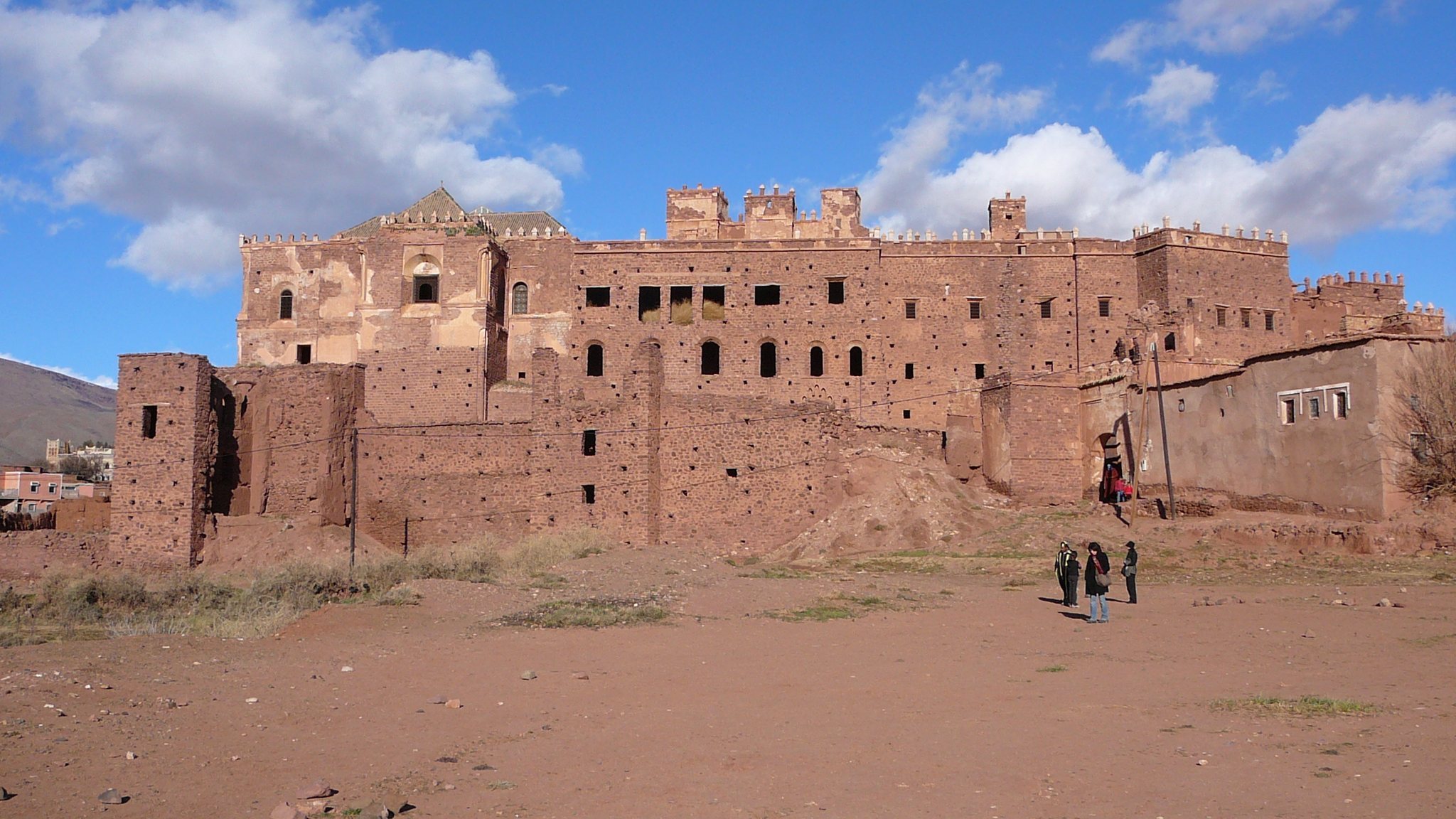
After Moroccan independence, the Glaoui family’s property and palaces were confiscated, and Telouet Kasbah was abandoned. The loss of its former functions and changes in ownership brought prolonged neglect. By the early twenty-first century, much of the complex was falling into ruin. Limited restoration work took place around 2010, but it did not extend across the entire site.
The kasbah is recognized as part of Morocco’s cultural heritage. The 8 September 2023 Marrakesh–Safi earthquake damaged the complex, including the restored portion. A restored section of the upper reception rooms remains accessible, while other deteriorated areas are unsafe or inaccessible.
Remains
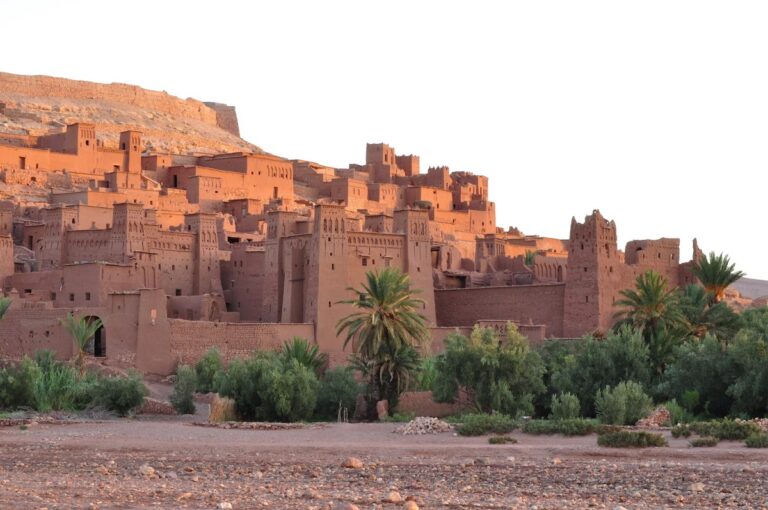
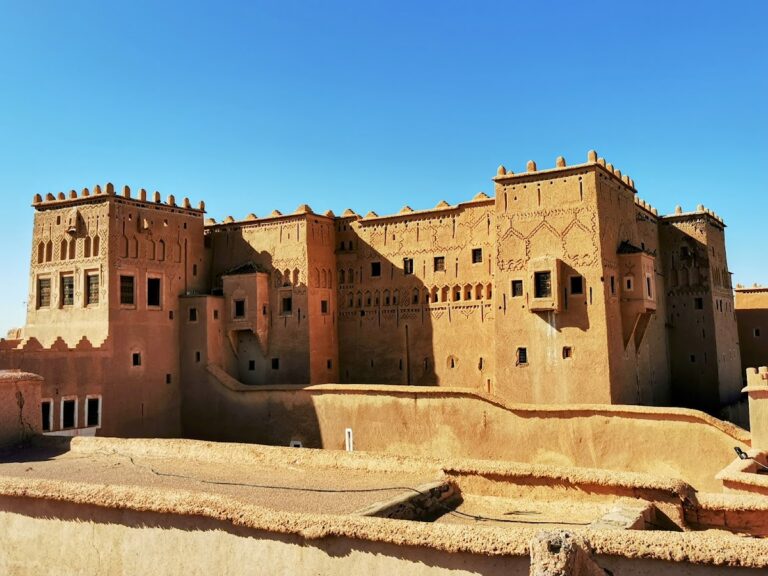
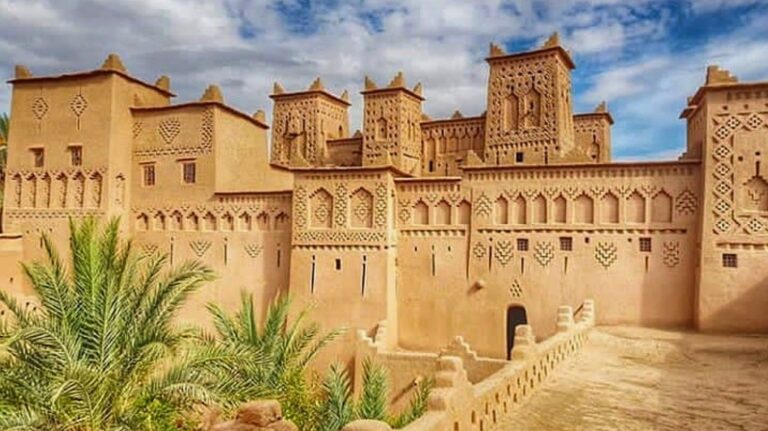
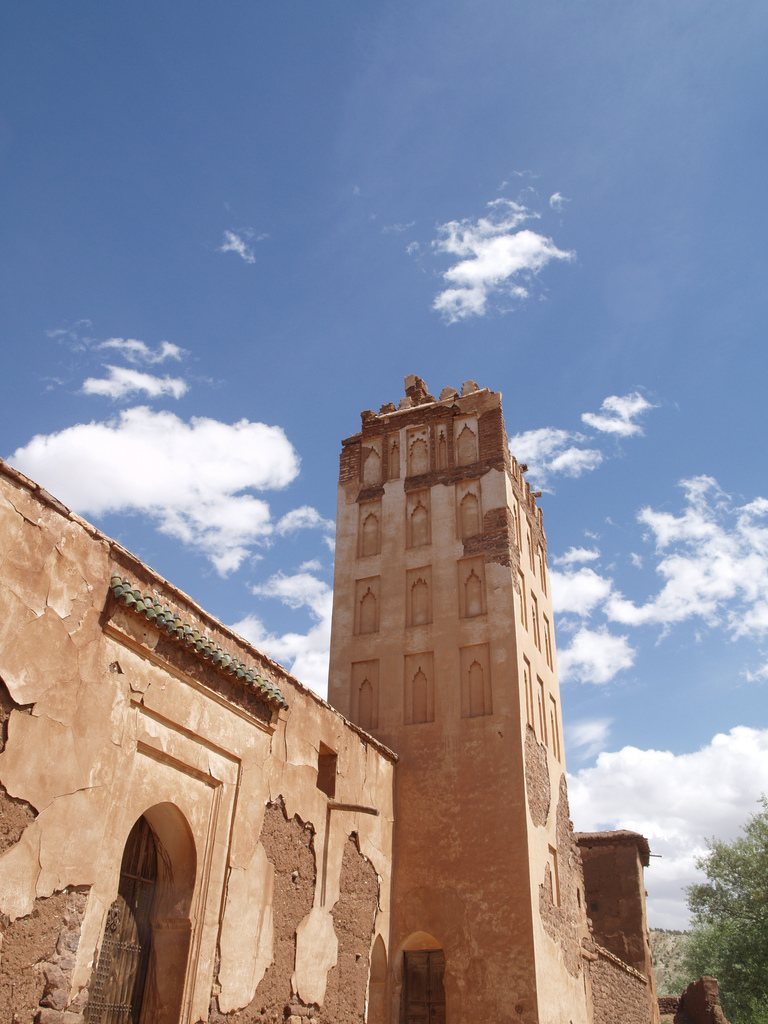
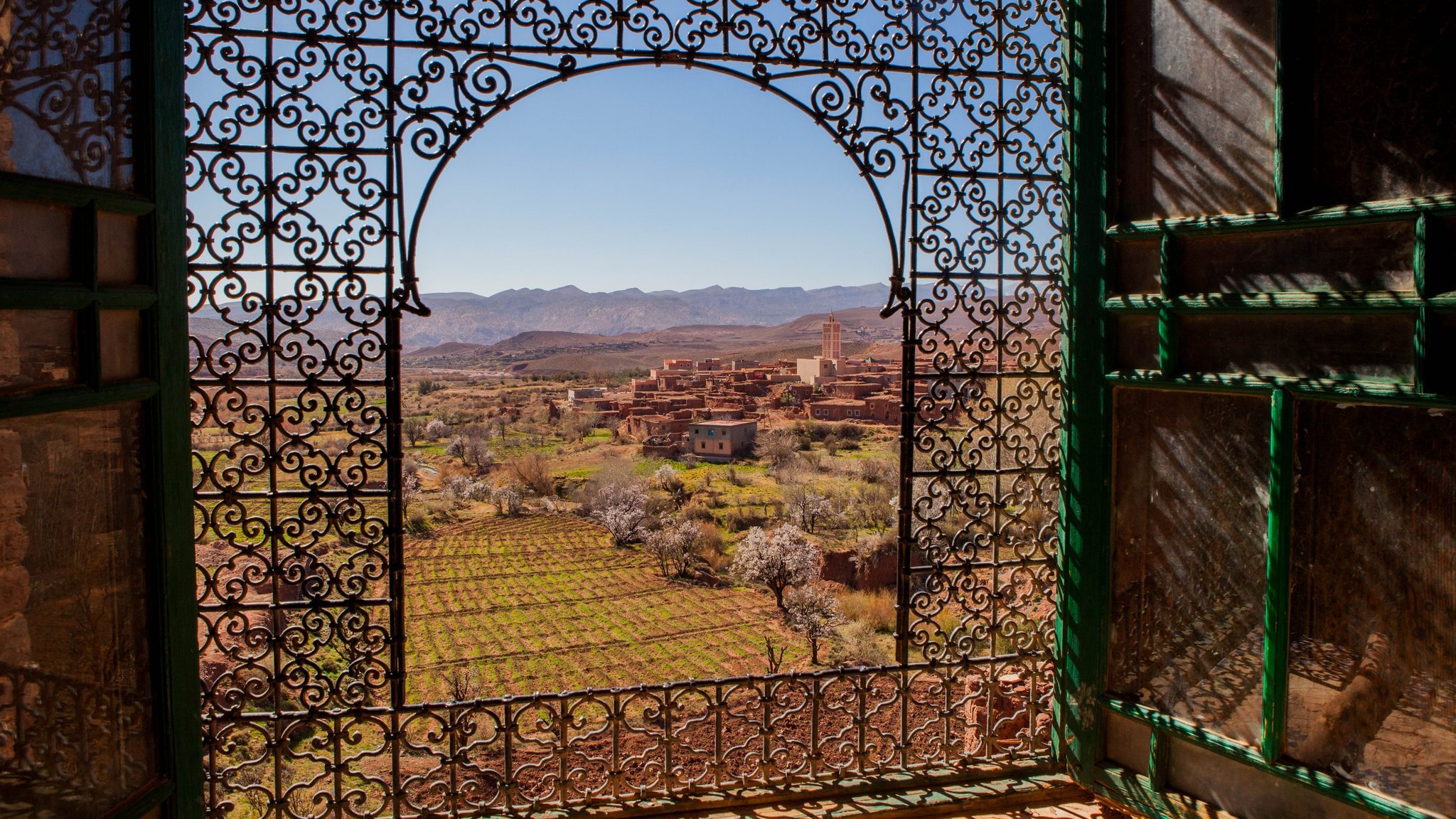
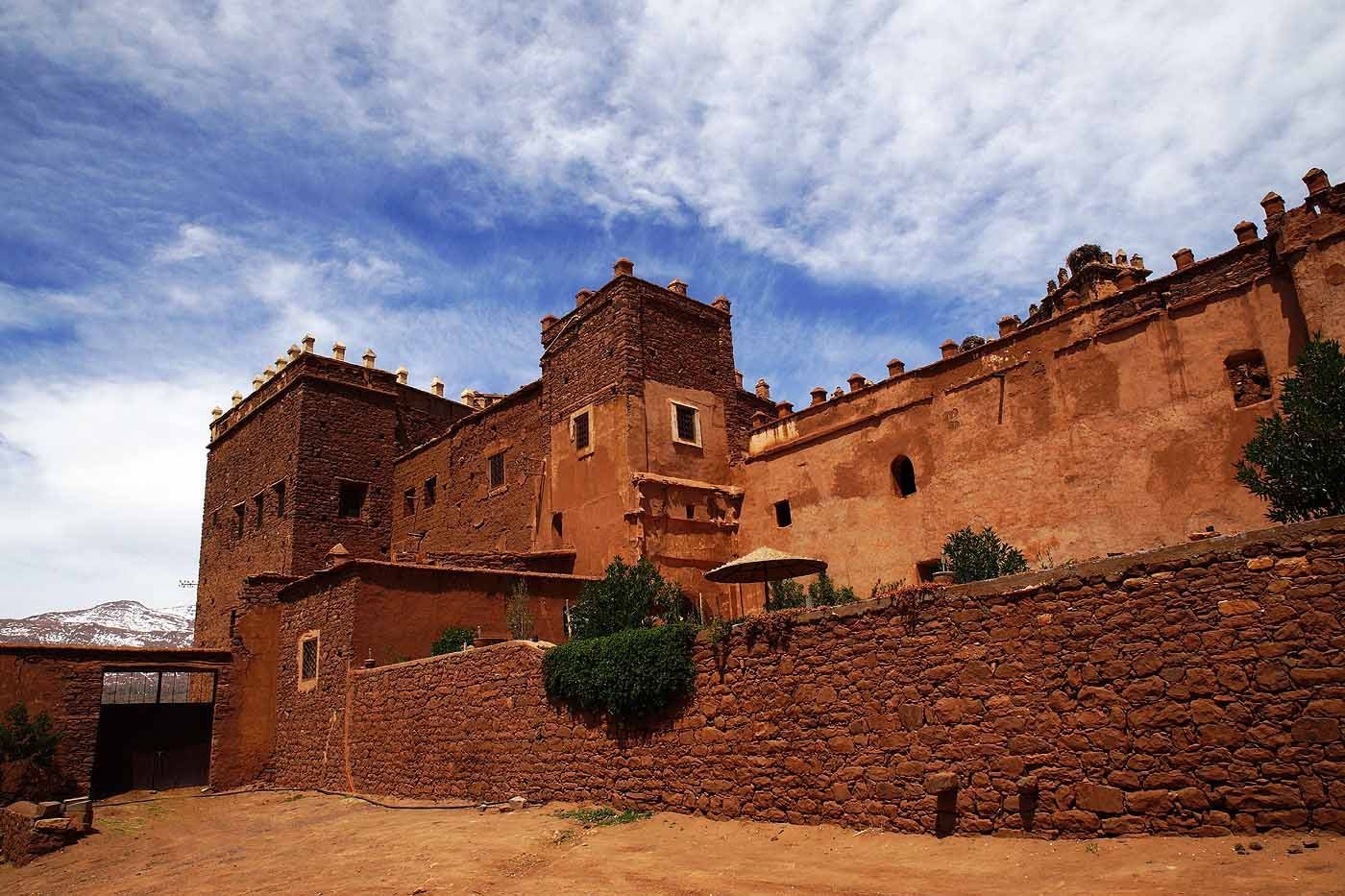
Telouet Kasbah stands on the outskirts of Telouet in the High Atlas at approximately 1,800 metres above sea level. The complex occupies a strategic position near the former caravan route and major salt mines. Its principal walls are made of mud brick, combining the building traditions of the High Atlas with richly finished Moroccan-Andalusian interiors. Several construction phases can be identified across the partly ruined complex.
Structure and materials
Earthen walls and courtyards
The main structural fabric consists of mud-brick walls arranged within the fortified residence. Later alterations introduced central heating and glazed structures in the courtyards, adding modern features to the earlier earthen complex. The roofs are covered with green-painted ceramic tiles. Much of the palace has deteriorated, and the wider complex continues to suffer damage and slow collapse.
Upper reception rooms
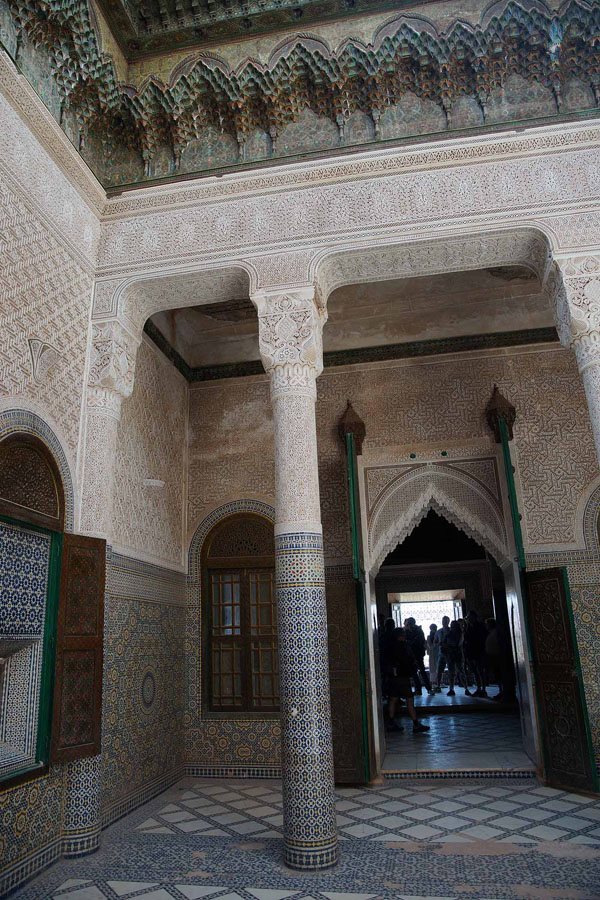
The restored upper reception rooms form an ornate group within the kasbah. Their floors include Italian marble, while the lower parts of the walls and pillars are covered with zellij, a Moroccan mosaic technique made from individually shaped and glazed ceramic pieces. Above them, finely carved stucco includes muqarnas, three-dimensional ornament formed from tiered, niche-like elements that transition between architectural surfaces. Painted, carved, and inlaid cedarwood ceilings complete the decoration. These rooms are described as comparable in refinement to palatial architecture in Marrakesh and Fez.
Survival and condition
The upper reception rooms have been fully restored, but the restoration covers only part of the kasbah. Other sections remain deteriorated, and the earthquake of 8 September 2023 caused further damage, including to the restored area. The surviving decorated rooms and the extensive ruined fabric together reveal the complex’s successive construction phases and its transformation from a fortified Glaoui residence into a substantial administrative and economic center.