Synagogue Museum Saint Anne: Trani’s Former Great Synagogue and Jewish History Museum
Site at a Glance
- Popularity
- Low
- Country
- Italy
- Primary era
- Medieval
- Eras represented
- Medieval, Early Modern
- Civilizations
- Kingdom of Naples, Kingdom of Sicily, Spanish
- Site type
- Religious
- Remains
- Synagogue
On this page10 sections
History
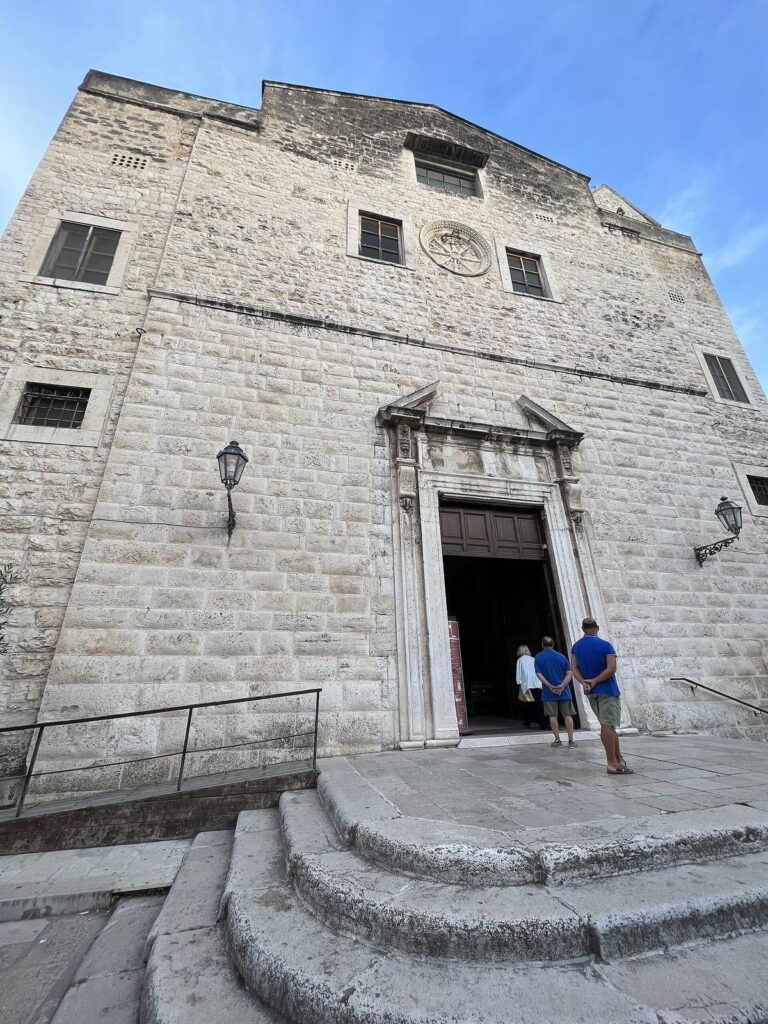
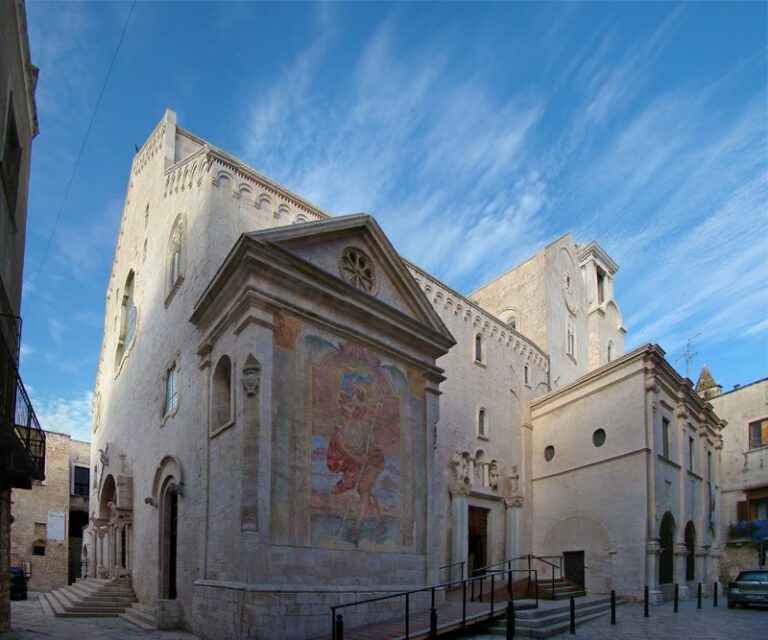
Synagogue Museum Saint Anne is a former synagogue and Jewish history museum in Trani, Italy. Built in 1246–1247 during a period of prosperity for the city’s Jewish community, it stood on the main street of Trani’s old Jewish quarter.
The medieval Jewish community
Around 1160, Trani had about 200 Jewish households, a figure noted in his travel diary by Benjamin of Tudela, a Jewish traveler and writer who visited the city.
Known as the Great Synagogue or Scola Grande, the building belonged to a quarter with four synagogues. By 1700, two had been destroyed, while Scola Grande and Scolanova remained as surviving buildings.
From synagogue to church and museum
In 1380, amid persecution and the forced conversion of Jews in the region, the Angevins converted the synagogue into a Catholic church. The Angevins were a French-origin ruling dynasty whose rulers governed parts of southern Italy. The church was first dedicated to Saints Quiricus and Julitta, early Christian martyrs, and rededicated to Saint Anne in the eighteenth century. Christian tradition identifies Saint Anne as Mary’s mother.
Restoration planning began in 1992, and the work was completed in 2009. The building then opened as the Jewish section of the Diocesan Museum of the Archdiocese of Trani-Barletta-Bisceglie. No longer an active synagogue, it is the only museum of Jewish history in southern Italy and is protected as an Italian cultural property.
Remains
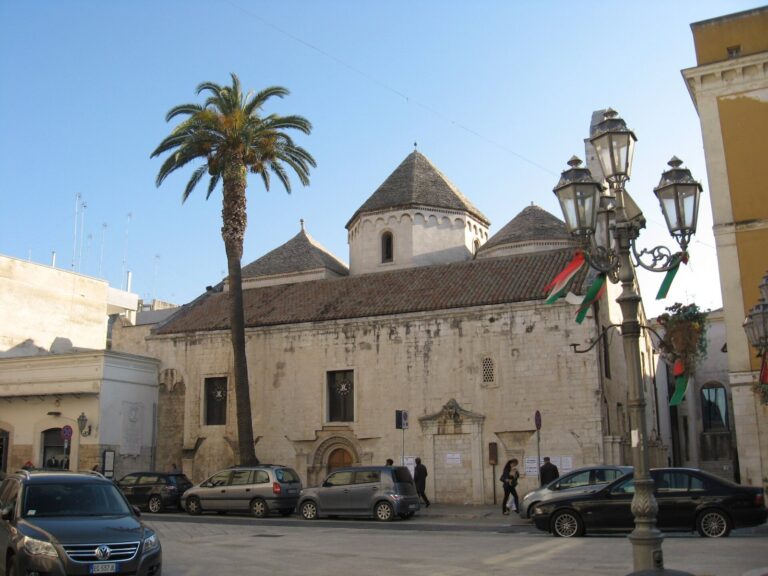
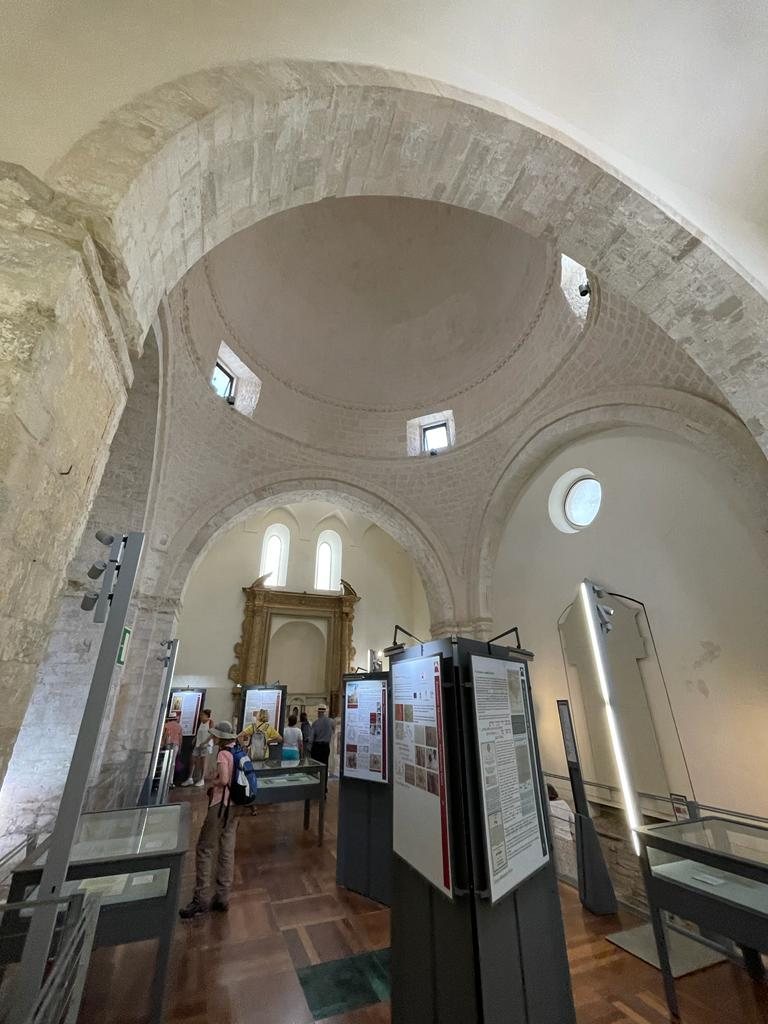
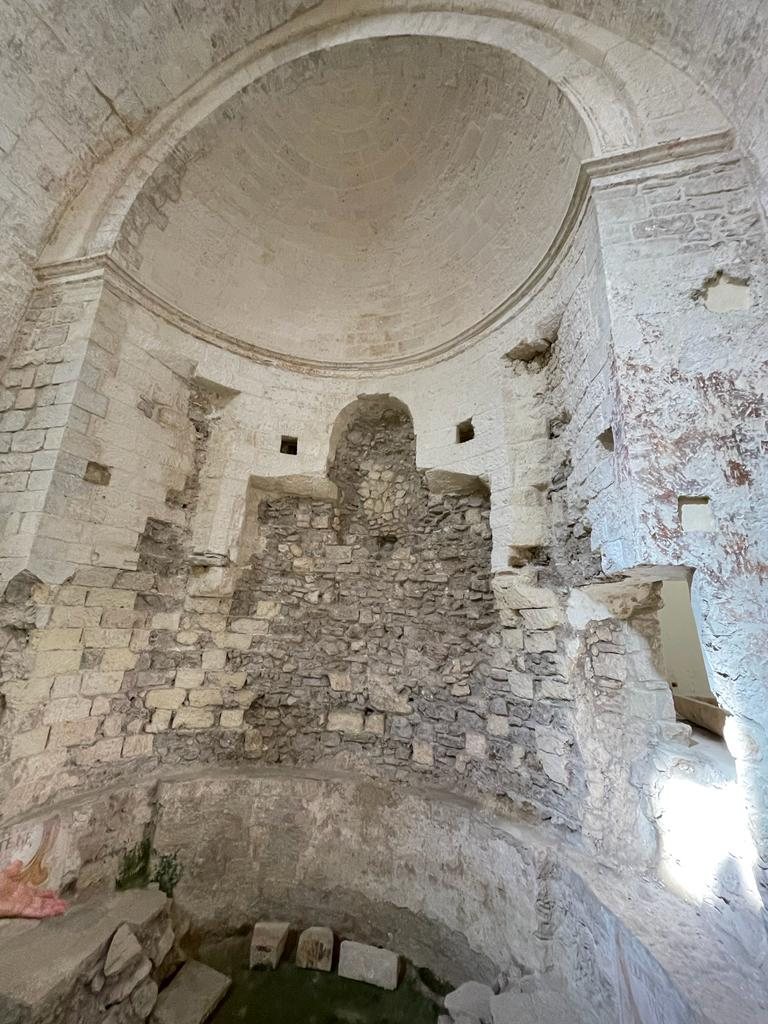
At the junction of Via la Giudea and Via San Martino, the former synagogue has a compact, nearly square plan. Its original exterior walls survive, and four interior arches support an octagonal drum, the structure beneath a dome, and a hemispherical dome above.
Synagogue fabric
Dome and foundation inscription
Four windows pierce the drum, and the dome’s interior surface is also part of the original synagogue fabric. An inscription inside records the sanctuary’s foundation and describes a high dome, a window admitting daylight, a doorway, and seating for the community at floor level. It closes with a prayer for mercy to the one dwelling in heaven.
Entrance and recovered interior
A small pointed tympanum, a shaped panel above a doorway, survives over a secondary entrance. It is thought to have crowned the Holy Ark, the cabinet for Torah scrolls, which may have stood inside the synagogue. Restoration revealed the original floor level, several cisterns, or water-storage chambers, and the base of a stone bench.
Later church fabric and museum holdings
Church additions
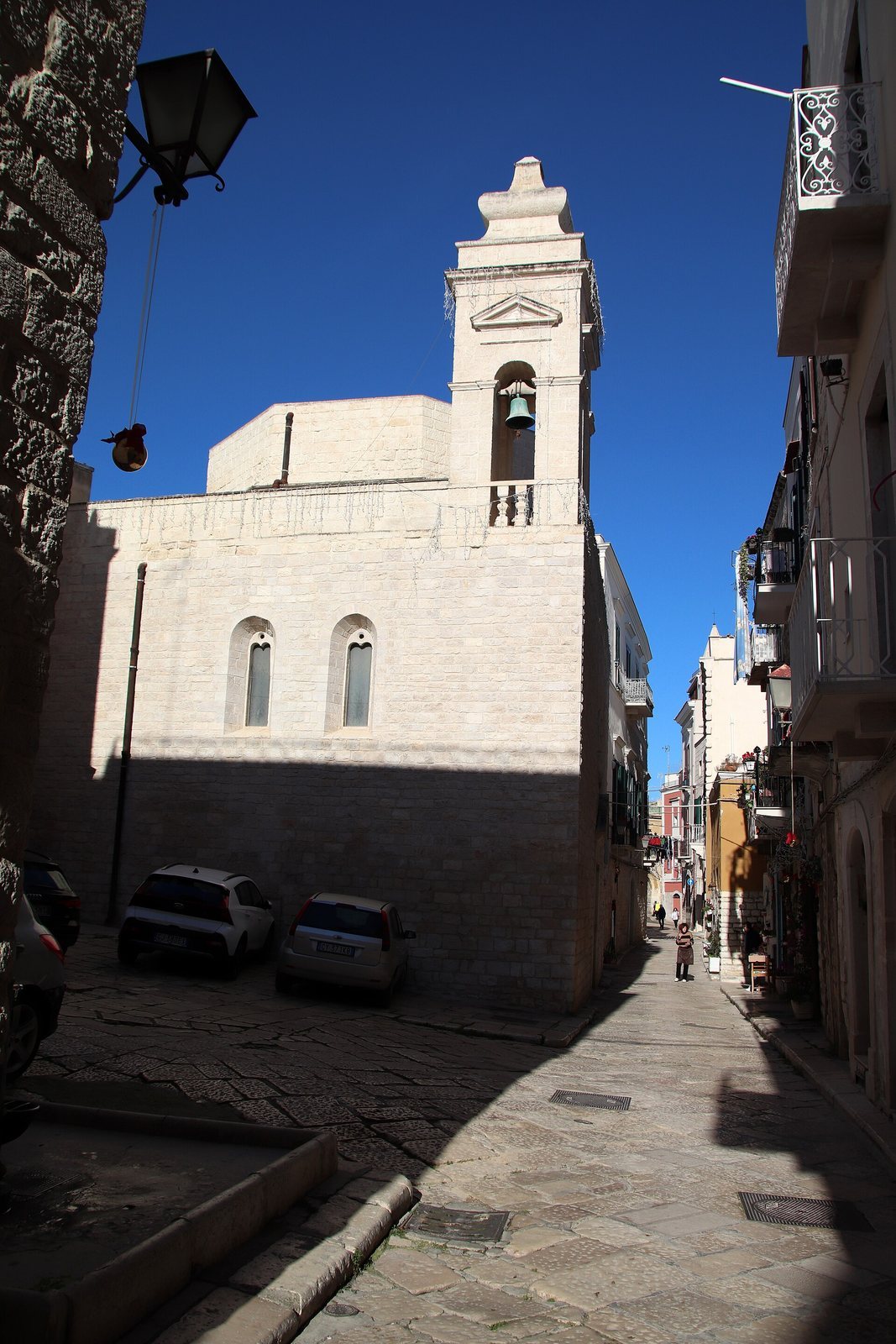
Features retained from the church include a medieval apse, a rounded sanctuary end, seventeenth-century decorations, an eighteenth-century wooden altar, and the exterior bell tower.
Crypt and displays
The crypt, an underground chamber, holds tombstones from Trani’s Jewish cemetery. On the upper level, explanatory panels cover the Jewish communities of Trani and southern Italy from the thirteenth to fifteenth centuries, as well as the building’s history. Displays include copies of documents, ritual objects, a mezuzah, a parchment inscribed with biblical passages and traditionally kept in a doorpost case, dated to the twelfth or thirteenth century, and fragments of a fourteenth-century Hebrew Bible on parchment. In 2018, the collection numbered 25 objects; the museum’s area was listed as 250 square metres.