Surgad: A Hill Fort That Guarded a Trade Route in Maharashtra
Site at a Glance
- Popularity
- Medium
- Country
- India
- Primary era
- Medieval
- Eras represented
- Medieval
- Civilizations
- Unclassified
- Site type
- Military
- Remains
- Fort
On this page8 sections
History
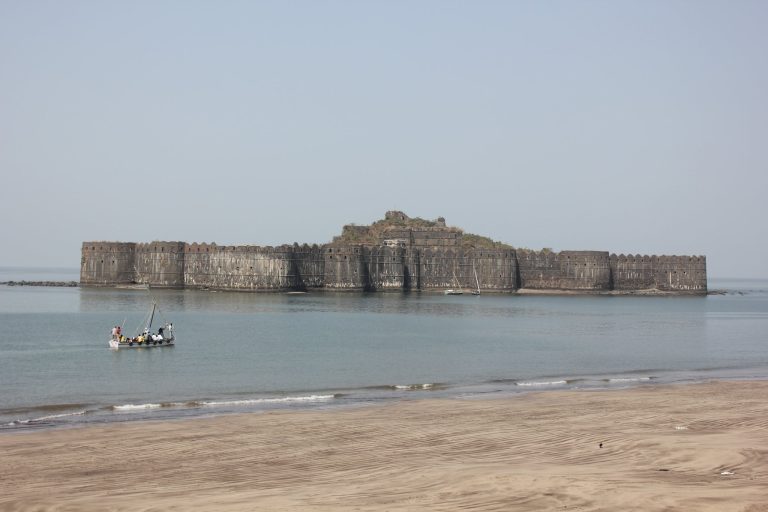
Surgad is a hill fort near Roha, beside Vaijanath village in Raigad district, Maharashtra, India. It is believed to have been built by the Shilahar kings, a medieval dynasty of western India, and served as an observation fort guarding the trade route along the Kundalika River between Sudhagad and Revdanda forts. Its name means Fort of the Gods.
Early construction and rebuilding
The fort was later used by the Nizam of Ahmadnagar, a ruler of the Deccan Nizam Shahi Sultanate. Chhatrapati Shivaji, founder of the Maratha kingdom, is believed to have reconstructed it. An inscription places the fort’s construction at the beginning of the second year of Sidhi Saheb’s command, with Saheb being a respectful title. It names Nuryaji as architect and Tukoji Haibat as governor.
Maratha captures and use
During the reign of Maratha ruler Rajaram, the Maratha official Shankarji Narayan Sachiv captured Surgad from the Siddis of Janjira, whose rulers controlled a coastal state centered on Janjira. Bajirao I captured the fort again in 1733. A leading Peshwa, Bajirao held an office that had developed from chief minister into a position of authority in the Maratha state. During the Peshwa period, the fort was used to hold prisoners.
British capture
In February 1818, British officer Colonel Prother captured Surgad from the Peshwas during the Third Anglo-Maratha War, an early nineteenth-century conflict between the British and the Maratha powers.
Remains
Setting and defenses
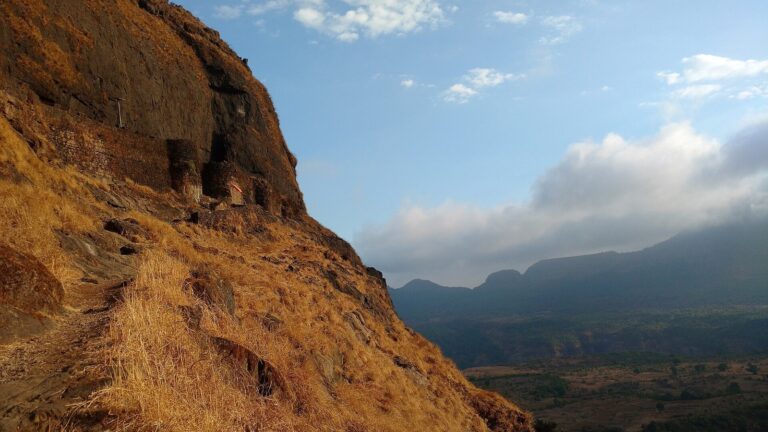
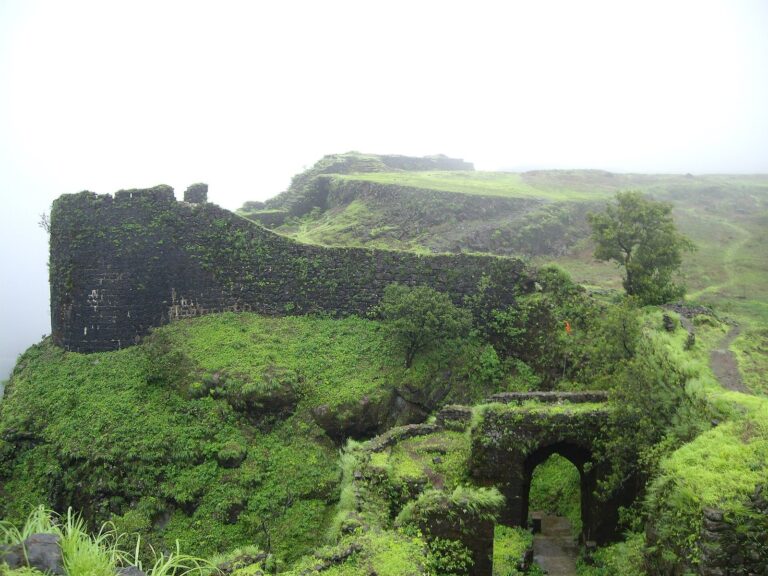
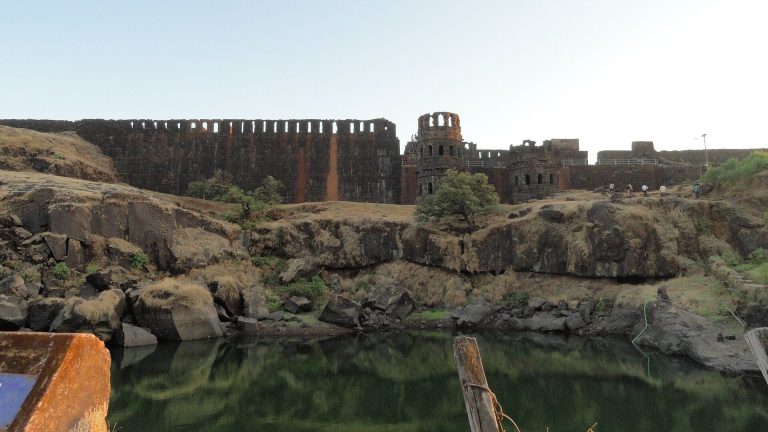
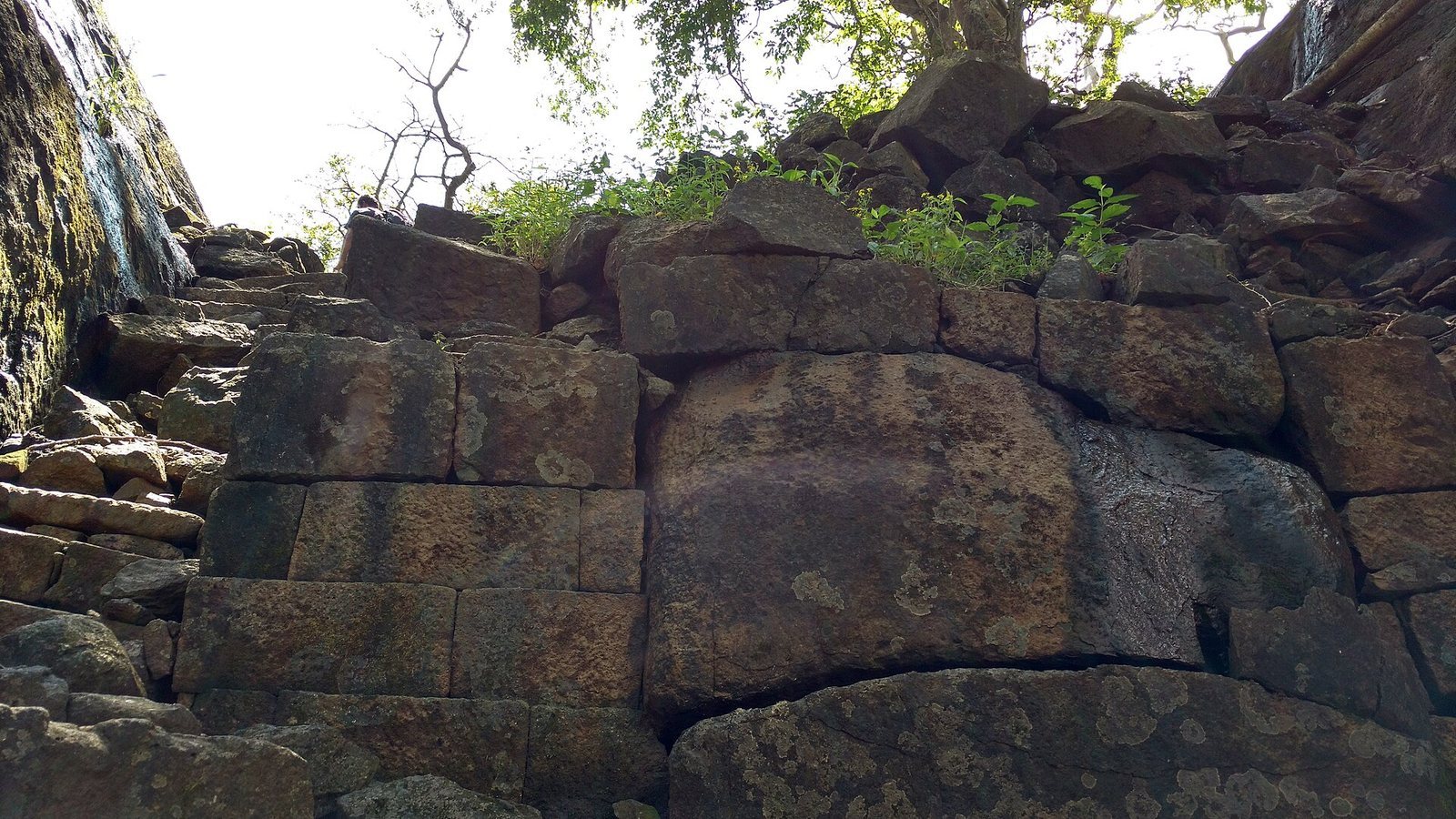
Surgad occupies a small spur extending south from the main hill range, apart from the Sahyadri, another name for the Western Ghats. Its height is uncertain, but is estimated at about 280 metres. Dense teak and Dhawda forest surrounds the ruined stone fort. The main gate is in poor condition, and two bastions, projecting fortifications, stand at opposite ends, one to the north and one to the south.
Water and religious structures
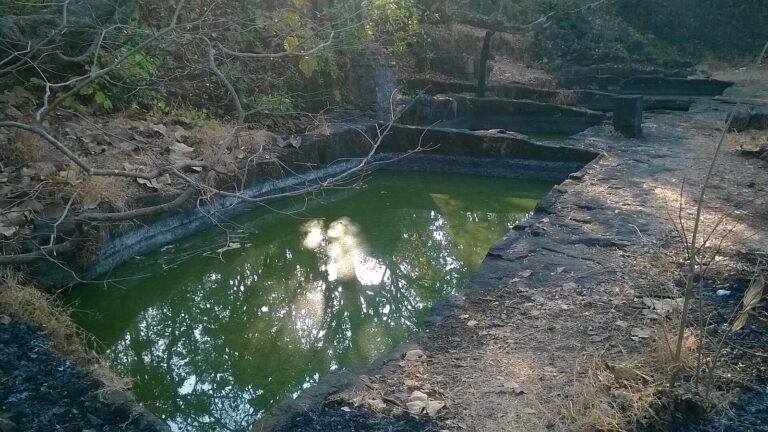
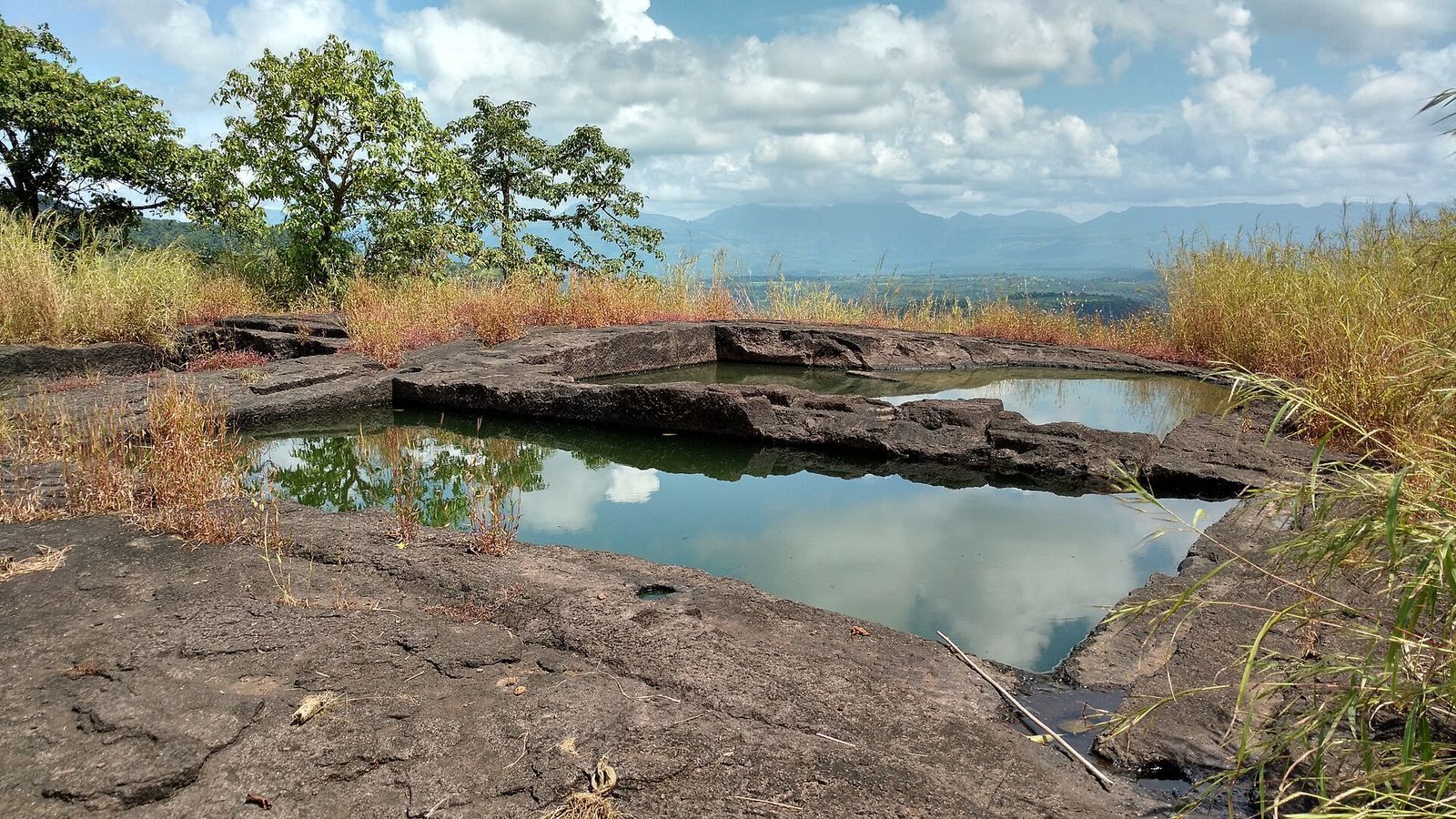
Seventeen cisterns cut into the rock hold water on the fort; water from the cistern on its northeastern side is potable. A small temple to Veer Maruti, a name for the Hindu deity Hanuman, stands at the summit. A temple dedicated to Ansai Devi is near the fort’s base.
Buildings and inscriptions
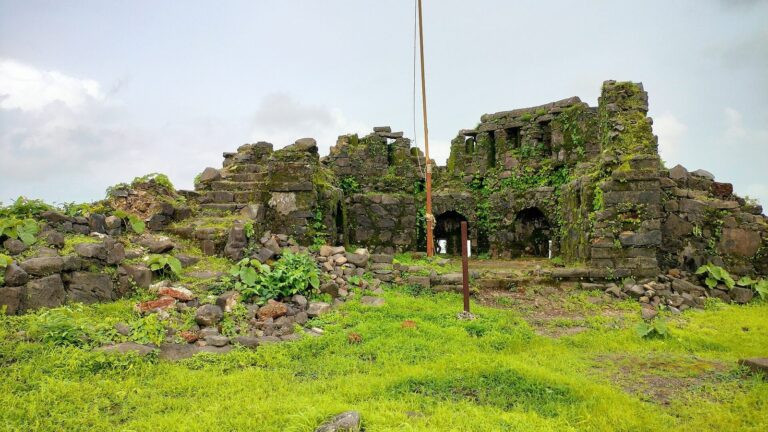
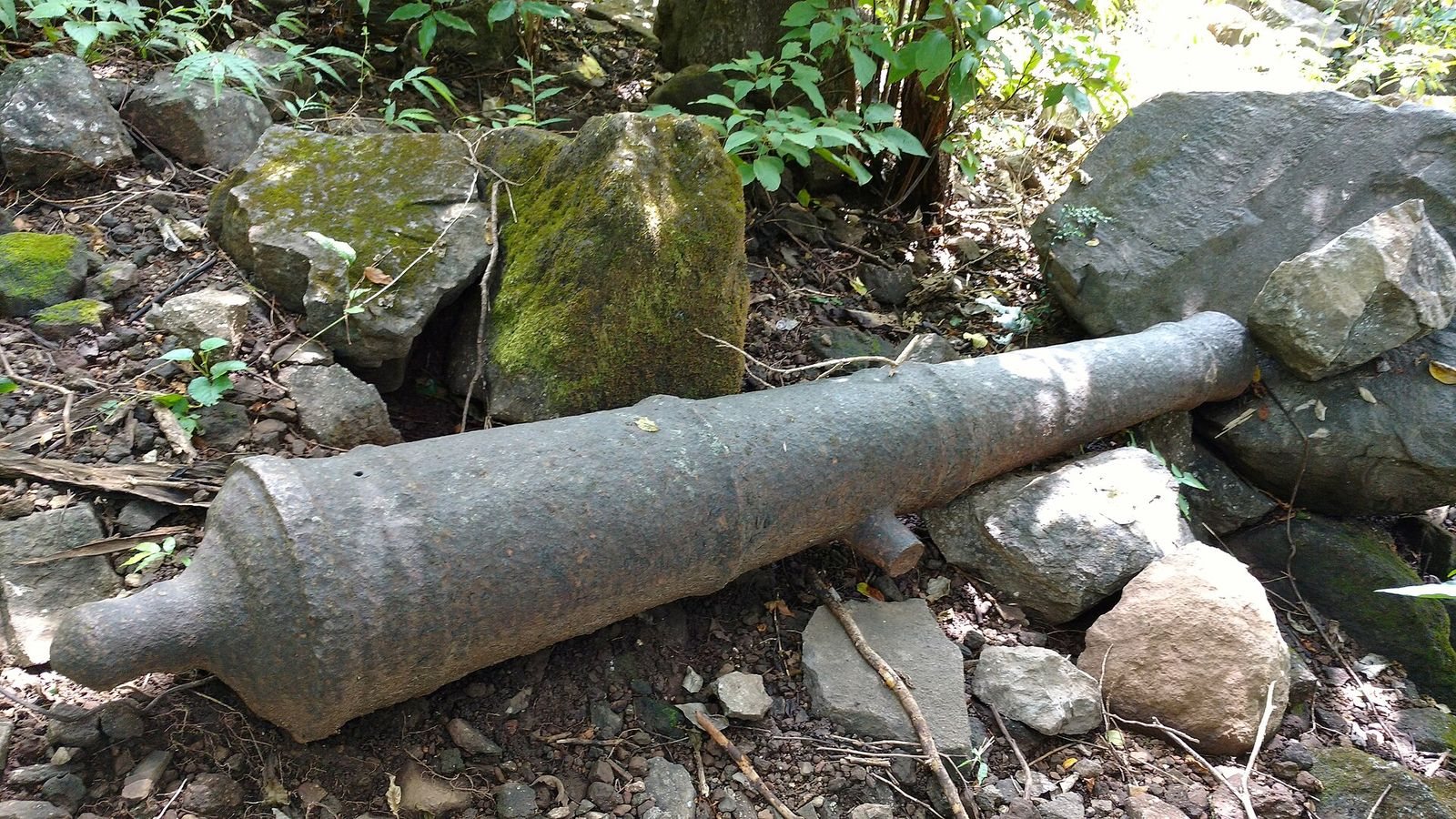
Two dilapidated buildings on the fort are known as Sadar, an assembly or administrative hall, and a gunpowder storehouse. A cannon lies on the plateau at the fort’s base. A stone block bears inscriptions in Persian and Devanagari, a writing script.