Stedelijk Gymnasium Haarlem: A Public Classical School in the Netherlands
Site at a Glance
- Popularity
- Medium
- Country
- Netherlands
- Primary era
- Modern
- Eras represented
- Modern
- Civilizations
- Dutch
- Site type
- Civic
- Remains
- School
On this page7 sections
History
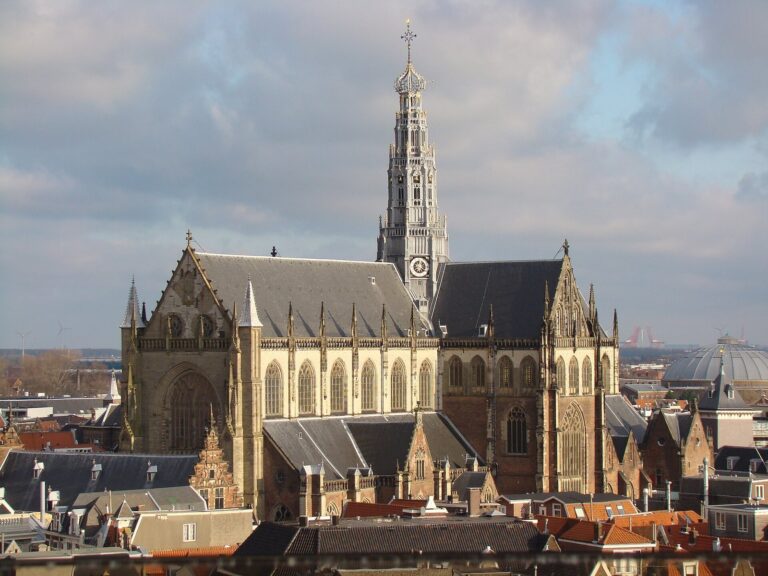
Stedelijk Gymnasium Haarlem is a public Dutch gymnasium, an academically oriented secondary school with a classical curriculum, in Haarlem, Netherlands. Founded on 6 December 1389 as a Latin school, it is among the oldest schools in the country. Its first recorded rector, Gheraerde de scoelmeester, is associated with the school in 1301. In 1389, Duke Albert of Bavaria, then Count of Holland, granted Haarlem a Latin school to be led by clergy. The city gained the right to appoint its rector jointly with the pastor of St Bavo’s Church.
Medieval and early modern school
The rector received fees from pupils, with additional charges for those boarding from outside Haarlem, and paid the assistant teachers. Teaching included parts of the Trivium, the traditional grouping of grammar, rhetoric, and logic, in Latin. The Quadrivium, traditionally comprising arithmetic, geometry, music, and astronomy, included music for choirboys who sang in church. Hebrew was taught to pupils preparing for theology, and Greek was added in 1522. Before Leiden University was founded in 1579, pupils seeking higher study had to travel abroad.
From 1502 to 1577, a fund maintained by a Haarlem religious institution helped promising pupils continue their studies in Cologne. In 1553, the school petitioned Charles V, ruler of the Holy Roman Empire, for permission to establish a university in Haarlem; no reply followed. In 1577, books from the city’s monasteries and convents were transferred to the school. Rector Cornelius Schonaeus spent two weeks preparing an inventory and reorganized the school, a process later continued by Theodorus Schrevelius.
After the Siege of Haarlem, a military siege of the city, and the council’s seizure of Catholic property, the school left the Schoolsteeg area. In the late sixteenth century it moved to a former monastery in the Jacobijnestraat and Prinsenhof area, under Schonaeus’s direction.
Changes in the nineteenth and twentieth centuries
In 1864, Haarlem’s municipal council combined the school with a government-subsidized Higher Civic School (HBS), a distinct type of Dutch secondary school, to which the Latin school was attached. The Latin school then had 19 pupils. The institutions separated in 1875, restoring the gymnasium as an independent school. The school moved into its new Prinsenhof building on 1 September 1883.
In the 1920s, the school expanded, including the addition of a science wing. From 1925 to 1933, the gymnasium’s rector led a lyceum program at the HBS; its gymnasial section ended in 1933. The periods of combination with the HBS were associated with falling enrollment.
The school underwent a major renovation from 2005 to 2008, and its two buildings are designated national monuments. Today it is an independent public school offering pre-university education and a classical curriculum that includes Latin and Greek.
Remains
School buildings and grounds
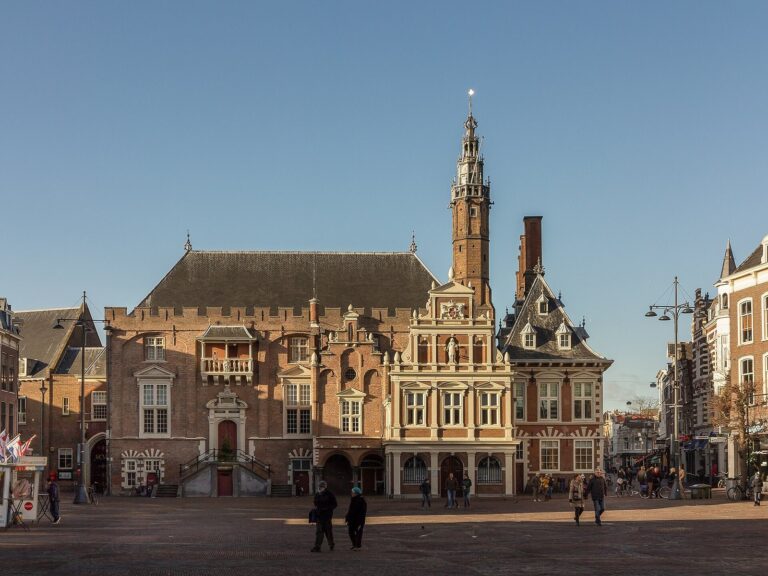
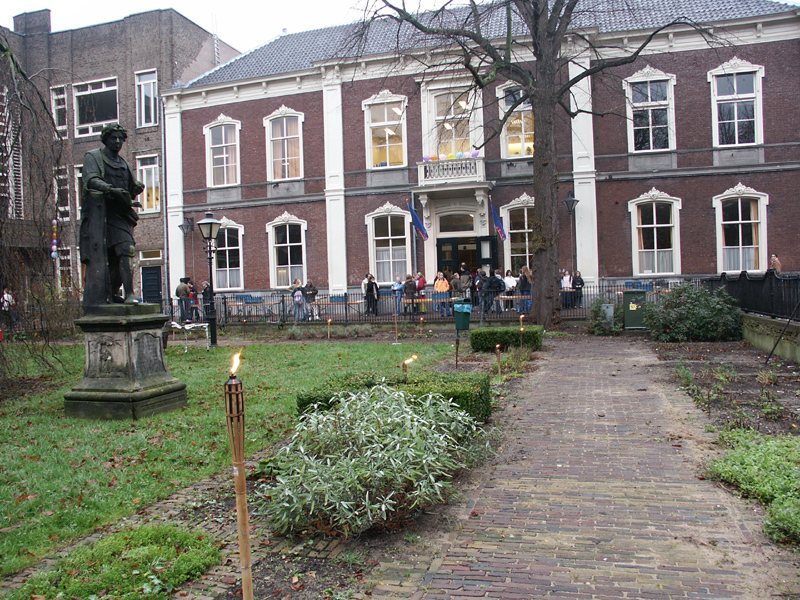
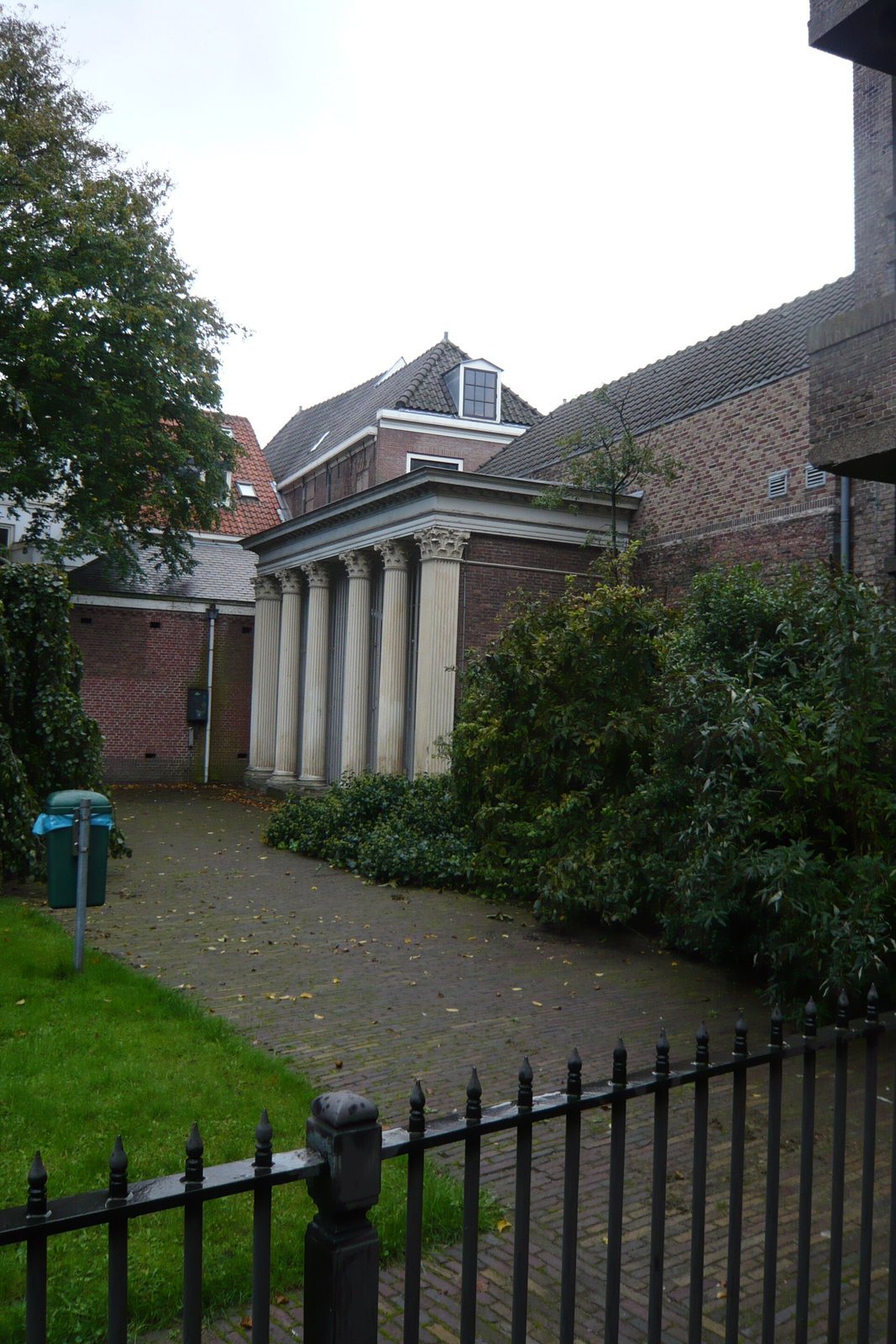
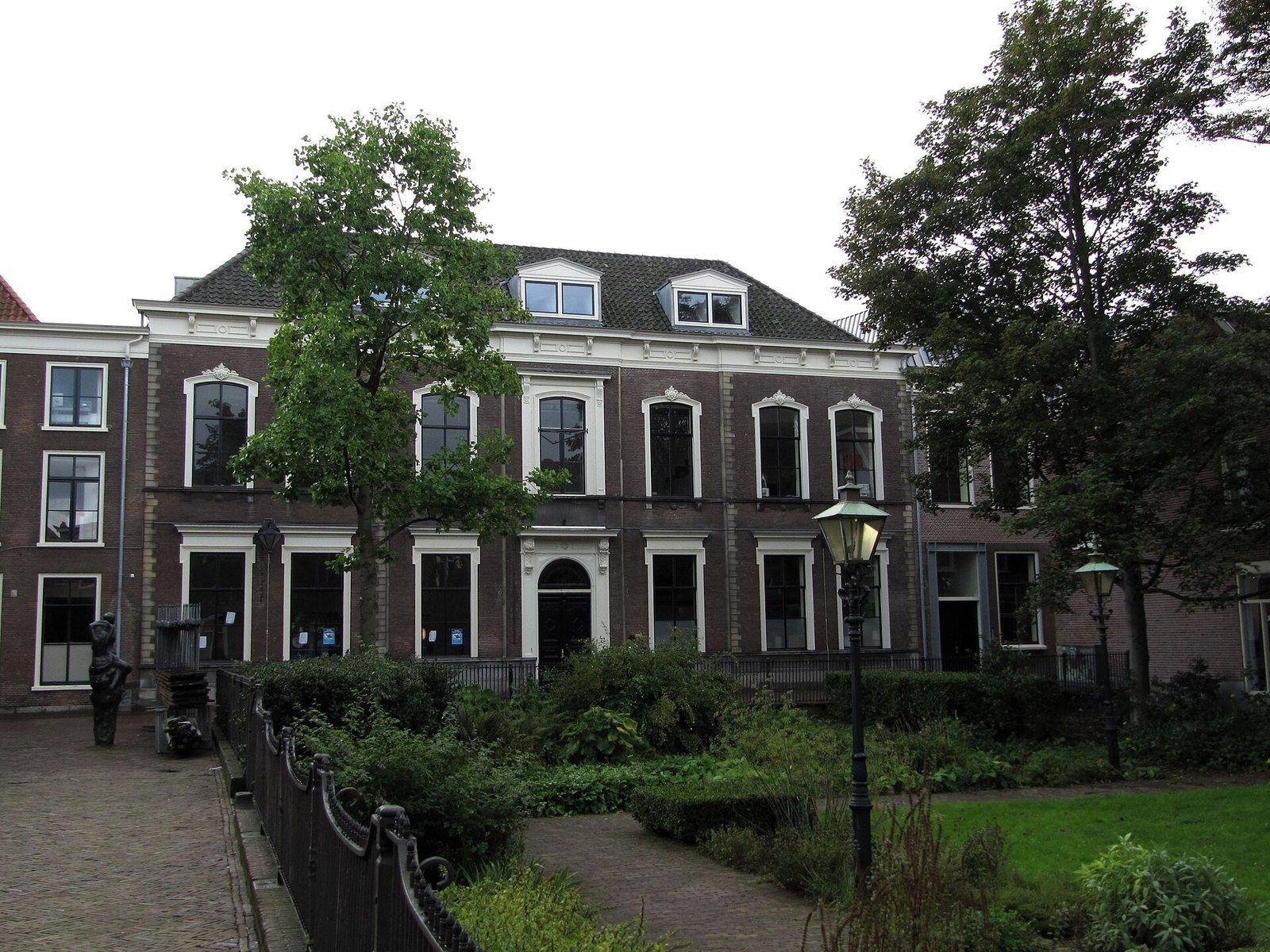
The school occupies two buildings behind Haarlem’s city hall: the main building at Prinsenhof 3 and an annex opposite it at Jacobijnestraat 24. The Hortus Medicus, or medicinal garden, lies between them.
Prinsenhof main building
The main building was constructed in 1879 by Jacob Ernst van den Arend, an architect employed by the city. A science wing was added to its west side in the 1920s.
Jacobijnestraat annex
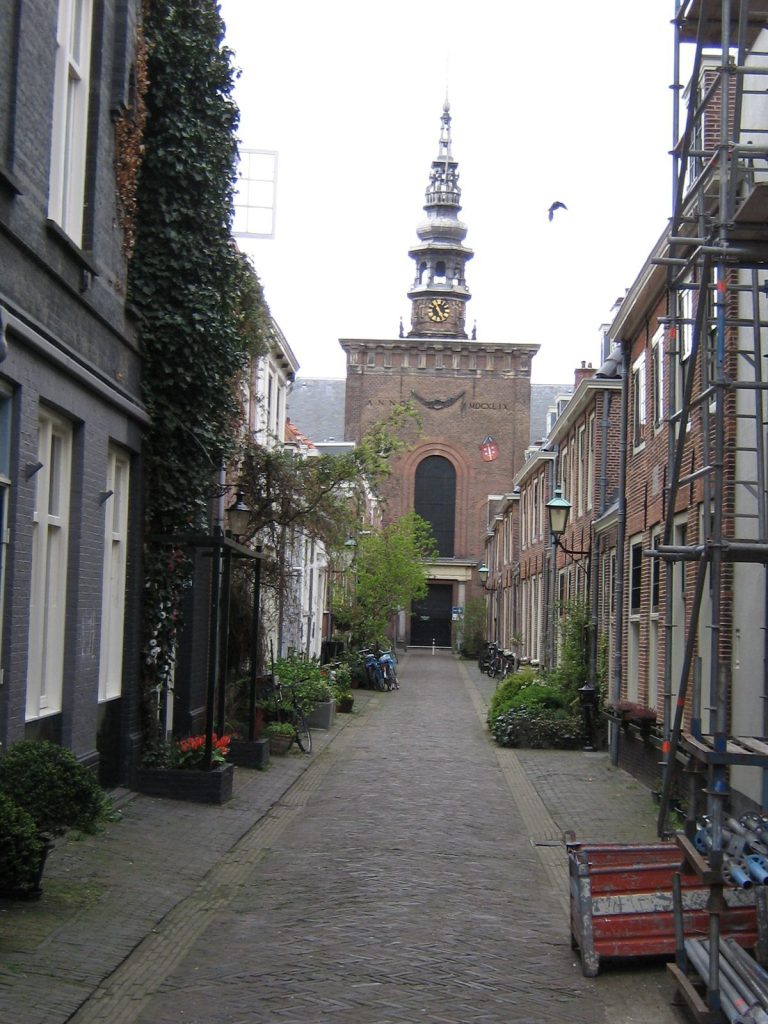
The annex incorporates a school building constructed on Jacobijnestraat in 1864 by van den Arend. It was enlarged in 1918 with three classrooms, and a second HBS was established there. The HBS building became part of the annex in 1991. Properties at Jacobijnestraat 20 and 22 were incorporated in 2004 and fitted out with classrooms and a sports hall.