Stansted Mountfitchet Castle: A Norman Ringwork-and-Bailey Fortification


Site at a Glance
- Rating
- 4.6
- Popularity
- Medium
- Country
- United Kingdom
- Primary era
- Medieval
- External website
- Open
- Eras represented
- Medieval
- Civilizations
- English, Norman
- Site type
- Military
- Remains
- Castle
On this page7 sections
History
Earlier Settlement and Norman Foundation
Stansted Mountfitchet Castle is a Norman fortification in the United Kingdom, built after the Norman Conquest of England in 1066 by the Montfitchet family. The conquest brought England under the rule of William, Duke of Normandy, after his victory that year. The site is believed to have earlier served as an Early Iron Age fort and later as a Roman, Saxon, and Viking settlement. Artefacts associated with these periods support this interpretation.
The site was attacked by the Normans in 1066. Robert Gernon, also recorded as Robert Greno in the Domesday Book of 1086, subsequently built his castle there. He made it his chief seat and established it as the head of his barony. Gernon had come from France with William the Conqueror and received this lordship and several other estates in Essex. The male line of the Gernon family continued for only five generations.
Reconstruction and Present Interpretation
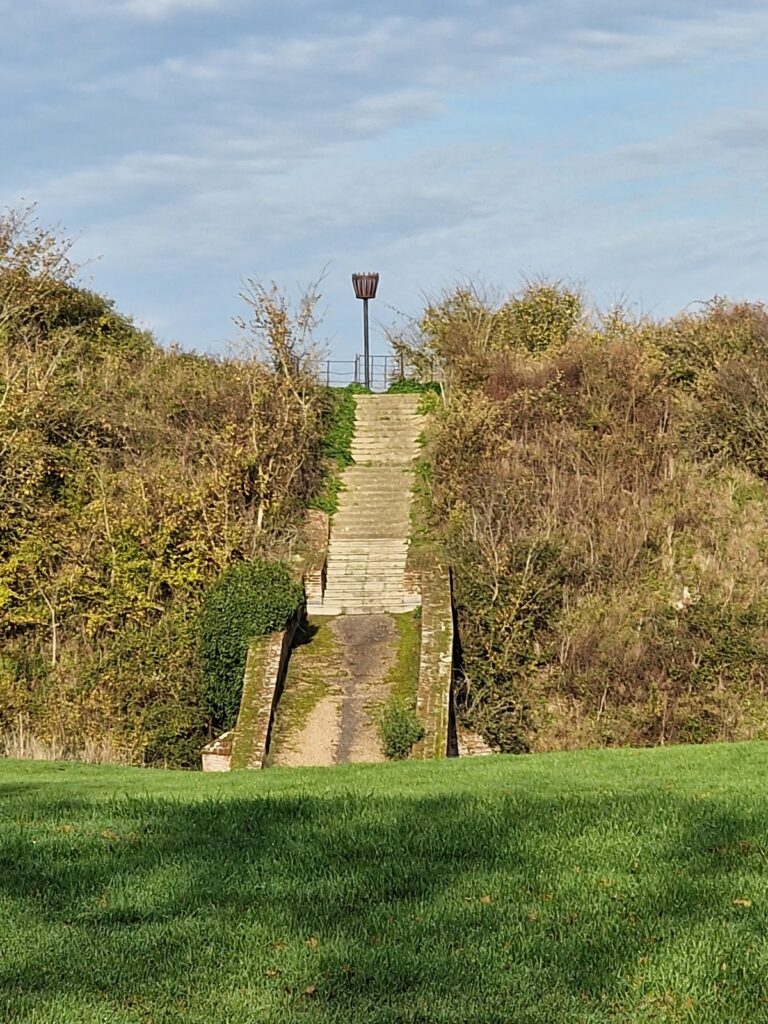
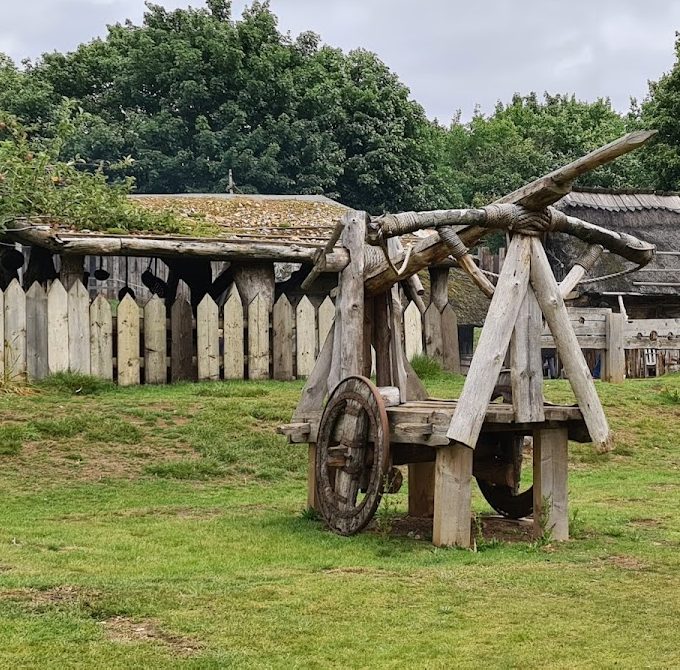
The castle grounds were cleared during the 1980s to expose the original earthworks and mounds. Reconstruction began in 1980 after prolonged planning difficulties and was completed after several years. The reconstructed castle opened to the public in 1985 and is now used as a living-history museum, interpreting the past through reconstructed environments, material culture, and historically themed activities. Livestock of kinds that people would have kept during the castle’s period of use forms part of this interpretation.
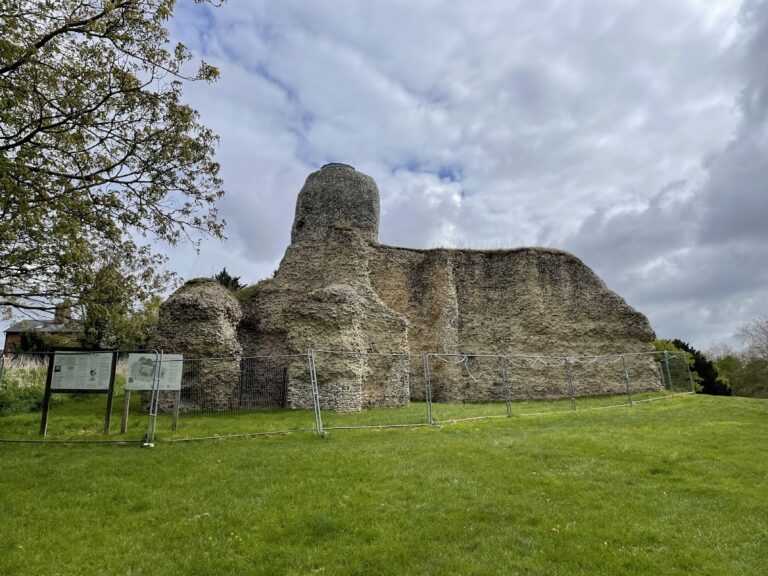
The rebuilding was undertaken with efforts to protect the original remains, although the reconstruction and the subsequent large number of visitors damaged parts of the site. Stansted Mountfitchet Castle is a scheduled monument, a legally protected archaeological or historic monument in England.
Remains
Fortification Layout
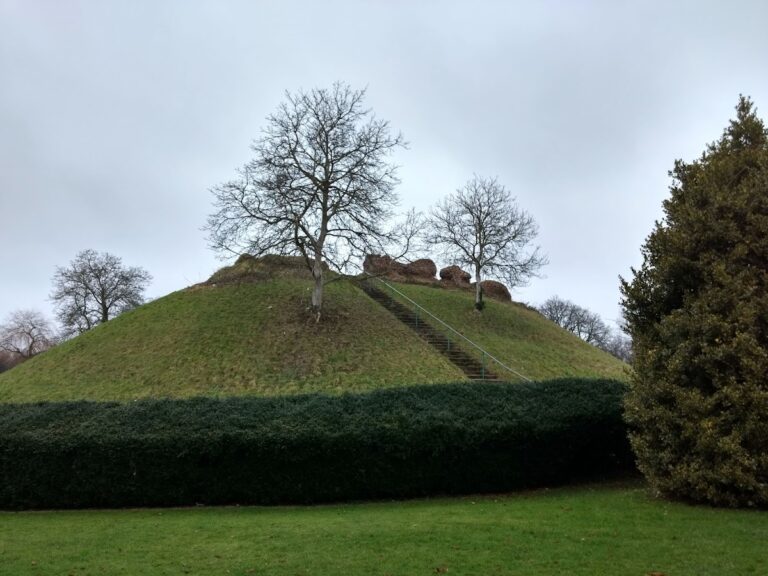
The castle is a Norman ringwork-and-bailey fortification built on high ground. A ringwork is a defended enclosure protected by an encircling bank or rampart, while a bailey is an adjoining enclosed area. The surviving arrangement includes a main defended enclosure on higher ground and a larger complex on slightly lower ground. The recorded construction materials are stone and timber.
Ringwork and Keep
The ringwork covers approximately 0.5 acres, or 0.20 hectares. Within it stands a keep inside a small, round enclosure, forming the central defensive element of the higher enclosure.
Bailey Complex
The bailey complex occupies approximately 1 acre, or 0.40 hectares, on slightly lower ground. Its enclosure forms the adjoining part of the fortification and complements the ringwork and its keep.
Nearby sites