Staatlicher Hofkeller Würzburg: A Historic Bavarian Court Winery
Site at a Glance
- Popularity
- Medium
- Country
- Germany
- Primary era
- Early Modern
- Eras represented
- Early Modern, Modern
- Civilizations
- German, Holy Roman Empire
- Site type
- Economic
- Remains
- Production Complex
On this page15 sections
History
Staatlicher Hofkeller Würzburg is a historic winery in Würzburg, Germany. Its recorded origins reach back to 1128, when Bishop Embricho granted land in Zell to religious brothers to establish a monastery. The winery later developed from the Prince-Bishop’s vineyards, and ownership has remained with the ruling authority of each period since its foundation.
Origins and the Prince-Bishop’s Court Cellar
By 1168, the winery was recorded as the Prince-Bishop’s Court Cellar. This name reflects its connection to Würzburg’s ruling prince-bishops, who combined religious office with territorial rule.
Bavarian and state ownership
In 1814, it became the Royal Bavarian Court Cellar. It took the name Staatlicher Hofkeller Würzburg in 1918 and is now owned by the Free State of Bavaria.
War, heritage and wine production
During the bombing of Würzburg, part of the cellar ceiling was destroyed. In 1981, the wine-cellar vaults and the Würzburg Residence above them were included in the same UNESCO World Heritage property.
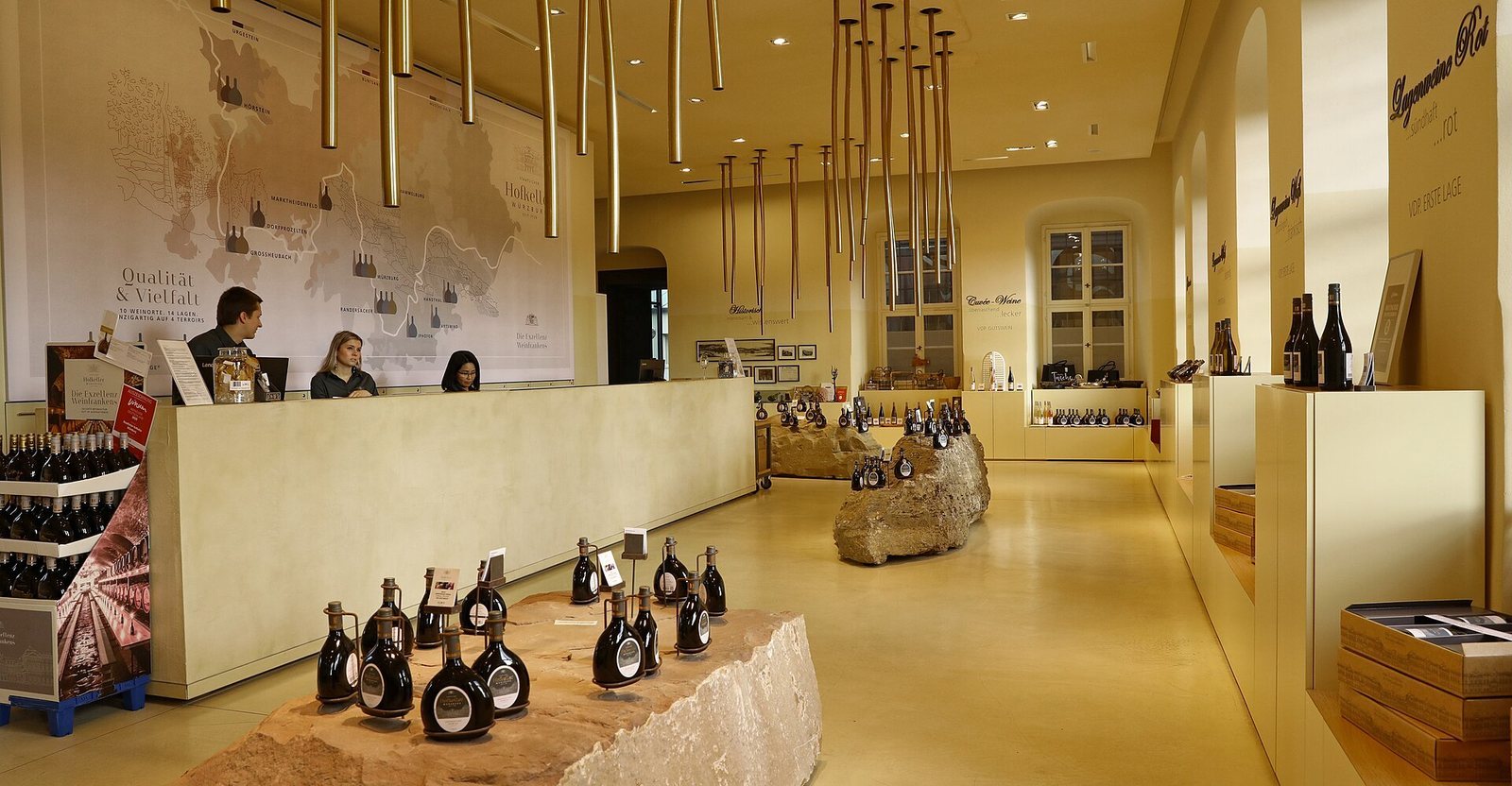
The winery belongs to the VDP, a German association of winegrowers, and follows its wine classifications. It cultivates about 120 hectares of vineyards across Franconia and produces approximately 800,000 bottles each year. It is described as Germany’s third-largest winery.
Its Grosses Gewächs wines are dry wines from Grosse Lage vineyard sites. Randersackerer Pfülben, Würzburger Innere Leiste and Würzburger Stein were classified in the Royal Bavarian soil assessment of 1828. Production is limited to 50 hectolitres per hectare, and the must must reach at least 90 degrees Oechsle, a measure of its density and sugar content. These wines are marketed from September of the following year.
The winery’s Erste Lage wines come from selectively hand-harvested grapes, with yields capped at 60 hectolitres per hectare. Ortswein is made from grapes grown within a municipality’s boundaries, with yields no higher than 75 hectolitres per hectare. Estate-level Gutswein consists of varietal wines bottled in Bordeaux-style bottles as blends, without a vineyard designation.
Remains
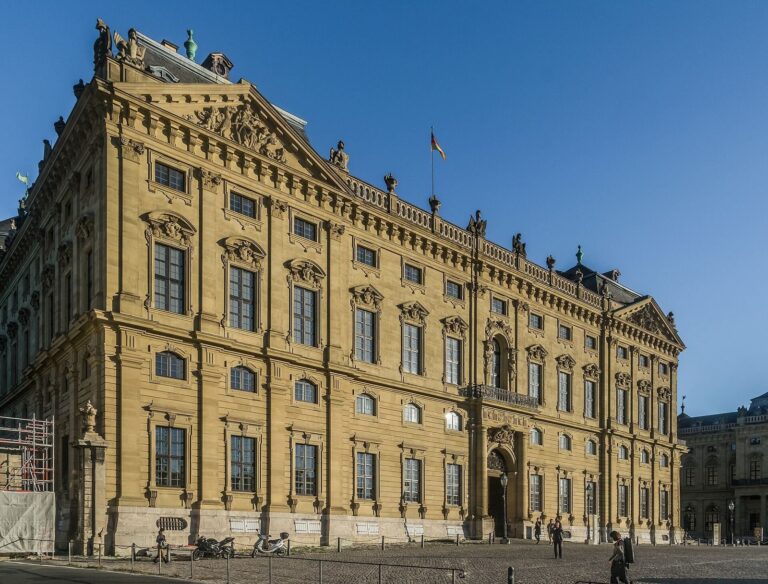
The cellars beneath the Residence
The winery’s vaulted cellars extend beneath the Würzburg Residence. Balthasar Neumann, a German Baroque architect and engineer, built the vaults as part of the Residence’s construction between 1720 and 1744. The cellar covers 4,557 square metres and extends for 891 metres; its vaulted ceilings reach up to six metres, and its walls are as much as five metres thick. The north and south sections were originally separate, then joined by a 63-metre passage built beneath the Residence courtyard in the 1960s.
North-wing barrel cellar
The north wing contains the barrel cellar, where about 300 wooden casks have a combined capacity of approximately 700,000 litres.
South-wing fermentation cellar
The south wing contains steel tanks used to ferment grape juice.
Historic casks and wine chamber
The cellar holds the Swedish Cask, made later for wine from the 1540 vintage, known as the wine of the millennium. Three casks built in 1784 stored wine given as wages to court staff; together, they hold 100,000 litres. A treasure chamber in the Bacchus Cellar stores and displays rare wines. Candlelight in the cellar recalls the former use of candles to test the oxygen content of the air.
Rosenbach Palace
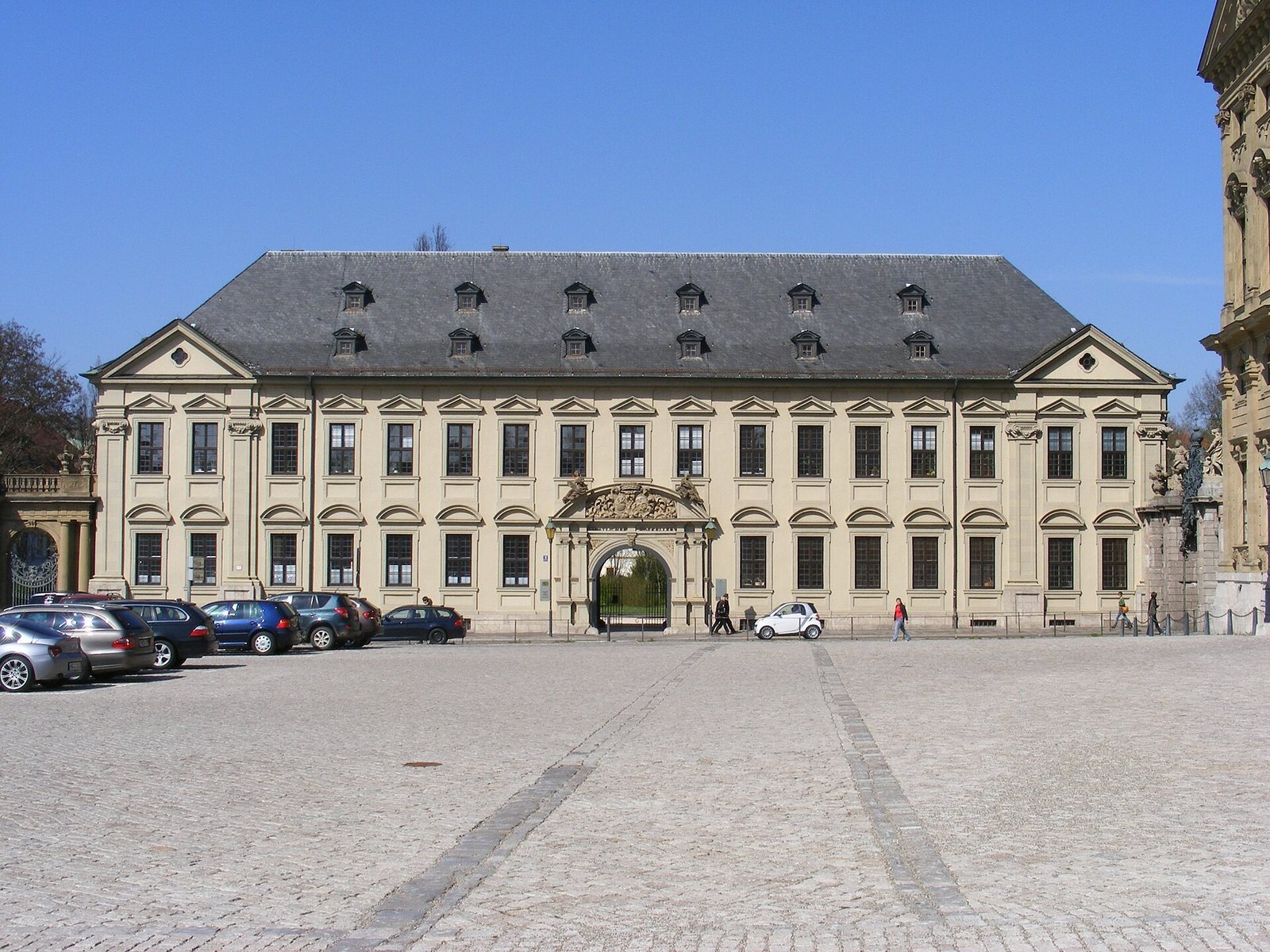
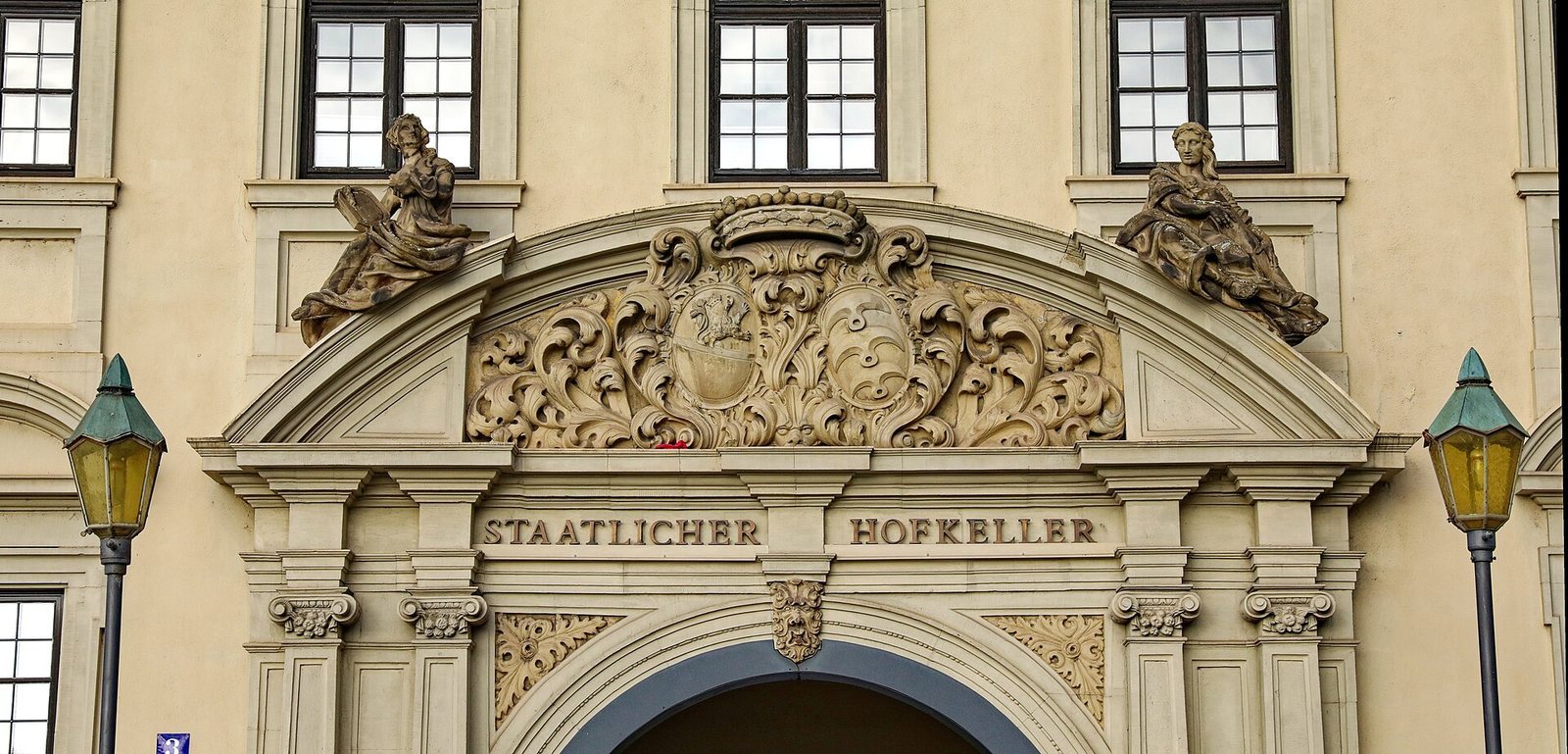
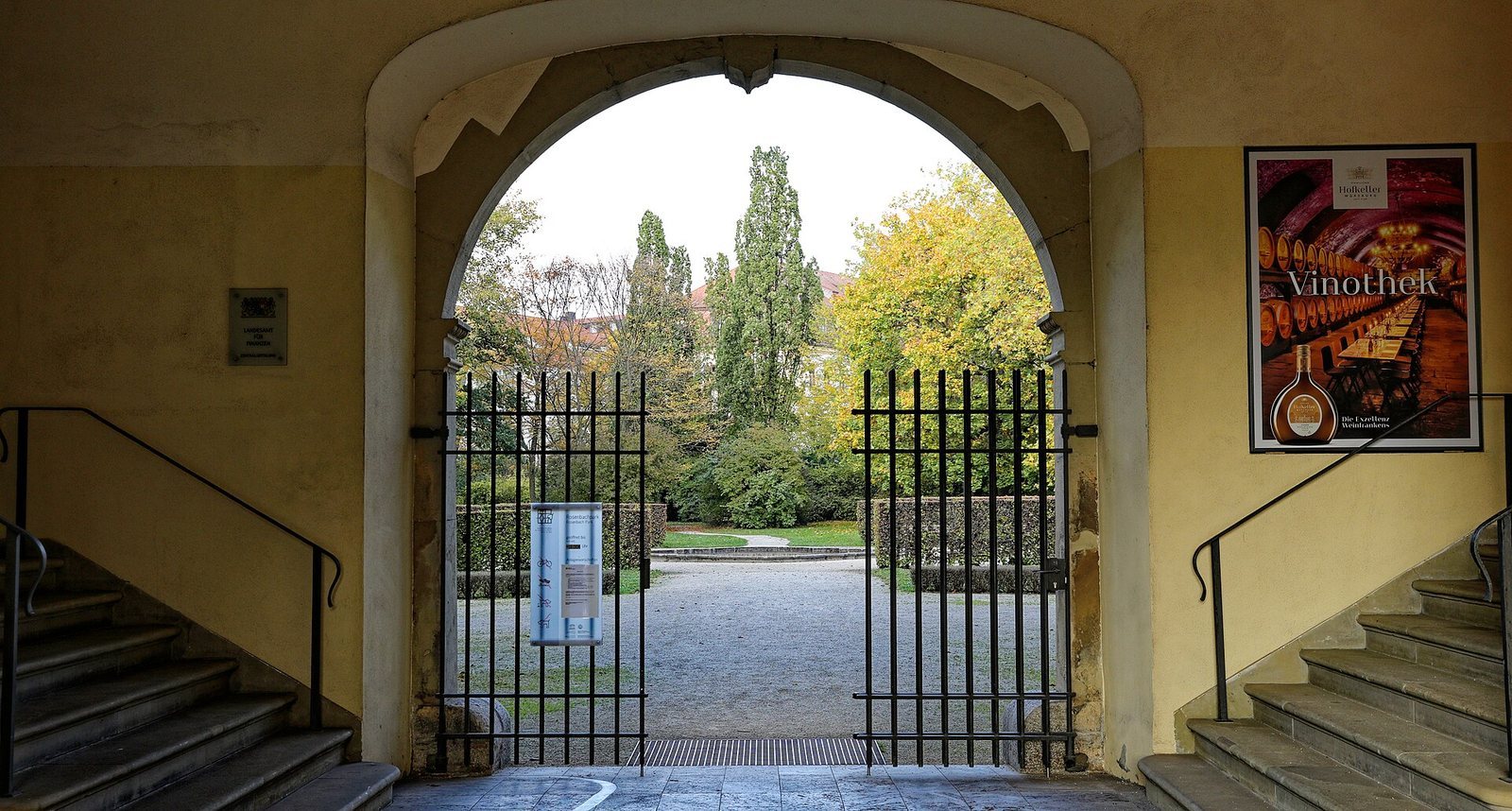
The winery’s administrative headquarters are in Rosenbach Palace at Residenzplatz 3. Created around 1700, the palace was named for Prince-Bishop Johann Hartmann von Rosenbach, a church leader who also governed a territory.
Vineyards across Franconia
The winery’s vineyards grow on four geological formations: ancient crystalline rock, shell limestone, gypsum-bearing Keuper and Bunter sandstone. Its named growing areas are the Alzenau wine region, Churfranken, Main Himmelreich, Frankens Saalestück, Mittelmain, MainSüden, Schwanberger Land and Weinparadies. The grapes are matured in the cellars beneath the Residence.
Randersacker vineyard sites
At Randersacker, the winery cultivates the Marsberg, Teufelskeller, Lämmerberg and Pfülben sites. Randersackerer Pfülben lies west of the village on steep slopes facing southwest. Its name comes from the Middle High German word Pfülwen, meaning “pillow.”
Hörsteiner Abtsberg
Hörsteiner Abtsberg occupies the foothills of the Spessart ridge. Its soils include ancient crystalline rocks such as gneiss, mica schist, granite and basalt. An abbots’ summer residence once stood there.
Vineyards below Marienberg Fortress
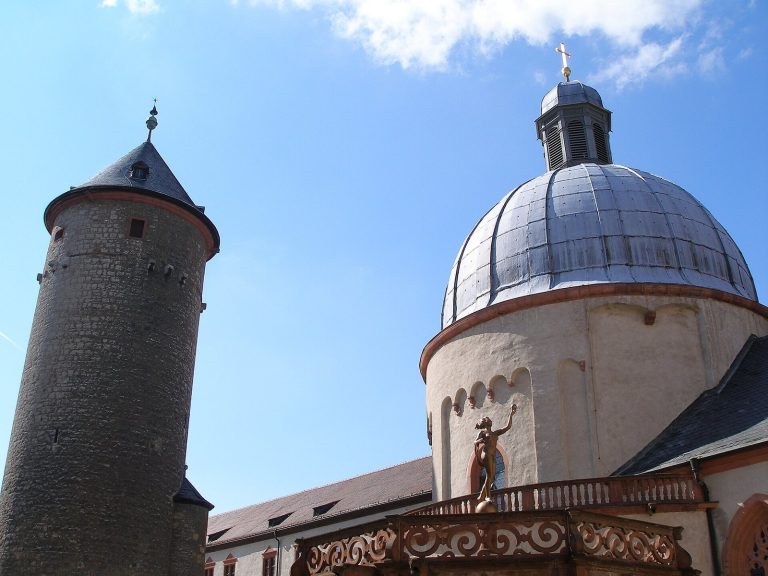
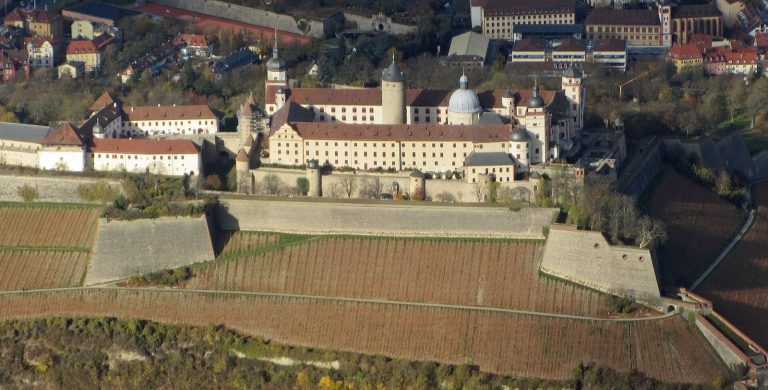
Würzburger Innere Leiste lies south of and below Marienberg Fortress and the Maschikuli Tower, on clay-rich limestone soils. Würzburger Schlossberg extends from below the fortress toward the Main River.
Handthal village vineyard
The Handthal village vineyard is located by Steigerwald Nature Park.