St Swithun-upon-Kingsgate Church: A Medieval Parish Church in Winchester
Site at a Glance
- Rating
- 4.7
- Popularity
- Low
- Country
- United Kingdom
- Primary era
- Medieval
- Eras represented
- Medieval, Early Modern, Modern
- Civilizations
- British, English
- Site type
- Religious
- Remains
- Church
On this page7 sections
History
St Swithun-upon-Kingsgate Church is a parish church of the Church of England, the Anglican church established in England, in Winchester, United Kingdom. Built in the thirteenth century, it is in the Early English phase of English Gothic architecture. It belongs to the parish of St Lawrence with St Swithun-upon-Kingsgate.
Medieval beginnings
A 1148 survey of Winchester records a payment of 15 pence to the sacristan at Kingsgate, an officer responsible for church property and arrangements for worship. The payment suggests that a chapel may have served lay workers of the abbey, a monastic community led by an abbot or abbess. The church’s original construction is undocumented.
The first explicit mention of the church comes from the citizens’ revolt of 1264, when Kingsgate and the church above it were burned. Woodwork was carried out at the church in 1337 for 15 shillings, and its windows were repaired in 1484.
St Swithun and religious change
St Swithun, a ninth-century English bishop venerated as a saint, was born in Winchester, became the city’s nineteenth bishop in 852, and died in 862. He may have tutored the young Alfred the Great, king of Wessex, and accompanied him on a pilgrimage to Rome. A legend links a thunderstorm to the movement of Swithun’s bones in July 971, from outside the old Saxon cathedral to inside it. St Swithun’s Day is observed on 15 July.
The shrine to St Swithun in Winchester Cathedral was destroyed in 1538, and the monastery was dissolved the following year. The church then became a parish church. Its east-wall niche may once have held a statue of the saint, probably destroyed during this period.
Restoration and later associations
By the seventeenth century, the church had fallen into disrepair. Robert Allen, the Kingsgate porter, and his wife occupied it and kept pigs at the chapel end. The church was restored around 1660, and its bells were rehung in 1677. It has remained a place of worship since.
In the 1850s, the novelist Anthony Trollope portrayed the church as the fictional St Cuthbert’s in The Warden. In the novel, Warden Harding becomes its rector after resigning from Hiram’s Hospital, probably based on Winchester’s Hospital of St Cross, a medieval charitable religious institution. Trollope describes the church above the gateway to the Close, usually called Prior’s Gate.
The church is Grade I listed, a category for buildings of exceptional national architectural or historic interest. Kingsgate is a scheduled monument, a nationally important archaeological site or monument protected by law. The parish maintains the church, while the City of Winchester maintains the gate. In retirement, Donald Coggan, a former Archbishop of Canterbury and senior bishop of the Church of England, regularly attended services and sometimes played the piano. His funeral was held at the church on 26 May 2000.
Remains
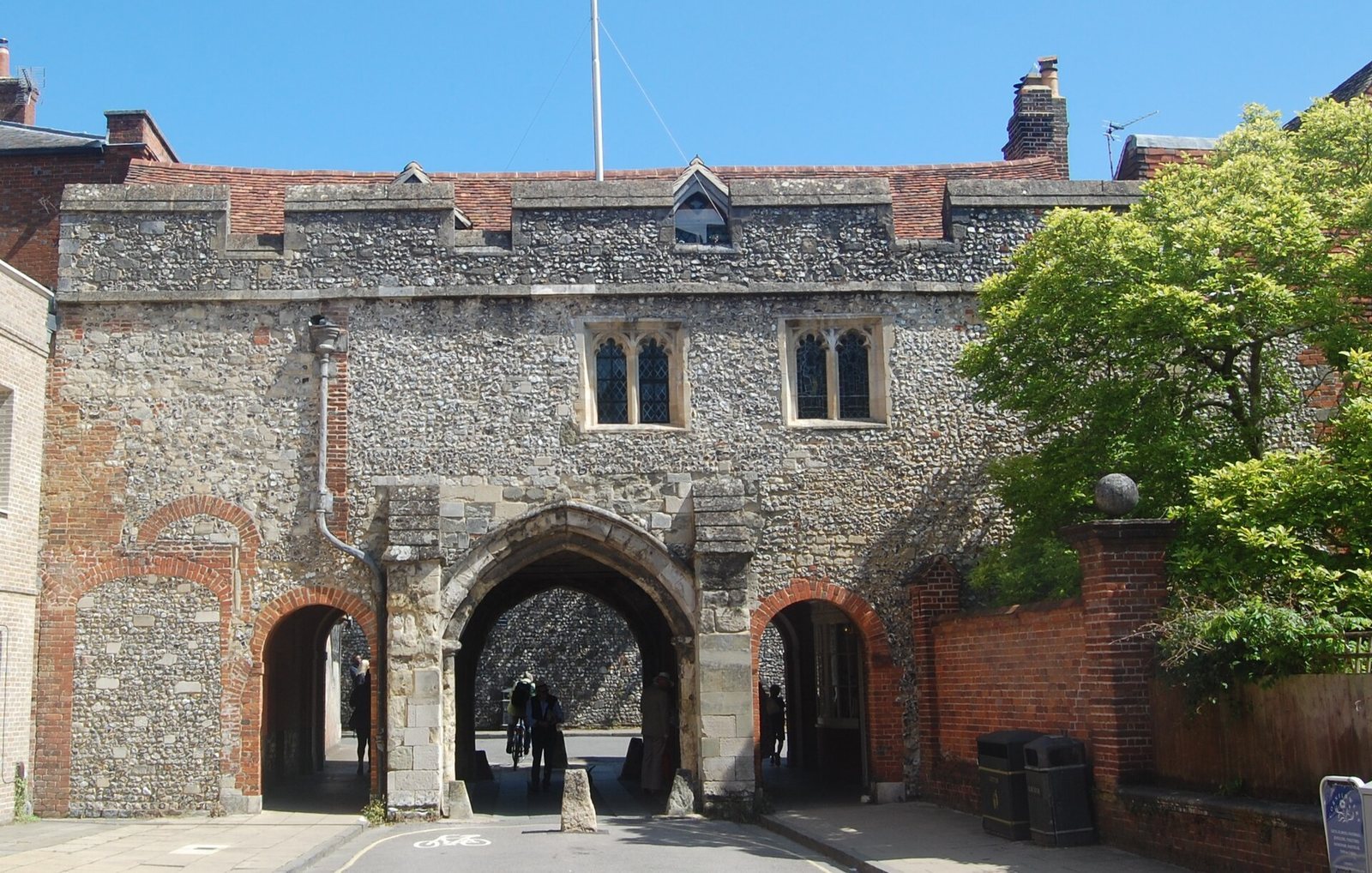
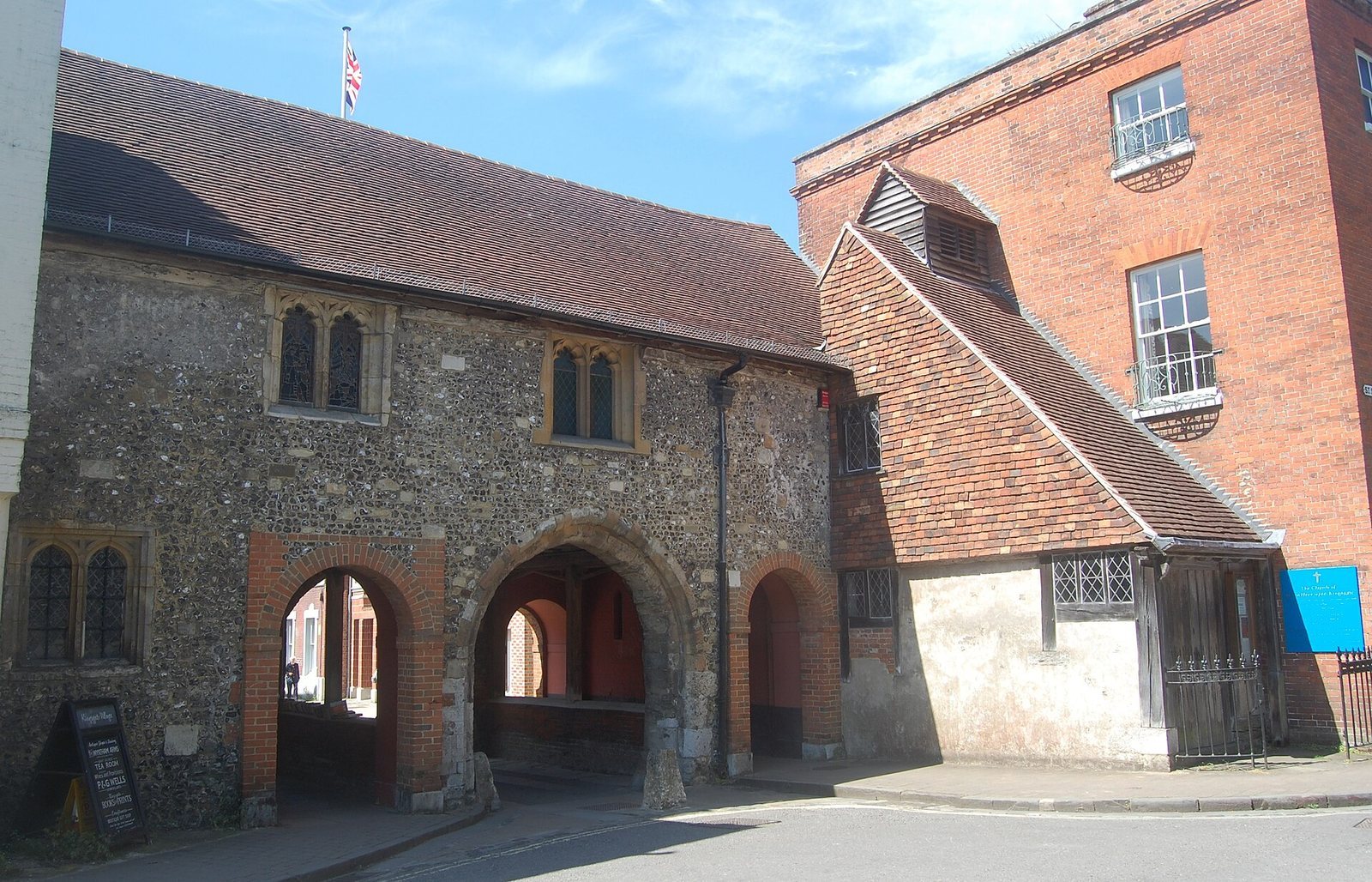
The Early English church stands above medieval Kingsgate and forms part of the fabric of Winchester’s old city walls. The gateway has three arches, with a wooden staircase providing access to the church from St Swithun Street.
Gateway and entrance
The staircase stands beside the arch on the right. Parts of it date to the sixteenth century, while some steps were added in 1954.
Interior features
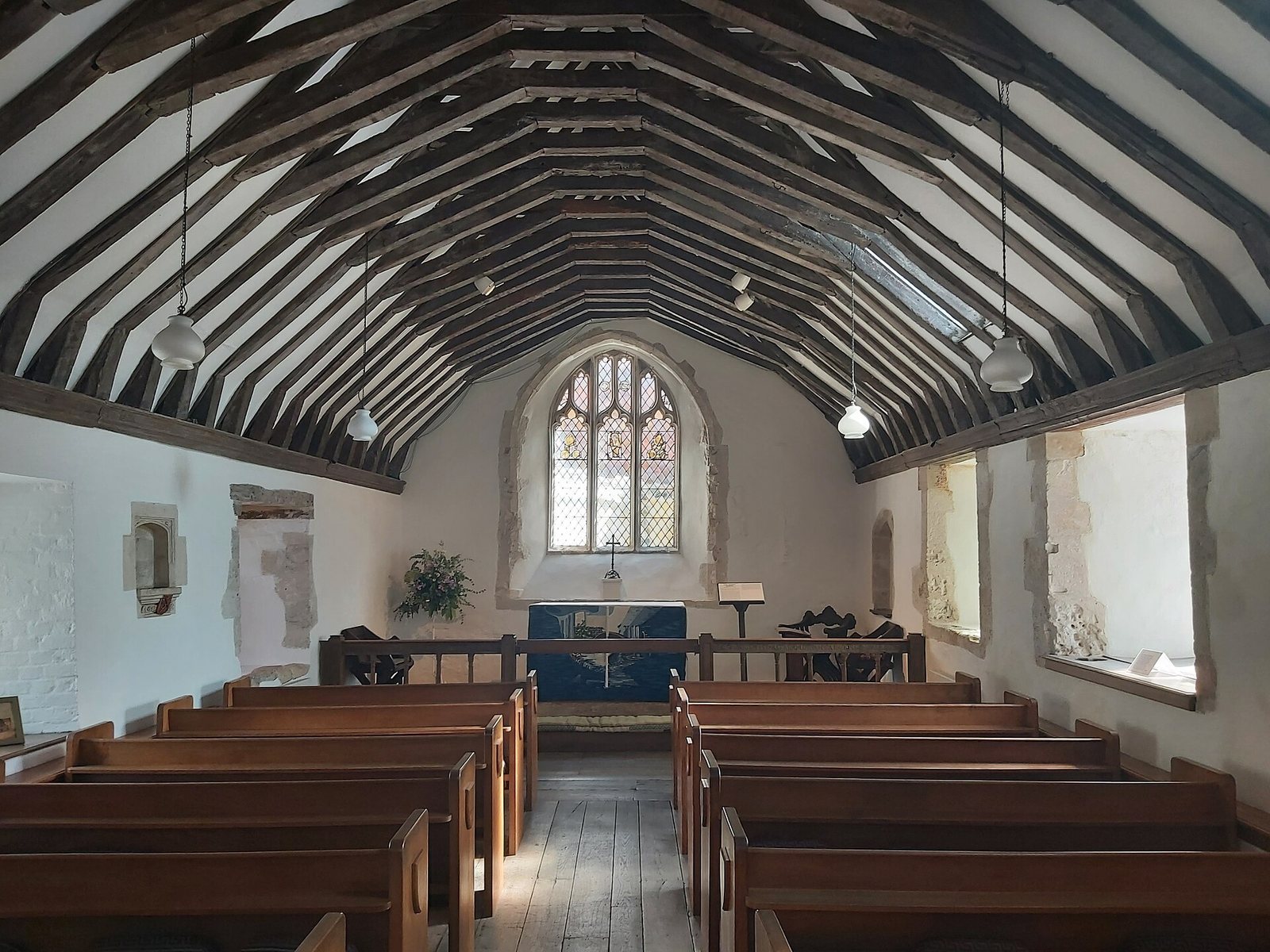
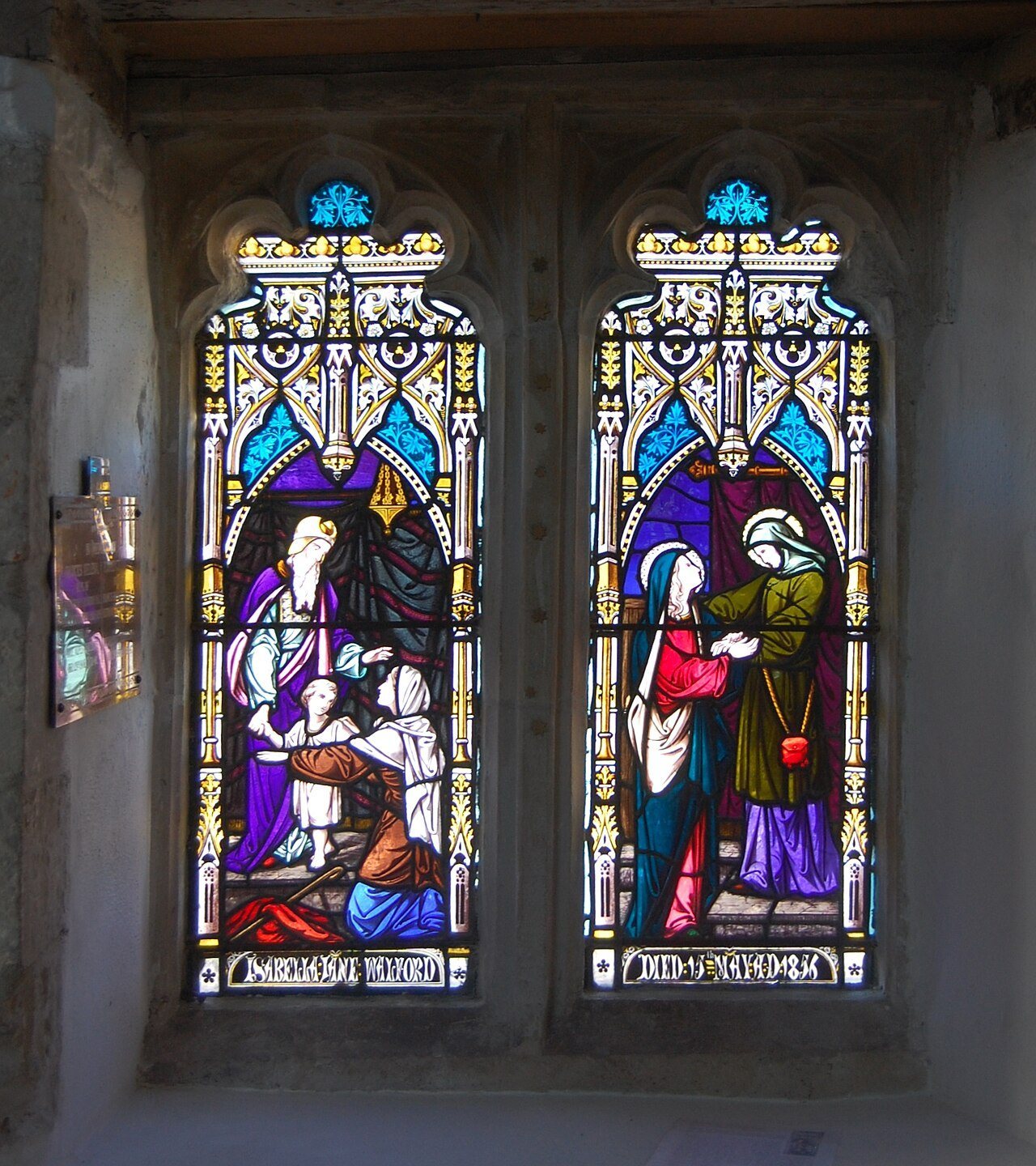
An empty niche is set into the east wall. The east window contains fragments of medieval stained glass, probably depicting the Annunciation, the Christian account of the angel Gabriel telling Mary she would give birth to Jesus. The fragments were brought from St Peter’s Church, Chesil, in 1961. A seventeenth-century altar rail, which marks the boundary of the altar area, came from a Winchester school and was installed in 1960. Parishioner Colin Campbell made new pews in 1968; they now constitute most of the church’s pews. Lord Coggan’s initials are carved on a bench-end, the end panel of a pew.