St Senara’s Church, Zennor: A Church of England Parish Church
Site at a Glance
- Rating
- 4.7
- Popularity
- Medium
- Country
- United Kingdom
- Primary era
- Medieval
- Eras represented
- Medieval, Modern
- Civilizations
- British, English
- Site type
- Religious
- Remains
- Church
On this page8 sections
History
St Senara’s Church is the Church of England parish church serving Zennor Churchtown in the United Kingdom, a settlement distinct from the wider parish of Zennor. The Church of England is the Anglican church in England, and the church belongs to the Diocese of Truro, a regional church jurisdiction. A church dedicated to Saint Senara, a local Christian saint associated with Cornwall, has stood on this site since at least the 6th century. The building was rebuilt in the 12th century and is Gothic in style, a later medieval form commonly associated with pointed arches.
Foundation traditions
Local tradition credits Saint Senara with founding the church after she returned from Ireland with her son, who had become a bishop, and also associates them with the founding of Zennor village. Another local tale, shared with the church at nearby Morvah, tells of a cow eating a straw bell-rope.
Restoration and continuing use
The church underwent a complete restoration and reopened on 10 December 1890. George Wilkinson, Bishop of Truro, conducted the reopening. On 10 June 1954, it was listed at Grade I, England’s highest listed-building category, for buildings of exceptional architectural or historic interest. The listing uses the name “Church of Saint Sennar.” The church remains in regular use for Sunday services.
Remains
Building and layout
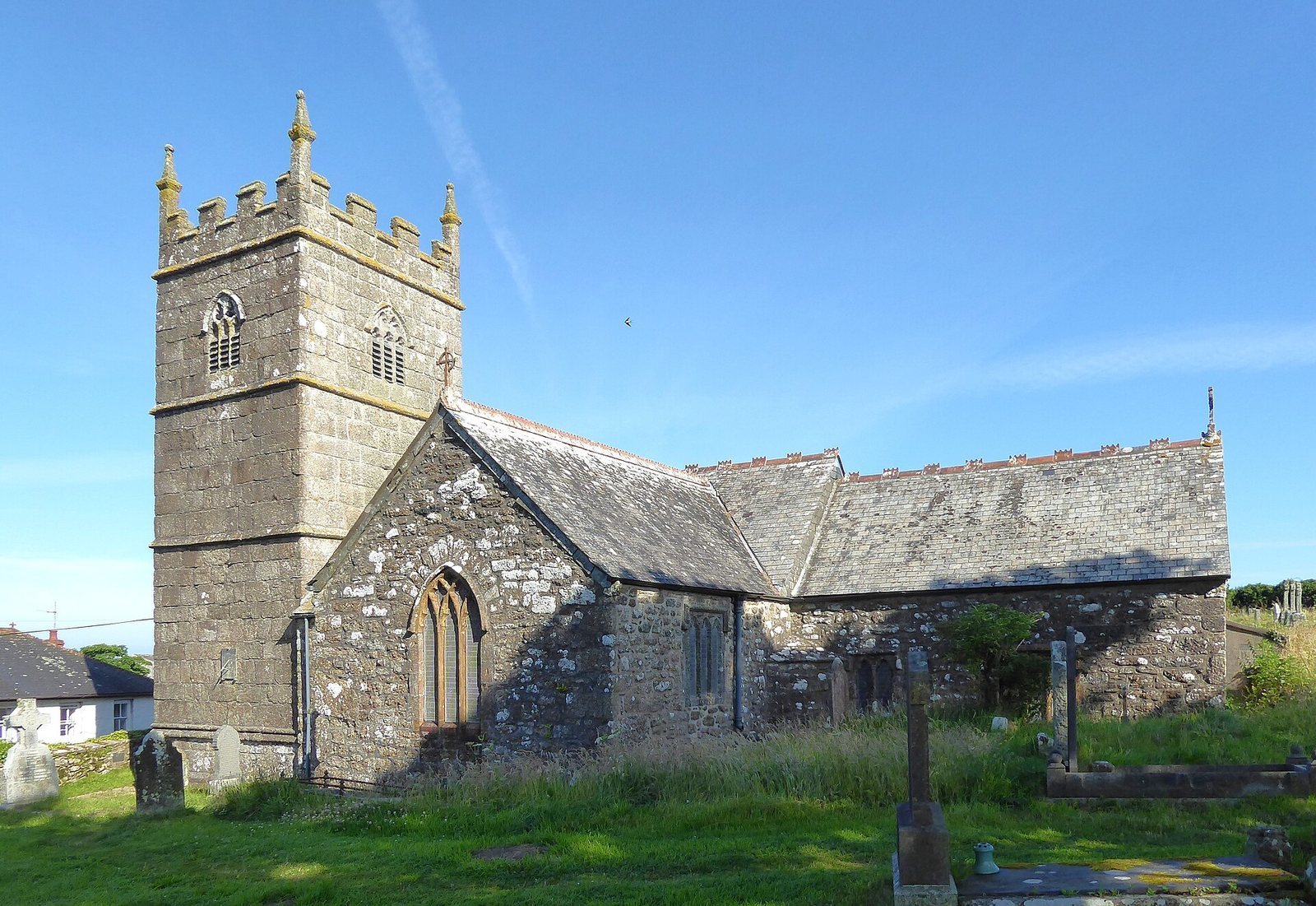
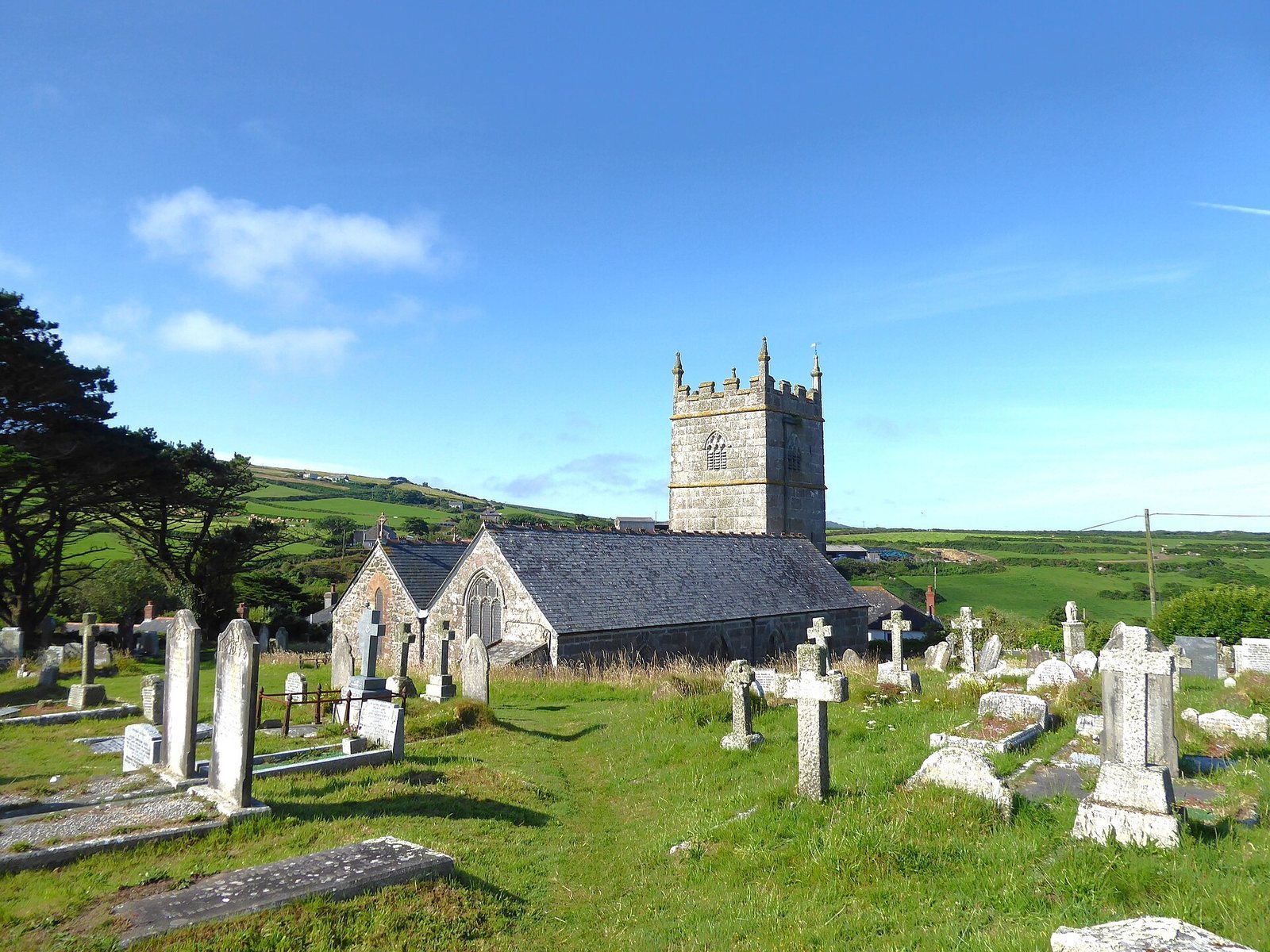
Standing in Zennor Churchtown and overlooking the sea, the church combines work from several medieval periods. Its fabric is partly Norman, meaning it belongs to the Norman period in medieval England, and partly from the 13th and 15th centuries. The north aisle dates to the 15th century, and a tower stands at the west end.
Font and carved furnishings
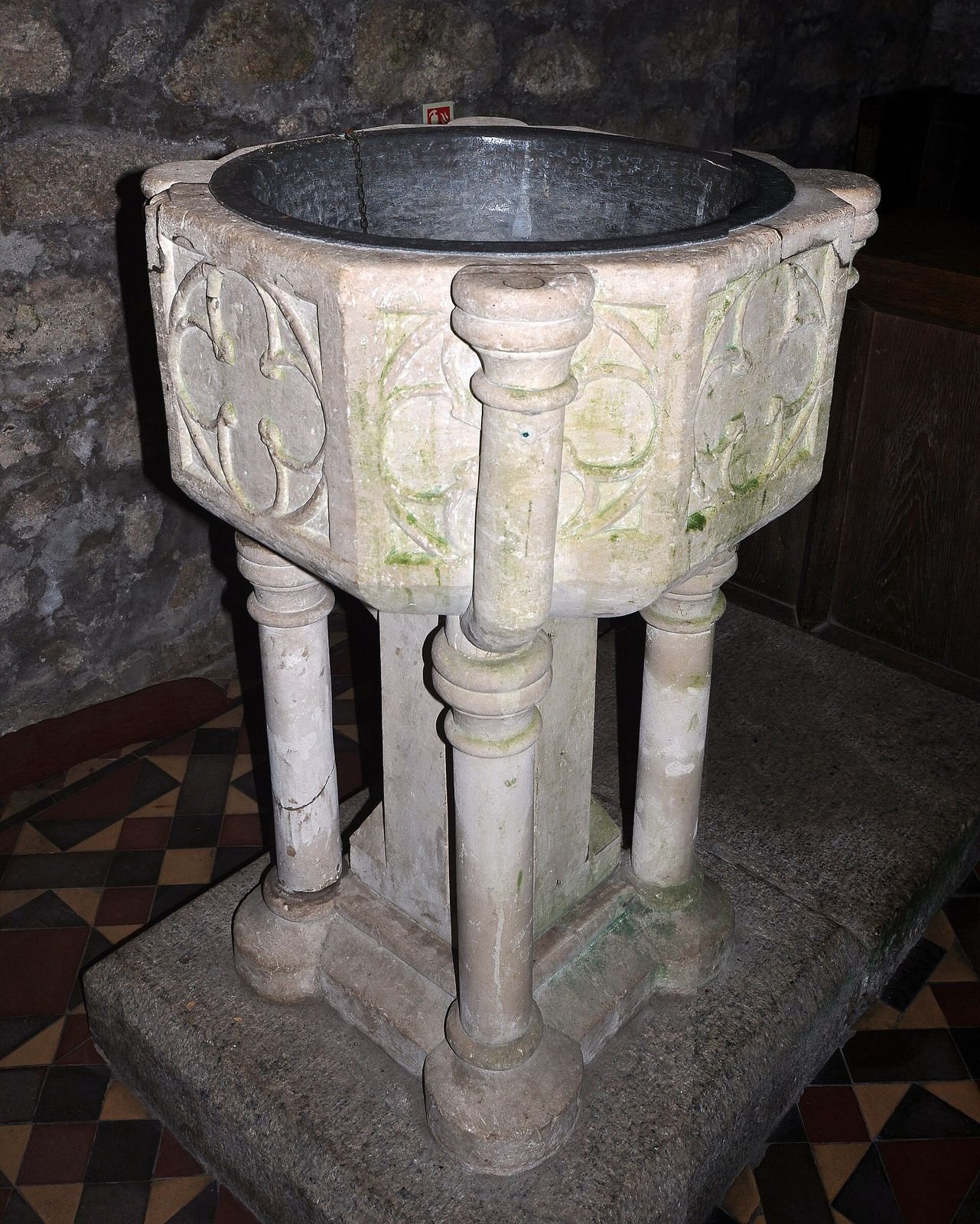
An octagonal font, the basin used for baptism, may date to the 13th century. One of the church’s two surviving bench-ends, panels at the ends of church benches, shows the Mermaid of Zennor admiring herself in a mirror. The associated Mermaid Chair has fish carved into its seat and is believed to be at least 600 years old.
Tower bells
The tower holds six bells tuned to the key of G. Four were cast by Gillett & Johnston in 1926 to accompany two much older bells. A full restoration in 2019 returned the bells to change-ringing, in which bells sound in changing sequences rather than as a fixed tune.
Churchyard and memorial
A small, circular graveyard surrounds the church, with boundaries that have existed since the Bronze Age and a long history of parish burials. It includes the graves of artists Bryan Wynter and Patrick Heron, who lived in Zennor and drew inspiration from its surrounding landscape. A memorial to John Davy, identified as the last person whose native language was Cornish, is fixed to the exterior wall west of the south porch. The memorial dates to 1891.