St Peter’s Church, Nottingham: A Medieval Anglican Parish Church
Site at a Glance
- Popularity
- Medium
- Country
- United Kingdom
- Primary era
- Medieval
- Eras represented
- Medieval, Early Modern, Modern
- Civilizations
- British, English
- Site type
- Religious
- Remains
- Church
On this page9 sections
History
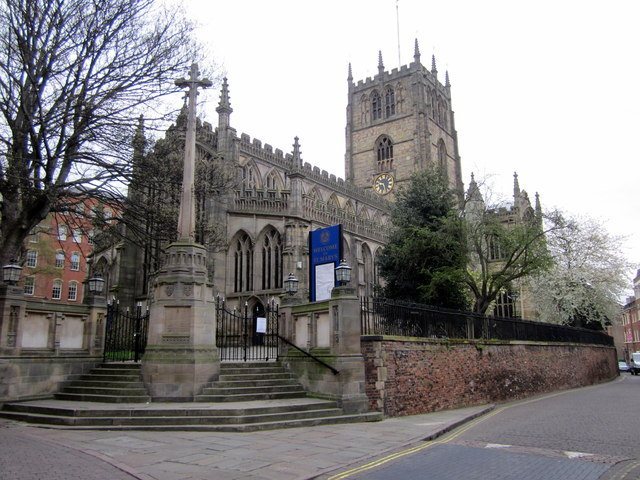
St Peter’s Church, Nottingham, is an Anglican parish church in central Nottingham, United Kingdom, with origins around 1100 and Norman, Gothic, and Victorian features. It is one of the city’s three medieval parish churches, alongside St Mary’s and St Nicholas.
Early church and expansion
A chapel or church stood on the site around 1100, but fire destroyed it. A replacement was built around 1180, and the church grew through successive stages during the fourteenth century and later.
Parish union and administration
The church’s formal title, The Church of St Peter with St James, followed the 1933 union with the parish of St James’s Church on Standard Hill. Founded in 1807, St James’s was demolished a few years after the union, and some of its monuments were transferred to St Peter’s. St Peter’s now belongs to the Church of England parish of All Saints’, St Mary’s and St Peter’s, within the Diocese of Southwell and Nottingham in the Province of York. Its churchmanship is Broad Church, an inclusive tradition within Anglicanism. The church has Grade I listed status, a designation for exceptional architectural or historic interest.
Organ and choral tradition
An organ installed by Lincoln in 1812 was the first introduced after the Commonwealth, England’s republican government from 1649 to 1660. Lloyd and Dudgeon enlarged it in 1863; E. Wragg & Son, Henry Willis & Sons, and Hill, Norman & Beard later altered or restored the instrument. In 1952, much of the organ from St Columba on Mansfield Road was incorporated into it.
Parish records also reflect a long-standing musical life. An organist received 5 shillings in 1481–82. At the request of most parishioners, Robert Dowse’s salary was increased to 6 shillings and 11 pence for 1516/17–1517/18. William Bradley received a guinea in 1785 to teach boys to sing, while an organist was paid £12 12 shillings in 1816, although the church did not meet that expense. Vincent Trivett served as organist from 1906 to 1947, followed by Kendrick Partington from 1957 to 1994; both helped develop the church’s choral tradition.
The church clock
In 1552, commissioners acting for Edward VI, king of England from 1547 to 1553, handed a clock to the parish priest, Nicholas Cooke, for the steeple. A clock may already have been there in the fifteenth century. The earliest church record of its upkeep dates to 1577, when Thomas Lockwood was paid 2 shillings to maintain it. In 1723–24, the sexton received £1 for ringing a bell at four o’clock.
In 1846, the parish considered replacing the clock. While helping remove its old face in October, Richard Ward, an employee of Taylor and Garrett, was pulled along when the face gave way and a rope attached to it dragged him. A new clock by Reuben Bosworth was installed in 1847. It had four dials, each 7 feet (2.1 metres) across, and was described at the time as Nottingham’s largest. Its pendulum was 10 feet 4 inches (3.15 metres) long, with a 60-pound (27-kilogram) bob. After weeks of testing, its hands were connected to the mechanism on 7 April. A hurricane broke one of its minute hands on Christmas Eve 1852.
Henry Smith gave the church new cast-iron dials in 1872, also 7 feet across. A clock installed by G. & F. Cope followed in 1881. It had a Denison remontoire, a mechanism that periodically supplied the timekeeping mechanism with a steadier force, as well as wire-rope lines and an hour-striking hammer on the E bell. Smiths of Derby replaced it with an electrically driven clock in 1965.
Remains
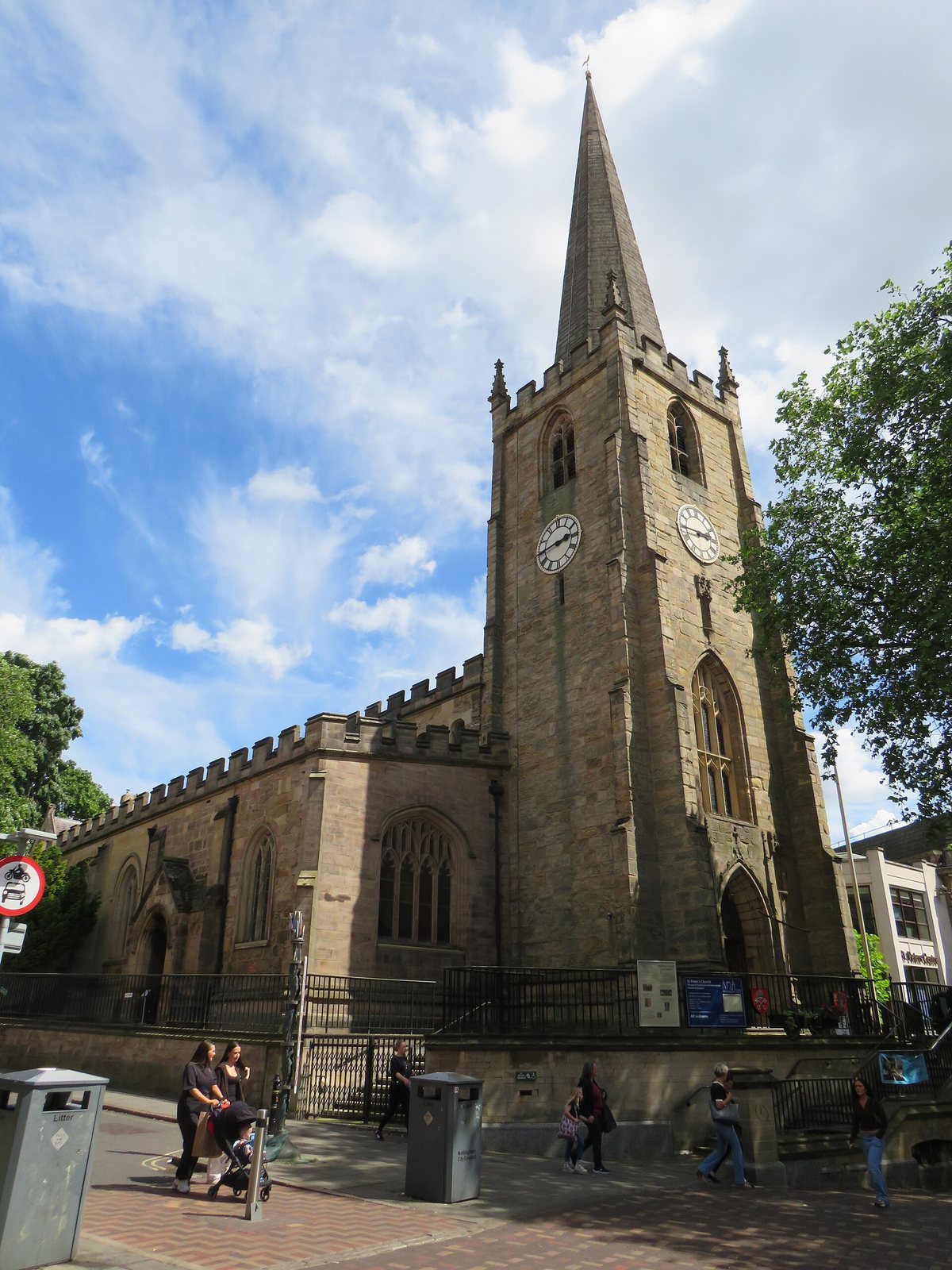
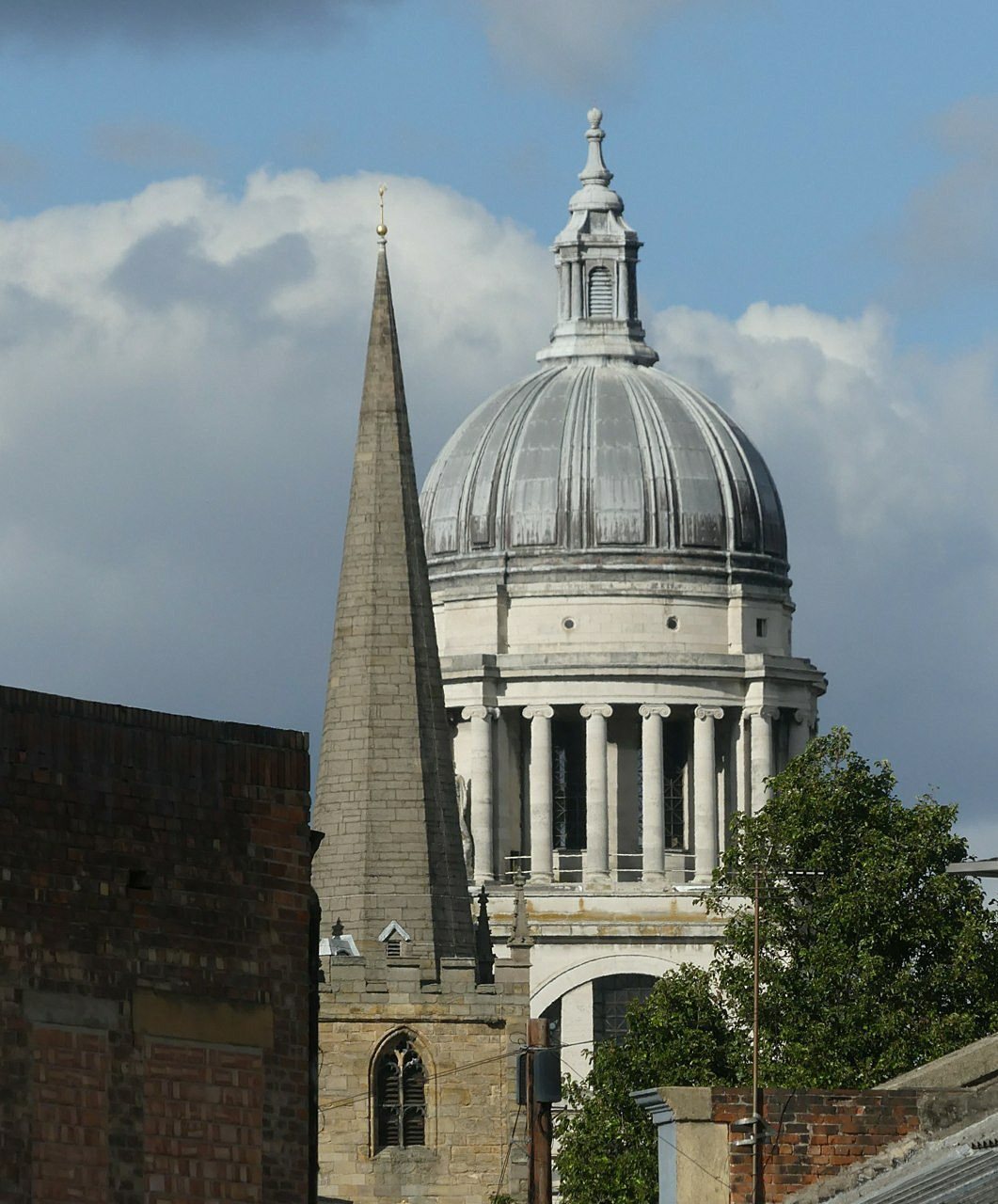
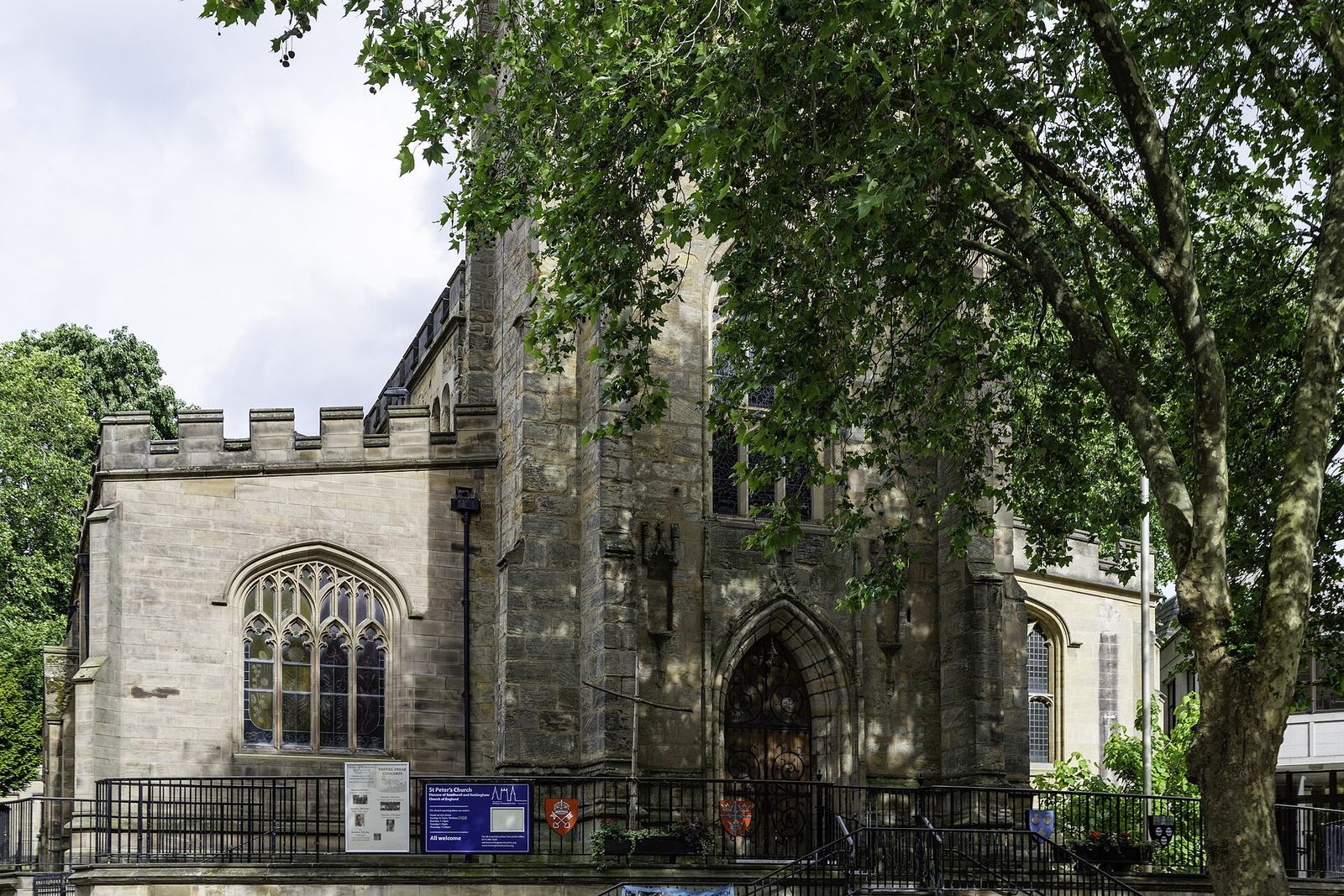
The church is a multi-period building that combines Norman, Gothic, and Victorian work. Its square tower and spire rise to 46 metres (150 feet).
Exterior and medieval fabric
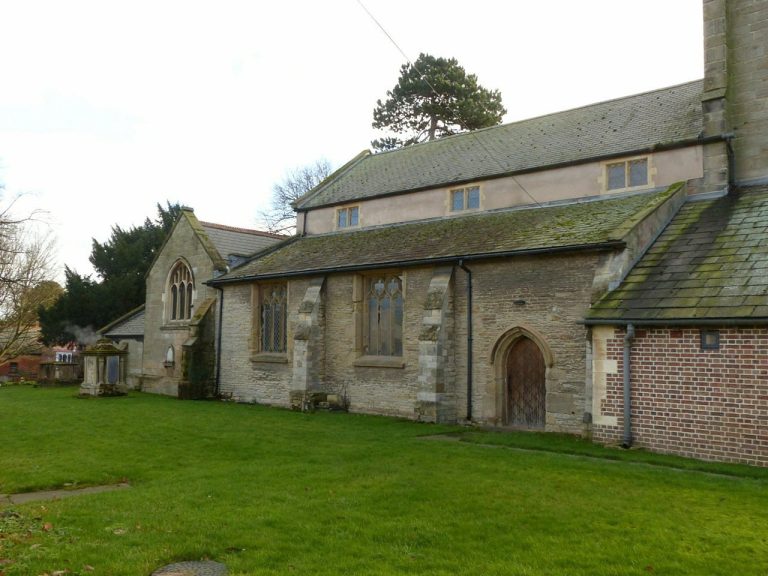
The tower and spire date to around 1340, while the north transept, the crosswise part of the church, was built around 1360. A clerestory, a high row of windows, dates to around 1480. Together these features form part of the church’s medieval fabric.
Interior, glass, and monuments
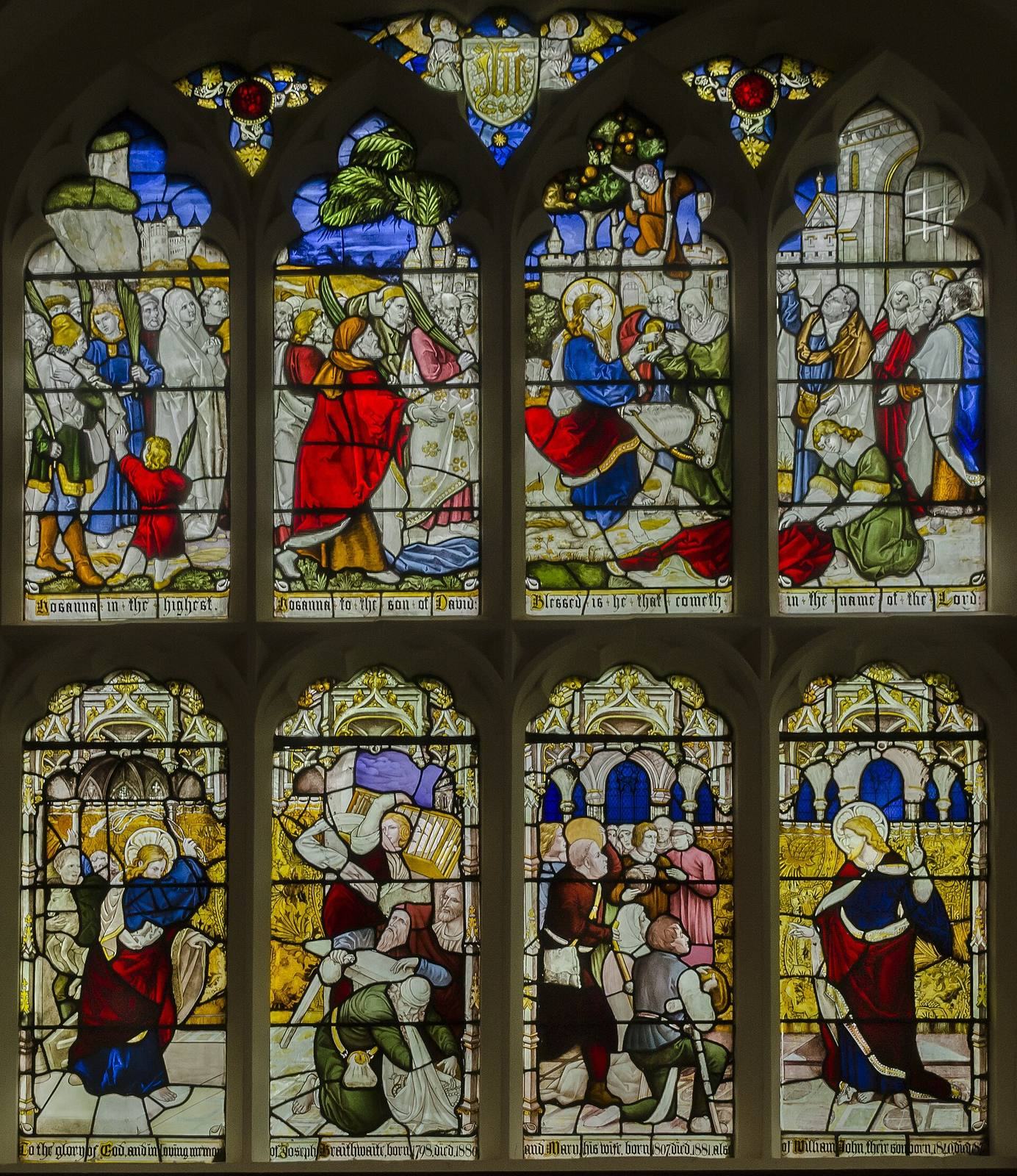
The interior retains thirteenth-century vaulting and arcades, alongside a Victorian chancel screen that separates the chancel from the rest of the church. Stained glass includes a window made by the English firm Burlison & Grylls in 1881. Monuments from the demolished St James’s Church are also preserved here.
Organ
The organ installed in 2010 stands in the church’s north-east corner and incorporates an eighteenth-century case. It combines new and reused sets of pipes with digital simulations for most of its sounds. Its design serves recitals, congregational singing, and accompaniment of the choir.