Dabous Giraffes: Neolithic Rock Carvings in Niger
Site at a Glance
- Popularity
- High
- Country
- Niger
- Primary era
- Stone Age
- Eras represented
- Stone Age
- Civilizations
- Unclassified
- Site type
- Civic
- Remains
- Rock Art
On this page7 sections
History
Neolithic carvings
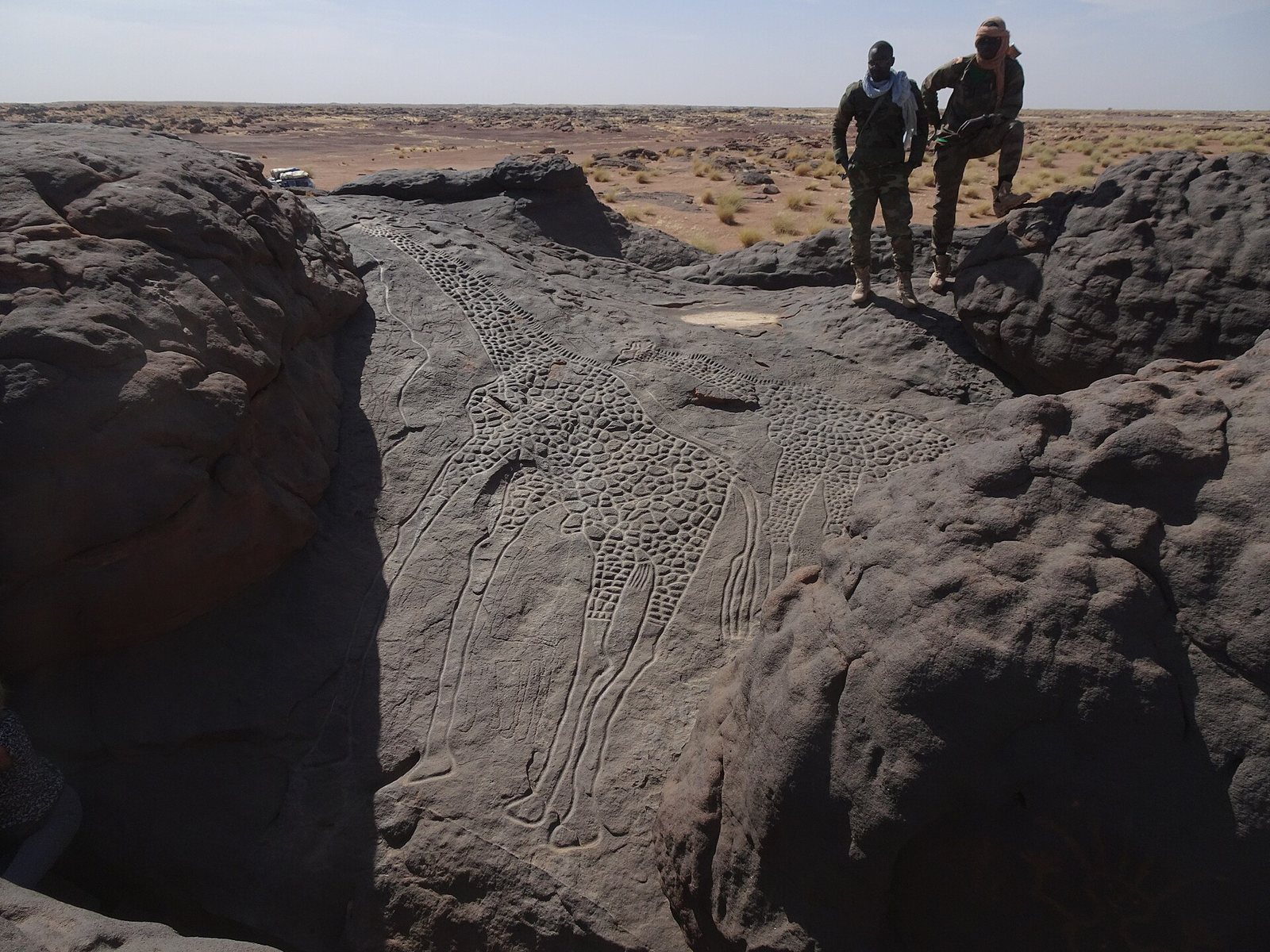
The Dabous Giraffes are Neolithic rock carvings on Dabous Rock in the Ténéré Desert of north-central Niger, made by unknown artists roughly 6000–4000 BCE. The Neolithic was a prehistoric period associated with farming and settled communities. The carvings belong to the African Humid Period, when this part of the Sahara was less arid and the landscape supported a vast savanna.
Recording and preservation
French archaeologist Christian Dupuy first recorded the carvings in 1987. David Coulson documented them during a photographic expedition in 1997. Around 2000, French archaeologist Jean Clottes raised concern about human-caused deterioration and the need to protect the rock art. A mold was made, and an aluminum cast of it is displayed at Agadez Airport.
A proposed interpretation
In 2022, paleontologist Nikos Solounias, a scientist who studies fossils and extinct life, proposed that these giraffes and some carvings elsewhere might depict a previously unknown extinct species. He named the proposed species Giraffa sahara, pointing to apparent differences between the carvings’ spots and the markings of living giraffes.
Remains
Dabous Rock and the principal carvings
The carvings are cut into a sandstone outcrop in the first foothills on the western side of the Aïr Mountains, about 110 kilometres north of Agadez. The principal group is about six metres high and shows two detailed giraffes, a male and a smaller female. These are the largest known animal rock carvings in the world.
Surrounding rock art and landscape
Hundreds of smaller carvings occur on nearby rocks. Across the surrounding rocks, 828 images have been found, including 704 animal images of cattle, giraffes, ostriches, antelopes, lions, rhinoceroses and camels. The group also includes 61 human figures and 17 inscriptions in Tifinagh, a script used to write Amazigh (Berber) languages. Petrified wood has been found in the area.