St. Michael’s Convent: A Cistercian Nunnery in Tallinn
Site at a Glance
- Popularity
- Medium
- Country
- Estonia
- Primary era
- Medieval
- Eras represented
- Medieval, Early Modern
- Civilizations
- Crusader, Danish, Livonian Order, Russian
- Site type
- Religious
- Remains
- Monastery
On this page6 sections
History
St. Michael’s Convent was a Cistercian nunnery in Tallinn, Estonia, founded in 1249. The Cistercians were a Catholic monastic order, and the convent’s surviving complex later included Gothic buildings. Its foundation has sometimes been linked to a decree by Eric IV, king of Denmark from 1241 to 1250. A chapel dedicated to St. Wenceslas, associated with a battle in 1219, may have stood there earlier.
Growth and Reformation
The convent began outside Tallinn’s walls. From 1310, as the town expanded, it was incorporated into the settlement and eventually came within the protection of its fortifications. At its height, its holdings included several nearby villages and the manors of Nabala and Kuimetsa.
In 1543, the nuns adopted Lutheranism, a branch of Protestant Christianity, allowing the institution to avoid immediate closure. It went on to serve as a Protestant charitable center and ran a school for girls. The last head of the convent, Kate Kudling, died in 1629. Its property passed into secular control, and the convent ceased to exist.
Closure and Church Reuse
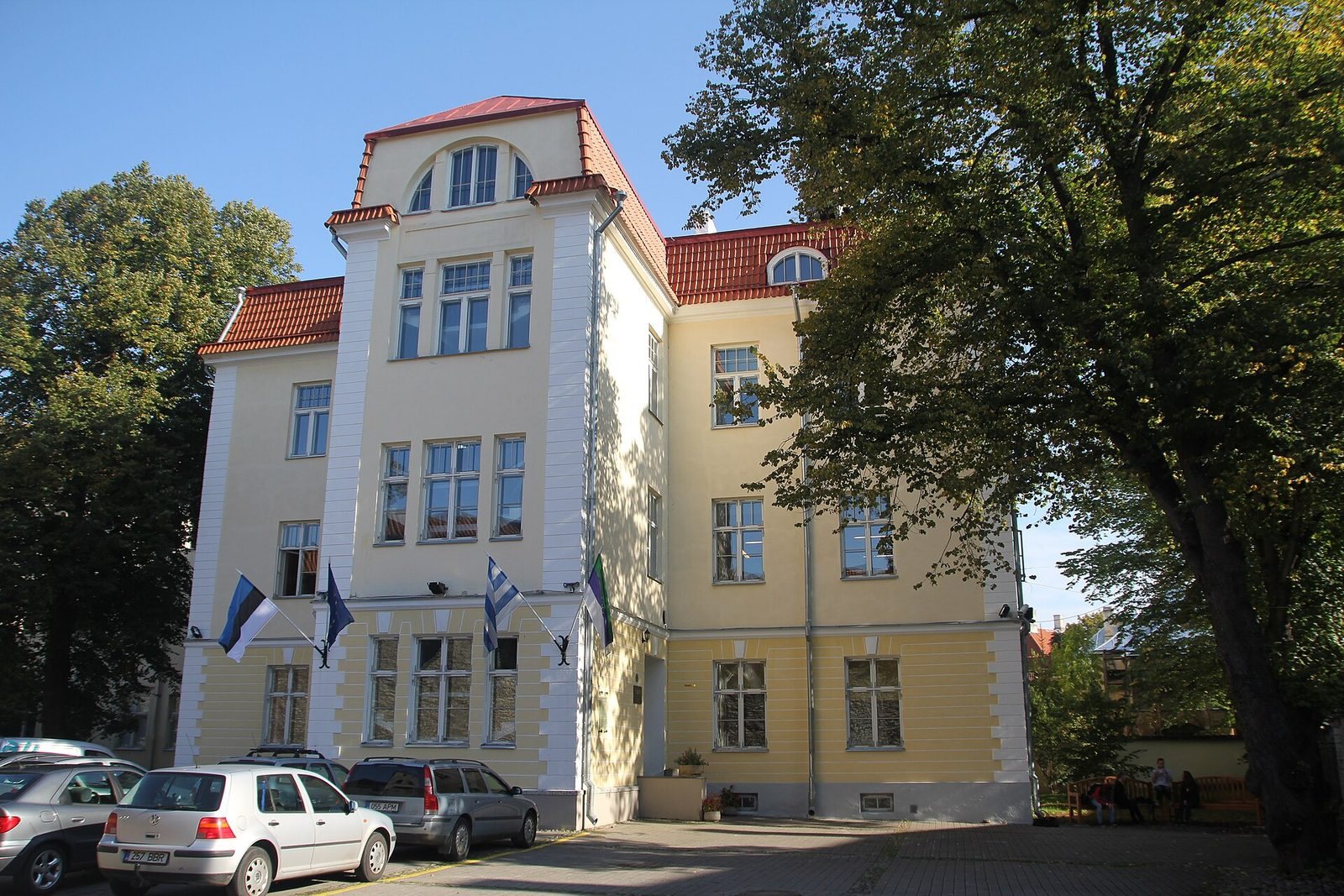
On 16 February 1631, Tallinn’s city council and the Estonian Knighthood, a body representing the Baltic German nobility in Estonia, agreed to give the former convent property to a school, now Gustav Adolf Gymnasium. The convent church was allocated to the Swedish garrison, the military force stationed in Tallinn.
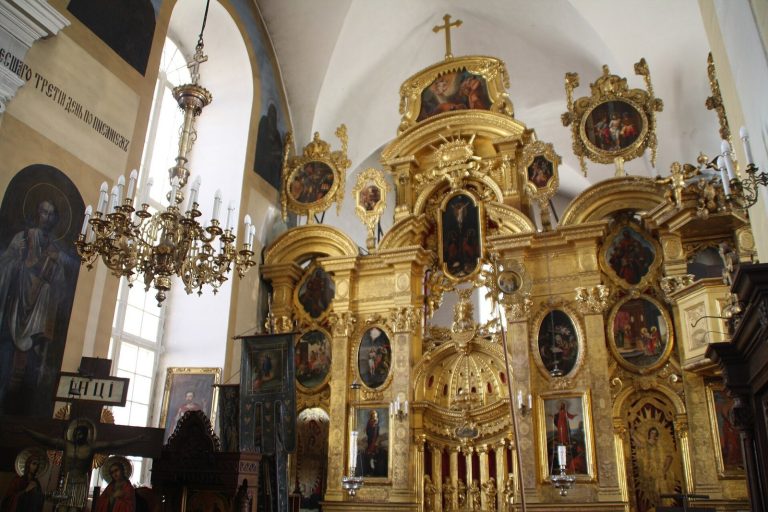
In 1716, at the direction of Russian statesman and military leader Alexander Menshikov, the church became a military Orthodox church dedicated to the Transfiguration, a central event in Christian tradition. It was rebuilt several times and is now under the jurisdiction of the Estonian Apostolic Orthodox Church.
Remains
Convent Buildings
The convent stood in the area of present-day Suur-Kloostri Street. Its brick and stone buildings formed a quadrangle around an inner courtyard, in a Gothic style, and had been erected by 1300 at the latest. Spaces in the north and east wings are the oldest surviving parts. They retain features of the original complex, including round columns and decorated column tops with stylized natural forms.
Church of St. Michael
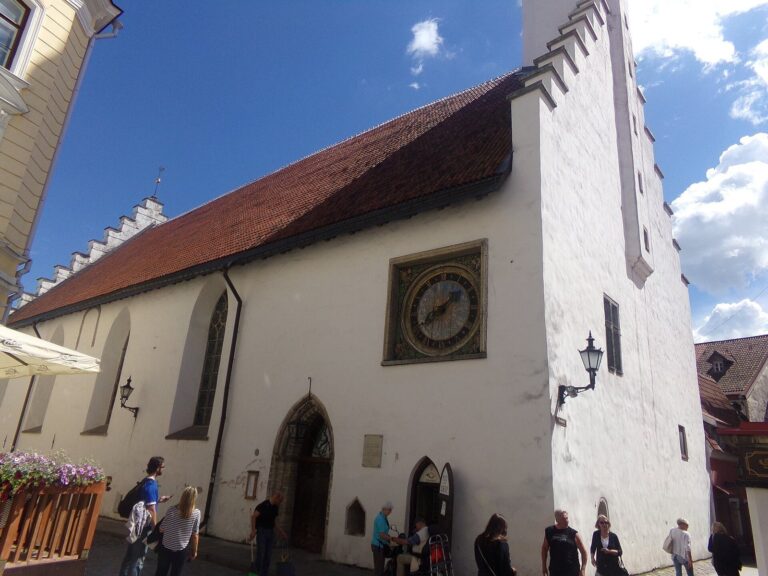
A two-nave church dedicated to St. Michael the Archangel replaced the complex’s south wing in the latter half of the fourteenth century or possibly the early fifteenth century. An octagonal belfry stood on its southwestern side. Repeated rebuilding followed its later conversion to Orthodox worship. The church retains an iconostasis by Ivan Zarudny, an architect and sculptor active in the Russian Empire. An iconostasis is a screen of icons separating the sanctuary from the main body of an Orthodox church.