St Mary’s Church, Stamford: A Church of England Parish Church
Site at a Glance
- Rating
- 4.5
- Popularity
- Medium
- Country
- United Kingdom
- Primary era
- Medieval
- Eras represented
- Medieval, Modern
- Civilizations
- British, English
- Site type
- Religious
- Remains
- Church
On this page12 sections
History
Foundation and medieval development
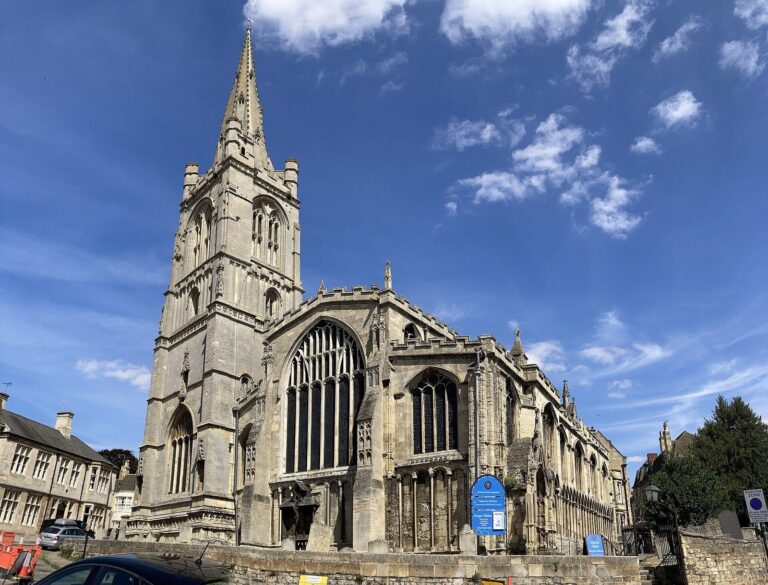
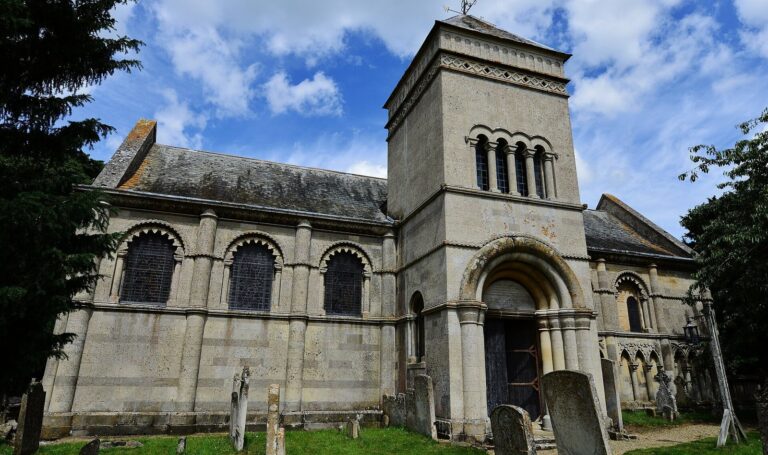
St Mary’s Church, Stamford, is a Church of England parish in Lincolnshire, United Kingdom, founded in 1101. The church was built in the 12th century, followed by its tower in the 13th century and spire in the 14th. The Corpus Christi Chapel is connected with an educational foundation that later became Stamford School. Its name refers to the Body of Christ in the Christian Eucharist.
The parish is known as Stamford St Mary and St Michael and belongs to the Diocese of Lincoln. Its worship follows the Anglo-Catholic tradition, which emphasizes forms of worship and belief associated with the historic Catholic Church. Because the parish rejects the ordination of women, it receives episcopal supervision from the Bishop of Richborough rather than its usual diocesan bishop.
Repairs and later changes
In 1741, William Stukeley, a scholar of the past, urged repairs to the spire to prevent its collapse. Charles Haynes carried out work in 1788, strengthening it with iron straps. Further reinforcement followed in 1913, using tie bars inside the structure.
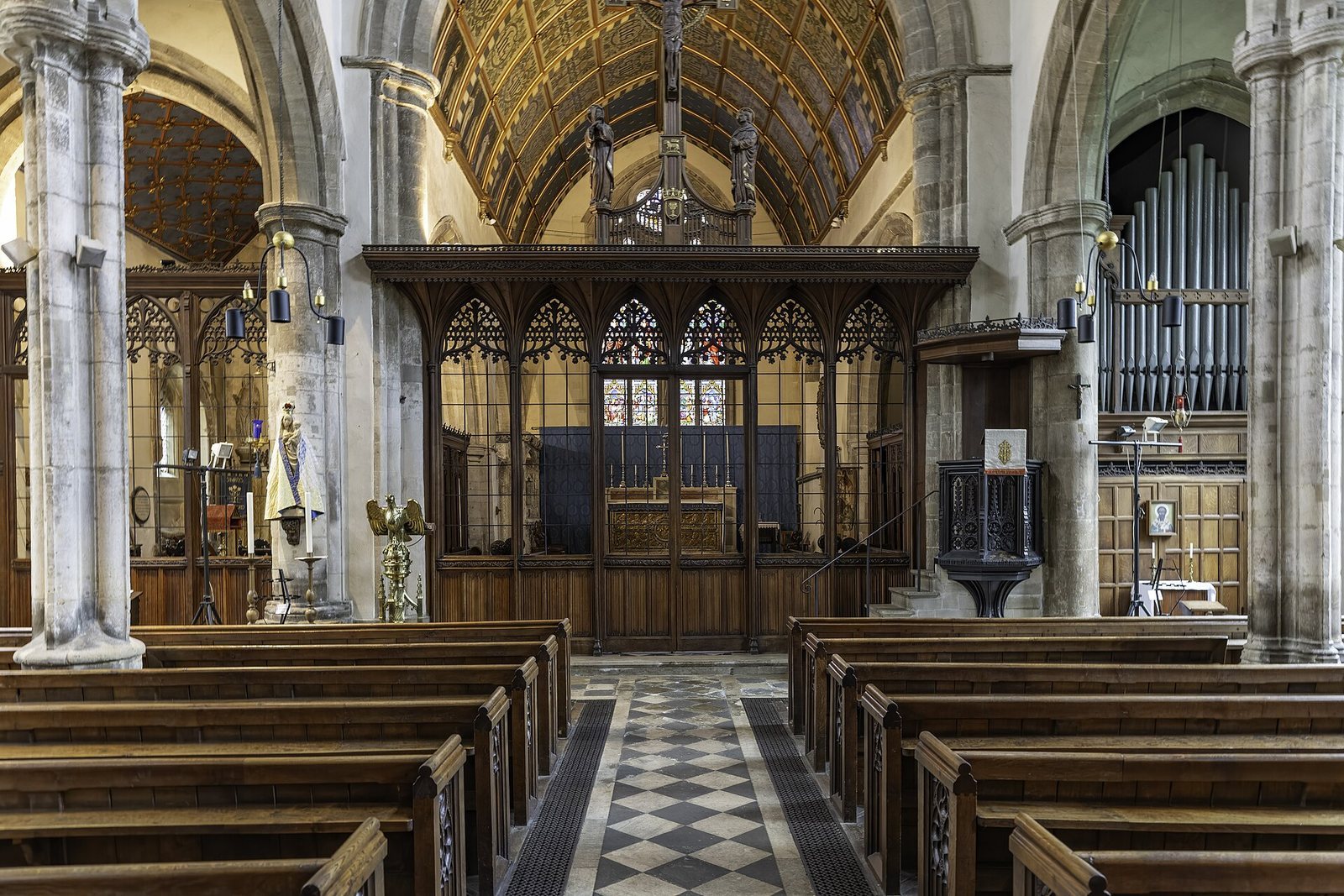
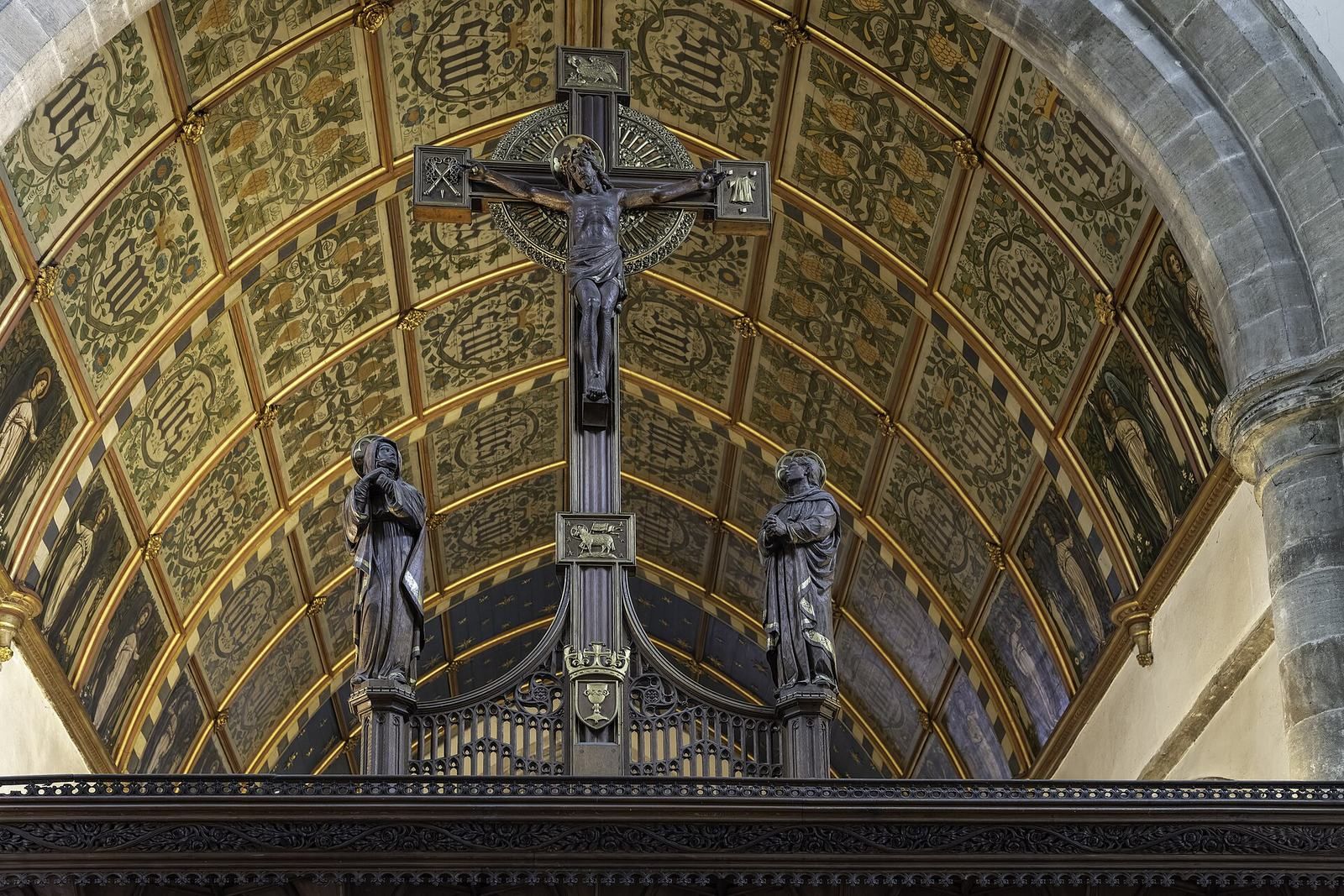
A vestry was added in 1880. In 1890, work designed by J. D. Sedding included screens, a new altar, and decoration for the chancel and sanctuary ceilings. The church’s commemorations of the world wars also shaped its interior: a rood, meaning a cross or crucifix, was placed above the chancel screen in 1921 in memory of parish men who died in the First World War. A screen was fitted to the tower arch in 1948 in memory of those who served in the Second World War.
Stained-glass artist Christopher Whall received his first independent commission for the Lady Chapel’s east window in 1891, from Sedding. A second window, made jointly by Whall and Louis Davis, followed in 1893. The organ, made by Gray in 1829, was moved from a west-end gallery to the south aisle in 1852. In 1984, Richard Bower overhauled it, added electro-pneumatic action, which uses electrical controls and air-powered mechanisms to operate the pipes, altered its tone, and turned the great division through 90 degrees. A clock made by Potts of Leeds was started by William Cecil, 3rd Marquess of Exeter, on 8 November 1890.
Remains
Setting and overall form
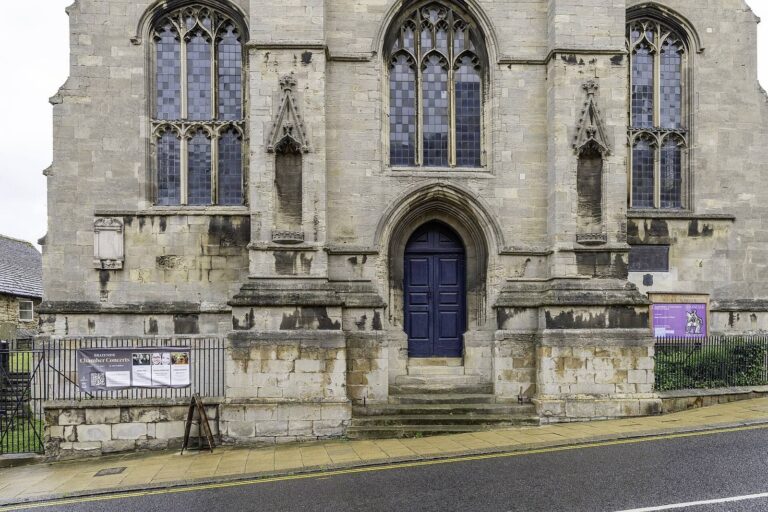
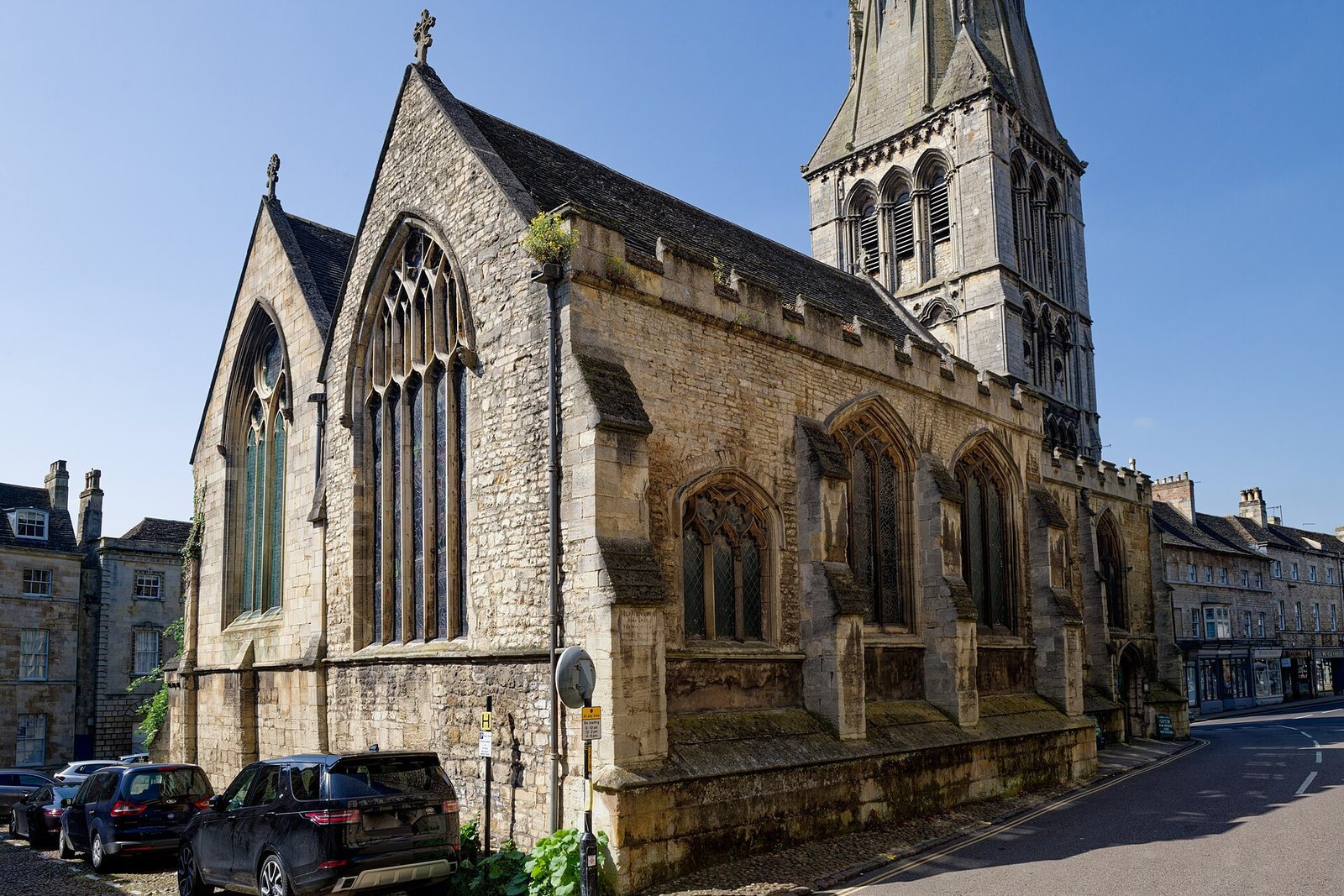
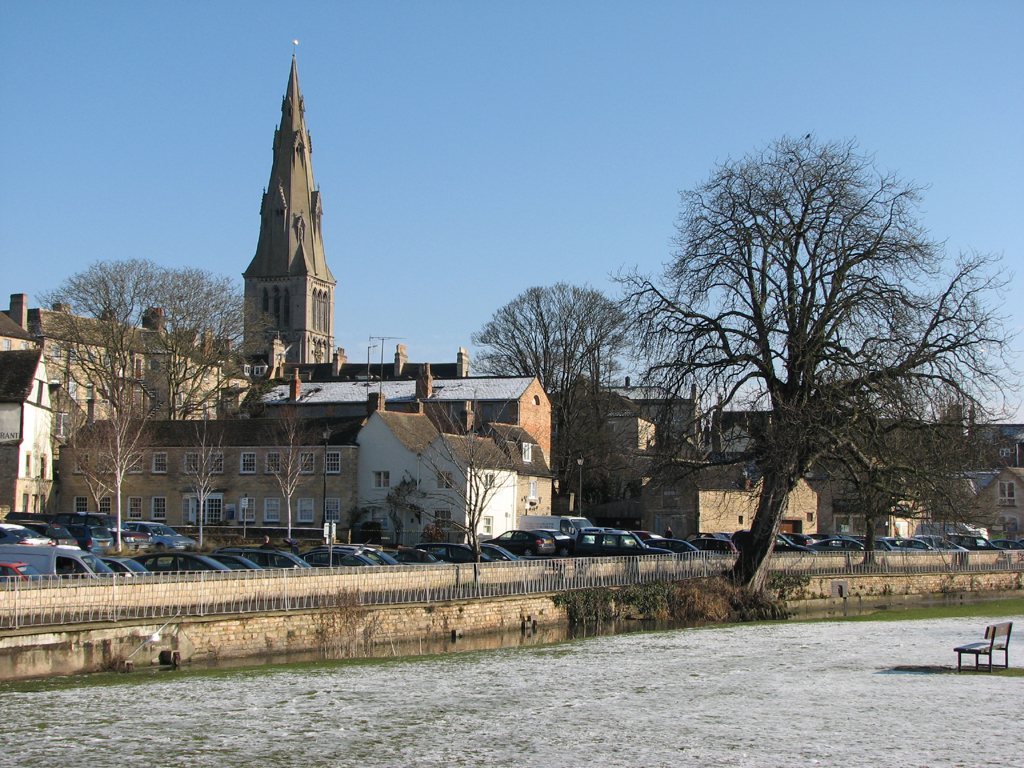
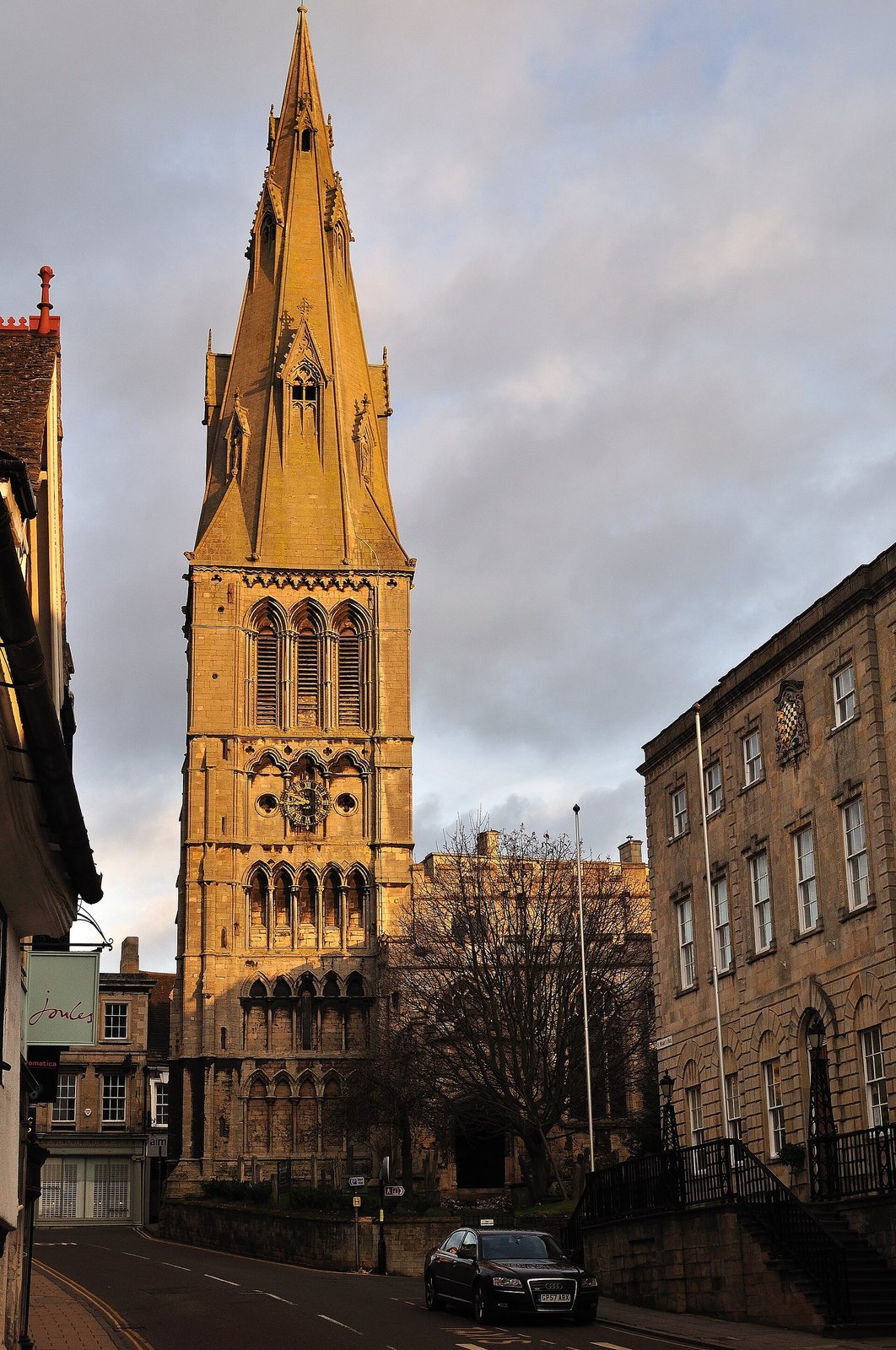
The church stands on St Mary’s Hill, which takes its name from the building. The hill forms part of the old Great North Road and descends to the river crossing opposite The George Hotel. The church brings together medieval sections and later additions. Its tower rises 78 feet (24 metres), with a 90-foot (27-metre) spire above it, giving them a combined height of 168 feet (51 metres).
Corpus Christi Chapel
Also called the North Chapel, this is the church’s earliest part. Most of it dates to the 14th century, while part of the east wall belongs to a separate phase of 13th-century work. Its decorated medieval wagon vault has a curved profile resembling the roof of a covered wagon. Ceilings of this kind are uncommon in the East Midlands compared with the West Country, and few survive in the region.
Tower and spire
The tower and spire form the church’s tall upper structure. The spire was strengthened with iron straps and later internal tie bars as part of repairs described above.
Interior fittings and memorials
Chancel and memorials
The chancel and sanctuary have decorated ceilings, with screens and an altar designed by J. D. Sedding. The rood stands above the chancel screen. A plaque south of the pulpit names the parish men who died in the First World War, while the Second World War memorial screen is fitted to the tower arch.
Lady Chapel windows
The east window shows Adam and Eve in its outer main panels. In the central panel, Gabriel and St Michael flank the Virgin and Child. The upper framework contains scenes from the Mysteries of the Rosary, events from the lives of Jesus and Mary contemplated in the Catholic devotion, with the Coronation of the Virgin at the top. Whall and one assistant made the window in a cowshed at Stonebridge near Dorking, which Whall used as a workshop. To prepare the figure of St Michael, they made papier-mache armour for the assistant to wear. Britten & Gilson fired and glazed the glass. The window’s style draws on the Pre-Raphaelites while also having harder-edged, Impressionist qualities. A further Lady Chapel window is on the north side.
Organ
The organ stands at the end of the south aisle, on the site of the former Chapel of St Nicholas. Its great division now directs sound into the nave as well as across the chancel. Before its alteration, it spoke across the chancel, an arrangement common in churches influenced by the 19th-century Oxford Movement, which sought to restore Catholic traditions within Anglican worship.
Clock
The church clock has quarter chimes and strikes the hours.