All Saints’ Church, Stamford: A Medieval Parish Church in Lincolnshire
Site at a Glance
- Rating
- 4.5
- Popularity
- Medium
- Country
- United Kingdom
- Primary era
- Medieval
- Eras represented
- Medieval, Modern
- Civilizations
- British, English
- Site type
- Religious
- Remains
- Church
On this page9 sections
History
All Saints’ Church is a Church of England parish church in Stamford, Lincolnshire, United Kingdom. The present building dates chiefly from the early 13th century.
Early church and medieval rebuilding
A central church at Stamford is mentioned in the Domesday Book, the 11th-century survey of English landholding and resources. None of that church’s fabric survives. The present building developed in the medieval period, with most of its construction dating to the 13th century.
Fifteenth-century additions and restoration
The Browne family funded extensive additions in the 15th century. John Browne, a merchant of the Staple of Calais, an English institution for the wool trade, paid for work at the church. His son William, who served as mayor of the Staple, funded its steeple.
The church suffered severe damage in 1461 during the Wars of the Roses, a series of dynastic conflicts in 15th-century England. Restoration began in 1470, financed by a local family of wool merchants.
Later history and status
William Stukeley, an English antiquary and archaeologist, served as vicar from 1730 to 1747. The church belongs to the Diocese of Lincoln and follows the Broad Church tradition, which accommodates a wide range of Anglican theological views. Its parish, Stamford All Saints with St John the Baptist, also includes St John the Baptist’s Church, declared redundant in 2003, meaning it was no longer required for regular worship. All Saints’ has been a Grade I listed building since 22 May 1954, a category for buildings of exceptional interest in England.
Remains
Medieval fabric
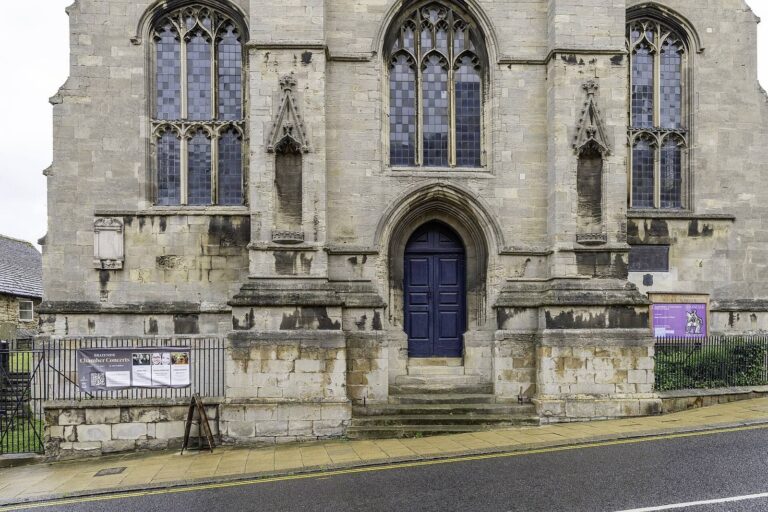
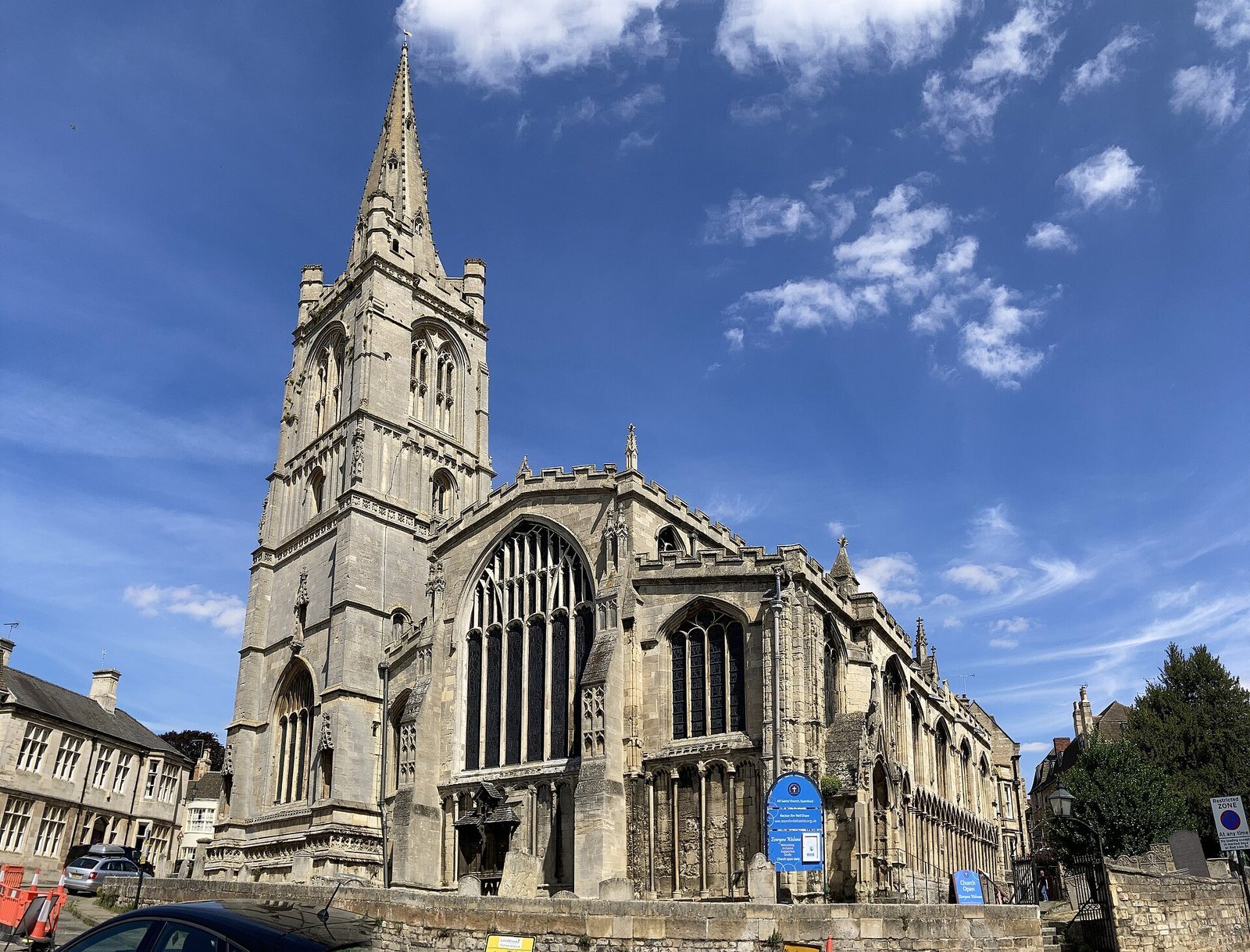
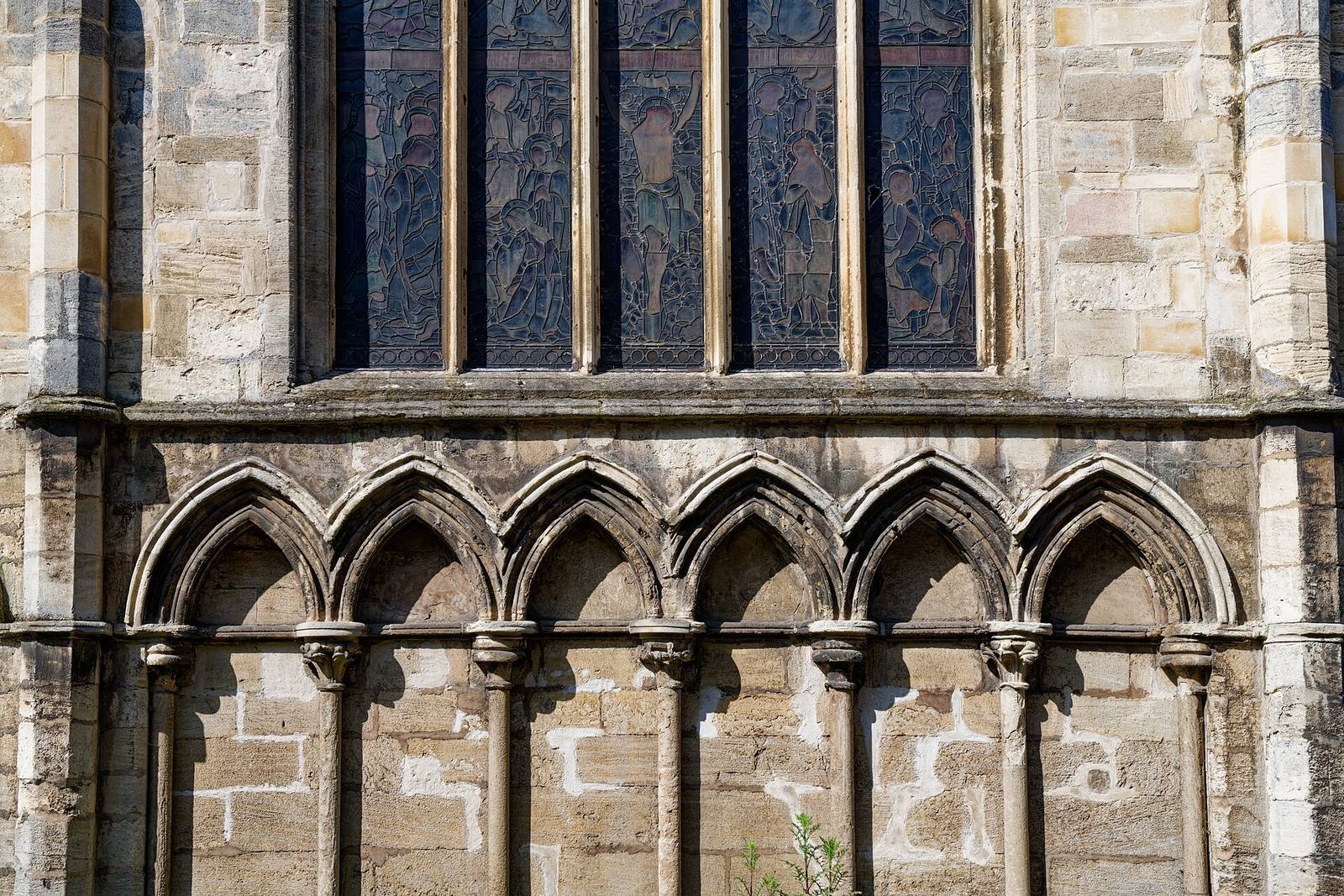
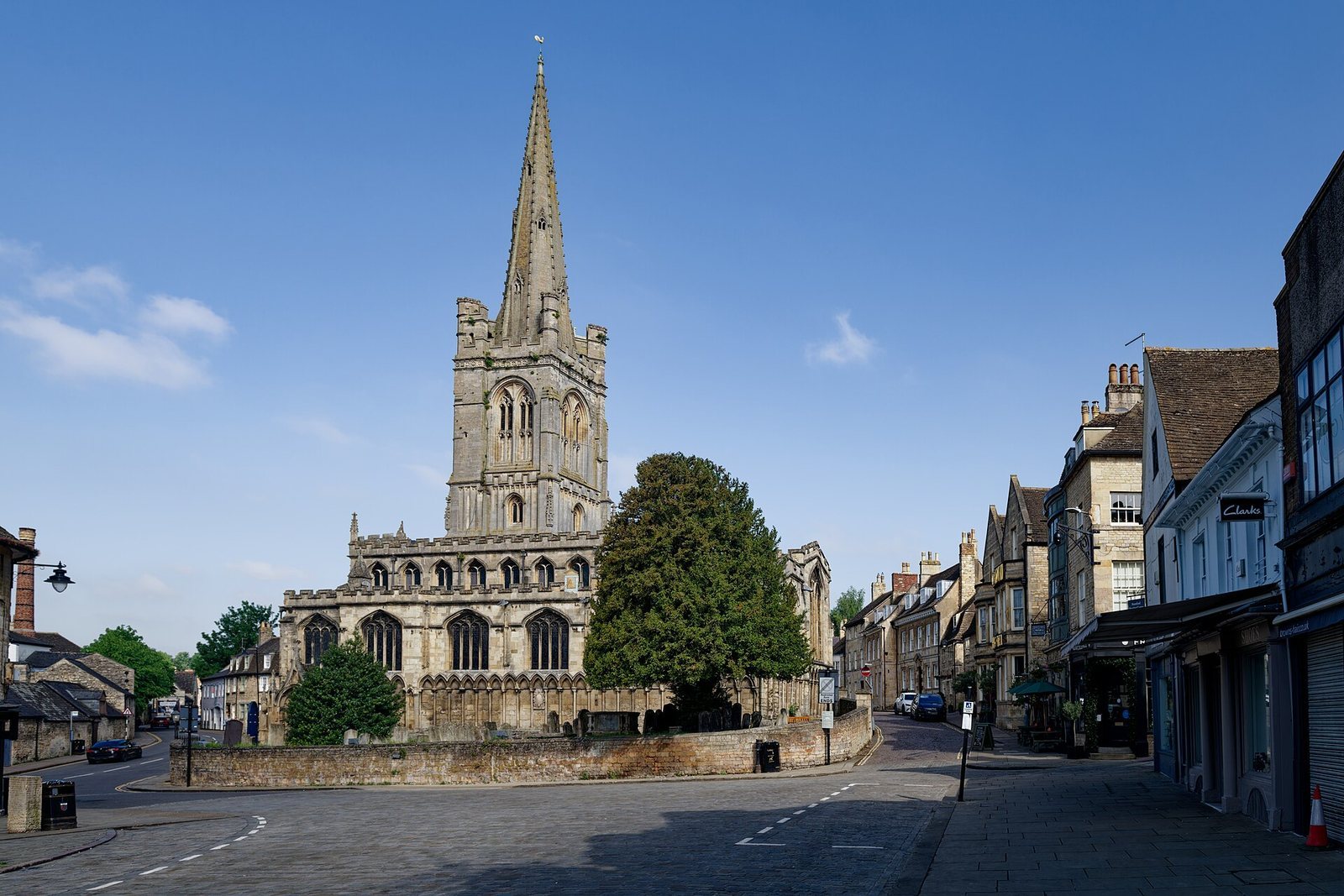
All Saints’ stands on the north side of Red Lion Square. Most of its fabric is 13th-century, alongside a small amount of surviving 12th-century stonework. The exterior features blind arcading, decorative arches set against a wall without openings, an unusual treatment for a parish church.
Fifteenth-century features
The 15th-century work includes ornamental battlements with inventive detailing and the steeple. Memorial sculptures set into the eastern wall commemorate the local wool-merchants’ family associated with the restoration.
Interior and organ
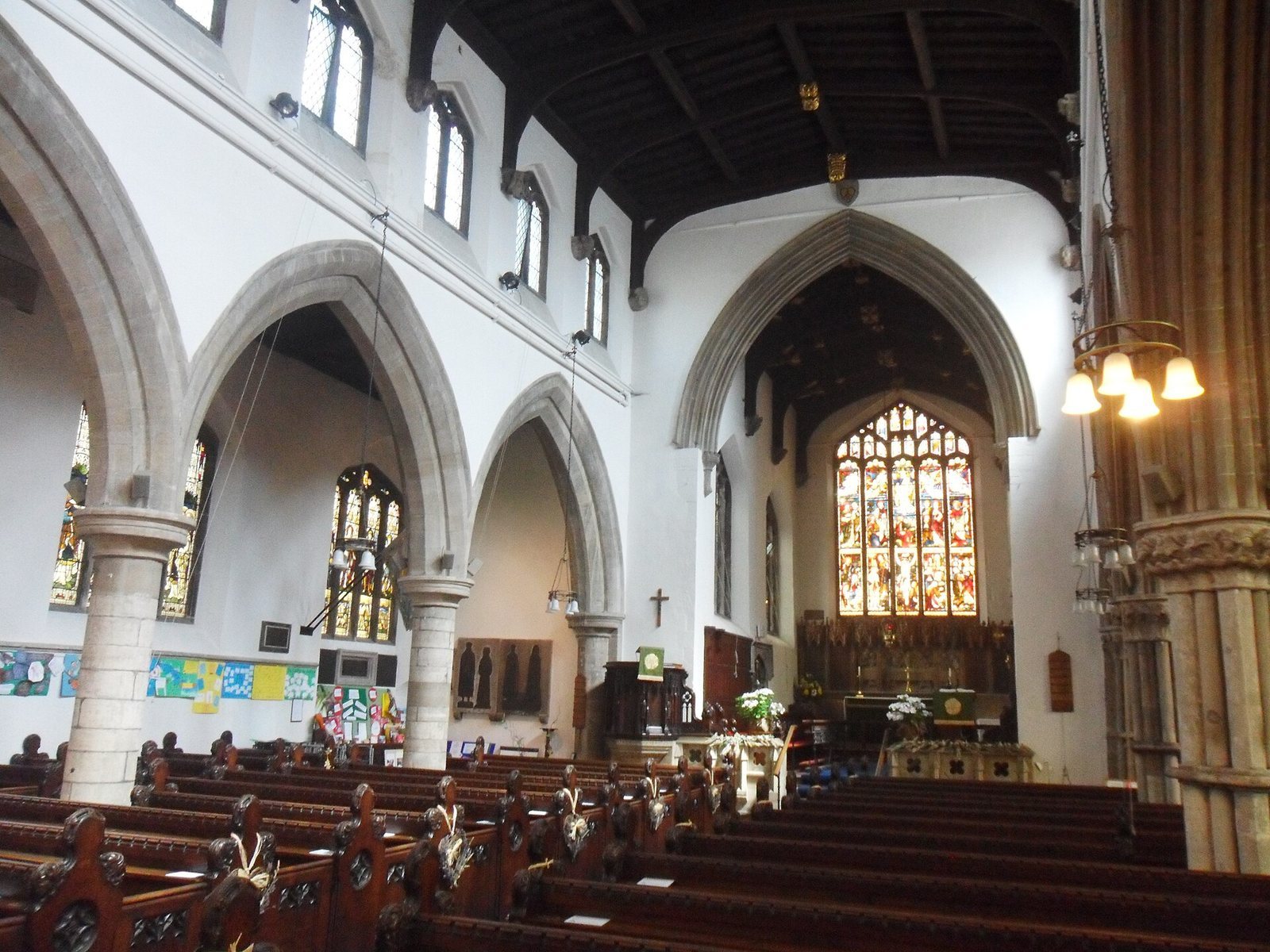
Browne family members are buried inside the church. Its William Hill & Sons organ dates from 1890 and was rebuilt by organ builder James Jepson Binns in 1916.
Church and townscape
Adjacent All Saints’ Place takes its name from the church and forms the base of Barn Hill. Architectural historian Nikolaus Pevsner described it as Stamford’s “visual hub.”