St. Marienthal Abbey: A Cistercian Nunnery in Germany
Site at a Glance
- Rating
- 4.6
- Popularity
- High
- Country
- Germany
- Primary era
- Early Modern
- Eras represented
- Medieval, Early Modern, Modern
- Civilizations
- Electorate of Saxony, Holy Roman Empire, Kingdom of Bohemia, Kingdom of Saxony
- Site type
- Religious
- Remains
- Monastery
On this page10 sections
History
Foundation and medieval development
St. Marienthal Abbey is a Cistercian nunnery on the left bank of the Neisse, south of Ostritz in Germany. Its foundation is traditionally dated to 1234, and it has maintained an unbroken community at its house since then. The Cistercians are a Catholic monastic order that developed from the Benedictine tradition. The abbey’s first church was Gothic and was later rebuilt in Baroque form.
Tradition credits Kunigunde, daughter of Philip of Swabia and wife of Wenceslas I of Bohemia, with founding the abbey. A charter records her gift of Seifersdorf to a convent that already existed, however, rather than establishing that she founded it. The Dohna burgraves, regional lords, may have initiated the house shortly beforehand as a family burial place and a focus for remembrance. The Přemyslids, a Bohemian ruling dynasty, later included the abbey in their policy of rule. It stood near a trade route connecting Prague and Görlitz by way of Zittau.
In 1235 the convent joined the Cistercian Order and was assigned to its Bohemian province. Adelheid I of Dohna, daughter of Burgrave Otto of Dohna, was its first recorded abbess. The abbot of Altzella initially acted as a visitor, an official who inspected or oversaw a monastery for its order. Wenceslas I confirmed the foundation in 1238, while the lay advocate’s office was reserved. An advocate was a secular representative who handled matters for a religious house.
The abbey’s territory was first assigned to the Diocese of Meissen and later came under Prague. A bishop of Prague consecrated the church in the mid-1240s. Wenceslas granted the abbey Jauernick in 1242, and gifts from local nobles, particularly the Dohna family, helped it acquire extensive estates. These included the town and lordship of Ostritz and half the lordship of Rohnau. The nuns managed some properties themselves, while an advocate represented the abbey in economic and, later, legal affairs. In 1238 the convent gained exemption from lower jurisdiction over lesser matters; in 1346 John, King of Bohemia, granted it authority over serious criminal cases. Charles IV granted it brewing rights in 1357. The abbey’s ecclesiastical connection with Prague ended in 1783, when it was placed under the Bautzen cathedral deanery.
War, Reformation and rebuilding
The Hussite Wars, fifteenth-century conflicts associated with the religious movement inspired by Jan Hus, brought destruction to the abbey in 1427. The nuns took refuge at the abbey’s house in Görlitz while their home was restored; they returned after the work was completed in 1452.
During the Reformation, many villages under the abbey’s lordship became Protestant, although the convent remained Catholic. It appointed Protestant pastors in parishes where it held patronage rights, meaning the right to choose a parish’s pastor, and its advocates were also Protestant. Protestant teaching gained support within the convent, and three abbesses were deposed during the sixteenth and seventeenth centuries. The community nevertheless avoided conversion into a secular women’s foundation. Its membership also changed: before the Reformation, the nuns were almost entirely from Upper Lusatian noble families; afterward, townspeople predominated, while abbesses often came from Silesia or Bohemia. Visitation of the convent passed from Altzella to Neuzelle and Bohemian monasteries.
Fires caused further destruction in 1515 and 1542, and a particularly severe blaze struck in 1683. A settlement in 1635 and a constitution in 1831 secured the abbey’s survival, traditional rights and liberties under Saxon rule. Since 1628, an annual Easter horseback procession has travelled from Ostritz to the abbey. In 1707, during the Great Northern War, the nuns again fled, this time to Bohemia.
Community and modern history
In the early nineteenth century, the abbey held land in 21 places and parts of four others; it continued to possess numerous rights to appoint parish pastors in surrounding settlements into the twentieth century. In 1838 it established an orphanage and school, which the authorities forcibly closed in 1938. Henriette Sontag, a singer, was buried in the abbey crypt. Her sister Nina joined the convent in 1846 and was buried in its cemetery in 1879. In 1901, eight nuns from St. Marienthal re-established the dissolved Cistercian abbey of Porta Coeli in Moravia; that abbey later founded Sostrup in Denmark.
During the Second World War, the abbey housed children evacuated for health reasons and, from 1942, a military hospital. The nuns cared for about 400 wounded soldiers. At the war’s end, they refused to leave, preventing the SS from blowing up the abbey buildings; the bridge over the Neisse was destroyed. The 1945 border separated the convent from extensive estates in territory that became part of Poland. The Nazi regime had revoked the abbey’s status as a public-law corporation, which it regained in 1952.
The abbey established the St. Joseph care home for disabled women and girls in 1955 and the Pater-Kolbe-Hof home for disabled men at Schlegel in 1979. In 1984, under socialist rule, 25,000 people joined the convent’s 750th-anniversary observance. The abbey founded an International Meeting Centre in 1992 to encourage reconciliation and understanding in the border region. In 1998 it transferred its brewing licence to Münch-Bräu Eibau, which thereafter made beer under the monastery’s name. After the Pater-Kolbe-Hof was expanded and renovated, women and girls moved there in 1999, and the former St. Joseph facility became a guesthouse.
In 1923 the abbey had joined the Bohemian Cistercian Congregation of the Purest Heart of Mary, an internal association of monasteries. That congregation was dissolved in 2014, after which St. Marienthal came directly under the Abbot General, the head of the Cistercian Order. It joined the Congregation of Saint Gertrude the Great in 2022. In 2010, facing substantial debt, the convent decided to sell about 800 hectares of forest and agricultural land that had belonged to the abbey since its foundation. Flooding of the Neisse that year caused damage estimated at more than €20 million; repairs to the Cross Chapel and Michael Chapel were completed by 2018. Abbess Elisabeth Vaterodt, in office since 2016, resigned and left in February 2025, citing internal conflicts. From 8 February 2025, Petra Articus, formerly abbess of Seligenthal, became administrator for three years.
Remains
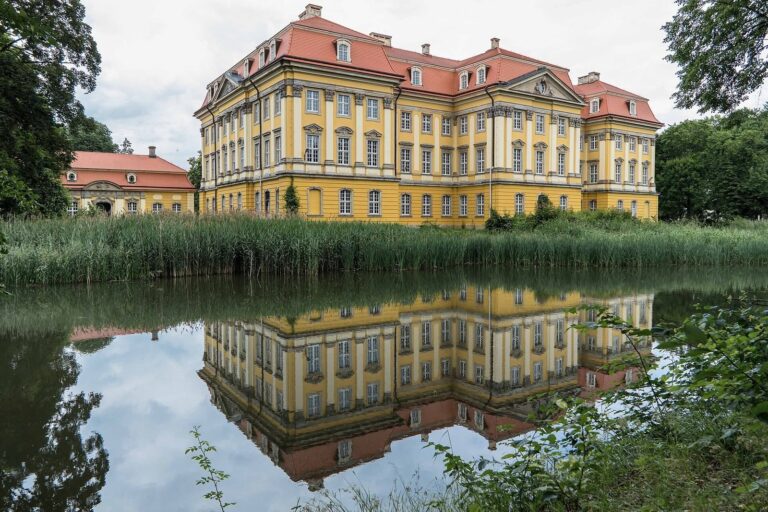
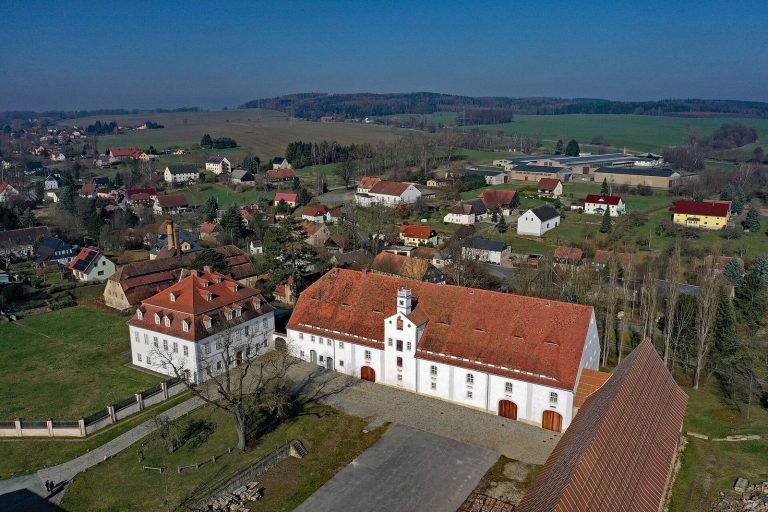
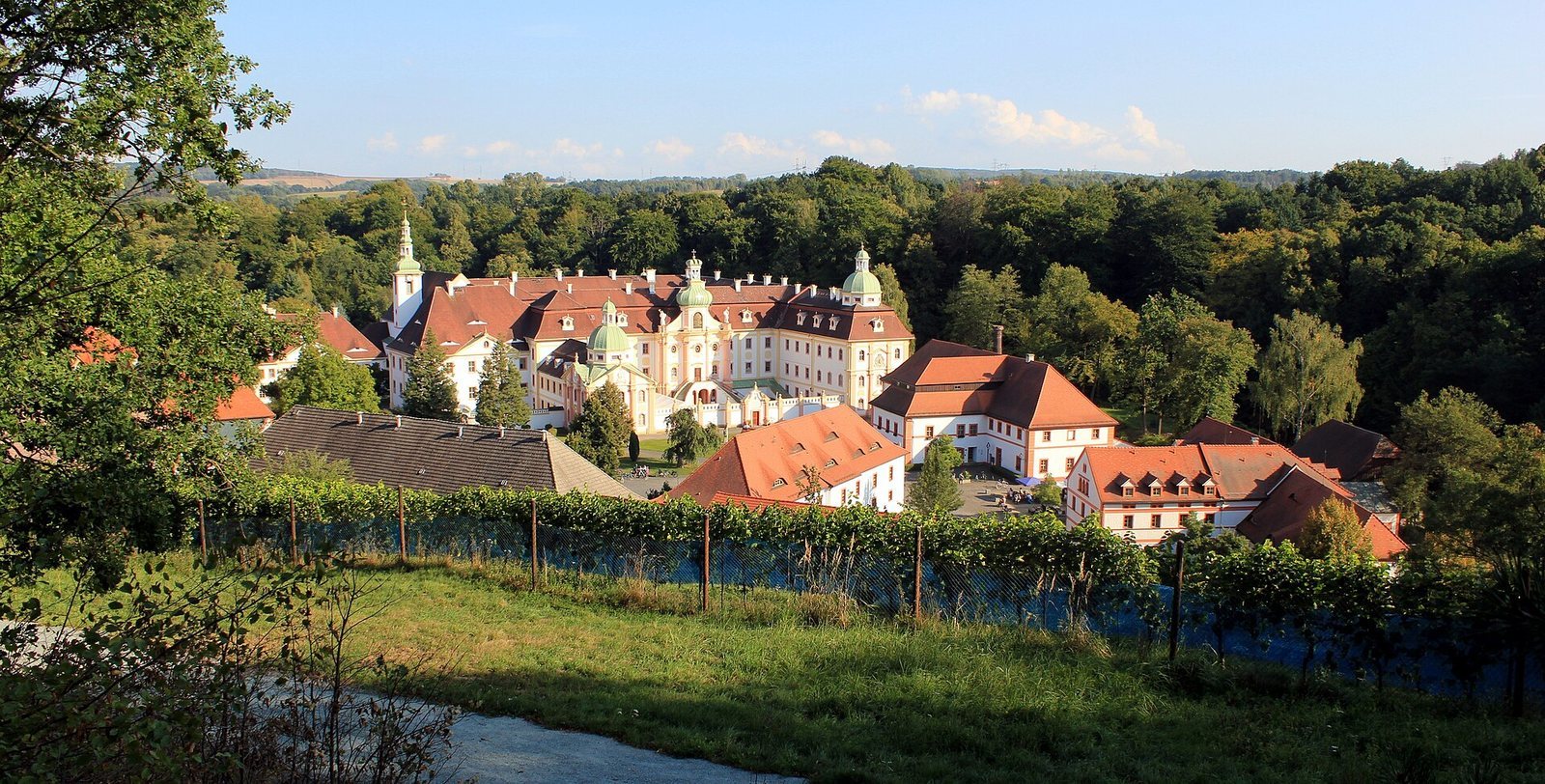
The extensive abbey complex brings together convent and residential buildings, places of worship, and working buildings. Its church preserves foundations and some exterior sections from an earlier phase, while its later form reflects the rebuilding that followed the 1683 fire.
Abbey church
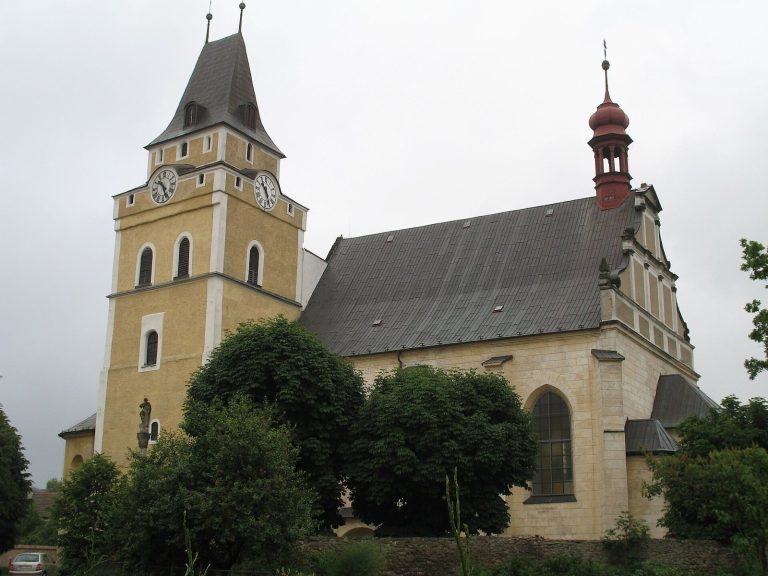
The church began as a Gothic building. After the 1683 fire, it was rebuilt between 1685 and 1744, retaining its foundations and some exterior sections. Its interior was decorated with wall paintings in the Nazarene style, a nineteenth-century revival of religious art associated with early Italian and German painting. These paintings date to 1859.
Restoration of the church continued from the late nineteenth century through 1921. The 1897 flood severely damaged it, destroying much of its Baroque interior furnishing.
Other buildings and grounds
Convent and service buildings
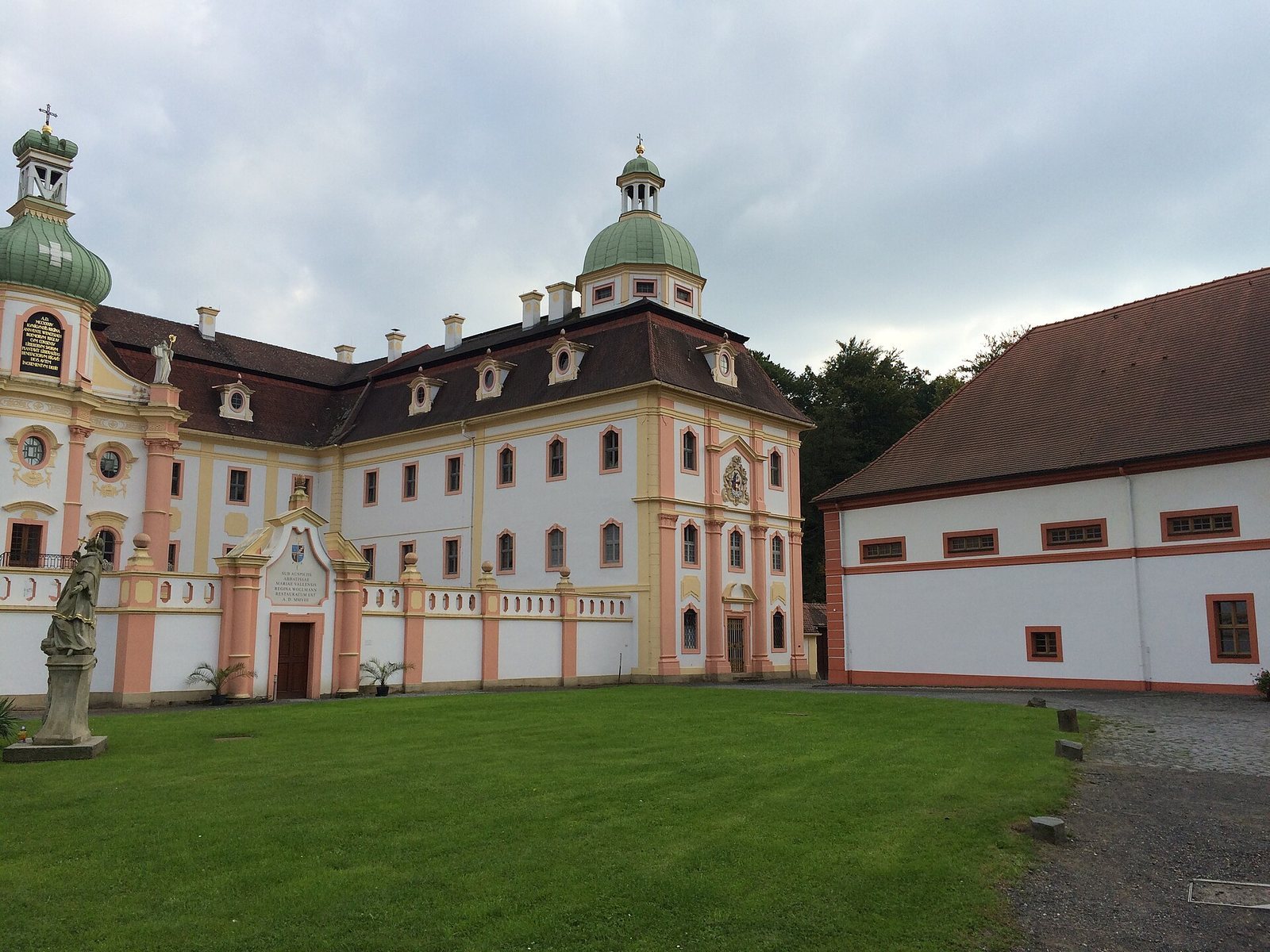
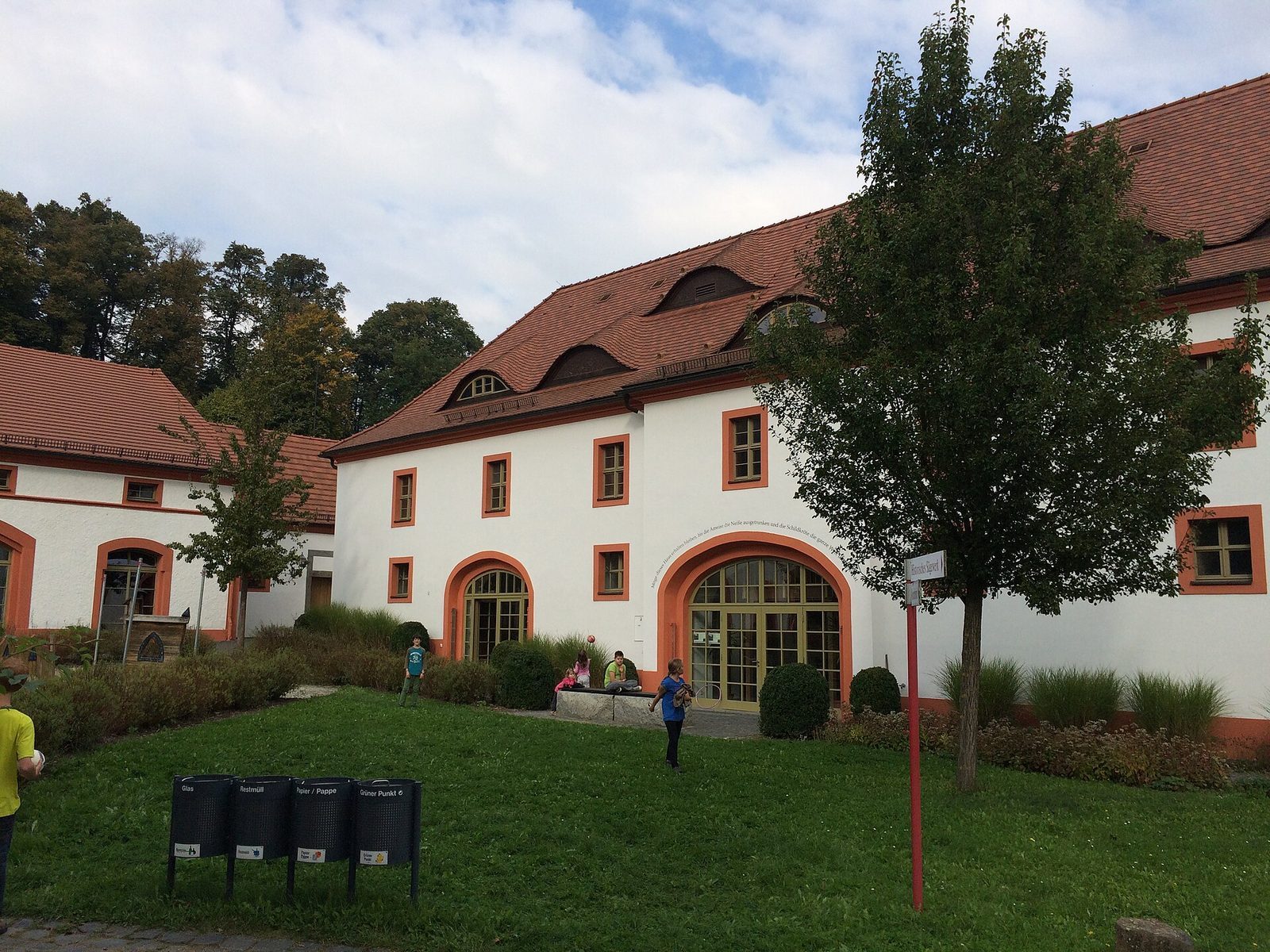
The precinct includes the convent buildings, the abbess’s residence and the abbey church, as well as the provostry, the residence or administrative seat of a provost. The Cross Chapel and Michael Chapel are also part of the complex. Its working buildings include a bakery, a sawmill, a former mill and a brewery.
Garden court and vineyard
The garden court covers about 1,030 square metres and presents more than 40 of the approximately 110 plant species mentioned in the Bible. Long-term unemployed women laid it out in 1998 and 1999 through an employment programme. The abbey’s vineyard is the easternmost in Germany.
Library
The monastery library included the richly illustrated Marienthal Psalter, an early-thirteenth-century book of Psalms regarded as a work of European importance. In 2023 the Free State of Saxony acquired about 2,700 titles from the library. Most remained at the abbey on permanent loan, while documents, early printed books and valuable manuscripts went to the Dresden State Archives or Leipzig University Library.