St John the Baptist Church, Chipping Barnet: A Parish Church on Barnet Hill
Site at a Glance
- Rating
- 4.5
- Popularity
- Medium
- Country
- United Kingdom
- Primary era
- Medieval
- Eras represented
- Medieval, Early Modern, Modern
- Civilizations
- British, English
- Site type
- Religious
- Remains
- Church
On this page8 sections
History
Medieval chapel and rebuilding
St John the Baptist Church is the Church of England parish church of Chipping Barnet in the United Kingdom. A chapel serving the village, its market and passing travellers existed by 1272; its construction is thought to date to about 1250. In 1258, Barnet’s priest, styled the Parson of Barnet, owned a copy of works by the Roman poet Ovid.
Around 1400, John de la Moote, abbot of St Albans, had the church rebuilt. Beauchamp was its architect.
Parish life and boundaries
St John’s was originally a chapel of ease, a place of worship for people who would otherwise have to travel to their parish church. It served under the older parish church of St Mary the Virgin in East Barnet. The benefice, an ecclesiastical office traditionally associated with income, was held together with East Barnet’s rectory until an Order in Council separated the two livings in 1866.
During the Victorian period, a further chapel of ease was established at Bells Hill for Chipping Barnet parish. After the parish was divided, it became the parish church of St Stephen’s. St John’s serves Chipping Barnet, while Christ Church is the parish church of High Barnet.
Renovation and later history
Thomas Ravenscroft, a local benefactor who died in 1630, was commemorated with a tomb shared with his wife, Thomasina. Their son James founded a charity in 1679 to pay for the repair and upkeep of both tombs. In 1871–1872, the architect William Butterfield extensively renovated the church.
During the mid-twentieth century, the church roof was repaired and Church House was restored. A fire in 1974 severely damaged the choir vestry beneath the tower and threatened the whole building, but was extinguished before the church was destroyed.
The church is part of the Chipping Barnet Team Ministry, a shared ministry serving St John’s and St Mark’s, Barnet Vale; St Peter’s, Arkley; and St Stephen’s, Bell’s Hill. Its Anglican administration is within the Province of Canterbury, a grouping of dioceses under an archbishop, and the Diocese of St Albans, a bishop’s area of administration, as well as the Archdeaconry of Hertford and the Deanery of Barnet. It is one of the few Anglican churches in Greater London within the Diocese of St Albans. Barnet Church is an informal name, not its official title. The building has been Grade II* listed since 1950, a designation for buildings of particular importance.
Remains
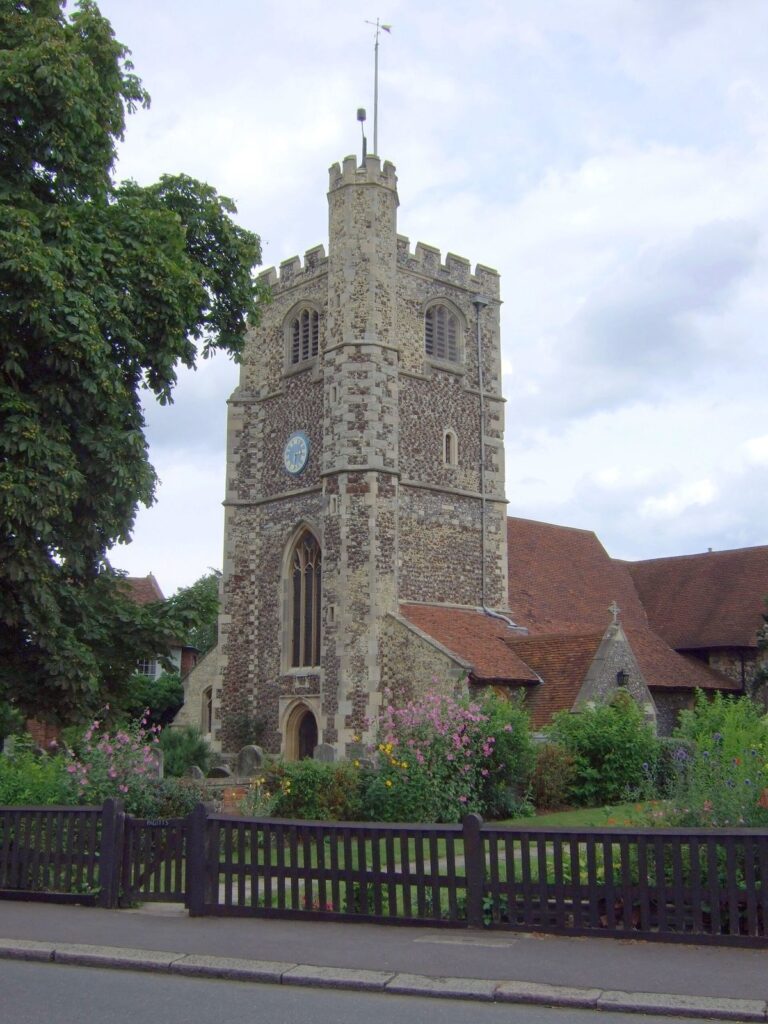
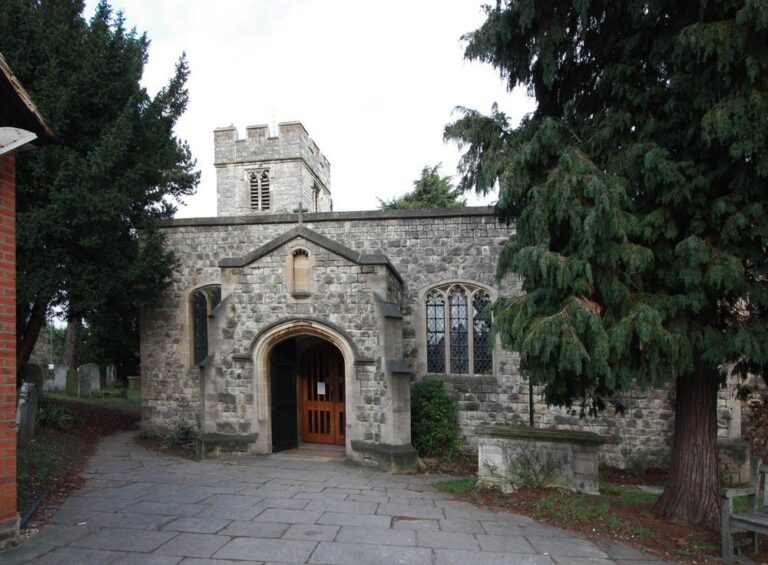
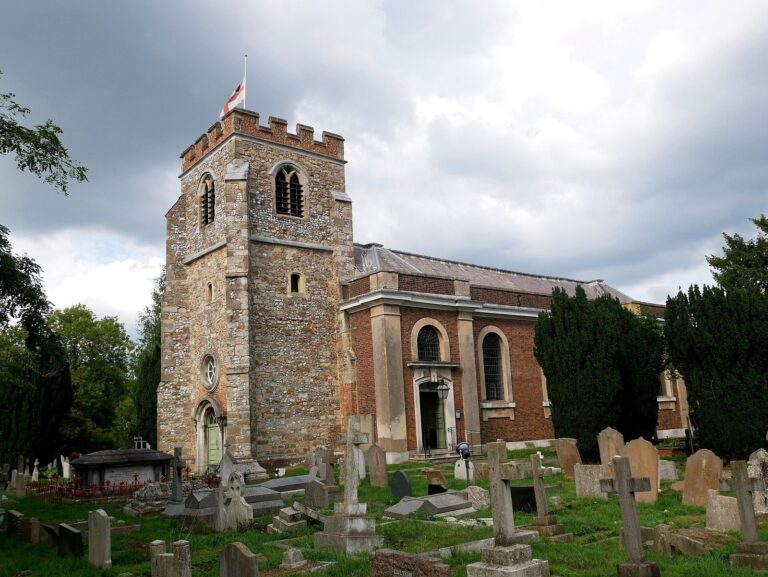
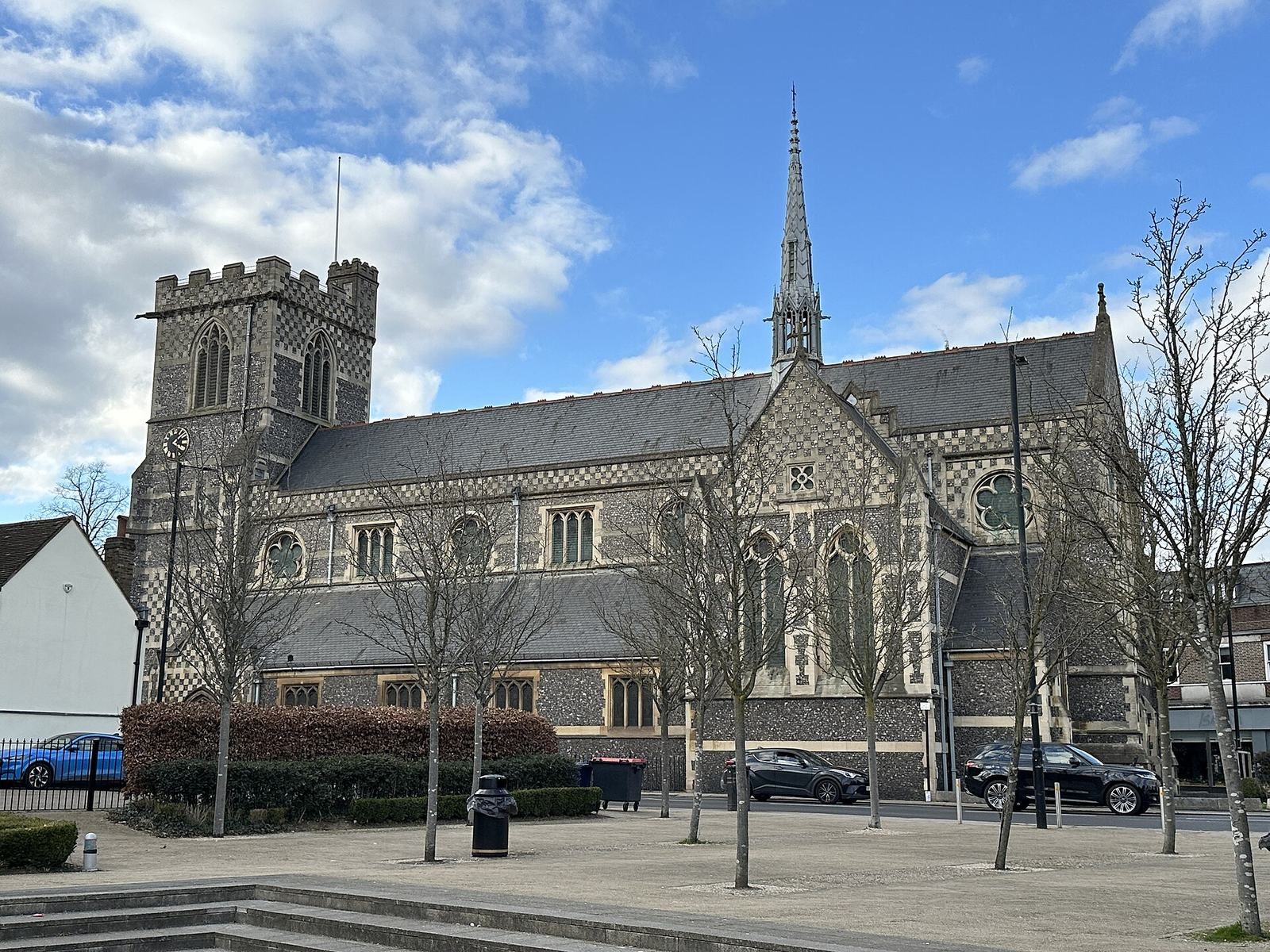
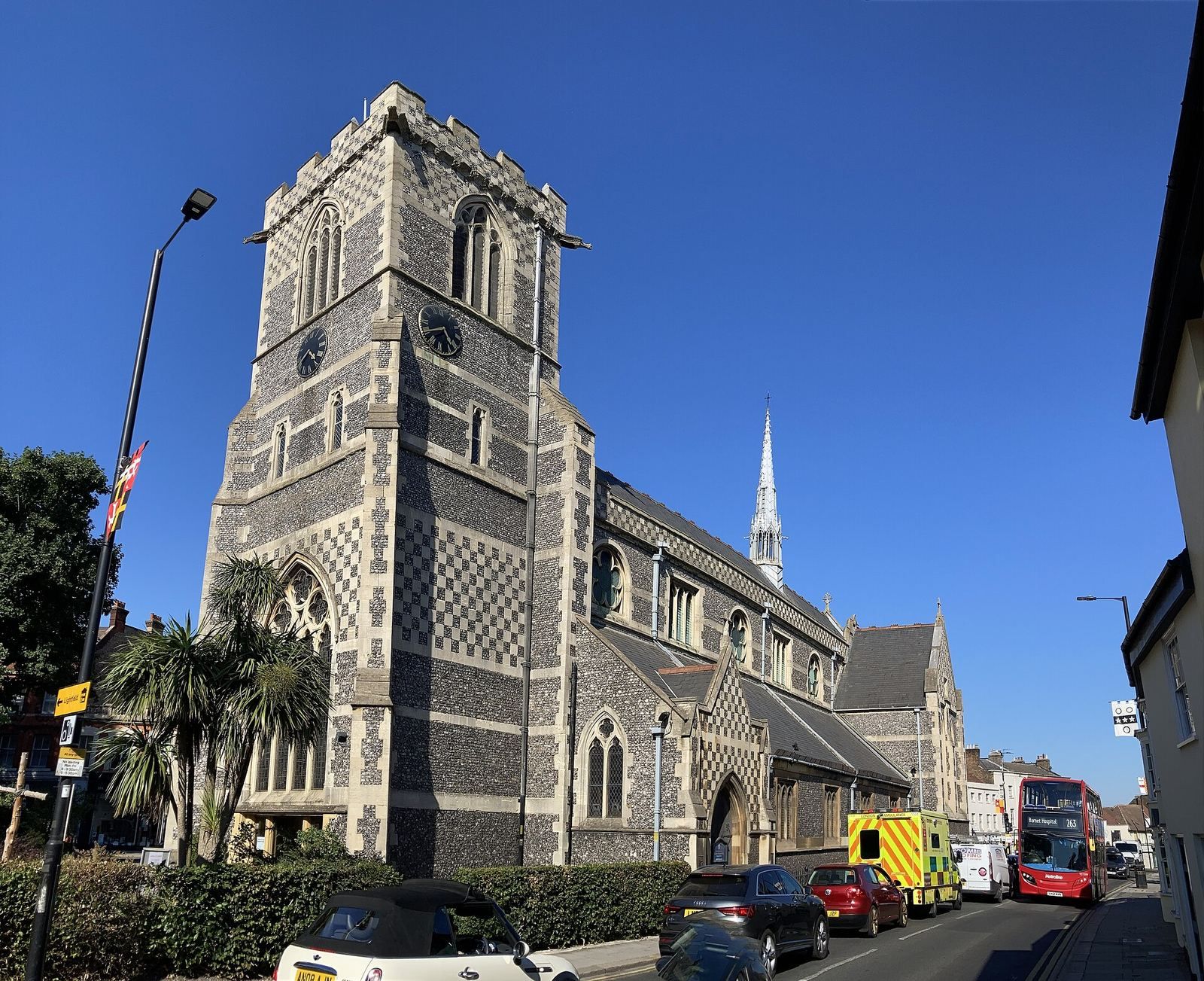
The church stands at the former centre of Chipping Barnet, at the junction of Wood Street and High Street, where the town’s ascent of Barnet Hill reaches its crest. Its plan runs from a low, square tower at the west end through the main body of the church to the chancel at the east.
Plan and principal spaces
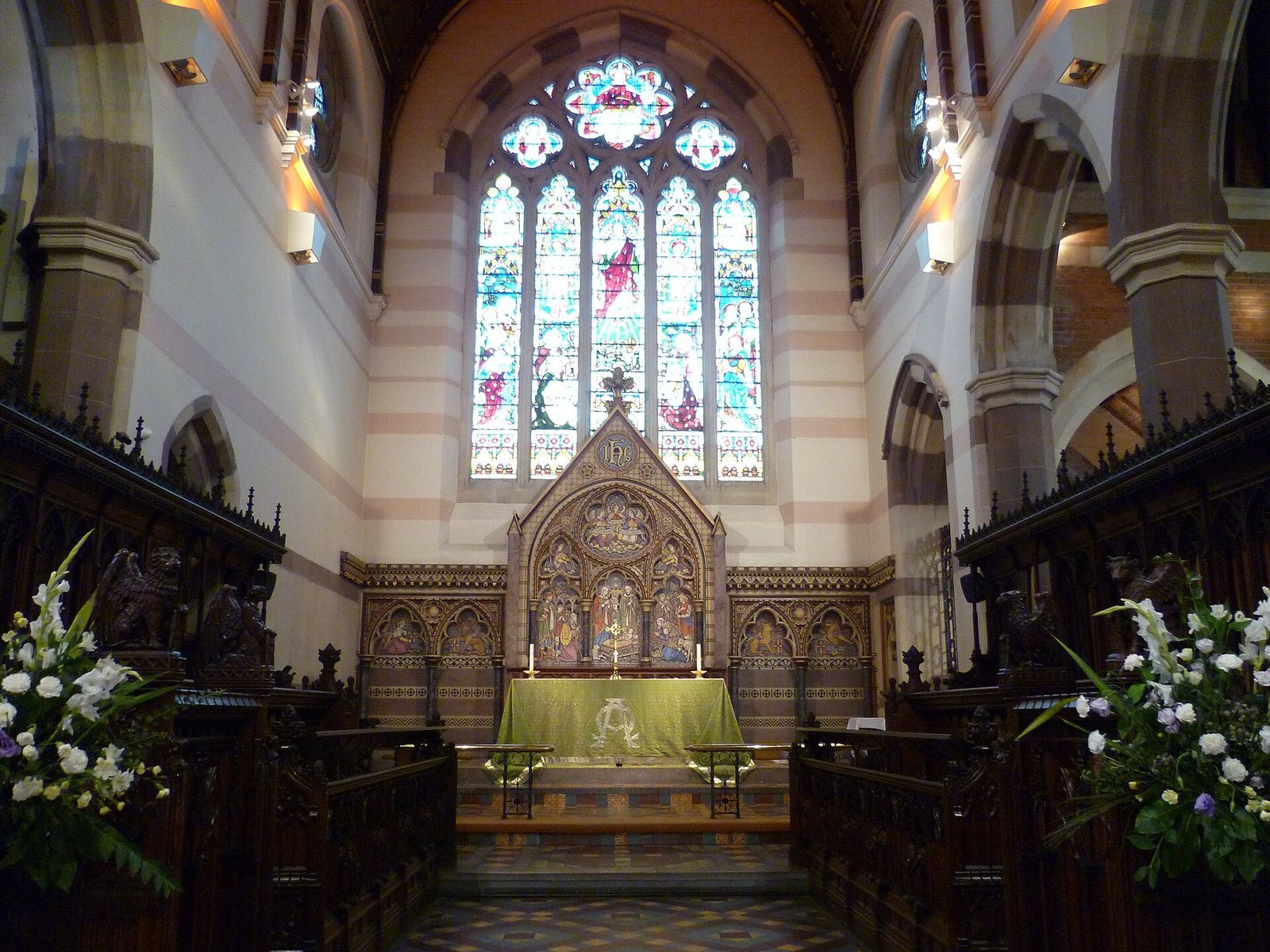
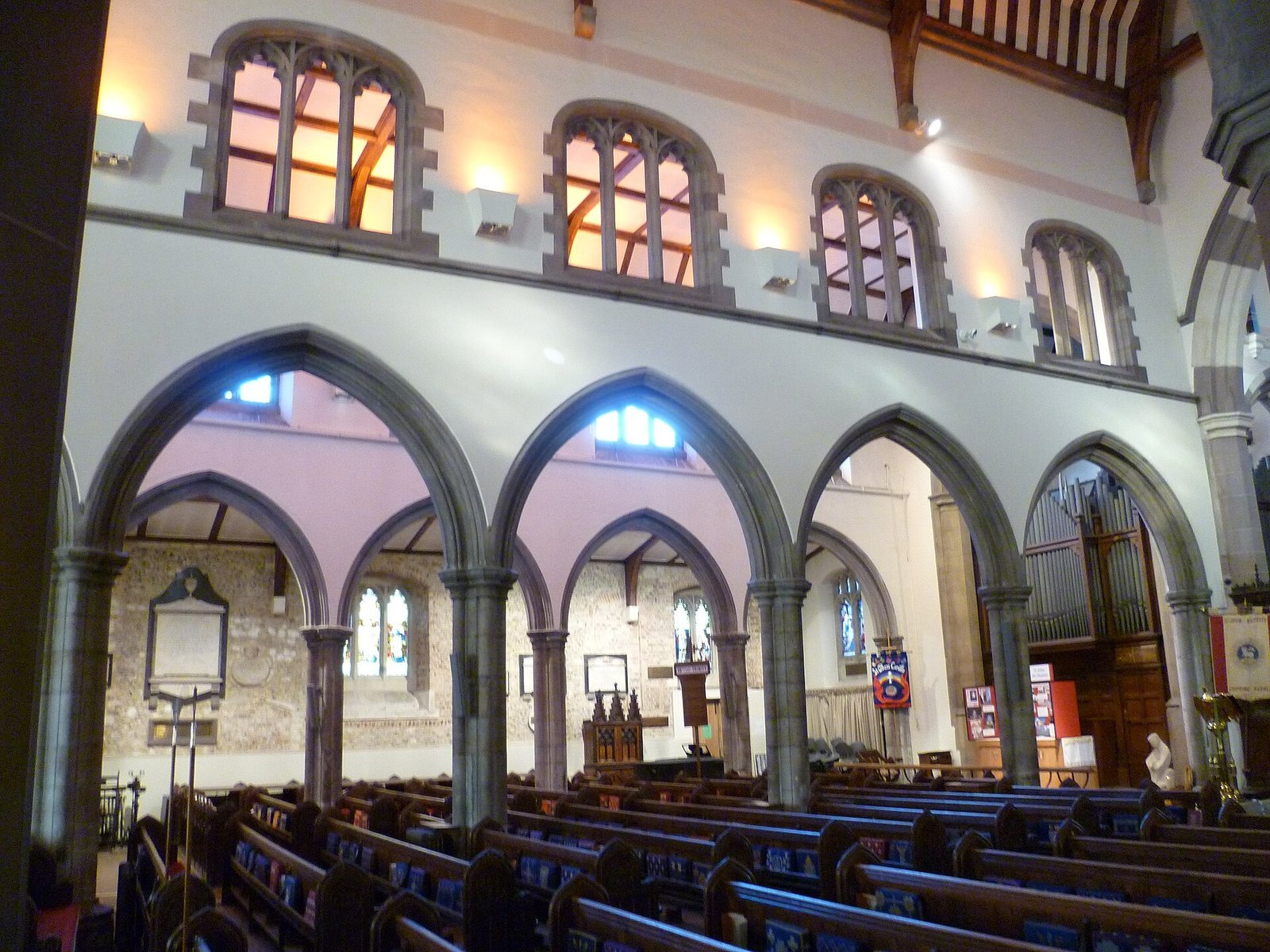
The nave, the main central space, is flanked by aisles, the passages alongside it. Clustered columns divide these spaces and support four pointed arches. At the east end, the chancel, the area around the altar, has a window with Perpendicular tracery, a Gothic design marked by strong vertical lines. The tower’s top is embattled, with a battlemented outline.
Monuments and furnishings
The tomb of Thomas Ravenscroft and his wife Thomasina was moved from the chancel to a newly built chapel during Butterfield’s renovation in 1871–1872. The church’s wooden roof spire, pulpit and pew ends were designed by John Charles Traylen.
Vestry and later alterations
Thomas Ravenscroft built the vestry during the reign of James I, who ruled England from 1603 to 1625. In 1984, a new choir vestry was created, glass doors were installed as the main entrance beneath the tower, and the organ was altered.