St James’ Priory, Bristol: A Benedictine Monastery and Parish Church
Site at a Glance
- Popularity
- Medium
- Country
- United Kingdom
- Primary era
- Medieval
- Eras represented
- Medieval, Early Modern, Modern
- Civilizations
- British, English
- Site type
- Religious
- Remains
- Church
On this page10 sections
History
St James’ Priory is a former Benedictine religious house in Bristol, United Kingdom, founded around 1129 by Robert, Earl of Gloucester. Benedictines followed the Rule of Saint Benedict, and the priory was Bristol’s first religious house. It was affiliated with Tewkesbury Abbey, its mother house, or overseeing monastery. Robert was a son of Henry I of England. The priory stood across the River Frome from Bristol Castle, where Robert was building a large new keep.
Foundation and medieval development
The priory’s foundation is dated between 1124 and 1137, with about 1129 generally given as the year. Robert endowed it with a broad meadow that later became the Broadmead area. The priory laid out part of this land as a planned suburb, with burgage plots, town holdings associated with medieval boroughs. A tradition recorded by the sixteenth-century antiquary John Leland claimed that every tenth stone brought from Normandy for Bristol Castle was set aside for the priory.
Robert was buried before the high altar in the monks’ church in 1147. Mabel FitzRobert, Countess of Gloucester, was also buried at the priory. In 1241, Eleanor, the Fair Maid of Brittany, received an honoured burial there. Her remains were later moved to Amesbury, though prayers for her continued to be said daily at St James.
The fair and the city
An annual fair formed part of Robert’s endowment in 1137. From 1238 it was held for fifteen days each year. It began at Whitsun, the Christian festival of Pentecost, but the date varied annually, so the fair was later moved to 25 July, the feast day of St James. In time it took place during the first half of September. Its stalls occupied the churchyard and neighbouring streets, and the fair became Bristol’s most important.
The income helped pay for rich decoration of the church. In 1498 an elaborate altar backdrop was commissioned to accompany an existing rood screen, the partition between the nave and chancel. The contract called for the screen to surpass one recently installed at St Mary Redcliffe. By 1518–19, stalls had spread from the graveyard into the surrounding streets. The fair offered plays, music, sports, wrestling, animal displays, acrobats, puppets and magicians; entertainments also took place on the Marsh, later Queen Square.
The Lord Chamberlain’s Men, the acting company associated with William Shakespeare, were listed among the fair’s players, raising the possibility that Shakespeare performed in Bristol. Merchant John Smyth’s ledger indicates that city merchants arranged their business year around the event, stocking goods such as wine, dyes, oil, iron, fruit and luxury wares. By the seventeenth century, ships sailing to Bristol for the fair were frequently attacked by Turkish pirates in the Bristol Channel. In 1604, a royal proclamation barred Londoners from attending amid fears that the fair’s national reach might spread plague.
The last fair was held in 1837. Religious groups and moralists objected to its perceived corrupting influence and to the use of a graveyard for the event. Local names preserve links with its former grounds: Horsefair is a road in Broadmead, while St James Barton refers to land once belonging to the priory farm.
Dissolution and later worship
In 1374, an agreement between the Abbot of Tewkesbury and parishioners made them responsible for the church’s nave. This arrangement helped the nave survive the dissolution of the monasteries under Henry VIII. The priory surrendered to the Crown on 9 January 1540, and its monastic buildings were demolished, leaving the church nave. In 1543, the land and the right to hold a fair were sold to a London merchant-tailor. The church continued as an Anglican parish church until it fell out of use in the 1980s and was declared redundant.
The Little Brothers of Nazareth, a Catholic religious order, re-established the church as a Catholic church in 1996. They also founded the St James Priory Project, which supports vulnerable people, particularly those affected by substance dependency or mental illness. The church remains active within the Catholic Diocese of Clifton. It was designated a Grade I listed building in 1959. A major conservation and repair programme ran from November 2009 for 21 months, and the church reopened on 25 July 2011. After the work, it was no longer on Historic England’s Buildings at Risk Register by 2014.
Remains
The surviving church
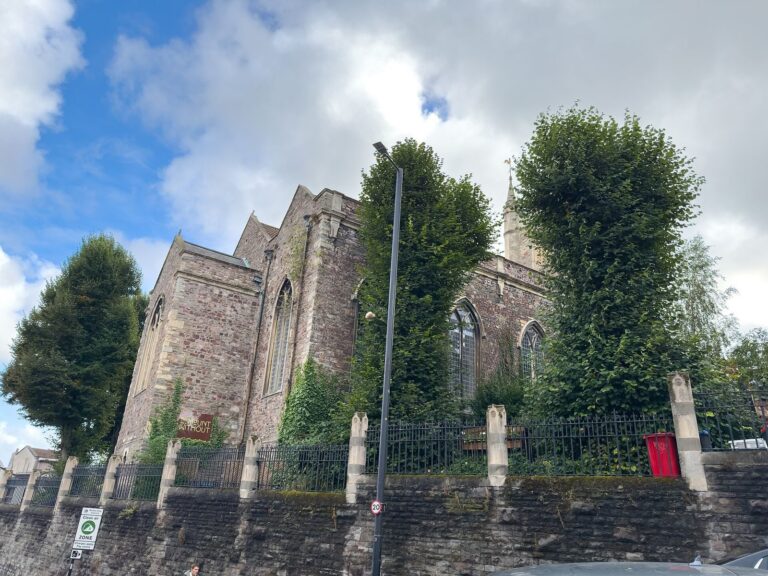
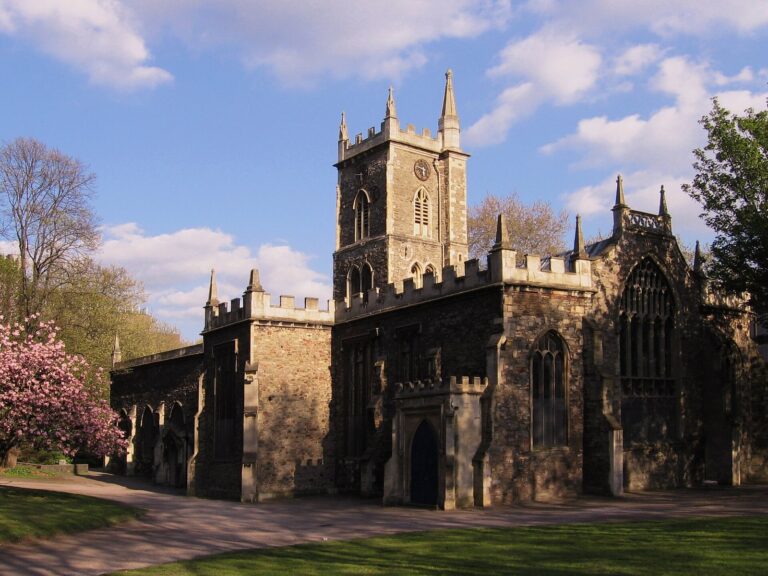
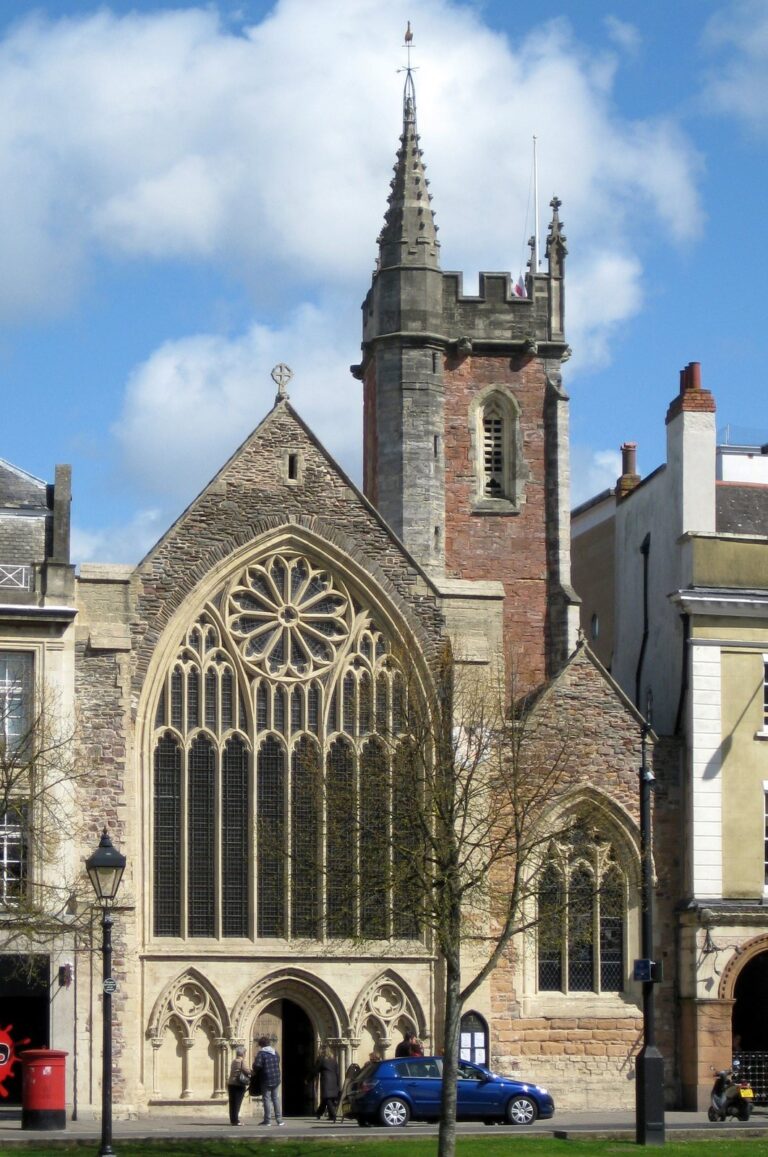
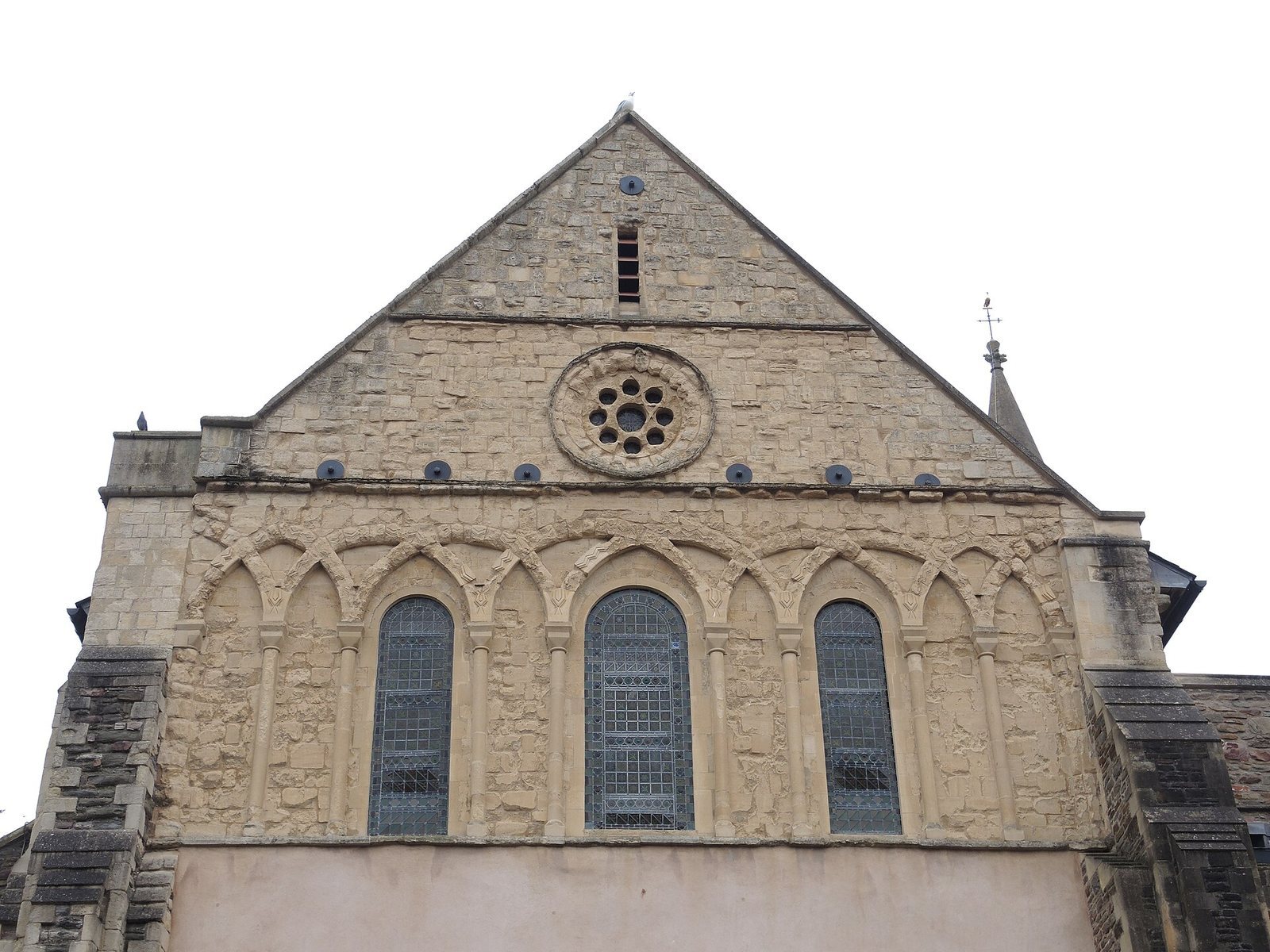
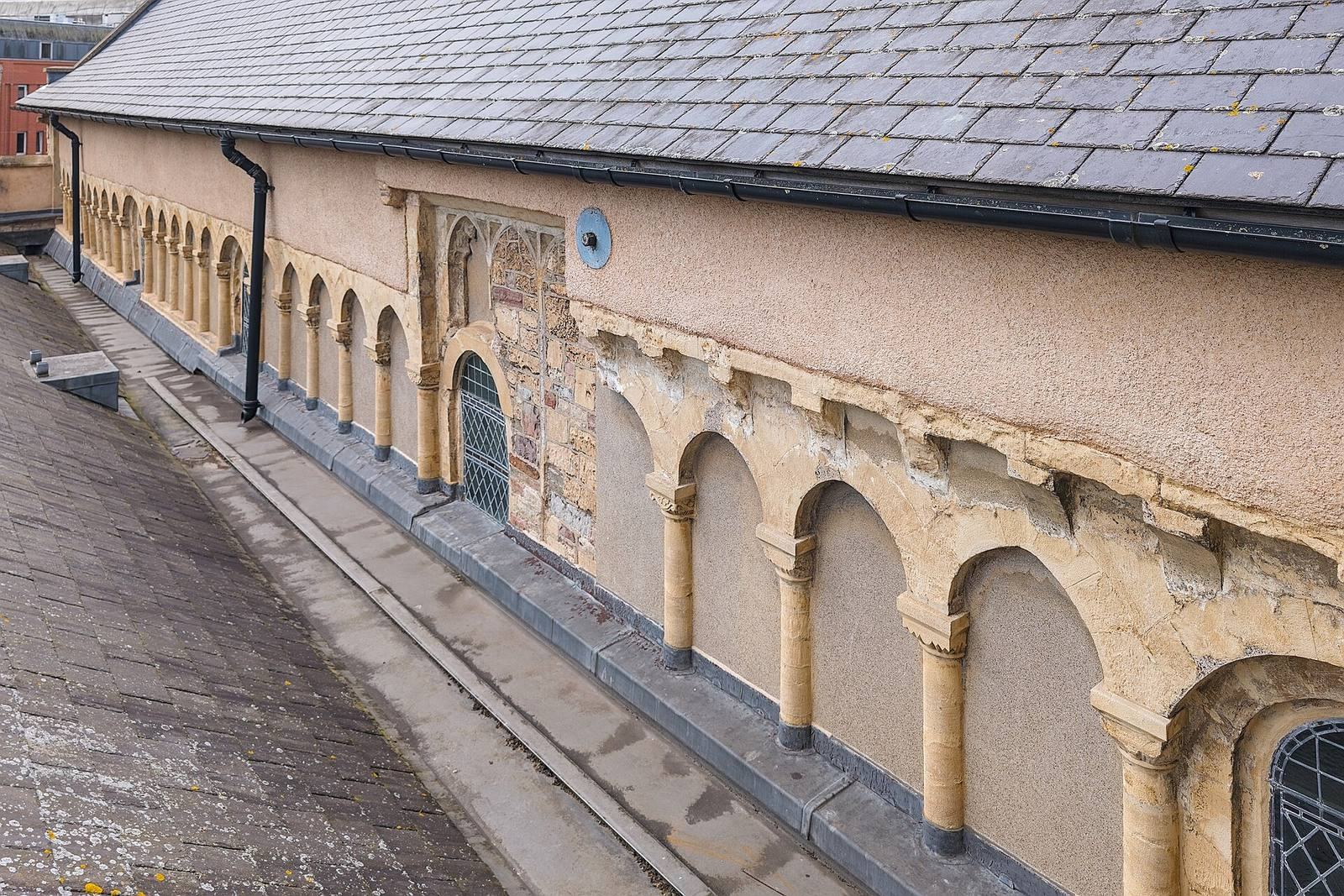
The church is built of stone and combines Romanesque and Gothic, two broad medieval architectural styles. Its surviving medieval core includes the early nave, while later additions changed the building around it. The church also incorporates stonework from the earlier priory in its west facade.
Medieval fabric
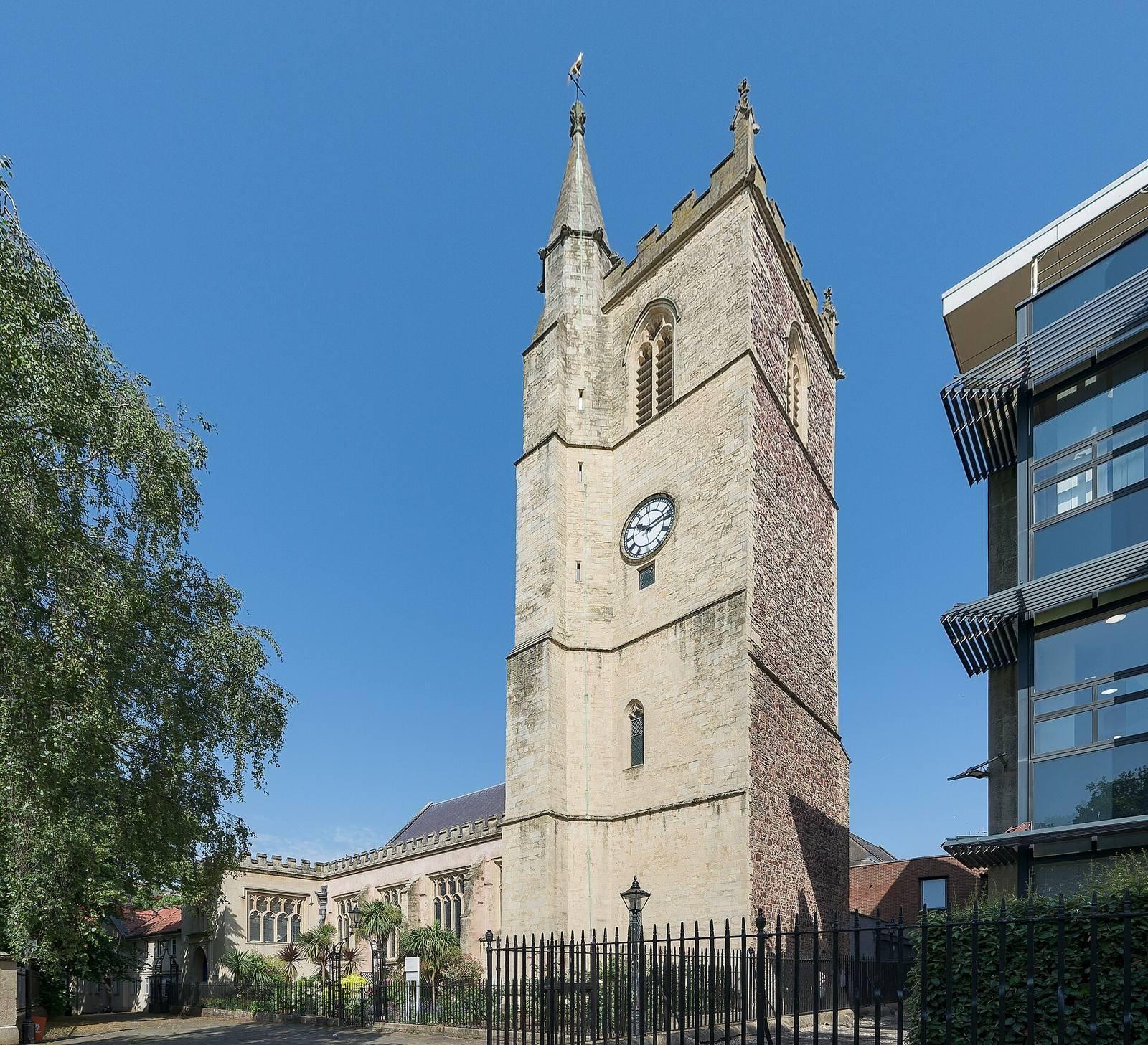
The nave dates to about 1129 and is the principal surviving part of the priory church. A tower was added around 1374. The west facade contains parts of the priory’s earlier stonework, incorporated into the church fabric.
Later additions
The south aisle was widened and rebuilt in 1698. A porch was added in the late eighteenth century, and the north aisle was rebuilt in 1864. Together, these alterations show how the surviving church grew beyond its early medieval core.
Interior and archaeological finds
During the 2009–11 restoration, workers uncovered a fragment of a sundial carved from Bath stone. Its hour lines and medieval Arabic numerals suggest that it was probably made in the fifteenth century; it may be Britain’s earliest scientific sundial. Restoration work also revealed that a statue in the church had originally been depicted topless.
Burial ground
A lay cemetery, a burial ground for people outside the monastic community, extended south from the priory complex toward the area now called Horsefair and St James’ Park. It covered about 128,000 square feet.