St George’s, Bloomsbury: An Anglican Parish Church
Site at a Glance
- Rating
- 4.5
- Popularity
- Medium
- Country
- United Kingdom
- Primary era
- Early Modern
- Eras represented
- Early Modern
- Civilizations
- British
- Site type
- Religious
- Remains
- Church
On this page11 sections
History
Creation of the parish church
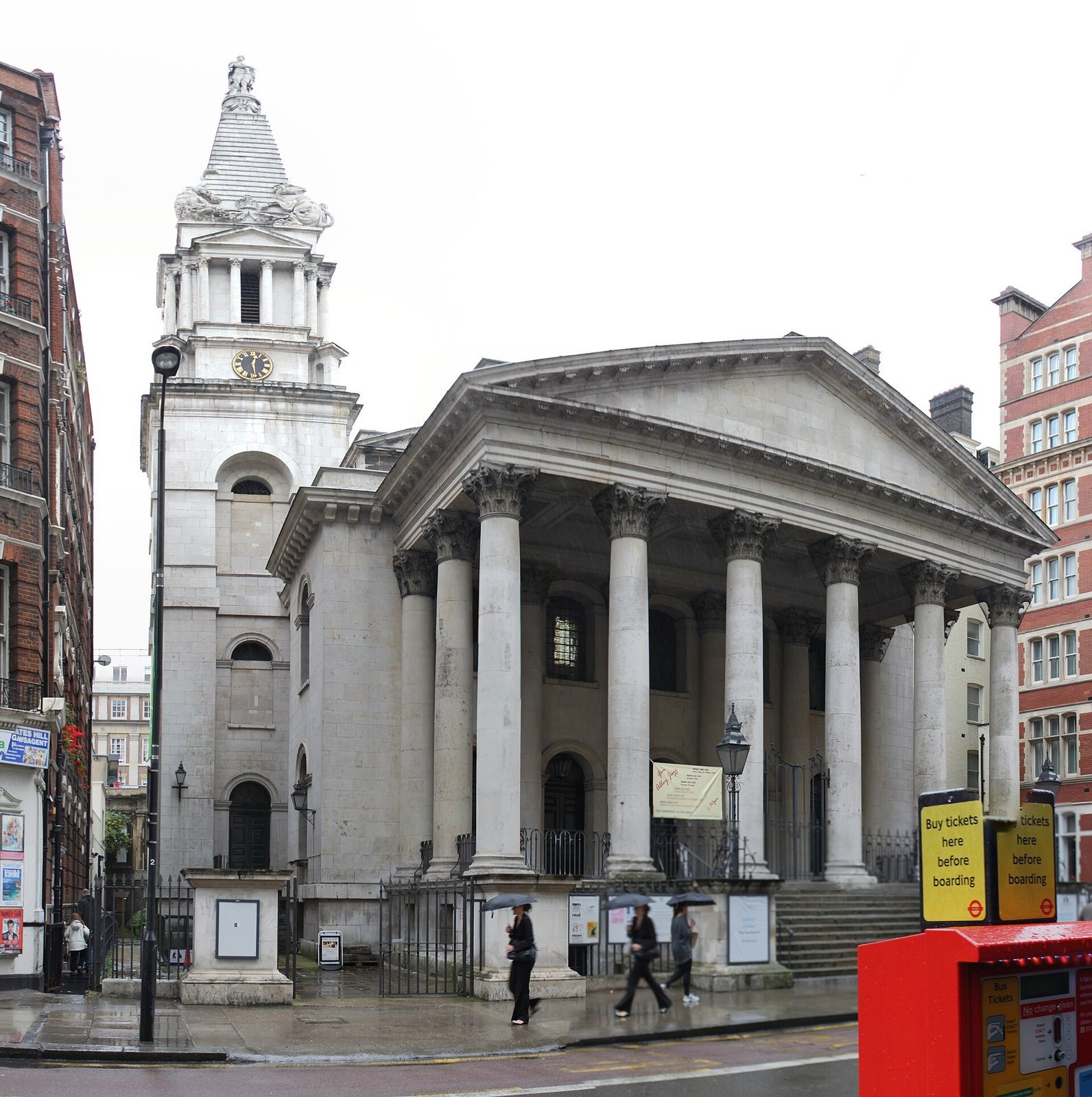
St George’s, Bloomsbury, is an Anglican parish church in the United Kingdom, built by English architect Nicholas Hawksmoor between 1716 and 1731 in the English Baroque classicist style. It was established to serve a rapidly growing Bloomsbury, then part of the parish of St Giles-in-the-Fields. The Commissioners for the Fifty New Churches, the body overseeing a London church-building program created by legislation in 1711, provided for the new parish church.
Hawksmoor bought the Ploughyard site for £1,000 from Lady Russell, widow of William Russell, a Whig (a member of a political faction associated with parliamentary government and a Protestant succession) executed in 1683. The confined plot posed a challenge for the design. Proposals by James Gibbs and Sir John Vanbrugh were rejected before Hawksmoor’s plan was accepted. St George’s was the sixth and final London church he designed; he was responsible for six of the twelve churches completed under the program.
Edmund Gibson, Bishop of London, consecrated the church on 28 January 1730, and building work finished in 1731 at a cost of £31,000. The church is dedicated to Saint George of Lydda, the Christian saint traditionally associated with the story of a knight who slays a dragon. It belongs to the Church of England’s Anglo-Catholic tradition, which emphasizes Catholic forms of worship and sacramental practice.
Church and public life
William Hogarth included the church’s tower in his 1751 engraving Gin Lane. In 1824, Anthony Trollope was baptised at St George’s. Richard Meux Benson was also baptised there and later founded the Society of St John the Evangelist, the first Anglican religious order for men. F. B. Chatterton, manager of the Theatre Royal, Drury Lane, married at the church in 1853.
In 1913, a funeral service was held there for Emily Davison, the suffragette who died after being struck by the King’s horse at the Derby. Two members of the Church League for Women’s Suffrage officiated. Emperor Haile Selassie attended a controversial requiem at St George’s in 1937 for those killed in the Abyssinian War, Italy’s invasion of Ethiopia, which had begun in 1935. Charles Dickens also used the church as the setting for “The Bloomsbury Christening” in Sketches by Boz.
Conservation
St George’s became a Grade I listed building in 1951, a category in England reserved for buildings of exceptional interest. Major conservation work led by the World Monuments Fund continued until 2006. An exhibition on the church, Hawksmoor, and Bloomsbury was installed in the undercroft.
Remains
Plan and interior
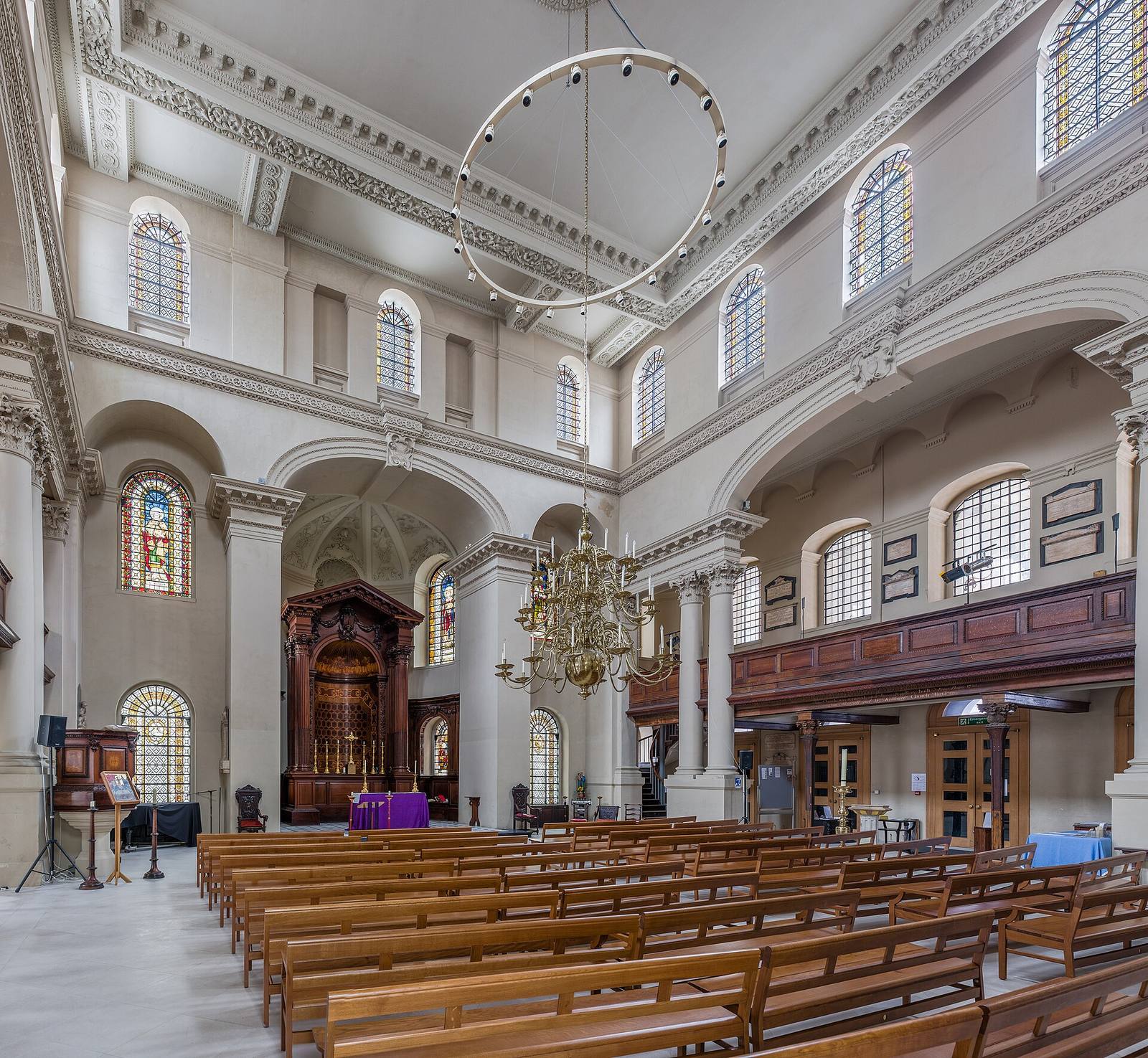
The church occupies a narrow rectangular plot, enclosed by surrounding buildings, and is aligned north to south. Although the commissioners’ 1711 guidance favored an east-to-west orientation, they agreed to a north-to-south alignment in 1715. Hawksmoor’s design is a transverse-hall church, organized around a hall that crosses the building’s main axis. Its interior is arranged around a central square, with columned spaces to the north and south. In 1781, the interior was turned toward the north: the northern gallery was removed and the altar moved to that end. A spiral staircase and a plaque for Paul Mellon, an American philanthropist and art collector who admired English culture, are also features of the church.
Exterior features
South portico
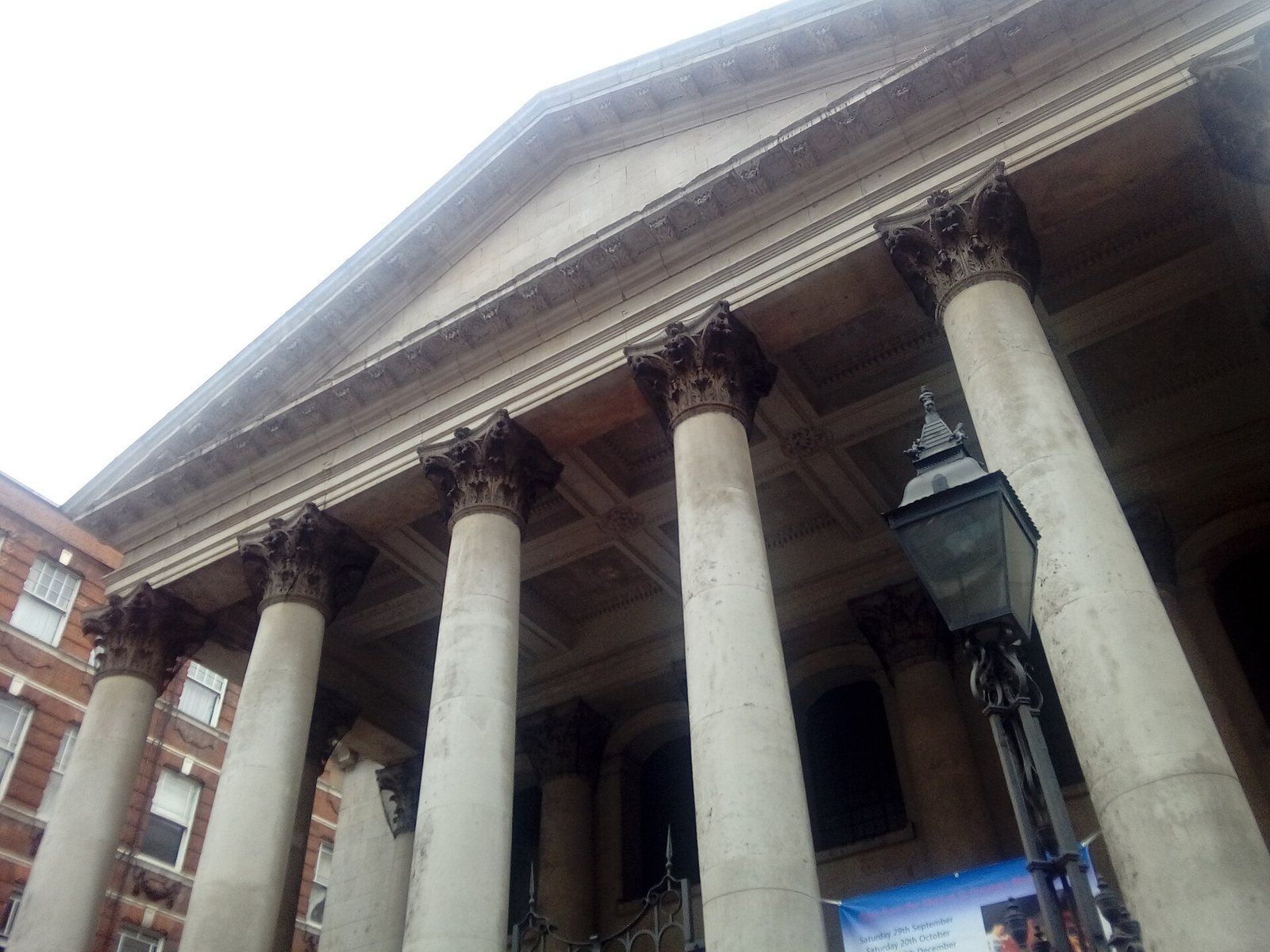
The projecting portico on the south side has six Corinthian columns, with capitals decorated in ornate acanthus-leaf forms. Its design takes inspiration from the Roman Temple of Bacchus, named for the god of wine and festivity, at Baalbek in present-day Lebanon. The church’s classical details also reflect Palladian principles associated with the Renaissance architect Andrea Palladio.
West tower
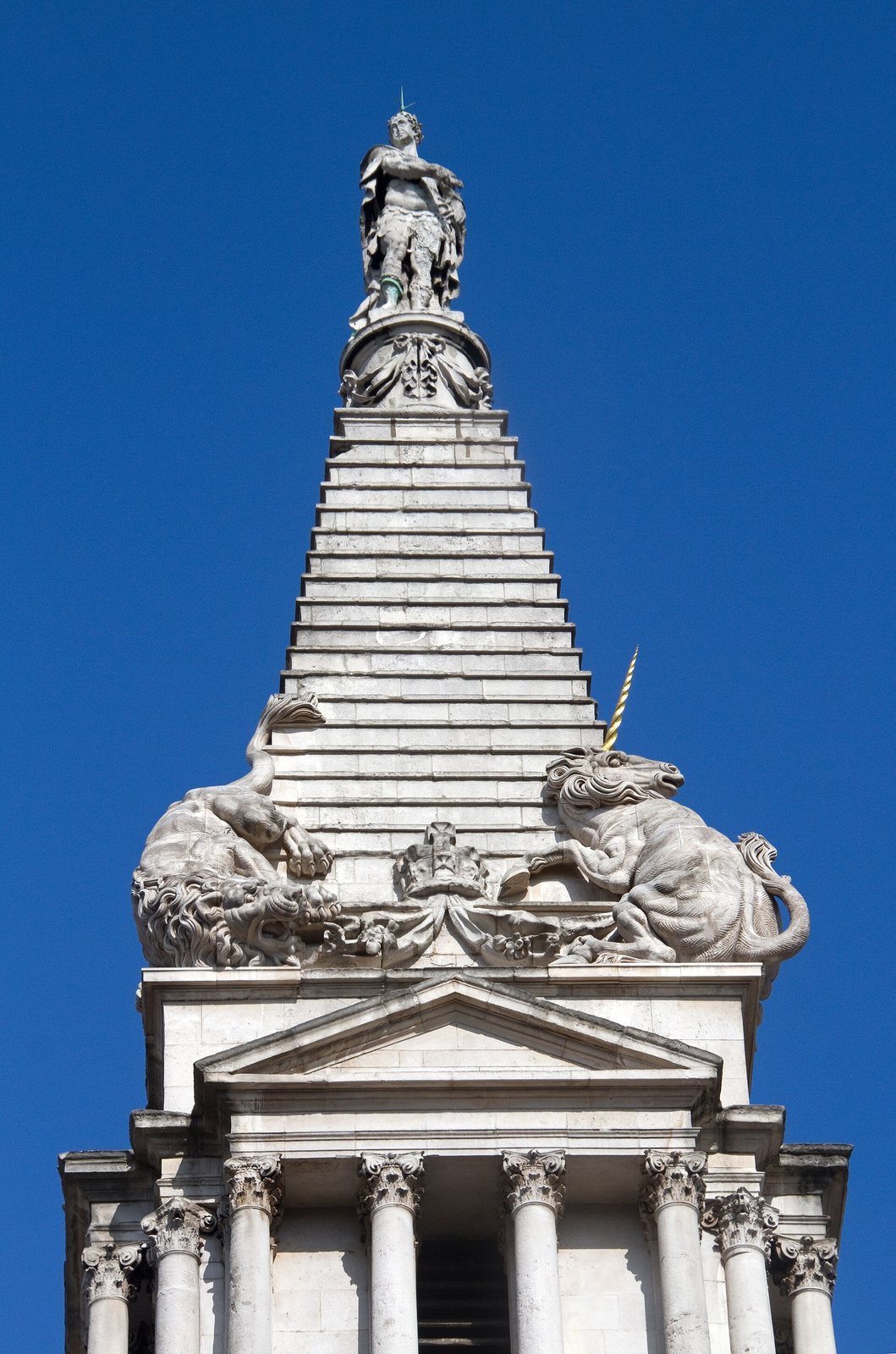
The tower on the west side has a stepped upper structure inspired by Pliny the Elder’s description of the Mausoleum at Halicarnassus, an ancient monumental tomb. A statue of George I in Roman dress stands at its summit.
Sculptural decoration
Sculptures of fighting lions and unicorns refer to the end of the First Jacobite Rising, an unsuccessful attempt in 1715 to restore the Stuart dynasty.
Crypt
Renovated in the 1990s, the crypt was used as an art gallery before becoming home to the Museum of Comedy in April 2014. The museum explores the history of British comedy through photographs, posters, props, clothing and costumes, scripts, films, and videos of performers and shows. The crypt also contains a 100-seat performance space.