St Florian’s Church in Jesionowo: A Medieval Roman Catholic Church
Site at a Glance
- Popularity
- Very Low
- Country
- Poland
- Primary era
- Modern
- Eras represented
- Medieval, Modern
- Civilizations
- Unclassified
- Site type
- Religious
- Remains
- Church
On this page7 sections
History
St Florian’s Church in Jesionowo is a Roman Catholic church in Poland, built in the thirteenth century. Dedicated to St Florian, an early Christian martyr venerated in Catholic tradition and associated with protection from fire, it served as a Protestant church before 1945.
Medieval origins and nineteenth-century rebuilding
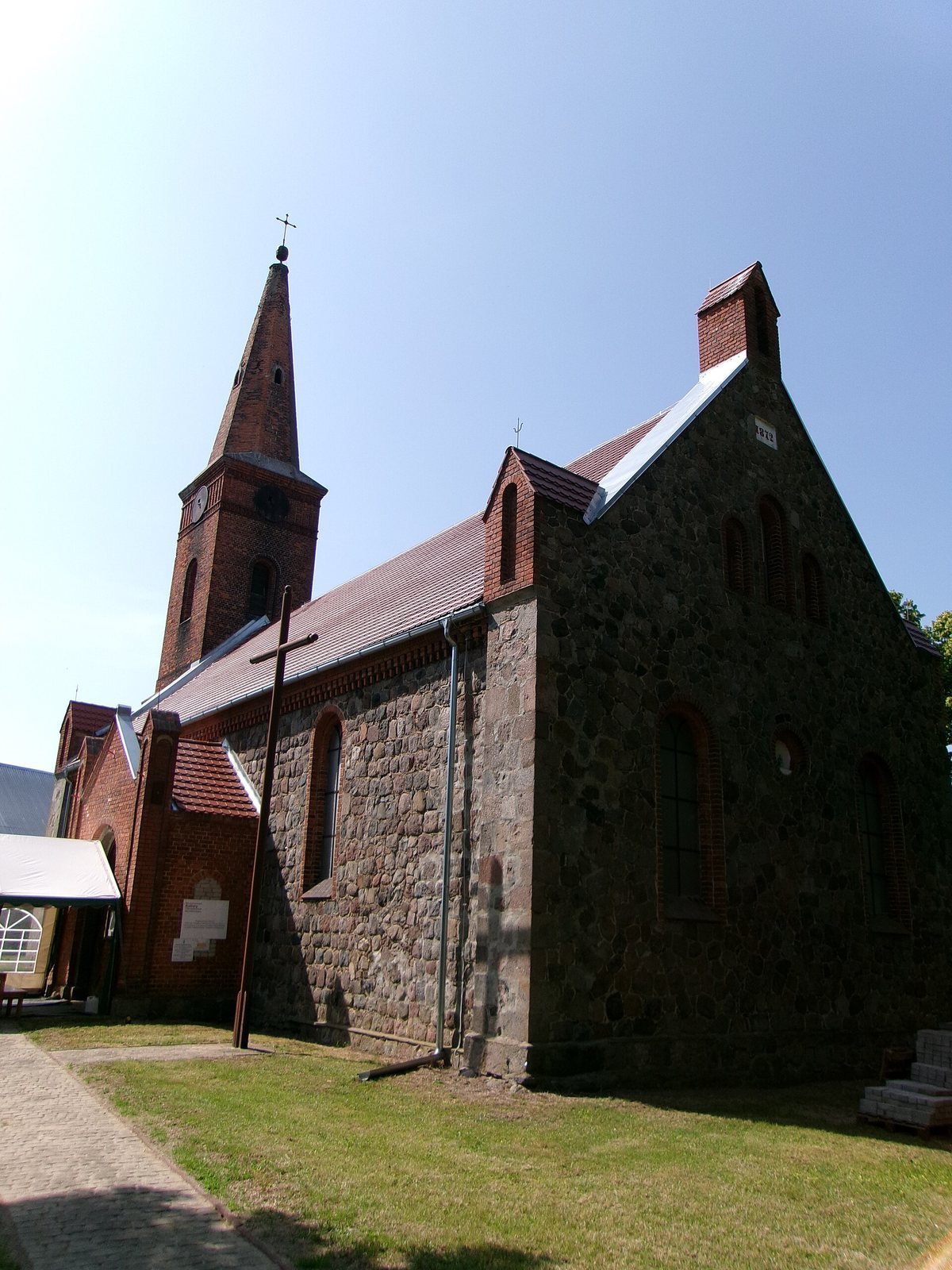
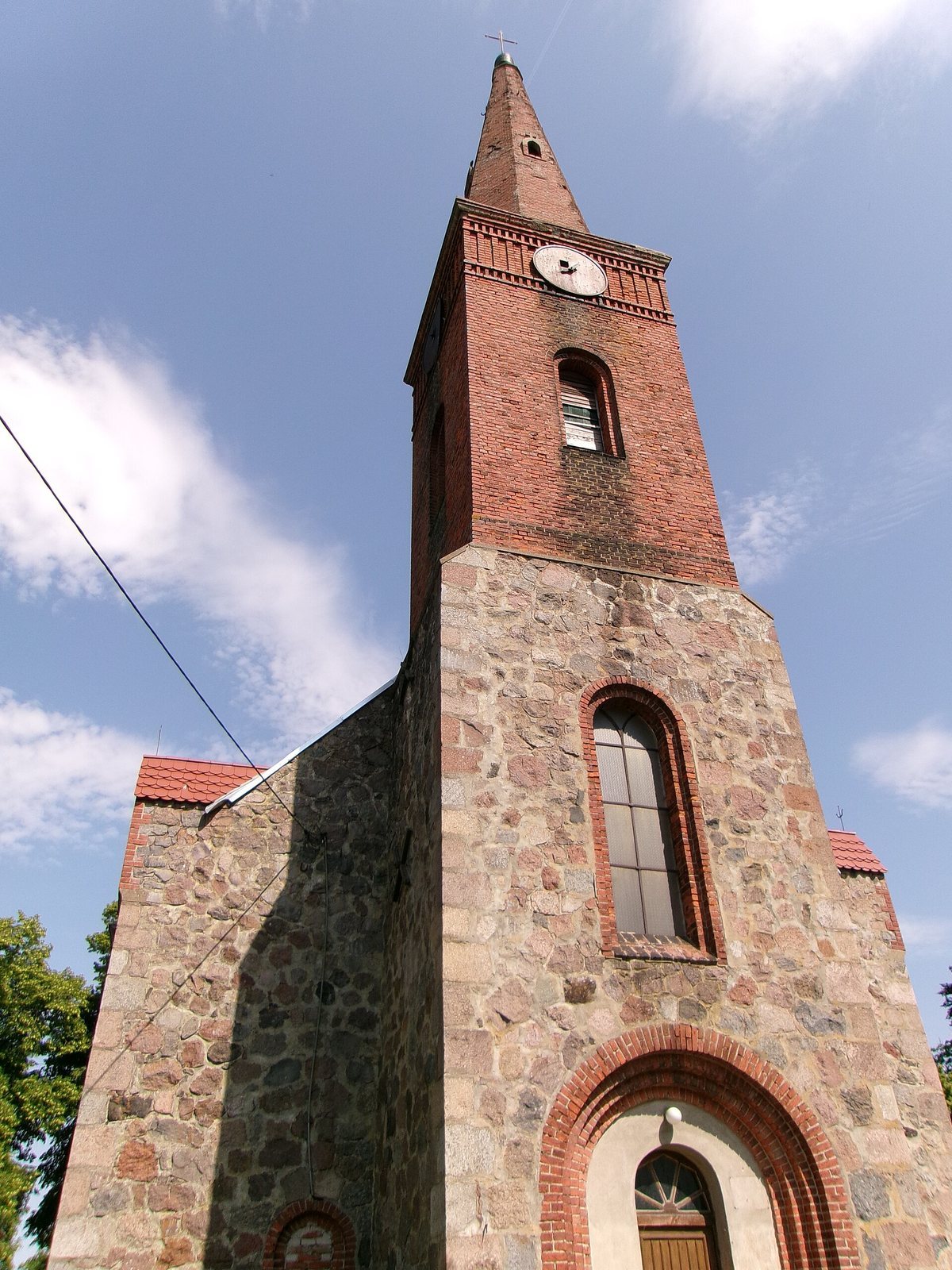
The church underwent major rebuilding in the second half of the nineteenth century, completed in 1872. This work altered the medieval building and added a bell tower at its western end.
Postwar restoration and Catholic use
After the Second World War, the church stood unused for many years because the village already had another Catholic church. It was restored around the turn of the 1980s and 1990s. Michał Lipka worked on restoring its wall paintings from 1985 to 1993, and the church was consecrated in 2003. It now serves as a subsidiary church of the Parish of Christ the King in Jesionowo, meaning it is associated with the parish but is not its principal church.
Remains
Plan and setting
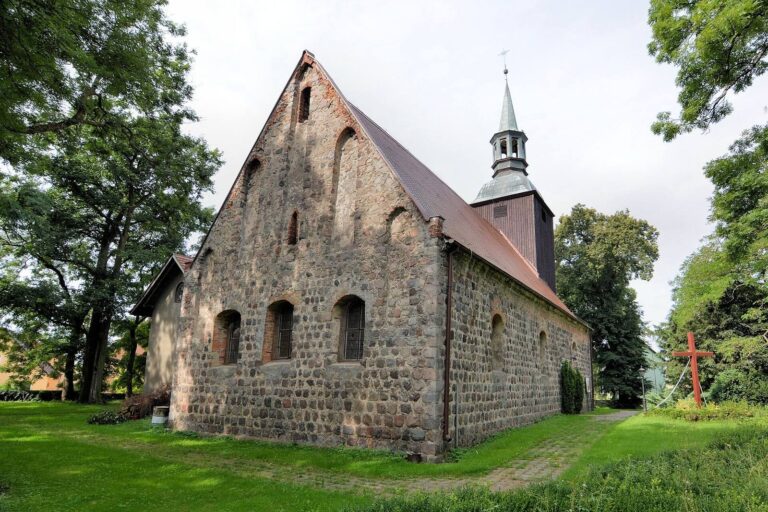
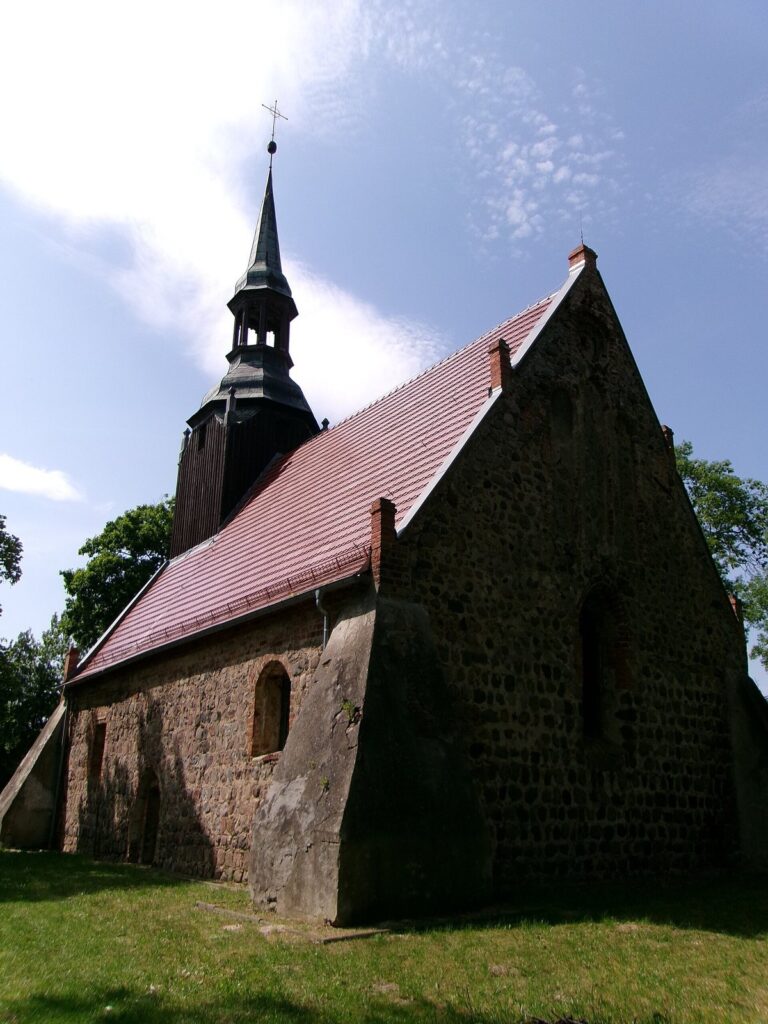
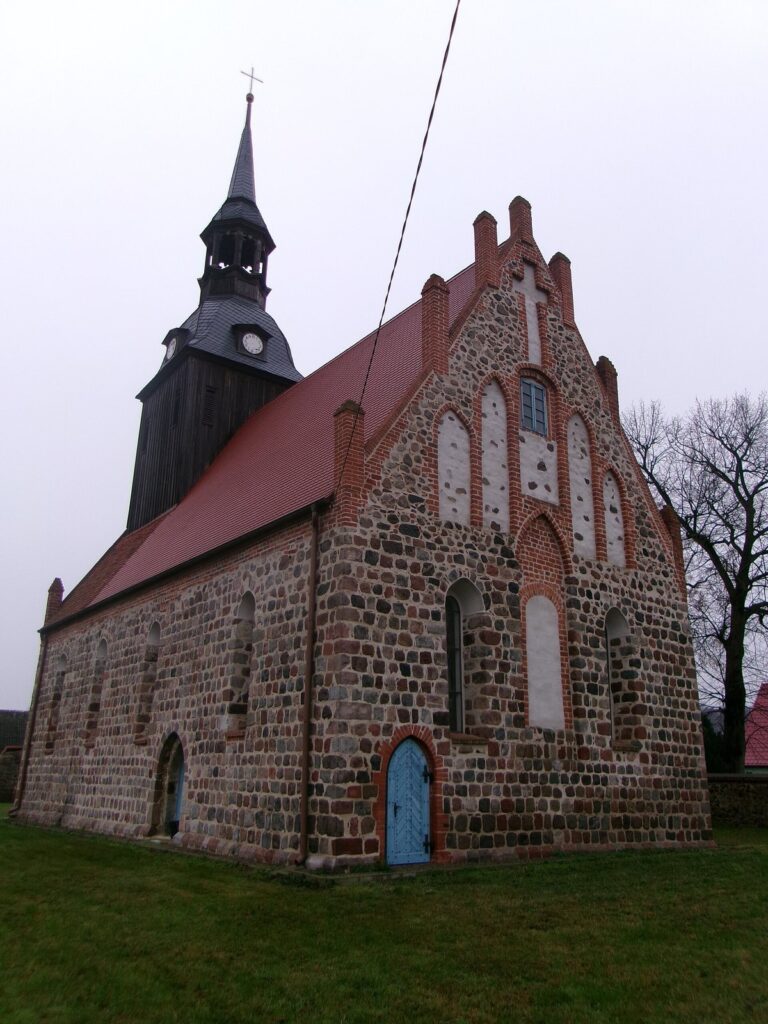
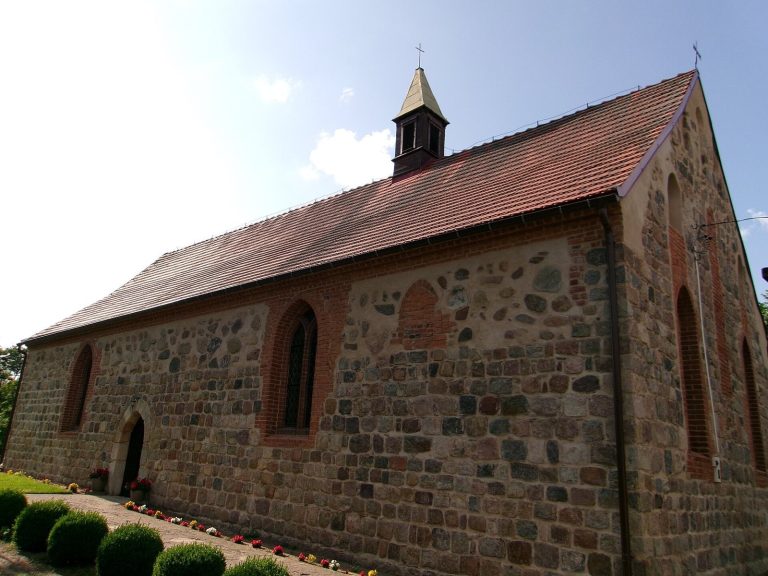
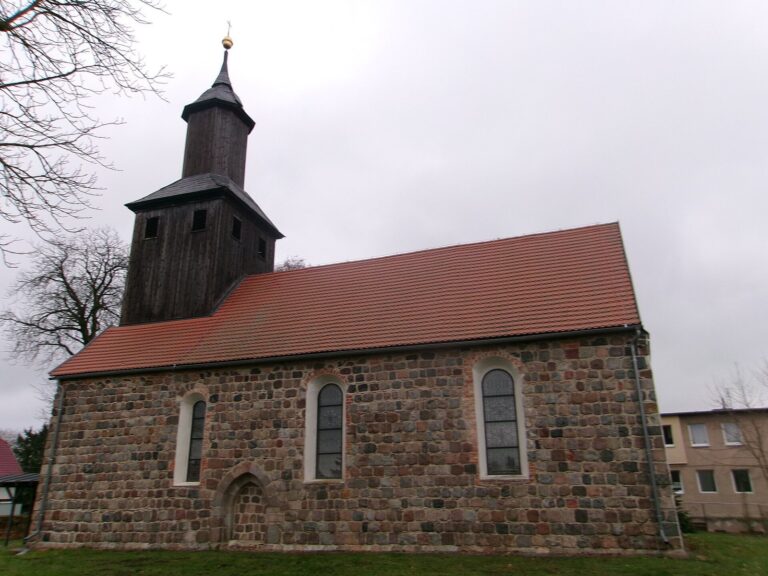
The church has a rectangular plan and is built from granite blocks. Its hall-type arrangement provides a single interior space rather than a central nave flanked by side aisles. The building stands within the grounds of a former cemetery, enclosed by a stone wall.
Exterior and bell tower
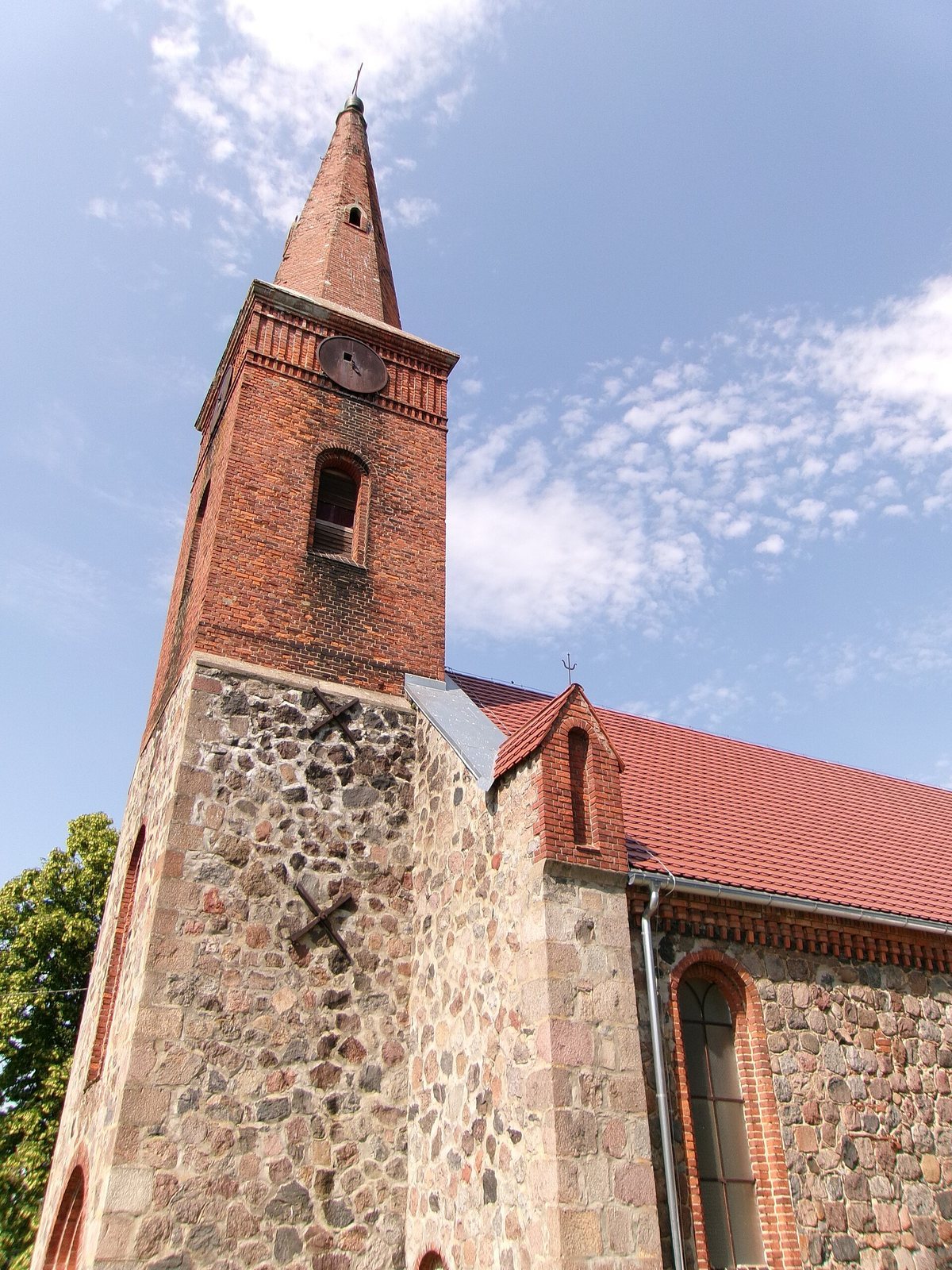
A four-sided tower rises at the west end, added during the nineteenth-century rebuilding. That work also created three windows in each side wall. The pointed-arch doorway in the south wall is the only surviving element of the original layout. A date marking the rebuilding’s completion appears on the east gable. The tower holds bells dated 1499 and 1928.
Interior
An organ gallery from the second half of the nineteenth century survives inside. Ceiling paintings depict the Lamb of God, a title for Jesus, the Holy Spirit as a dove, and the Eye of Providence, which represents God’s watchful presence. A niche in the east wall contains a painted illusion of a Neo-Baroque altar, using forms revived from the Baroque period.