St. Demetrius Church (Markova Sušica): Principal Church of Markov Monastery


Site at a Glance
- Rating
- 4.8
- Popularity
- Very Low
- Country
- North Macedonia
- Primary era
- Medieval
- Eras represented
- Medieval, Modern
- Civilizations
- Ottoman, Serbian
- Site type
- Religious
- Remains
- Church
On this page8 sections
History
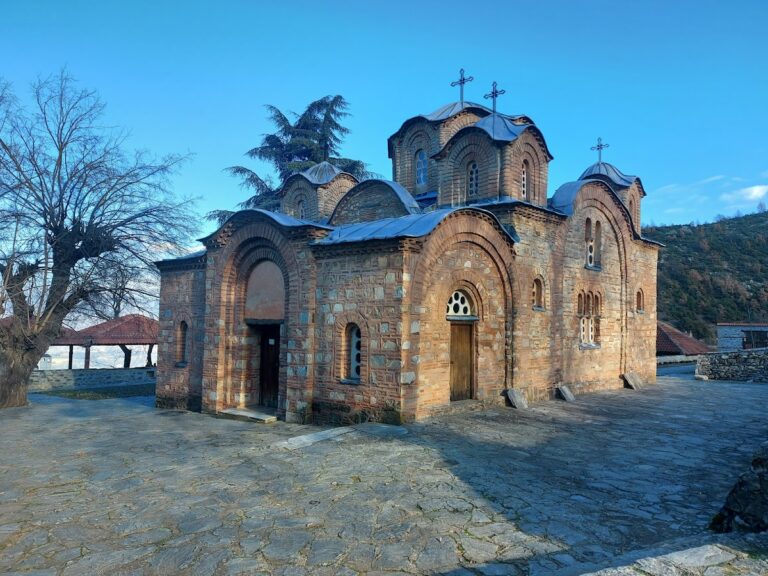
St. Demetrius Church (Markova Sušica) is the principal church of Markov Monastery near Skopje, North Macedonia. Built in the mid-fourteenth century, with 1345 given as its construction date, it belongs to the medieval Orthodox tradition associated with the Serbian political world of the Balkans. Its founders were the rulers King Vukašin and King Marko. Marko is identified as the church’s ktitor, meaning its founder or principal patron, and as the patron of the monastery that bears his name.
Medieval foundation and ecclesiastical setting
The church was associated with the Skopje Metropolitanate, the metropolitan see of the Skopje region within the Peć Patriarchate, a major Serbian Orthodox ecclesiastical jurisdiction. Its foundation is also linked to a later tradition. According to legend, monks who had fled Markov Monastery built the church during the first half of the fifteenth century. Numerous later alterations have made the building’s original form difficult to determine.
Nineteenth- and twentieth-century changes
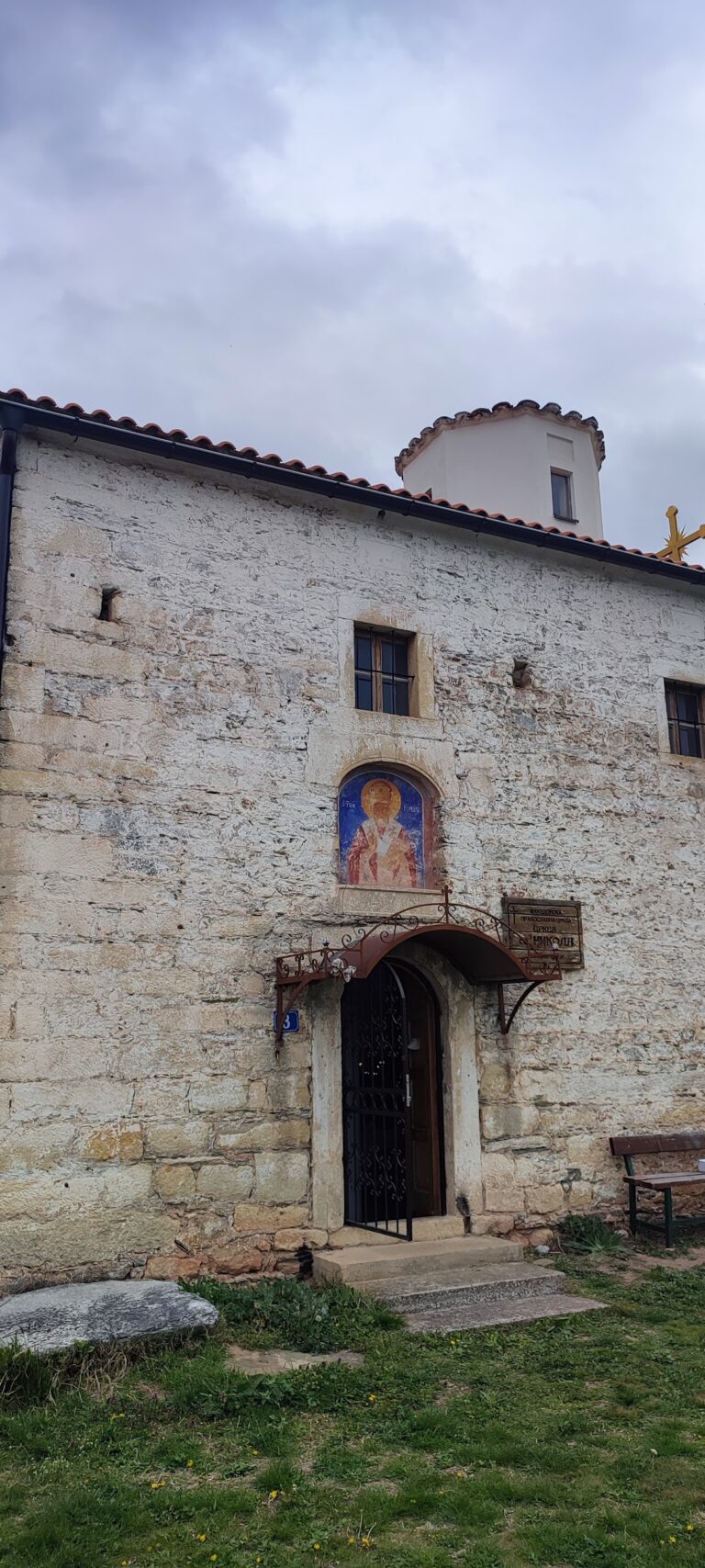
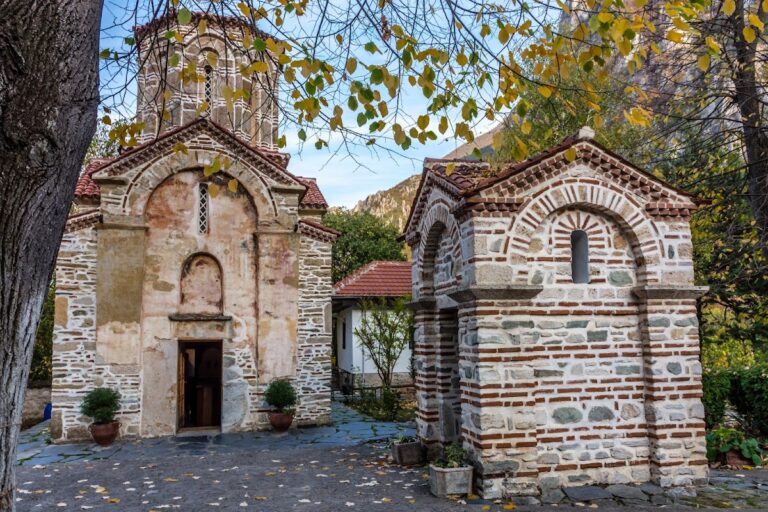
St. Demetrius Church underwent renovations in 1825, 1864, 1886, 1894, and 1896. The work between 1886 and 1894 both renovated and enlarged the church, giving it the appearance it has today. Dame, the son of the prominent Balkan church architect Andreja Damjanov, carried out this later work. Many older frescoes and other important details were damaged during the renovation, and the wooden iconostasis was subsequently repainted by the Macedonian religious painter Dimitrija Papradiški.
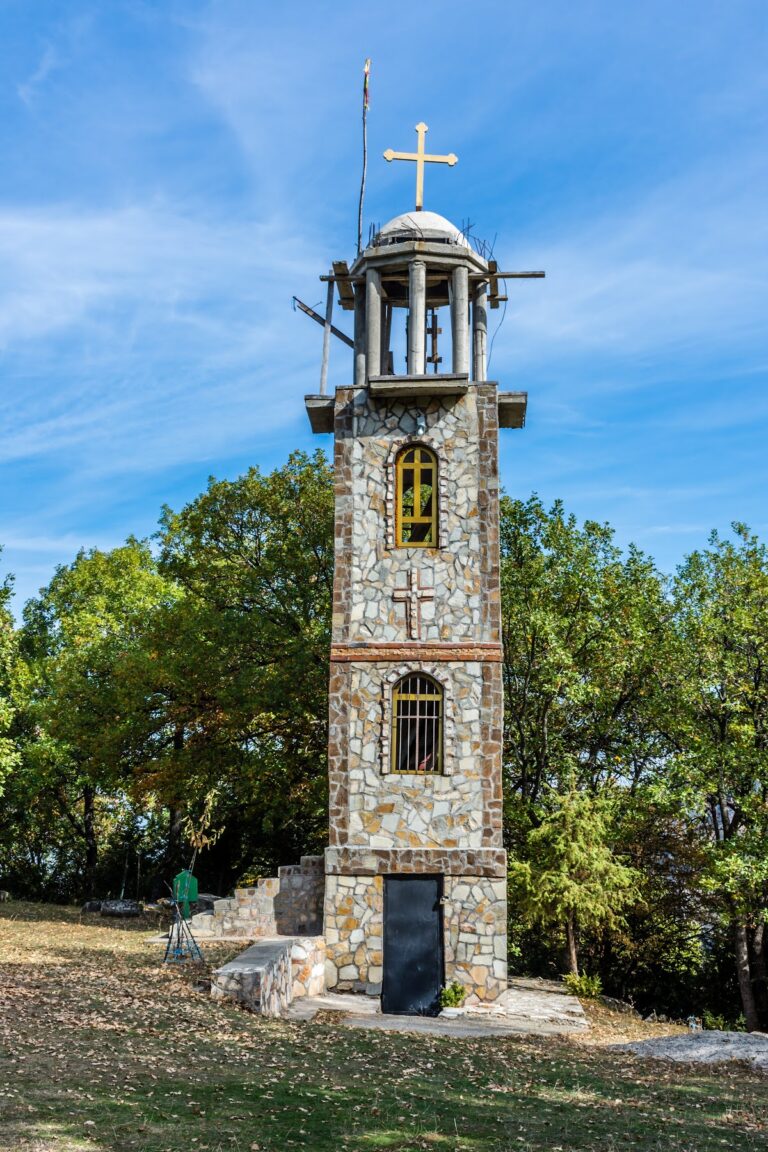
A church tower was added in 1907 and 1908. The church also contains the grave of the first head of the restored autocephalous Macedonian Orthodox Church, who held the title Archbishop of Ohrid, the senior hierarch associated with the historic see of Ohrid.
Remains
Building form and interior
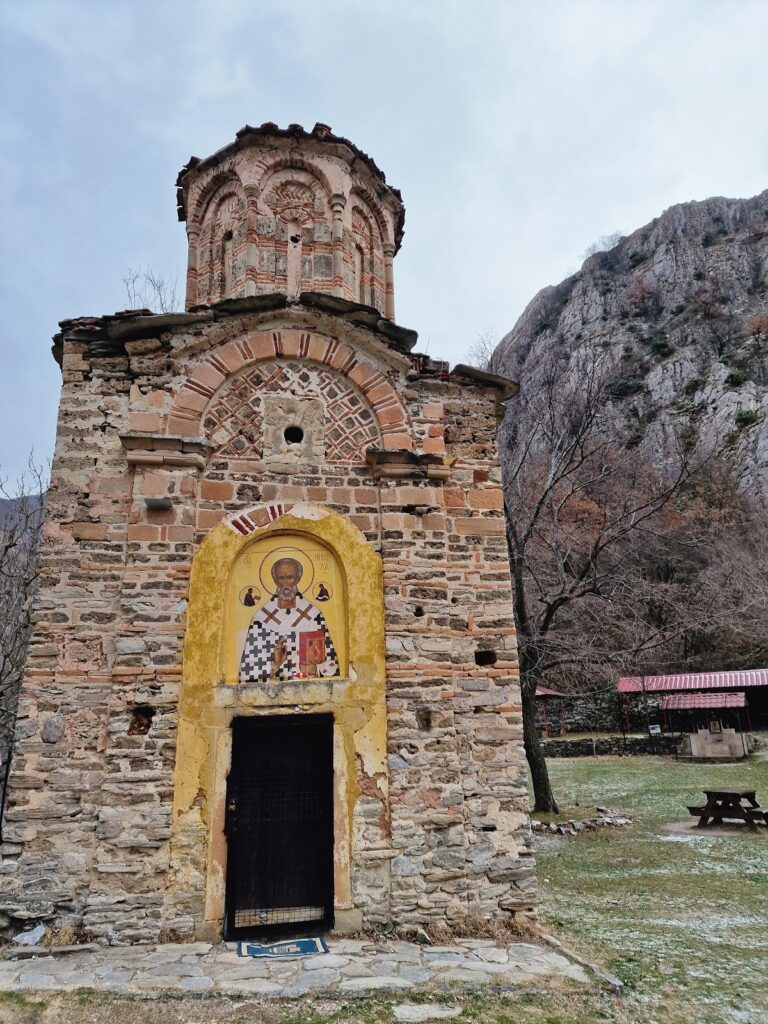
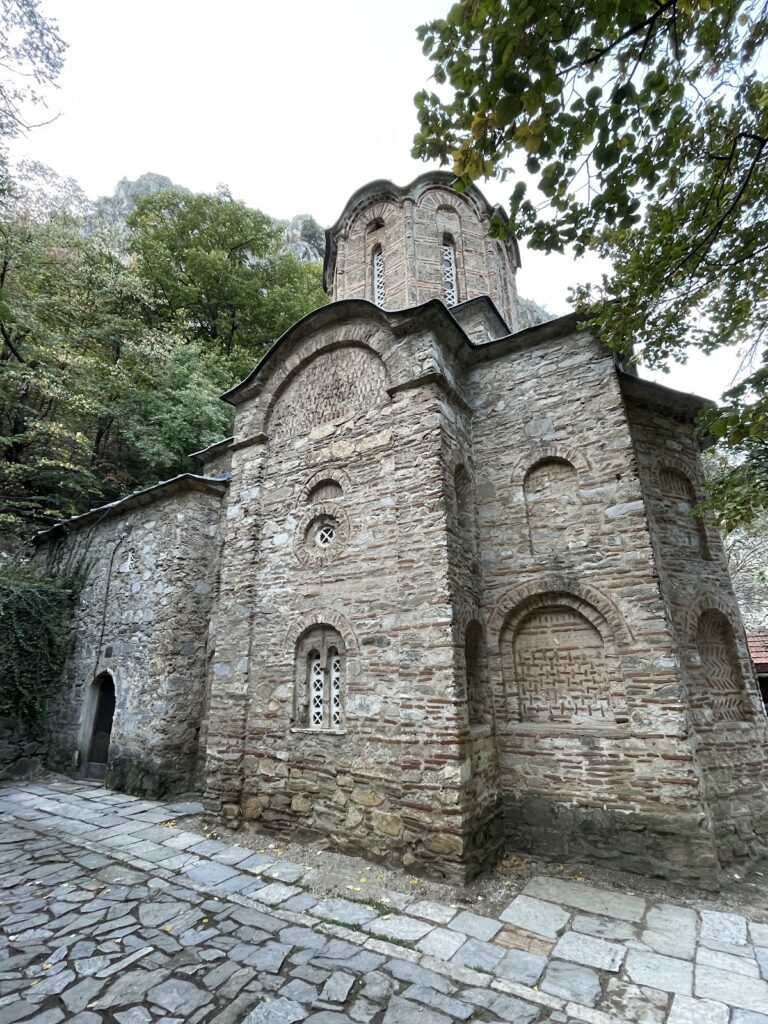
Constructed from stone and mortar, the church has a ship-shaped form. Its interior contains a gallery, spaces for the choir, and a bishop’s throne. Several architectural elements have been compared with the church of Pustinja Monastery. These include the masonry screen separating the altar area, the slender high drum supporting the dome, and the broad shallow vertical strips, or lesenes, that articulate the façades. The upper parts of St. Demetrius Church have also led some authors to associate it with the Morava churches, a group of late medieval Serbian churches linked with the Morava architectural style. The building is described as somewhat older than the Pustinja church.
Iconostasis
The three-tiered iconostasis, the screen separating the sanctuary from the main body of the church, rises to a cross. Its central Royal Doors are wooden, with shallow relief carving and gilding, and show the Annunciation. The first tier contains icons of the Virgin and Christ, Saint Demetrius, Christ, Saint John the Baptist, other saints, and feast scenes. The Last Supper occupies the center of the second section. On the right side of the third tier are scenes of Christ’s Ascension and the Virgin’s Ascension.
Fresco cycles
The frescoes are arranged in several zones across the interior. They include full-length figures of saints, scenes from the Akathist of the Virgin, a major Orthodox hymn cycle devoted to the Virgin Mary, and episodes from Christ’s life, miracles, and Passion. The program also includes the Twelve Great Feasts, the principal feasts of the Orthodox liturgical year, together with scenes from the lives of Saint Nicholas and Saint Demetrius, the church’s patron. The cycle includes the composition known as the Lamentation of Rachel, while the dome bears frescoes of the Passion of Jesus Christ.
Founder portraits and entrance paintings
Frescoes of Saint Demetrius and Saint Petka, the Orthodox name for Paraskeva of the Balkans, decorate the area around the southern entrance. Above the southern doorway, King Marko and King Vukašin appear as full-length figures. Marko wears royal clothing ornamented with pearls and precious stones and holds an unfurled scroll stating that, in Christ God, the pious King Marko built and painted the church. Vukašin stands opposite him with a scroll that names him.
Portraits of the founders were also painted on the northern wall. They survive only in badly damaged fragments, which makes their identities difficult to establish.
Nearby sites