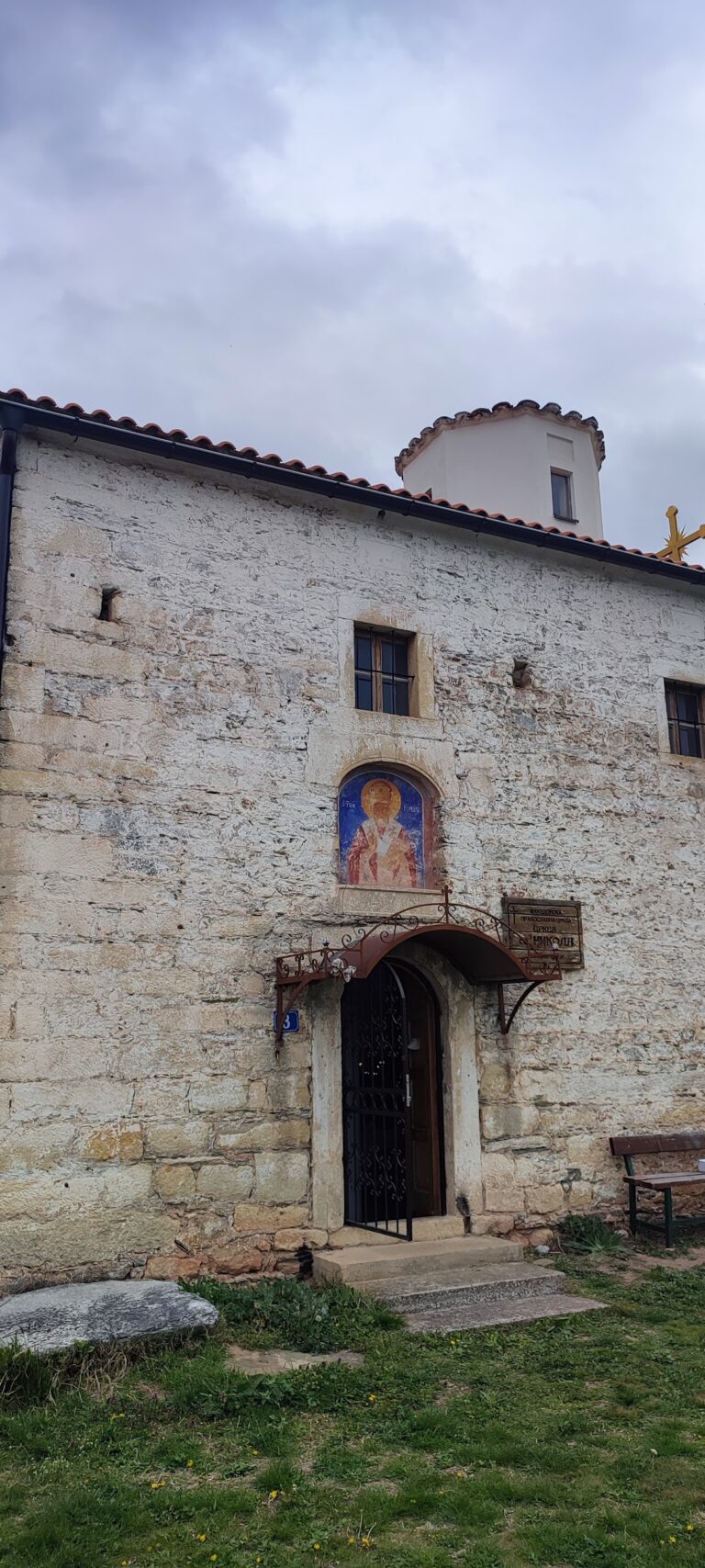
Andreaš Monastery: A Fourteenth-Century Orthodox Church near Skopje


Site at a Glance
- Rating
- 4.3
- Popularity
- Very Low
- Country
- North Macedonia
- Primary era
- Medieval
- External website
- Open
- Eras represented
- Medieval, Early Modern
- Civilizations
- Ottoman, Serbian
- Site type
- Religious
- Remains
- Church
On this page11 sections
History
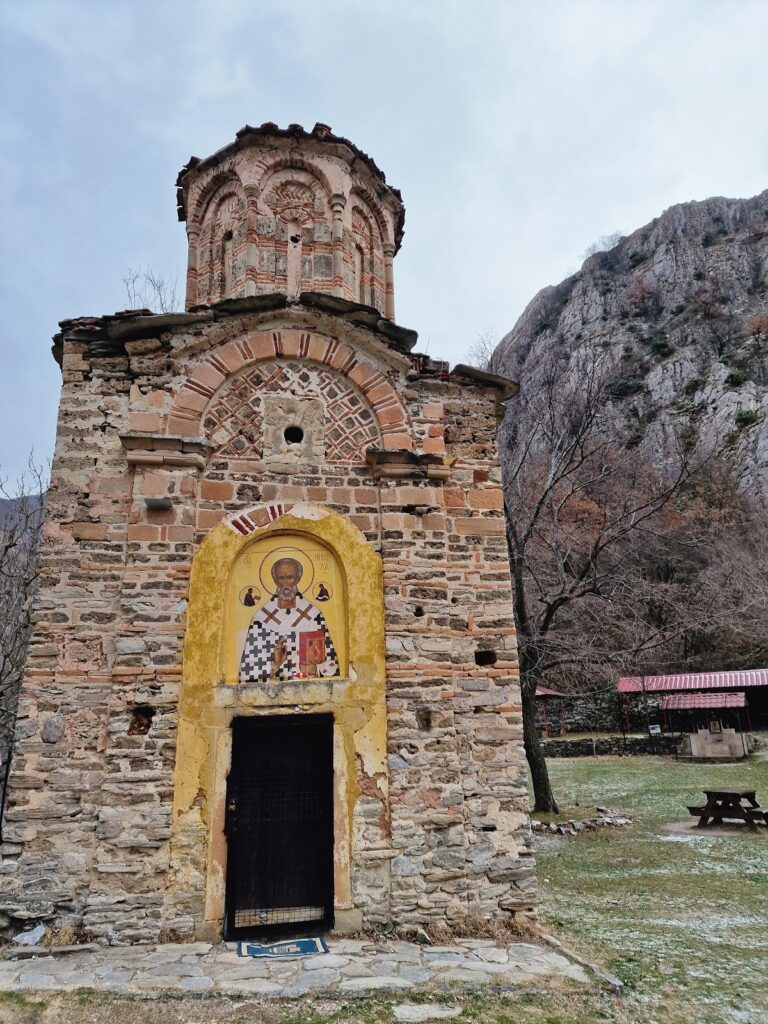
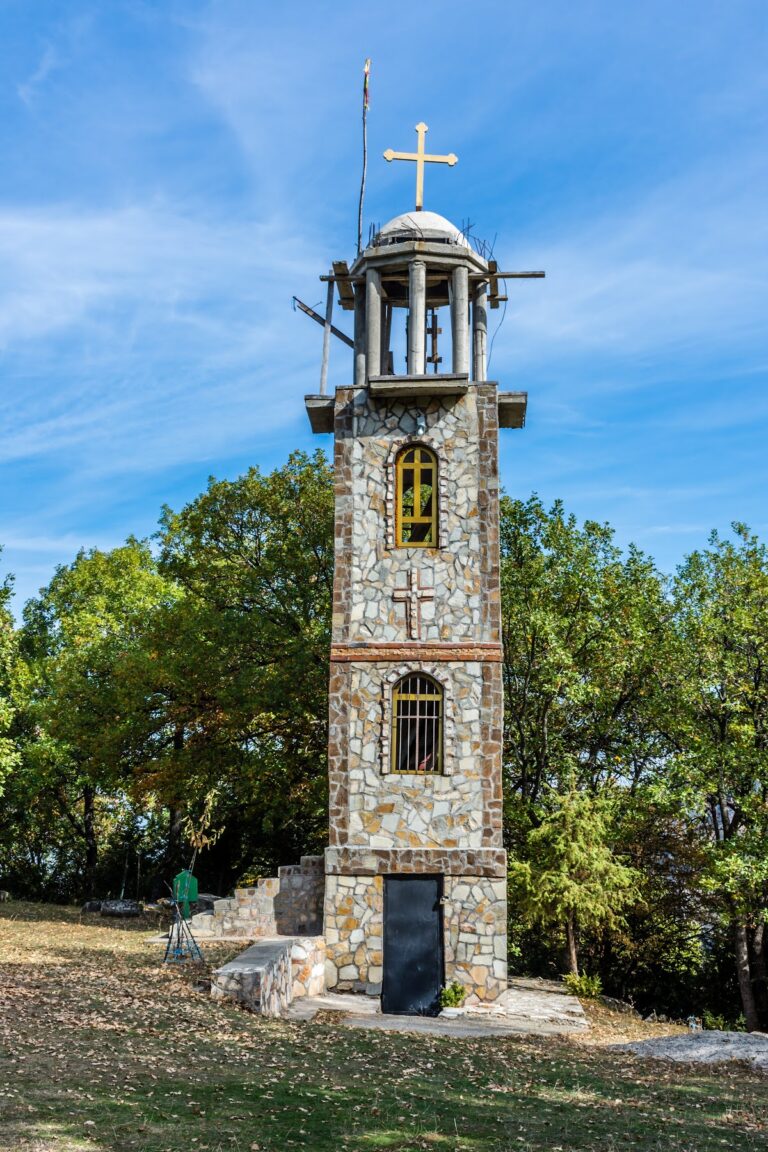
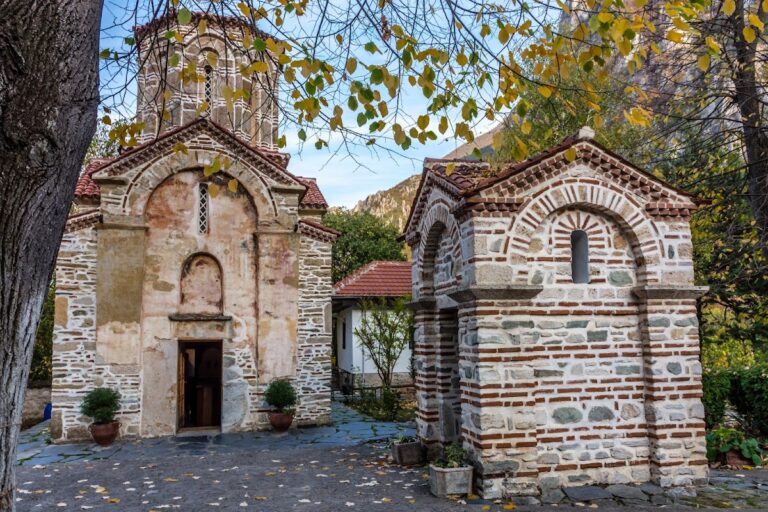
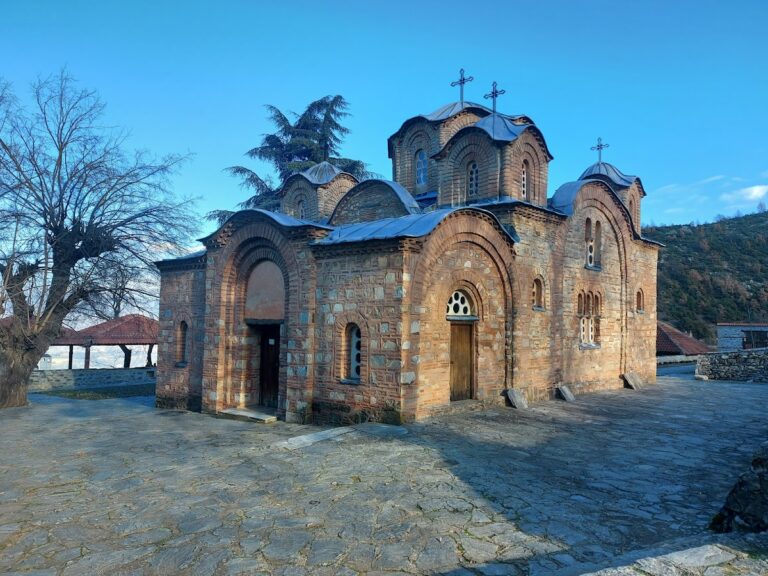
Andreaš Monastery is a small Orthodox monastery dedicated to the Apostle Andrew in North Macedonia, situated in the Treska River canyon beside Lake Matka, about 17 kilometres from Skopje. Its church was built in 1389 by Andreaš, the son of King Vukašin and a regional lord, during the period of the Kosovo Battle. The monastery is especially known for its late fourteenth-century frescoes, whose treatment of perspective, spatial composition, and warrior saints introduced notable innovations into Macedonian medieval painting.
Foundation and medieval painting
The church was established as a modest chapel-like building in the steep Treska gorge. Its restrained scale has been associated with the circumstances of its construction during a period marked by the Kosovo Battle. The painters were Metropolitan John, a senior Orthodox churchman and artist, and the hieromonk Gregory. An inscription north of the altar apse names them, while a donor charter attributed to Andreaš was written on the church walls. Most inscriptions from the church’s construction and first fresco campaign have survived.
The fresco scheme departed from the customary arrangement of subjects. It omitted, among other themes, Christ’s miracles, episodes from the life of the Virgin Mary, hermits, and the Communion of the Apostles. Instead, the selected scenes were presented with clarity, naturalism, and an accessibility intended for ordinary worshippers. The treatment of space and the unusually prominent representation of warriors give the interior a distinctive place in late fourteenth-century Macedonian painting.
Later additions and ecclesiastical history
The monastery was first connected with the Ohrid Archbishopric and later with the Bulgarian Exarchate. It is now under the Skopje Diocese of the Macedonian Orthodox Church–Ohrid Archbishopric, an Eastern Orthodox institution whose jurisdiction is centered in North Macedonia. A narthex, an entrance vestibule attached to the western end of a church, was added in the middle of the sixteenth century. A surviving part of a long inscription dates its fresco decoration to 1559–1560, and the paintings have been attributed to an artist from the school of John Theodorov.
Twentieth-century changes and protection
The monastery’s setting changed after a dam and hydroelectric facility were constructed in 1938. The former gorge landscape became the shore of the resulting Lake Matka reservoir. In 1932, monks who had fled Russia were present, although the church was closed and difficult to reach. By 1933, access was possible only by boat from the river. At that time, the frescoes were already old and damaged, and some visitors scraped away paint because they believed the removed material had healing powers. The fresco of the Samaritan Woman was singled out as particularly attractive. Andreaš Monastery is protected as a cultural monument.
Remains
The surviving church is an elongated, chapel-like structure about 15 metres long. Internally it follows a triconch plan, with three apsidal projections, while its exterior has a free-cross form. The northern and southern conches serve as choir apses, and the eastern conch forms the altar apse, which has a pentagonal exterior. Unlike a conventional triconch church, the side conches are enclosed externally within cubic wall masses. A single dome rises over the central space on pendentives, curved architectural transitions that support a dome above a square or polygonal area. Semicircular niches arranged in two superimposed rows enliven the exterior, whose decoration includes thin brick.
Late medieval frescoes
Warrior saints
The interior frescoes occupy three horizontal zones. The lowest zone contains full-length figures of George, Demetrius, Theodore Tiron, and Theodore Stratelates, Christian saints traditionally represented as military figures. They are shown with forceful physical presence, pronounced musculature, and carefully rendered military clothing or armour.
Passion scenes
The middle zone presents episodes from the Passion of Christ, including the Prayer on the Mount of Olives, the Washing of the Feet, the Last Supper, and the Descent from the Cross. In the Prayer on the Mount of Olives, one apostle appears in a foreshortened and freely composed pose. This figure demonstrates the painters’ interest in perspective and in placing bodies convincingly within space.
Great Feasts
The upper zone illustrates scenes from the cycle of Great Feasts, including the Nativity of Christ, the Presentation, and the Baptism of Christ. The figures combine strong expression, pronounced volume, and vivid colour. Architectural backgrounds provide settings into which the figures are incorporated. The restricted interior space shaped the selection and arrangement of the compositions.
Sixteenth-century narthex
The later narthex has a rectangular ground plan and a semicircular vault. Its surviving frescoes are concentrated mainly on the eastern wall. They include a Deesis, an iconographic group showing Christ enthroned between the Virgin Mary and John the Baptist, together with the Apostles Peter and Paul, scenes from the Akathist of the Virgin, and other compositions. The paintings display a degree of monumentality unusual for sixteenth-century work and were intended to harmonize with the older nave frescoes, although the difference in date and artistic level between the two campaigns remains visible.
Iconostasis
The church’s iconostasis, the decorated screen separating the sanctuary from the main body of an Eastern Orthodox church, was made by the Debar master Nestor Aleksiev. His work belongs to the church woodcarving tradition associated with Debar.
Nearby sites