St Collen’s Church: A Parish Church in Llangollen, Wales
Site at a Glance
- Rating
- 4.6
- Popularity
- Medium
- Country
- United Kingdom
- Primary era
- Modern
- Eras represented
- Medieval, Early Modern, Modern
- Civilizations
- British
- Site type
- Religious
- Remains
- Church
On this page15 sections
History
Early church and medieval development
St Collen’s Church is a parish church in Llangollen, Wales, United Kingdom, whose first foundation is traditionally placed in the sixth century. According to local tradition, Collen, a monk from Glastonbury and a figure of early Welsh Christian tradition, arrived by coracle, a small, lightweight boat, and founded a church here. The church remains the only one in Wales dedicated to Saint Collen.
A new church was built on the site in the thirteenth century and was developed in later centuries. The Welsh poet Gruffudd Hiraethog, who died in 1564, was associated with the church through his burial in its vault.
The Ladies of Llangollen
Eleanor Charlotte Butler and Sarah Ponsonby worshipped at the church in the early nineteenth century. They had met in 1768 and left Ireland about a decade later to avoid the threat of forced marriages. They made their home at nearby Plas Newydd. Their partnership, which lasted nearly sixty years, drew both fascination and scandal in nineteenth-century Britain.
Victorian reconstruction
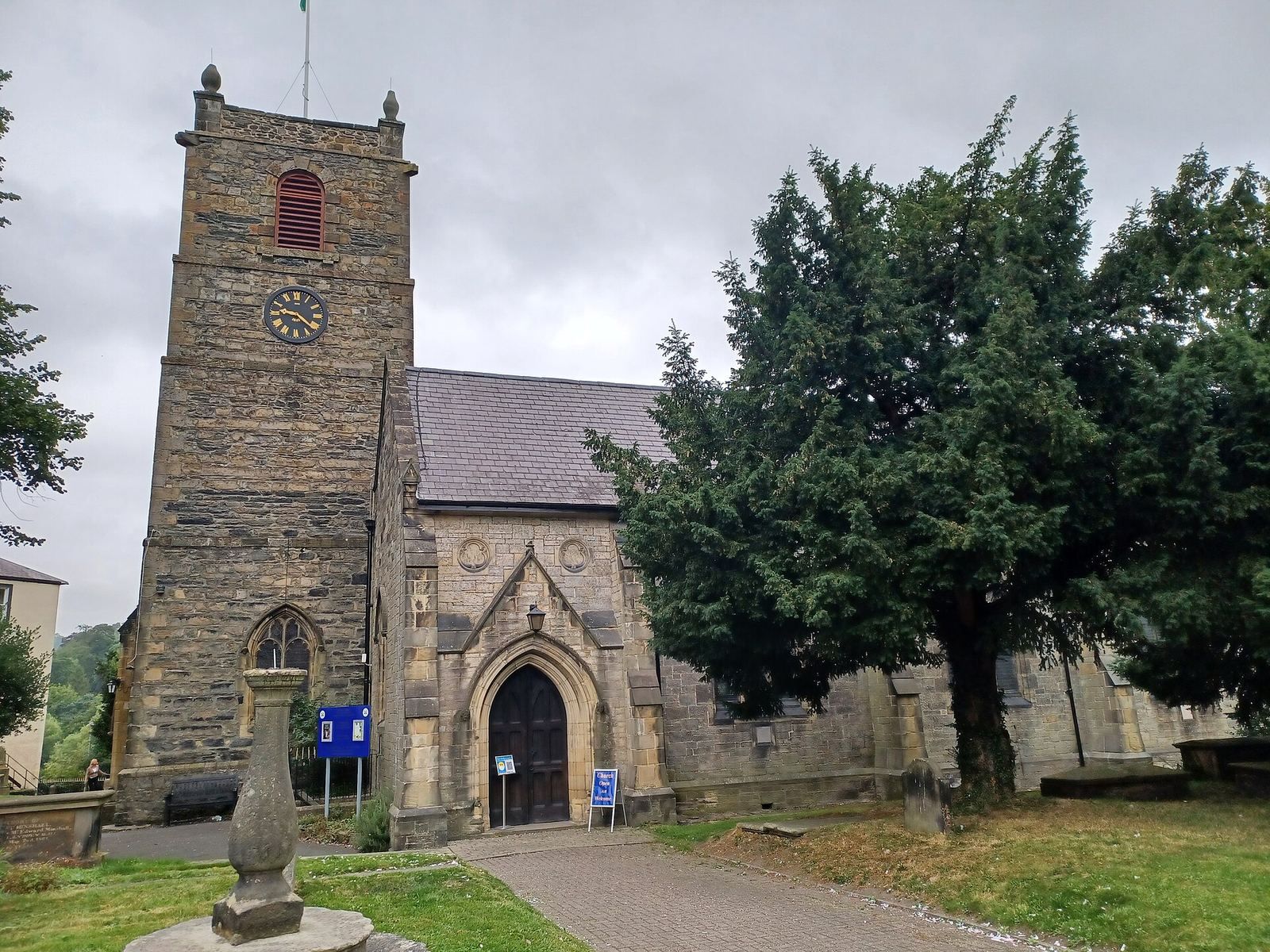
Between 1864 and 1867, architect Samuel Pountney Smith almost completely rebuilt the church. The eighteenth-century tower was retained to reduce costs, while the rest of the building was substantially renewed.
Listing and continuing use
Cadw, the Welsh government’s historic-environment service, designated the church a Grade I listed building on 24 April 1951. Grade I is the highest listed-building category in England and Wales, reserved for buildings of exceptional special interest. St Collen’s remains an active parish church in the Church in Wales, the Anglican church body in Wales, and belongs to the Diocese of St Asaph, a church district overseen by a bishop.
On 13 November 2021, the church hosted the first blessing of a same-sex partnership in a Church in Wales church, following a change to church rules that September. Bishop Gregory Cameron conducted the ceremony for the church’s vicar, Father Lee Taylor, and his partner.
Remains
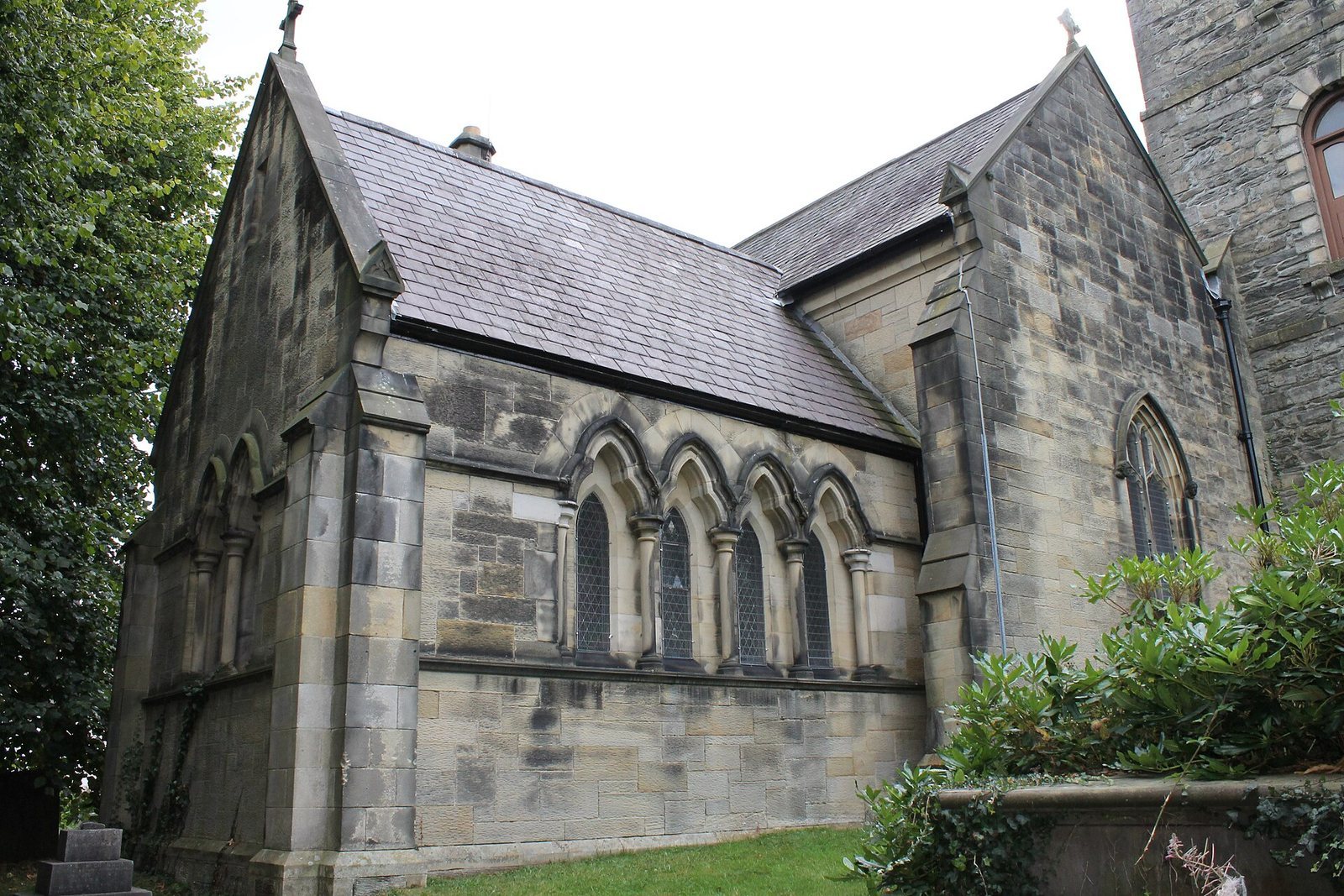
The present church has three aisles alongside its nave, with a body built of coursed rubble, rough stone laid in regular horizontal rows, and a slate roof. Its surviving fabric brings together the Victorian reconstruction and older features. Part of the church forms a section of the churchyard boundary, an arrangement that may reflect the medieval layout.
Church fabric and interior
Medieval survivals
The thirteenth-century church had two nave spaces. A fragment of a medieval stone shrine is incorporated into the present building, and the church’s unusual relationship to the churchyard boundary may also preserve an aspect of the earlier arrangement.
Tower
The retained eighteenth-century tower has four storeys and urn-like pinnacles.
Medieval roofs
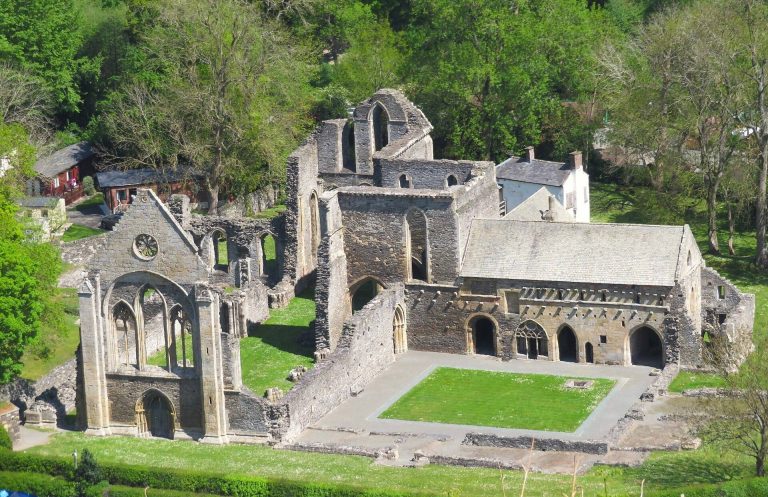
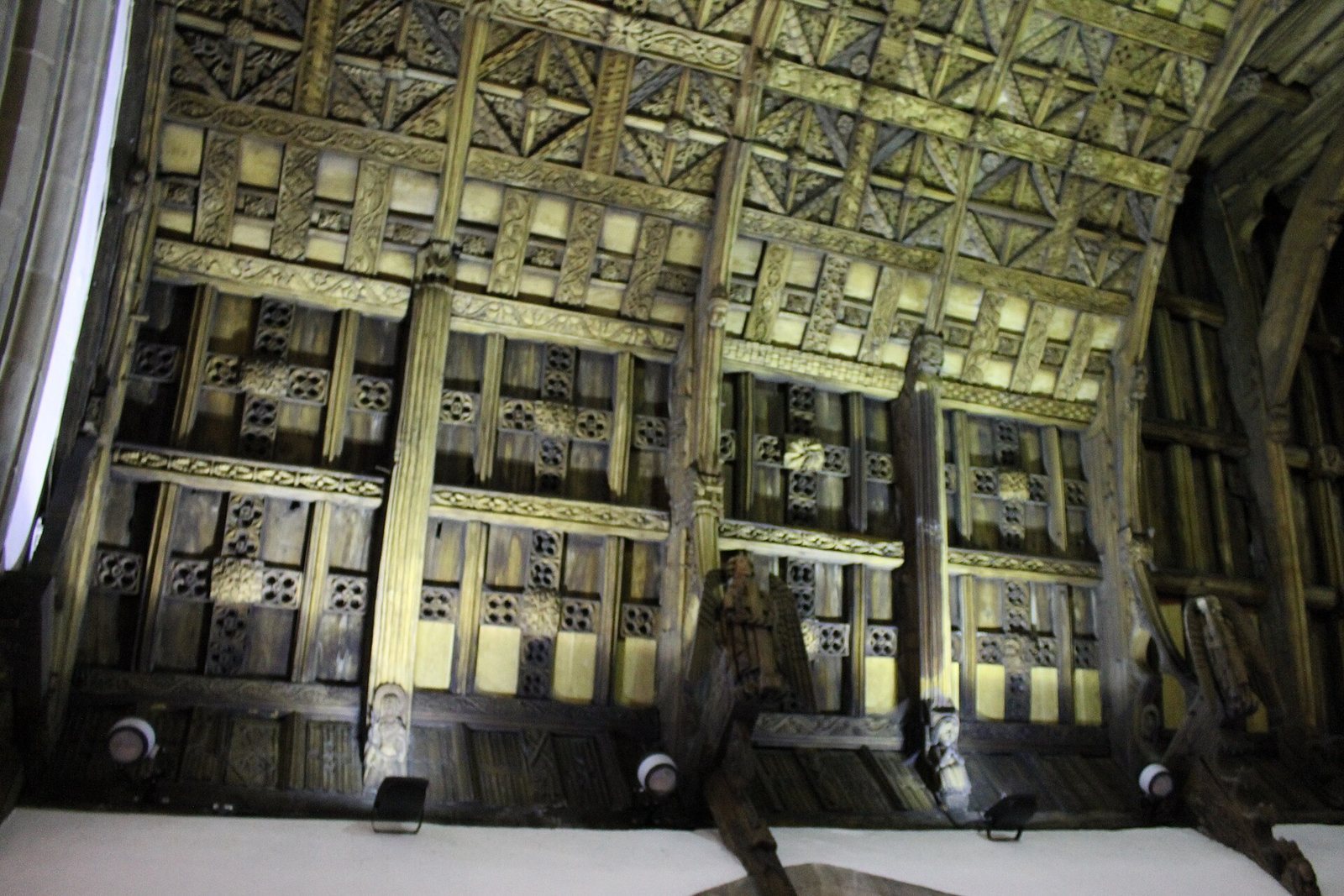
The nave’s carved hammerbeam roof is a timber structure with short projecting beams supporting the frame. It is medieval and carries Celtic motifs and imagery. It is sometimes said to have come from Valle Crucis Abbey, a medieval Welsh abbey, but Cadw and architectural historian Edward Hubbard question that attribution. A separate medieval roof in the north aisle also has Celtic motifs and imagery.
Windows and furnishings
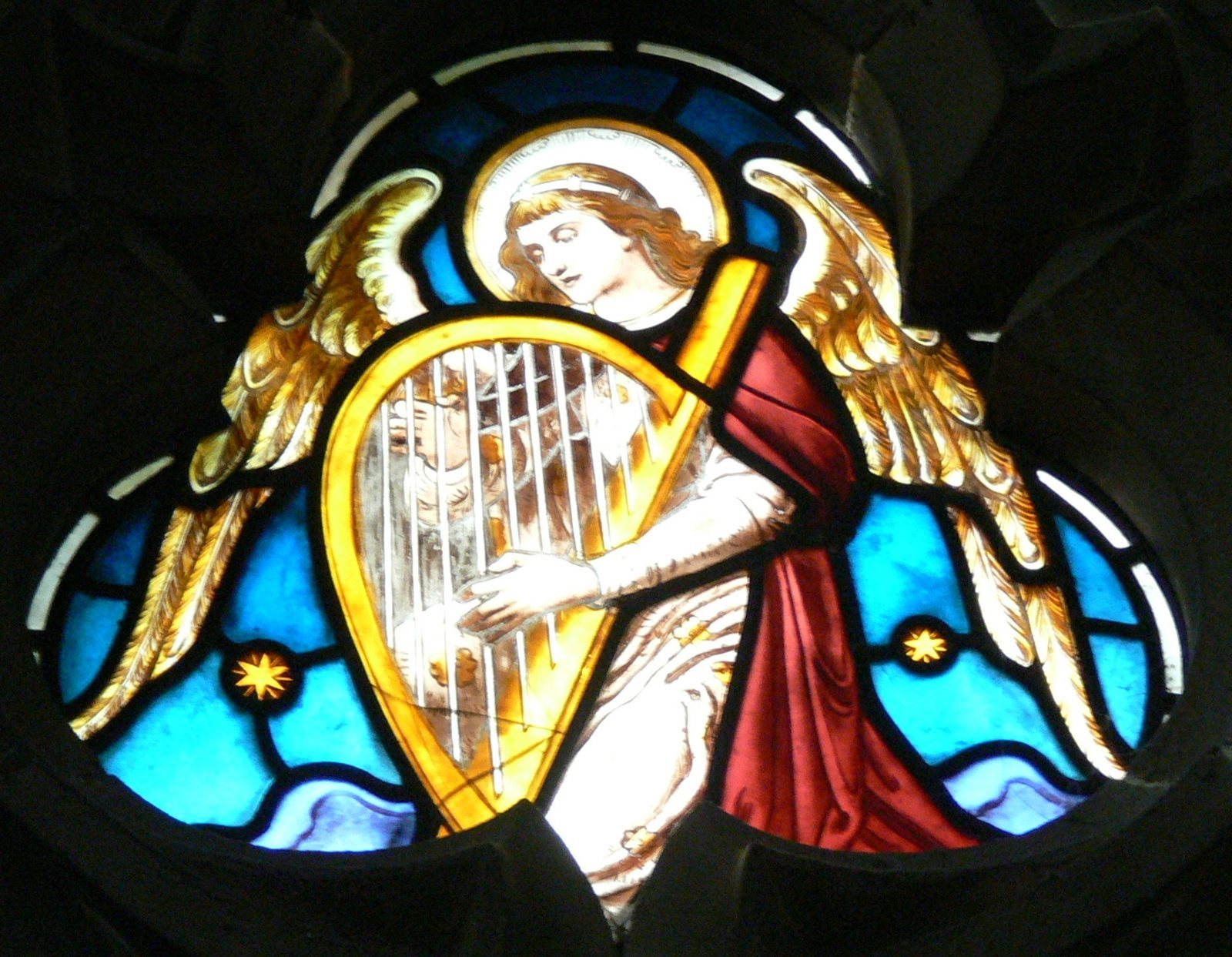
Victorian stained glass in the church includes work by Alexander Gibbs, Done & Davies, and William Holland. The font dates from the reconstruction; Hubbard described it as exceptionally large and exuberant. Finely carved furnishings include sedilia, seats for clergy, and a piscina, a basin for washing sacred vessels.
Churchyard and burials
Churchyard tomb
A tomb designed by Thomas Parker holds the graves of Mary Carryl, Eleanor Butler, and Sarah Ponsonby. Carryl, the women’s servant, died in 1809; Butler and Ponsonby were buried there after their deaths in 1829 and 1831.
Church vault
The church vault contains the burial of Gruffudd Hiraethog, the Welsh poet who died in 1564.
Sundial and wall
The churchyard also contains a sundial and a wall to the north of the church.