Soleb: An Ancient Nubian Town and Temple Site in Sudan
Site at a Glance
- Popularity
- High
- Country
- Sudan
- Primary era
- Bronze Age
- Eras represented
- Bronze Age, Classical
- Civilizations
- Egyptian, Kushite
- Site type
- Religious
- Remains
- Temple
On this page10 sections
History
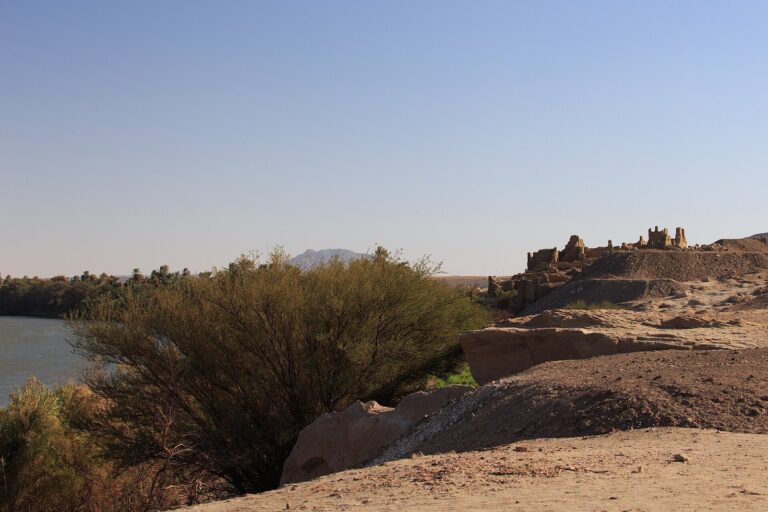
Soleb was an ancient Nubian town and temple site on the Nile’s west bank in present-day Sudan, about 500 kilometres south of Aswan and between the river’s second and third cataracts, its rocky stretches of rapids. During Egypt’s Eighteenth Dynasty, Pharaoh Amenhotep III built a large sandstone temple there, dedicated to Amun-Re and to the king in deified form. It is the southernmost temple currently known to have been built by him. Its architect may have been Amenhotep, son of Hapu, an Egyptian official and architect.
Amenhotep III and the temple
Amenhotep III also built a companion temple at Sedeinga for Queen Tiye, presenting her as the Eye of Ra, a protective manifestation of the sun god. The two temples thus linked the royal couple with Egyptian religious beliefs, while the Soleb temple honored Amun-Re and the deified king.
Religious change and royal inscriptions
During Akhenaten’s reign, the king was first shown at Soleb worshipping his father and Amun. Akhenaten later rededicated the temple to Aten, the sun disk, as part of his religious reforms. His successor Tutankhamun reversed those reforms and restored the dedication to Amun-Re. He completed the second granite lion at the temple, and Ay later added his name to the Prudhoe Lions.
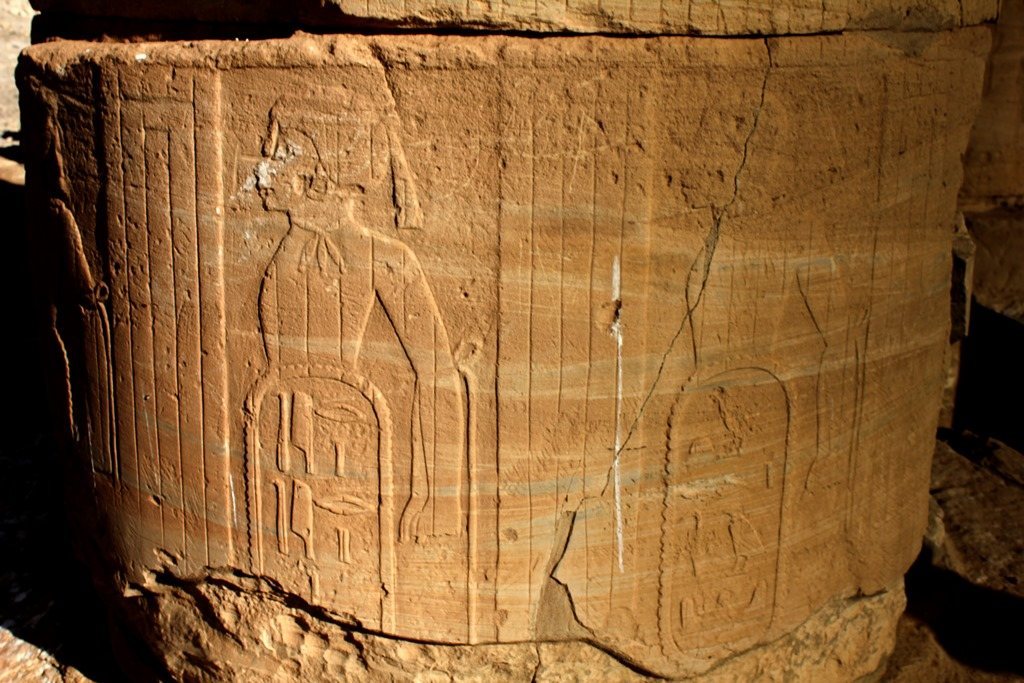
Inscriptions on the temple columns name peoples regarded by Egypt as enemies. They present Egyptian victories, which may be exaggerated, but also preserve names of groups that the Egyptians considered hostile. One inscription gives a name transcribed as tꜣ šꜣsw Yhwꜣ, translated as “land of the Shasu, those of Yhwꜣ” or “land of the nomads of Yhwꜣ.” The Shasu were groups described in Egyptian texts as nomads. The name has been read as Yahwa, while Yehua has also been proposed. Palestine and Syria have both been suggested as its location. An association between the Shasu of Yhwꜣ and the Israelites has been proposed because of the resemblance to Yahweh, but the available evidence is too limited to establish that identification.
Burials and modern investigation
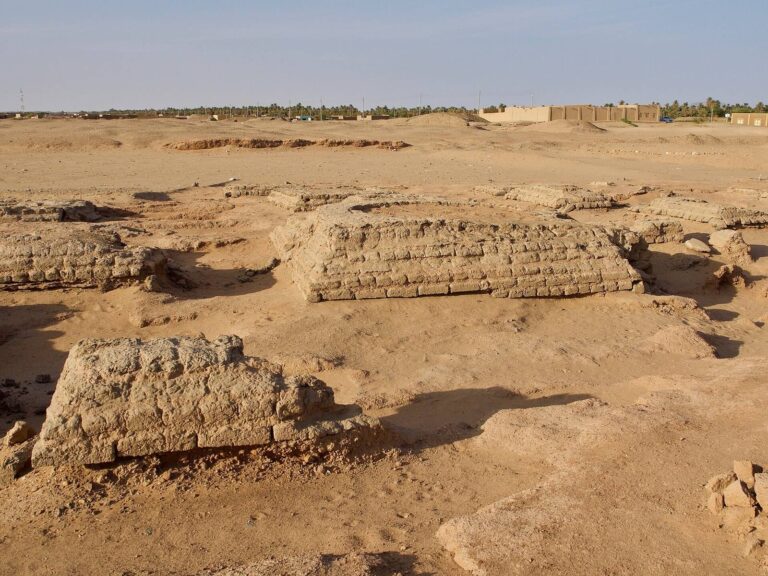
Soleb’s extensive necropolis includes royal tombs from the Eighteenth Dynasty, as well as burials from the later Ramesside era, associated with Egypt’s Ramesside rulers, and the Meroitic period of the kingdom of Meroe.
Major Felix led an expedition to Soleb in 1829 and identified prisoner inscriptions on visible columns as records of Amenhotep III’s victories. Karl Richard Lepsius described the site and made a plan in 1844. Sector IV of the hypostyle hall had been ruined, demolished, and partly buried in sand before it was rediscovered centuries later. Excavations led by Michela Schiff Giorgini from 1957 to 1963 reassembled other temple remains from identified fragments, including surviving prisoner inscriptions.
Remains
The temple
Sandstone structure
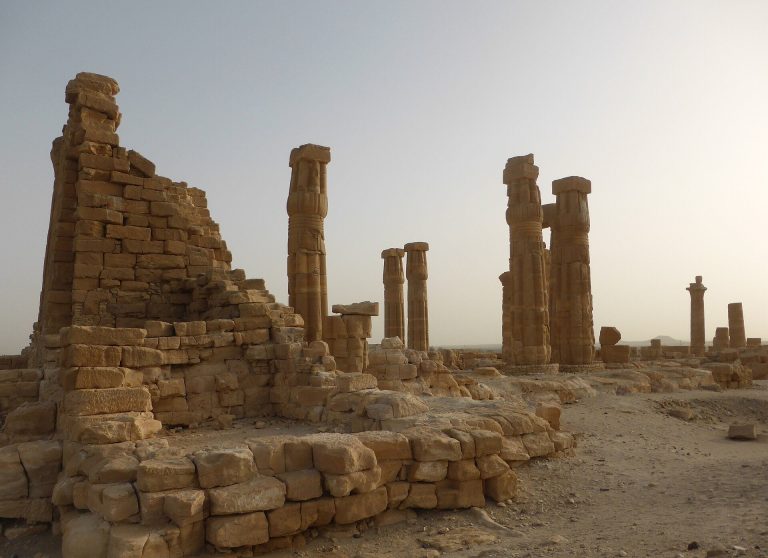
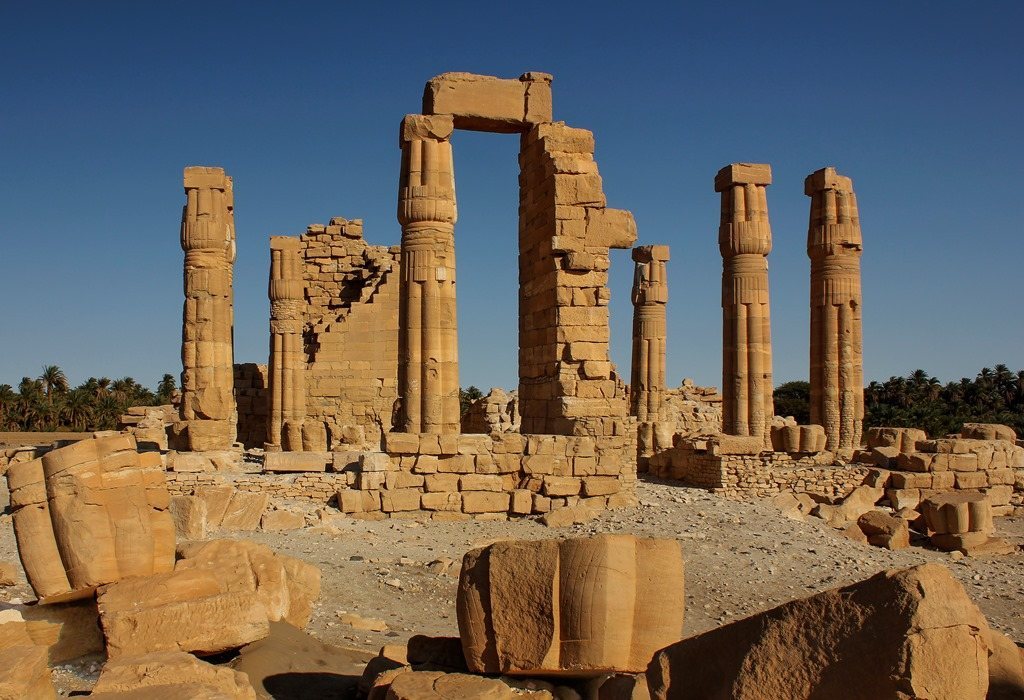
The principal architectural remains at Soleb are a large sandstone temple, now in ruins. The temple’s image of Amenhotep III as a deified king includes ram’s horns.
Hypostyle hall
The temple’s hypostyle hall is a large interior space supported by columns. Three preserved lists of foreign places and peoples appear on the columns. Each list includes a captive soldier with bound arms and a shield; writing on each shield identifies the town or place associated with the figure. Some of the column texts are linked with a throw-stick symbol.
Prudhoe Lions
The Prudhoe Lions are guardian figures that originally stood at the temple. The sculptures depict a lioness associated with Sekhmet, a goddess linked with royal protection, and bear Amenhotep III’s name.
Necropolis
The extensive burial area contains small tomb chapels decorated with pyramids. Together with the temple, these remains preserve evidence of activity at Soleb across several periods of Nubian and Egyptian history.