St John’s, Smith Square: An Anglican Church and Concert Hall
Site at a Glance
- Rating
- 4.6
- Popularity
- High
- Country
- United Kingdom
- Primary era
- Early Modern
- Eras represented
- Early Modern, Modern
- Civilizations
- British
- Site type
- Religious
- Remains
- Church
On this page9 sections
History
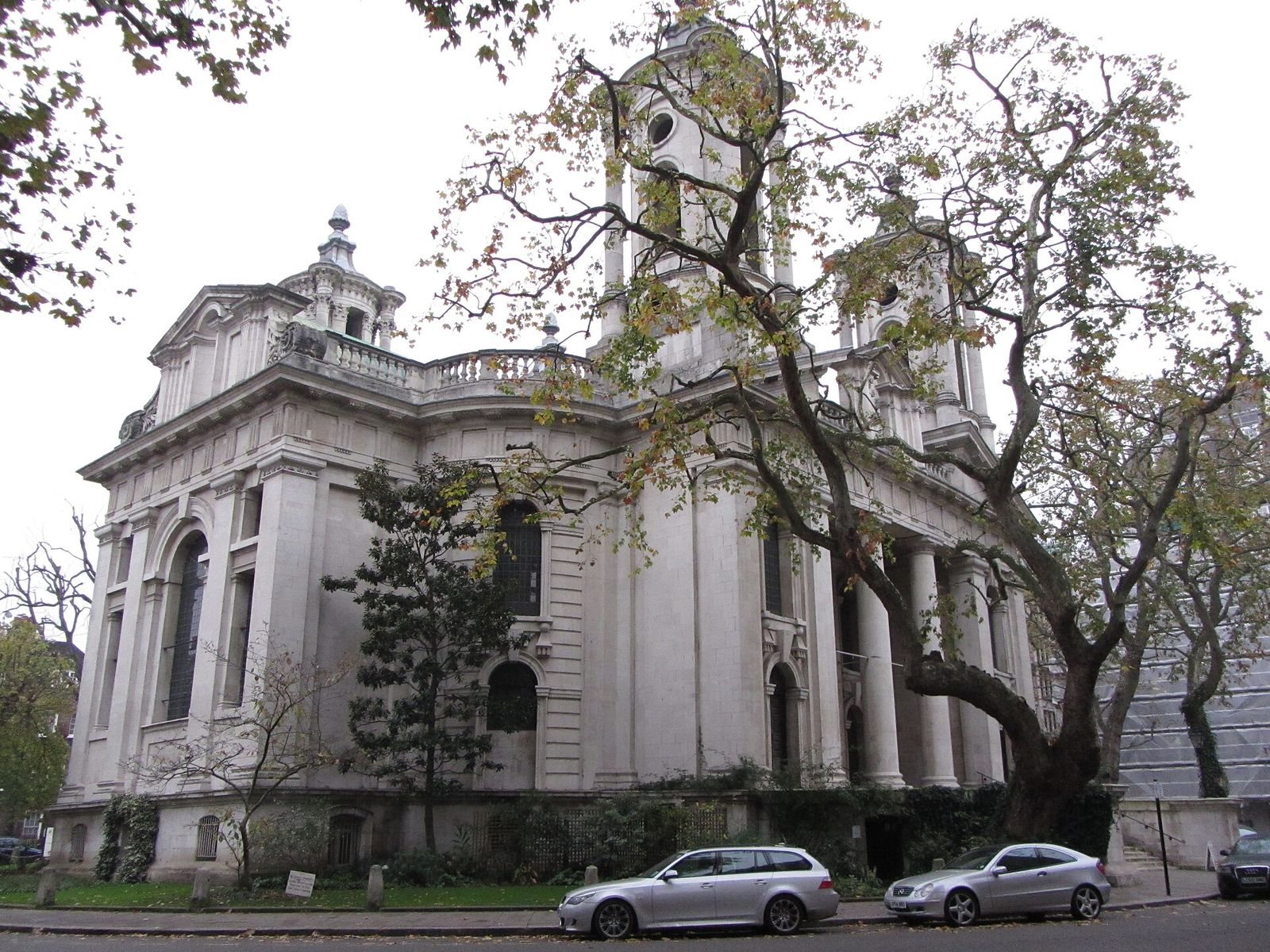
St John’s, Smith Square is an Anglican church in the United Kingdom. Built in the English Baroque style, known for its dramatic forms and ornament, it was dedicated to St John the Evangelist and formed part of a government-backed programme to build churches in London and Westminster. Construction began in 1713, and the church was completed and consecrated in 1728.
Construction for the Fifty New Churches programme
The programme followed storm damage to church buildings in November 1710 and a Tory campaign to strengthen the Church of England, England’s established Protestant church. An Act of Parliament in 1711 imposed a tax on coal entering the Port of London and set up a commission to oversee the new churches. Thomas Archer, an English architect and member of the commission, designed St John’s. The site was purchased from Henry Smith in June 1713 for £700, and building began immediately. Edward Strong the Younger carried out the construction, which cost £40,875 in total.
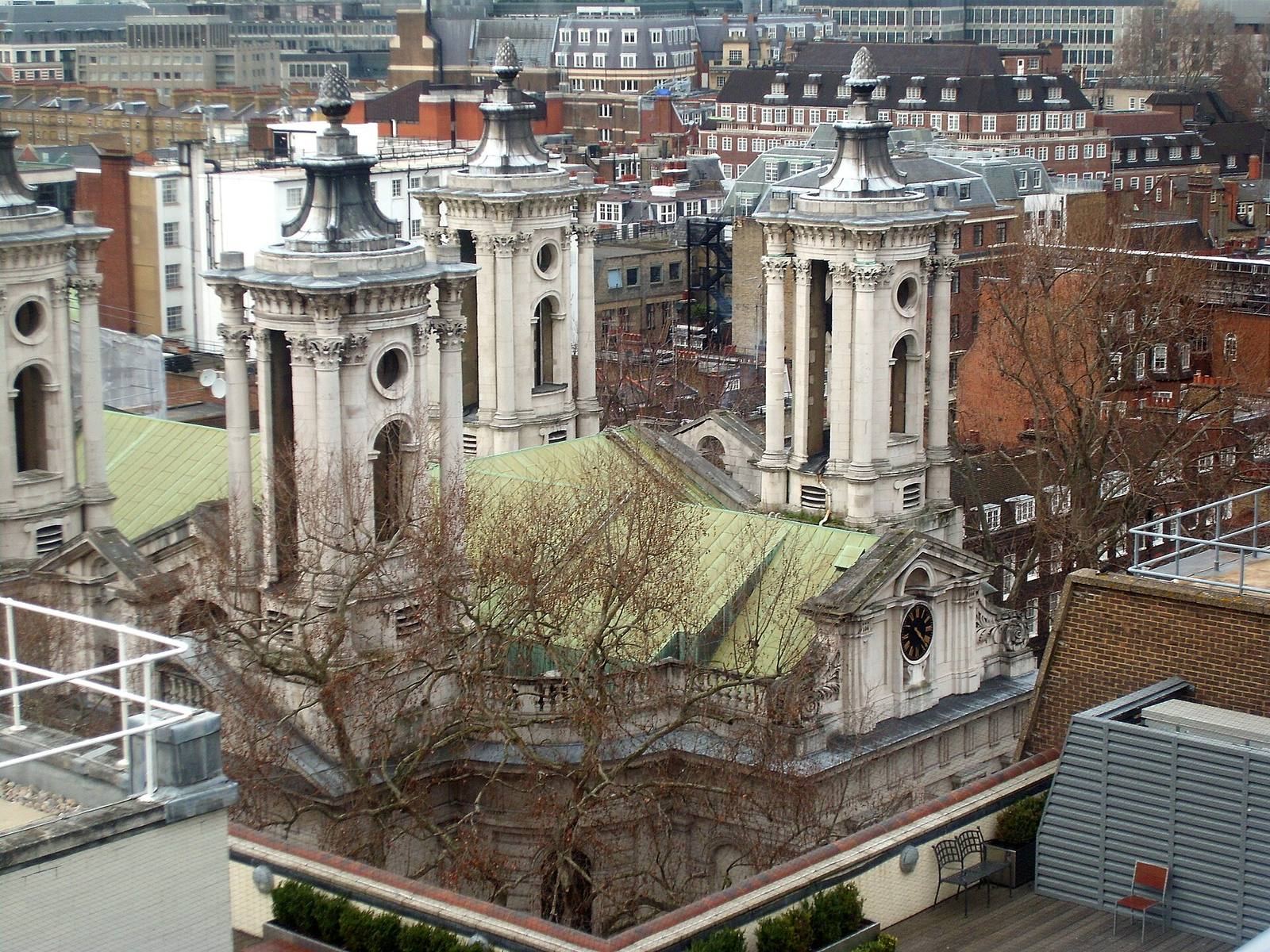
A tradition links the church’s design to Queen Anne, who supposedly kicked over her footstool and told Archer to make the building like that. The story connects the gesture to the four corner towers. In practice, the towers were added to help stabilize the building against subsidence.
Parish church and wartime destruction
St John’s served its parish for 213 years. A fire in 1742 led to extensive restoration of the interior. Lightning struck the church in 1773, and in 1815 work was needed to shore up the towers and roof. In 1840, the rectorship, or office of parish rector, was attached to a canonry, a clergy position, at Westminster Abbey held by John Jennings. Afterward, whoever held that canonry also became rector of St John’s. Randolph Churchill, son of Winston Churchill, married Pamela Digby at the church in 1939. In 1950, St John’s parish was united with that of St Stephen’s, Rochester Row.
On 10 May 1941, an incendiary bomb struck the church during an air raid and the resulting fire gutted the building. Its ruin remained open to the sky for more than 20 years.
Restoration and concert use
In 1962, Lady Parker of Waddington established the Friends of St John’s to raise funds to save the building and restore it as a concert hall. The church was formally deconsecrated in 1964, and restoration began the following year. Eleanor Warren, a former cellist, organized BBC broadcasts from the restored church. Its distance from traffic, including Underground trains, made it suitable for radio concerts, which were broadcast on Monday lunchtimes.
An appeal launched in 1986 funded a new concert organ, incorporating an older case donated by Sir Duncan Oppenheim. Built by Johannes Klais of Bonn, the instrument was completed in 1993 and named the Sainsbury Organ in recognition of the Sainsbury family’s major contribution. Exterior cleaning and stonework repairs were completed in 1999. The charity operating the venue merged with Southbank Sinfonia in 2021, and the operator adopted the name Smith Square Hall in 2024. The building is Grade I listed, England’s highest statutory protection category for buildings of exceptional architectural or historic interest.
Remains
The church stands at the centre of Smith Square. Its plan is roughly square and almost symmetrical, with interlocking interior spaces that can be understood either around a central arrangement or along the building’s length.
Exterior
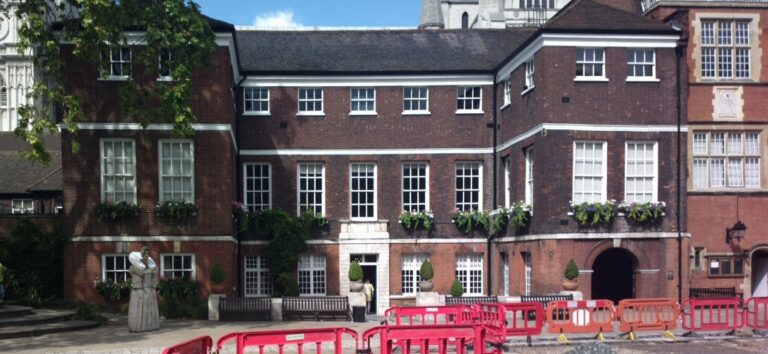
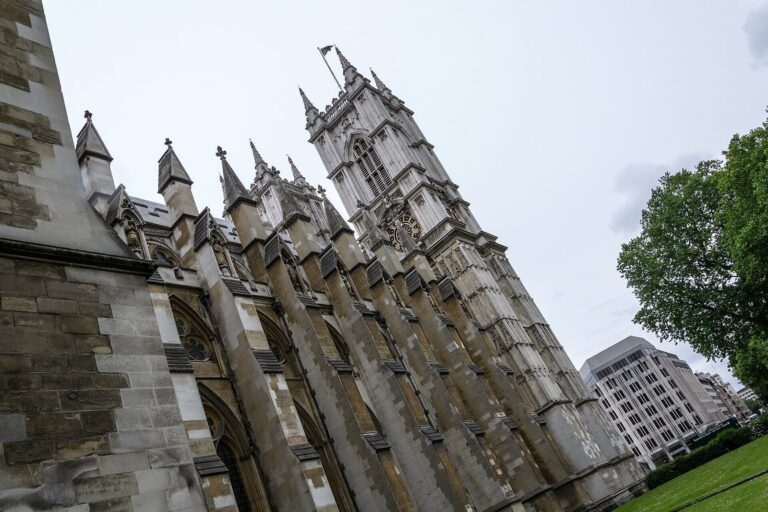
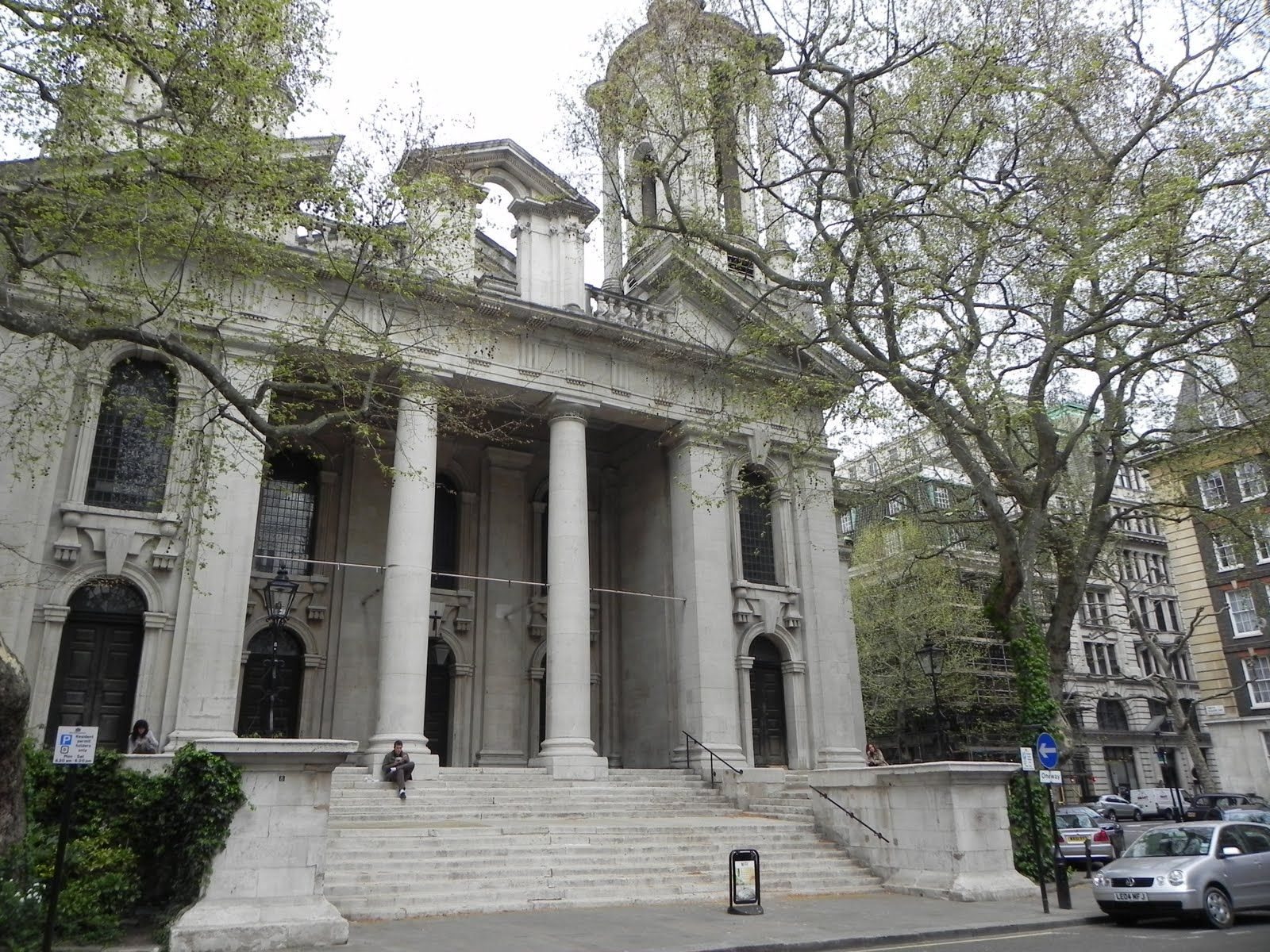
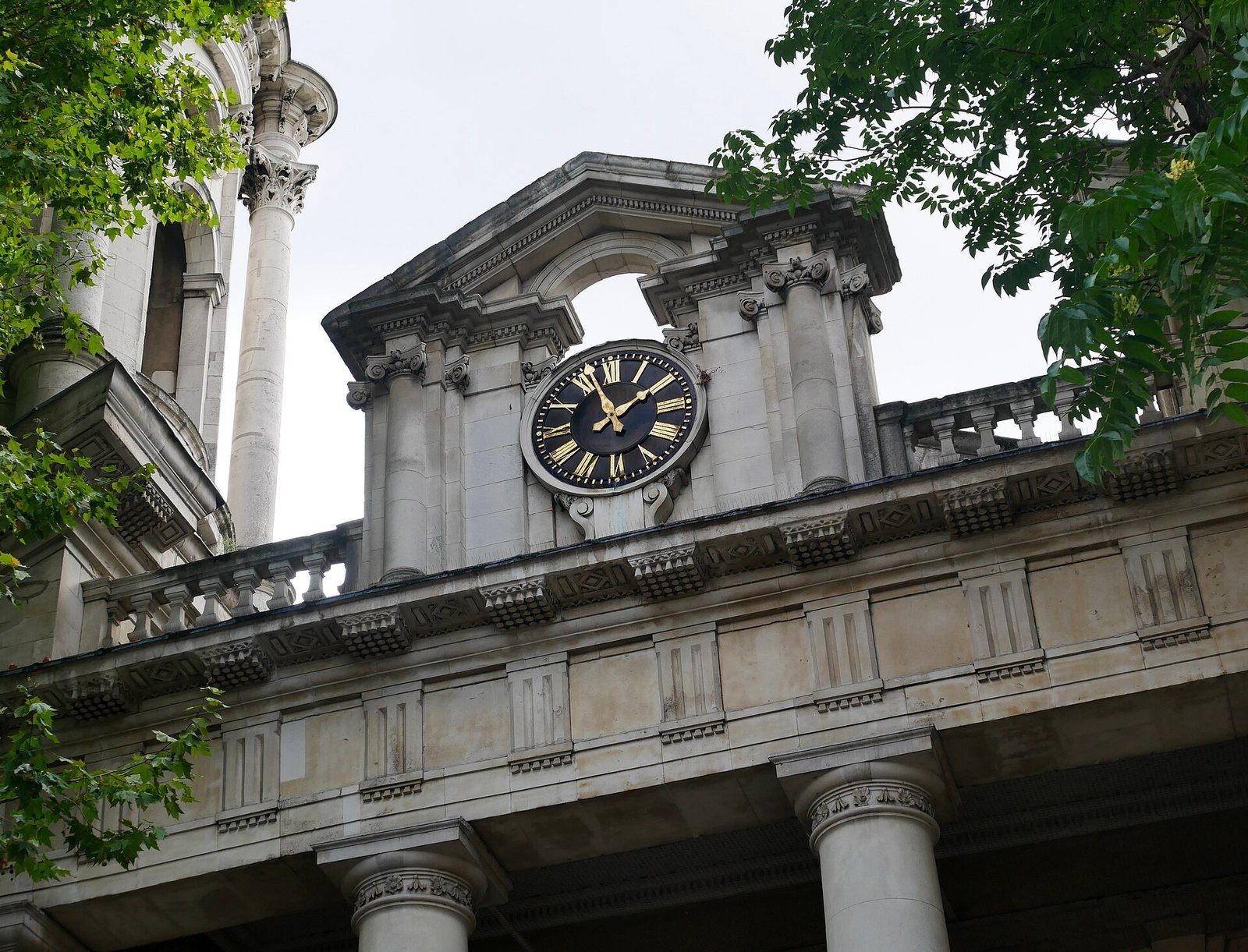
Four towers mark the corners of the building. Monumental broken pediments, with interrupted outlines, accompany classical columns, cornices and moulded pediments. The church’s scale is large in relation to the square of brick-fronted houses with white sash windows around it.
Interior
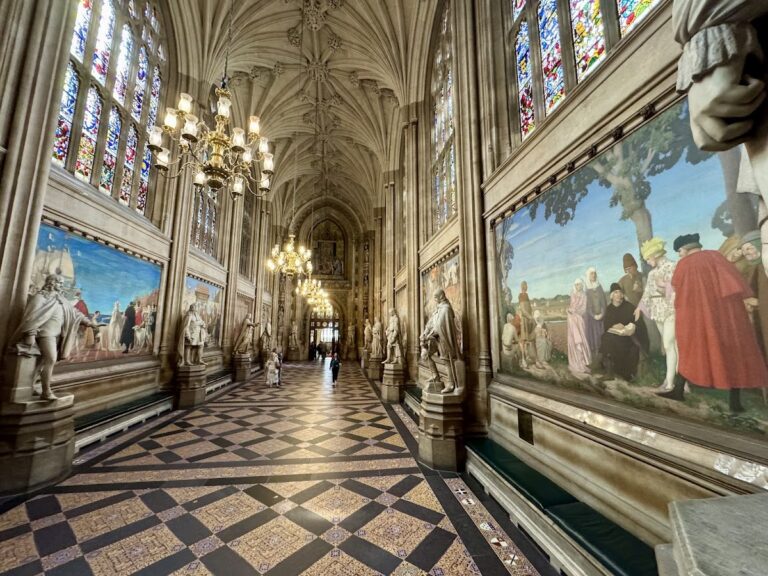
The lofty interior has white walls, a dark, polished timber gallery and large white-painted Corinthian columns, a classical type with elaborately decorated capitals. The columns support a simple barrel vault, a continuous arched ceiling. A scarlet curtain is also part of the interior. The concert organ uses a case made in 1734 by Jordan, Byfield and Bridges.
Crypt and associated features
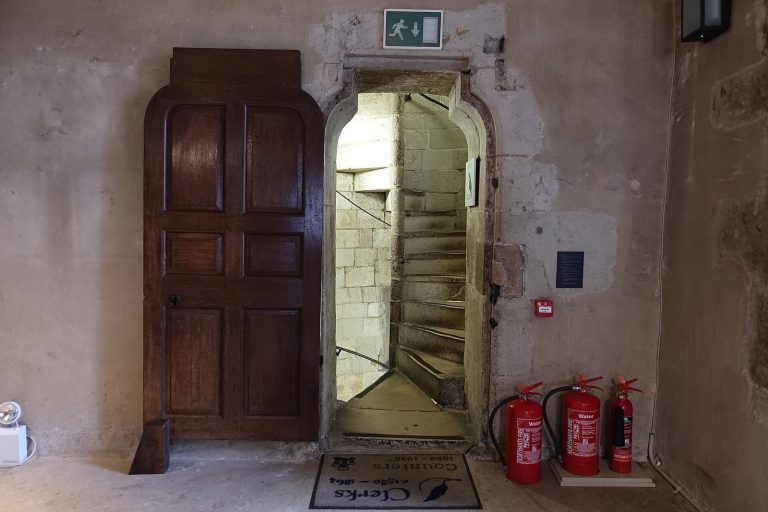
The crypt, a chamber beneath a church, has low brick vaults. Its brickwork is original eighteenth-century fabric, preserved because the crypt escaped the wartime fire. Stone stairs connect it to the main portico steps and to a spiral stair toward the rear of the hall; a further stone spiral stair lies in a corner tower. A framed handwritten account of the 1941 bombing is displayed at the top of the stairs from the rear of the hall. A plaque commemorating Lady Parker of Waddington is on the hall’s south wall.
Burial ground
The church’s burial ground lies in Horseferry Road beside the former Westminster Hospital buildings. It is now St John’s Gardens, where the surviving, heavily eroded grave slabs are arranged around the perimeter.