Sokograd Fortress: A Medieval Bosnian Stronghold in Bosnia and Herzegovina
Site at a Glance
- Rating
- 5
- Popularity
- Very Low
- Country
- Bosnia and Herzegovina
- Primary era
- Medieval
- Eras represented
- Medieval, Early Modern
- Civilizations
- Hungarian, Kingdom of Bosnia, Ottoman
- Site type
- Military
- Remains
- Castle
On this page6 sections
History
Sokograd Fortress is a medieval fortress in Bosnia and Herzegovina, built by the Bosnian state in the late first half of the 13th century. It became a highly important stronghold and the center of the Pliva district, then also known as Pljeva.
Origins and Bosnian rule
The fortress probably arose when stronger defensive centers began to appear in the Banate of Bosnia, a medieval territory governed by a ban, a high-ranking regional ruler. Its earliest form consisted of a fortified tower and a small courtyard. The settlement later expanded into an Upper Town and then a Lower Town, creating a larger fortified center in the Pliva River valley.
In July 1363, Louis I of Hungary, also known as Louis I of Anjou, invaded Bosnia and attempted to take Sokograd. The defenders, led by the Bosnian nobleman and military commander Vukac Hrvatinić, held out for three days before the Hungarian army withdrew. In recognition of this defense, Ban Tvrtko granted Vukac the fortress and the entire Pliva district, together with the title of duke. Vukac was the father of Hrvoje Vukčić Hrvatinić, who later became Grand Duke of Bosnia.
Hungarian forces made another attempt to capture Sokograd in 1405, but they were defeated. King Stephen Tomašević, the last king of medieval Bosnia, stayed briefly at the fortress during the collapse of the Bosnian kingdom under Ottoman invasion. Sokograd was later recaptured by the Kingdom of Hungary.
Hungarian and Ottoman periods
From 1463 to 1521, amid the conflicts between the Ottoman Empire and Hungary, Sokograd belonged to the Hungarian Jajce Banovina. A banovina was a larger territory governed by a ban. Ottoman forces occupied the fortress either in 1518 or 1521, beginning a new phase of its history.
During the 16th century, Sokograd was listed among nine Vlach katuns of Bosnia. A Vlach katun was a territorial or pastoral community associated with Vlach populations within the Ottoman administrative system. The fortress remained in Ottoman service until 1833, when its garrison was abandoned. With the incorporation of Bosnia into Austria-Hungary in 1878, Sokograd became part of the Austro-Hungarian state.
The fortress is now on the tentative list of National Monuments of Bosnia and Herzegovina. Its surviving historical phases correspond to Bosnian rule under the Banate and Kingdom of Bosnia, Hungarian control from 1463 to 1521, and Ottoman rule from 1521 to 1833.
Remains
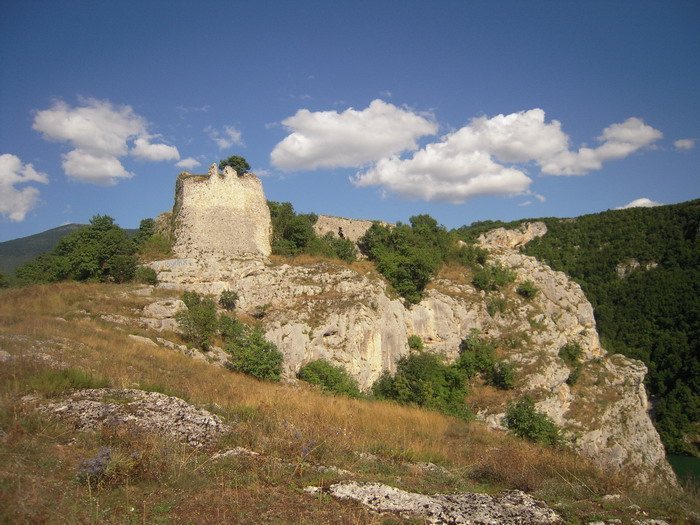
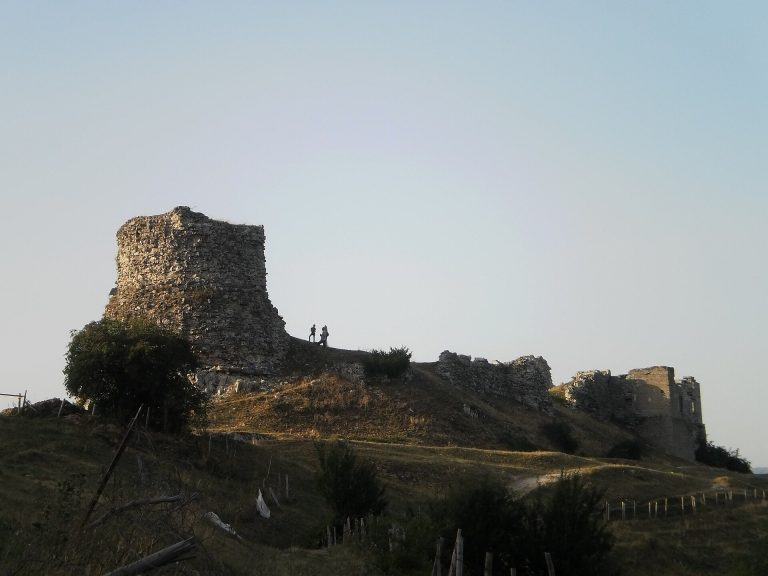
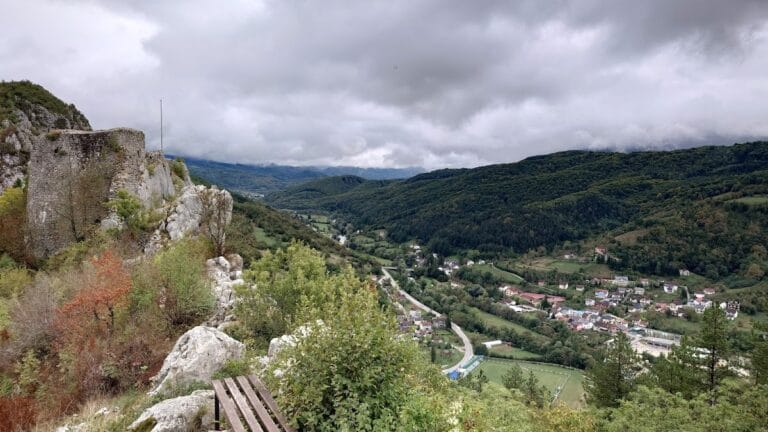
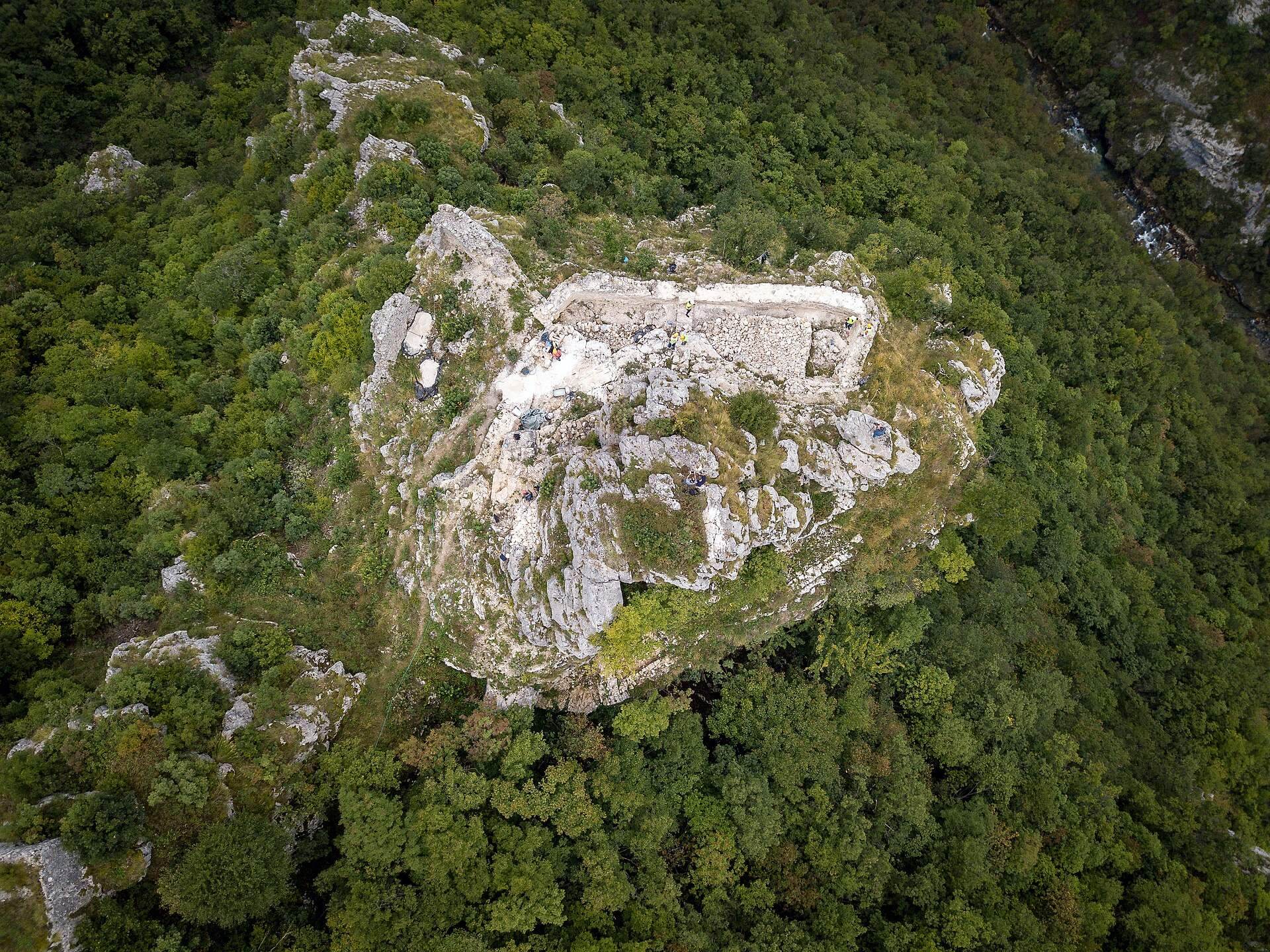
Sokograd occupies a steep canyon-side position high above the Sokočnica River, which flows into the Pliva. The fortress stands at approximately 647 metres above sea level and is now ruined. Its development proceeded from a small fortified nucleus to a settlement with an Upper Town and Lower Town, while later ramparts and towers were strengthened for firearms.
Fortified settlement
The earliest structure was Tower A, a fortified tower accompanied by a small courtyard. The complex subsequently grew into an Upper Town and then a Lower Town, with ramparts and towers enclosing the expanded settlement. Three construction and urban-development layers remain visible in the ramparts, corresponding to the Bosnian, Hungarian, and Ottoman phases.
Later defensive works
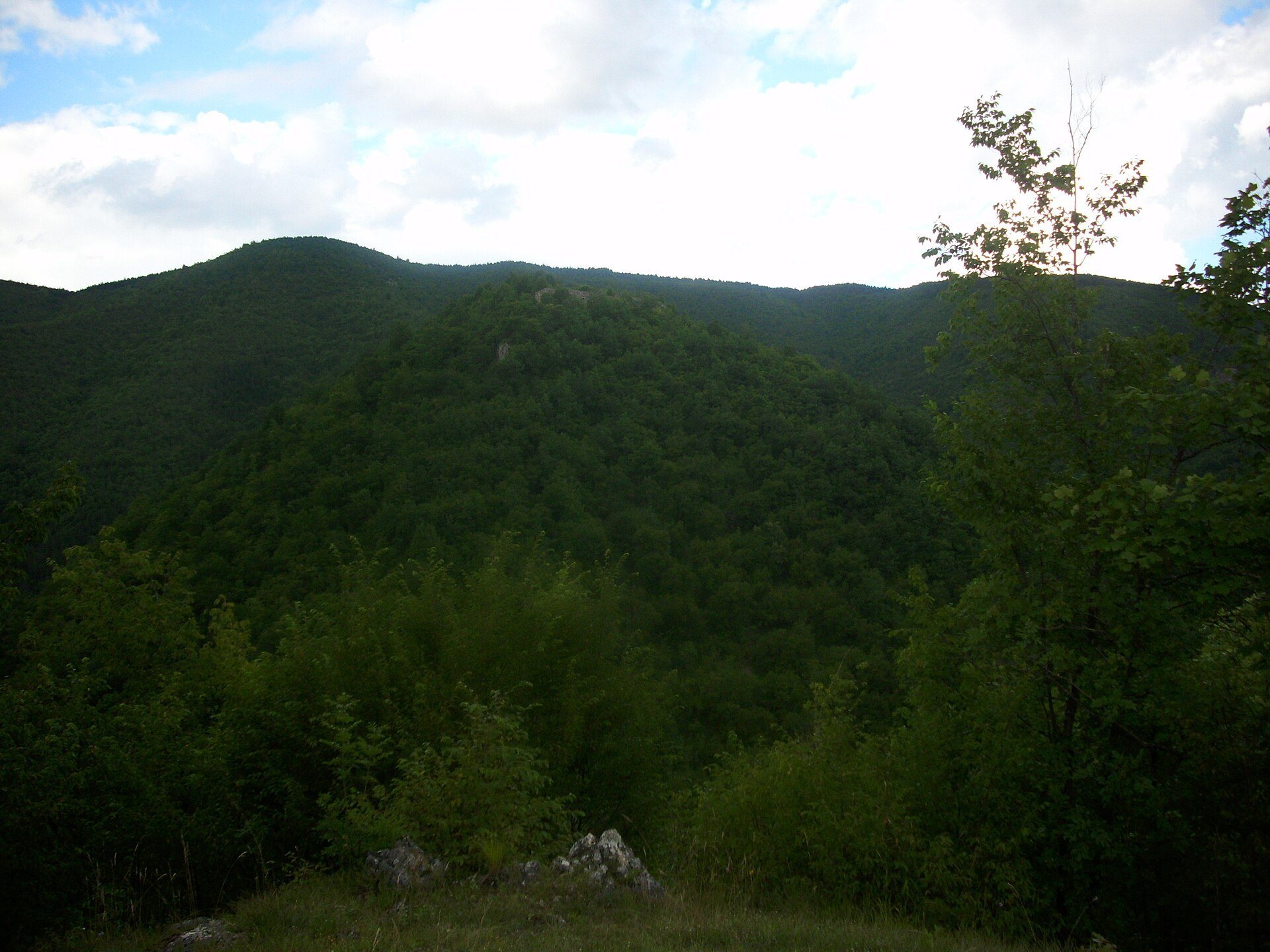
In a final stage of development, a tower or fortified structure was built on the opposite side of the Sokočnica canyon. Its purpose was to protect Sokograd from artillery fire approaching from the west. The fortress name derives from the Slavic word for “falcon” combined with grad, meaning “town.” Historical forms of the name include Pliva, Plivski grad, Pliva-Soko, Sokol-grad, Soko-grad, Sokolac, Soko, and Sokol.