Sobrado Abbey: A Cistercian Monastery in Galicia
Site at a Glance
- Rating
- 4.7
- Popularity
- Medium
- Country
- Spain
- Primary era
- Early Modern
- External website
- Open
- Eras represented
- Medieval, Early Modern
- Civilizations
- Crown of Castile, Spanish
- Site type
- Religious
- Remains
- Monastery
On this page9 sections
History
Sobrado Abbey, also known as Santa María de Sobrado dos Monxes, is a historic monastery in Spain, located in the municipality of Sobrado in Galicia. It was founded around 951 by Bishop Sisnando Menéndez and is associated with Benedictine monasticism, although its early history is poorly documented. The abbey later became an important Cistercian centre and developed through successive periods of expansion, decline, suppression, and reconstruction.
Foundation and Early Benedictine History
Sisnando Menéndez was the son of the Galician counts Hermenegildo Alóitez and Paterna. His parents made several donations to the monastery in 951, while a first stone associated with the foundation is dated 952. The institution was initially known as San Salvador. By the beginning of the twelfth century, however, it had been abandoned.
After the abandonment, the monastery passed to descendants of its founders, members of the House of Traba, a powerful medieval Galician noble lineage. Fernando and Bermudo Pérez de Traba transferred Sobrado to the Cistercians in January 1142. On 14 February of the same year, Bernard of Clairvaux sent a monastic community from Clairvaux, a major Cistercian abbey in France. This act began Cistercian monastic life at Sobrado.
Cistercian Expansion and Renewal
Sobrado flourished spiritually and economically during the twelfth and thirteenth centuries. It established Valdediós Abbey in Asturias as a daughter house and later supervised Monfero Abbey after that monastery joined the Cistercian Order. The Cistercians were a reform branch of Western Christian monasticism that placed particular emphasis on stricter monastic discipline.
Following a later period of decline, Sobrado joined the Castilian Cistercian Congregation in 1498, becoming the first abbey in Galicia to do so. The change halted its decline and brought renewed prosperity. Most of the surviving conventual buildings, meaning the structures used by the monastic community, were constructed or rebuilt during this period of recovery and the centuries that followed.
Baroque Reconstruction and Nineteenth-Century Suppression
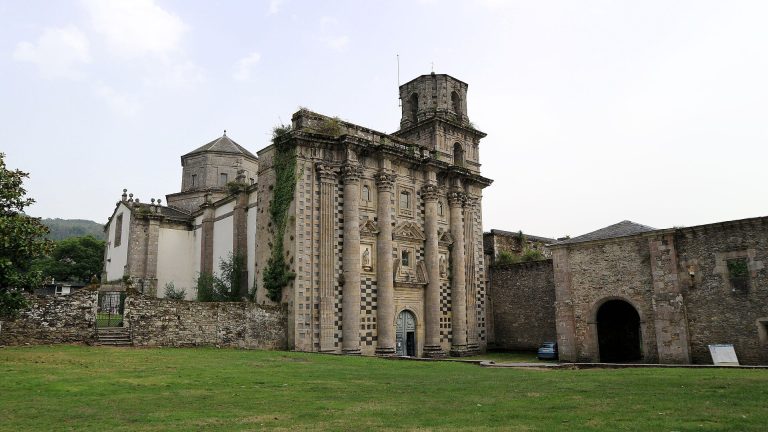
The present monumental abbey church was completed toward the end of the seventeenth century and solemnly dedicated in 1708. Its construction formed part of the broader rebuilding that gave the monastery much of its surviving architectural character, including elements associated with Baroque architecture, an early-modern style known for monumental compositions, dramatic spatial effects, and elaborate ornament.
During the First Carlist War, a nineteenth-century conflict over the Spanish succession and the political order of the country, the monastic community supported the Carlist claimant Charles V. It financed and assisted the Carlist force led by Antonio María López around Santiago de Compostela, giving Sobrado a role in the conflict in Galicia.
A royal order suppressed the monastery on 21 September 1834. General ecclesiastical disentailment measures in 1835, which involved the confiscation and sale of property belonging to religious institutions by the Spanish state, ended its institutional existence. The buildings and possessions were sold to people outside the religious institution, and the complex progressively deteriorated into ruins.
Reconstruction and Contemporary Monastic Life
Recovery began in 1954, when Cardinal Fernando Quiroga Palacios, archbishop of Santiago de Compostela, commissioned the Cistercian monastery of Viaceli at Cóbreces to reconstruct Sobrado. A community of Trappist monks arrived in July 1966, and monastic life resumed on 25 July that year. Trappists belong to the Cistercian Order of the Strict Observance. Reconstruction continued gradually after their return, and Sobrado remains an active Roman Catholic Trappist monastery.
Sobrado was designated a Spanish Historic-Artistic Monument on 3 June 1931. In 2015, it was included in the UNESCO World Heritage listing of the Routes of Santiago de Compostela: Camino Francés and Routes of Northern Spain.
Remains
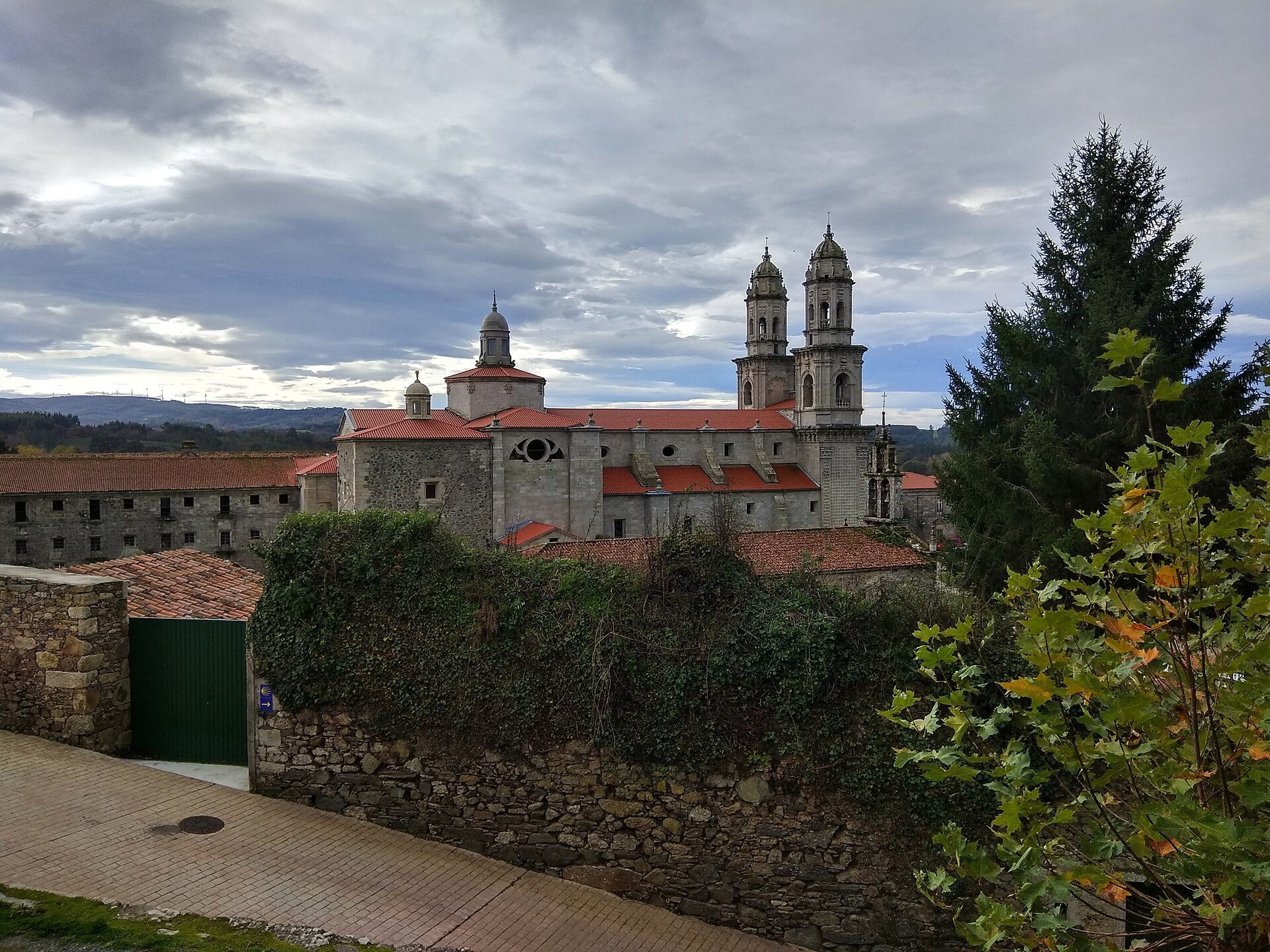
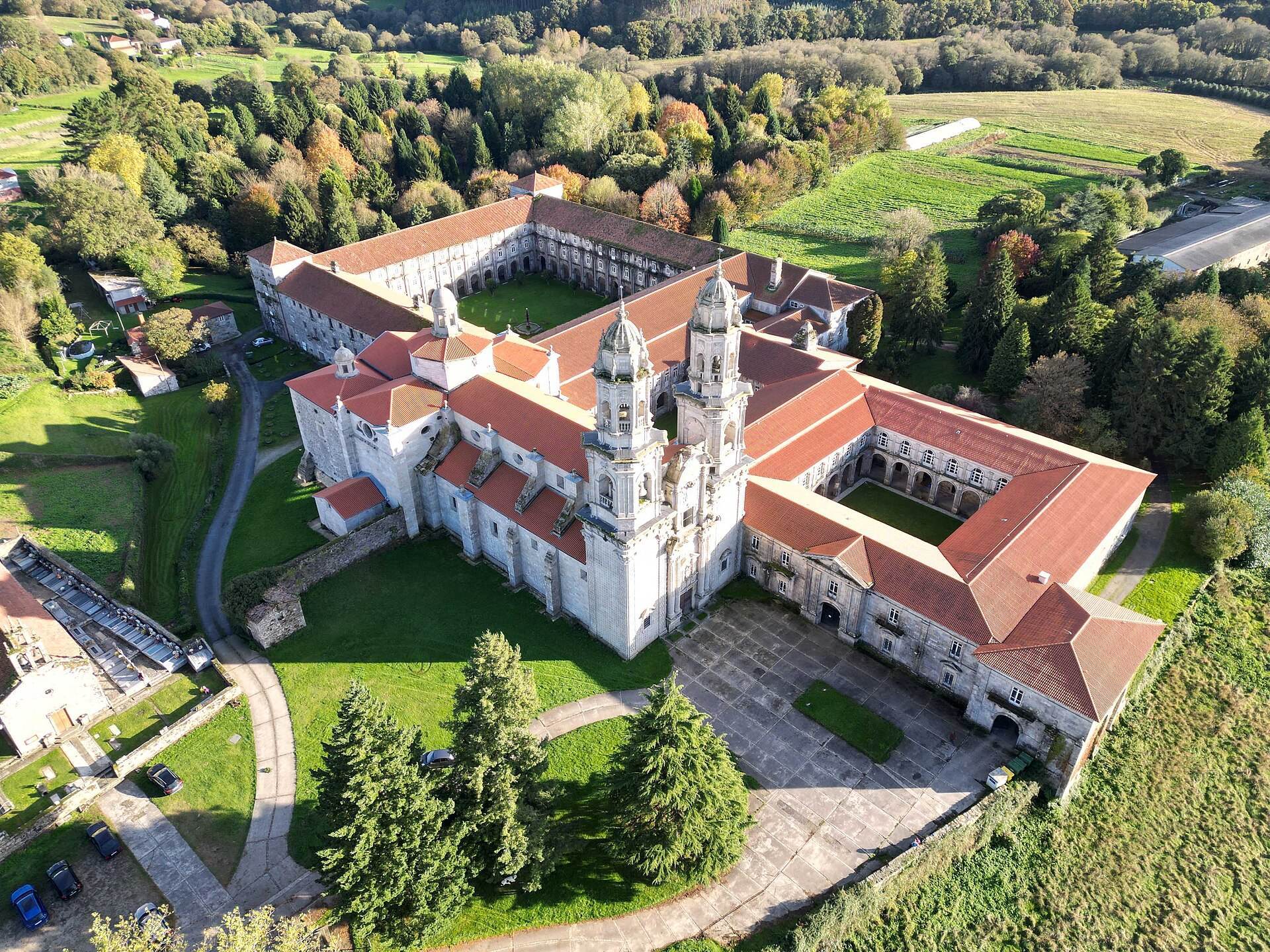
The monastery stands in the municipality of Sobrado in Galicia, at an elevation of approximately 540 metres. Its surviving complex combines Cistercian and Baroque elements. The abbey church, older medieval components, cloisters, and monastic service buildings together preserve evidence of the institution’s long architectural development. Severe deterioration followed the nineteenth-century suppression and abandonment, while the reconstruction begun in 1954 initiated the recovery of the complex.
Abbey Church and Earlier Components
The present abbey church was built at the end of the seventeenth century and has multiple domes and cupolas. It was solemnly dedicated in 1708 and represents the monumental rebuilding associated with Sobrado’s renewed prosperity. The Magdalene Chapel, which dates from the fourteenth century, is an older component of the church complex and preserves a connection with the monastery’s medieval architectural history.
Sacristy and Cloisters
The sixteenth-century sacristy was built by Juan de Herrera, a prominent Spanish architect associated with the austere style known as Herrerian architecture. The monastery also retains three cloisters, including the Cloister of the Medallions and the entrance cloister, also called the Pilgrims’ Cloister. These enclosed spaces form part of the surviving circulation and communal arrangement of the monastic complex.
Medieval Monastic Buildings
The medieval monastic buildings retain the kitchen and the chapter house. The chapter house was the room used for meetings of the monastic community, while the kitchen formed part of the practical service buildings that supported communal life. Their survival adds older elements to a complex that was substantially rebuilt in the early-modern period and later reconstructed after nineteenth-century deterioration.