Slot Schagen: A Medieval Water Castle in the Netherlands
Site at a Glance
- Popularity
- Medium
- Country
- Netherlands
- Primary era
- Modern
- Eras represented
- Medieval, Early Modern, Modern
- Civilizations
- Duchy of Burgundy, Dutch
- Site type
- Military
- Remains
- Castle
On this page7 sections
History
Medieval lordship and castle
Slot Schagen is a medieval castle in Schagen, the Netherlands, formed around 1440 when Schagen’s first lord converted an existing stone house into a square water castle. The town received its rights in 1415. On 29 June 1427, the Count of Holland granted Schagen and the Schagercogge, the district associated with the town, to Willem, known as the Bastard of Holland. This fief was a grant of land or authority held under a superior. Willem’s descendants adopted the family name Van Beijeren van Schagen, and the family’s lordship continued into the French period, when the Netherlands was under French political rule.
Sale, decline, and changing uses
Financial difficulties led the family to sell the lordship and its properties to George van Cats in 1658. He adapted the castle to contemporary needs, demolishing its gate tower and front wall and replacing the drawbridge with a fixed bridge. Floris Carel van Beijeren van Schagen bought the castle back in 1676. Since he lived in a castle in Belgium, Slot Schagen stood vacant for centuries and fell into ruin.
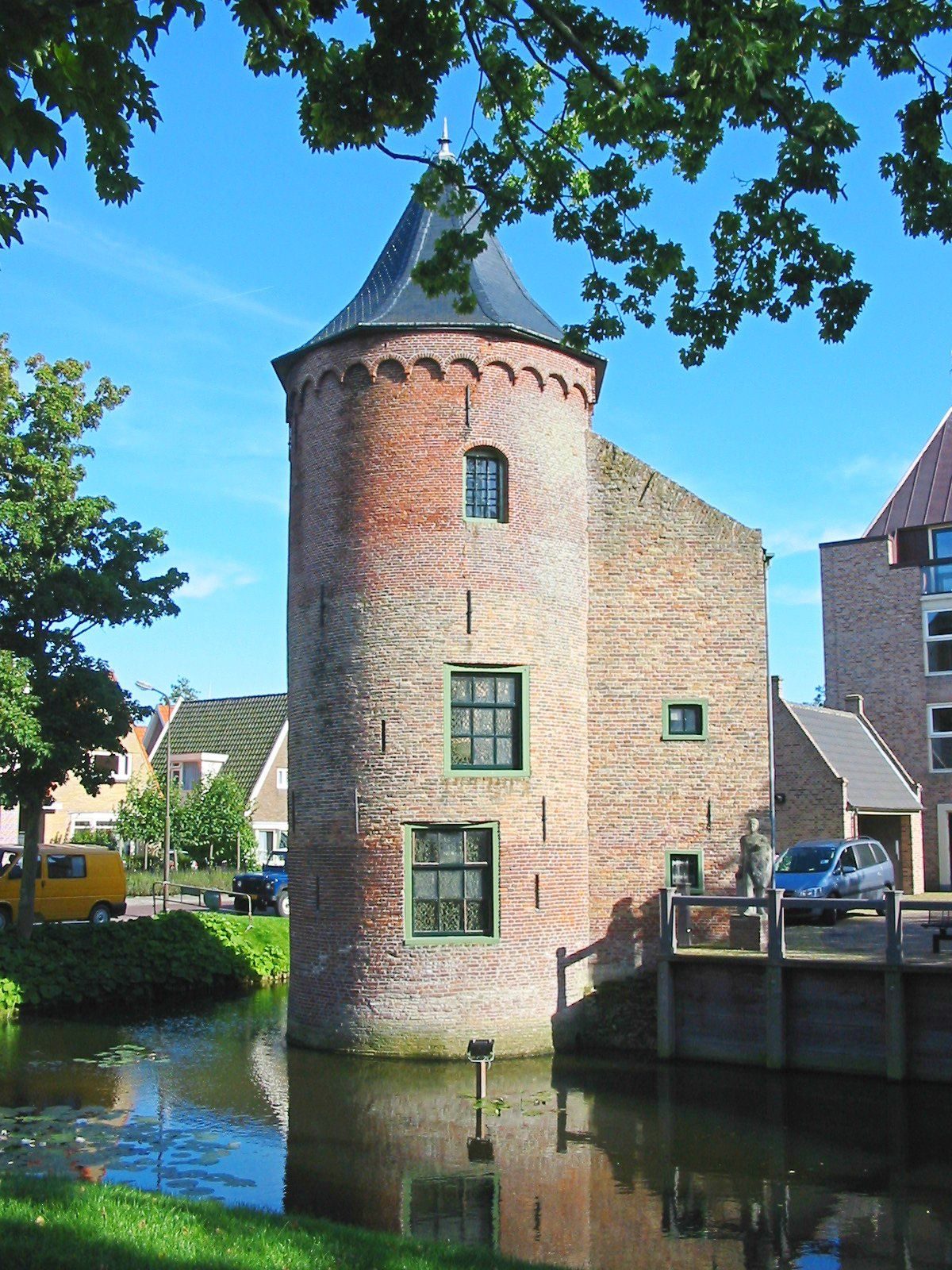
In 1829, the Belgian noble d’Oultremont family sold the ruin to the municipality of Schagen. The western tower became a temporary jail for travelers, while the eastern tower housed the jailer and his family and later the local constable’s family. The grounds served variously as a pigsty, ice cellar, fire-engine shed, quarantine building, and cemetery. They were used for burials for fifty years.
Rebuilding
After a ten-year civic initiative, the neglected site was rebuilt in the early twenty-first century. The rebuilt castle functions as a hotel. Slot Schagen is a Dutch national monument, a property recognized under the country’s heritage-protection system.
Remains
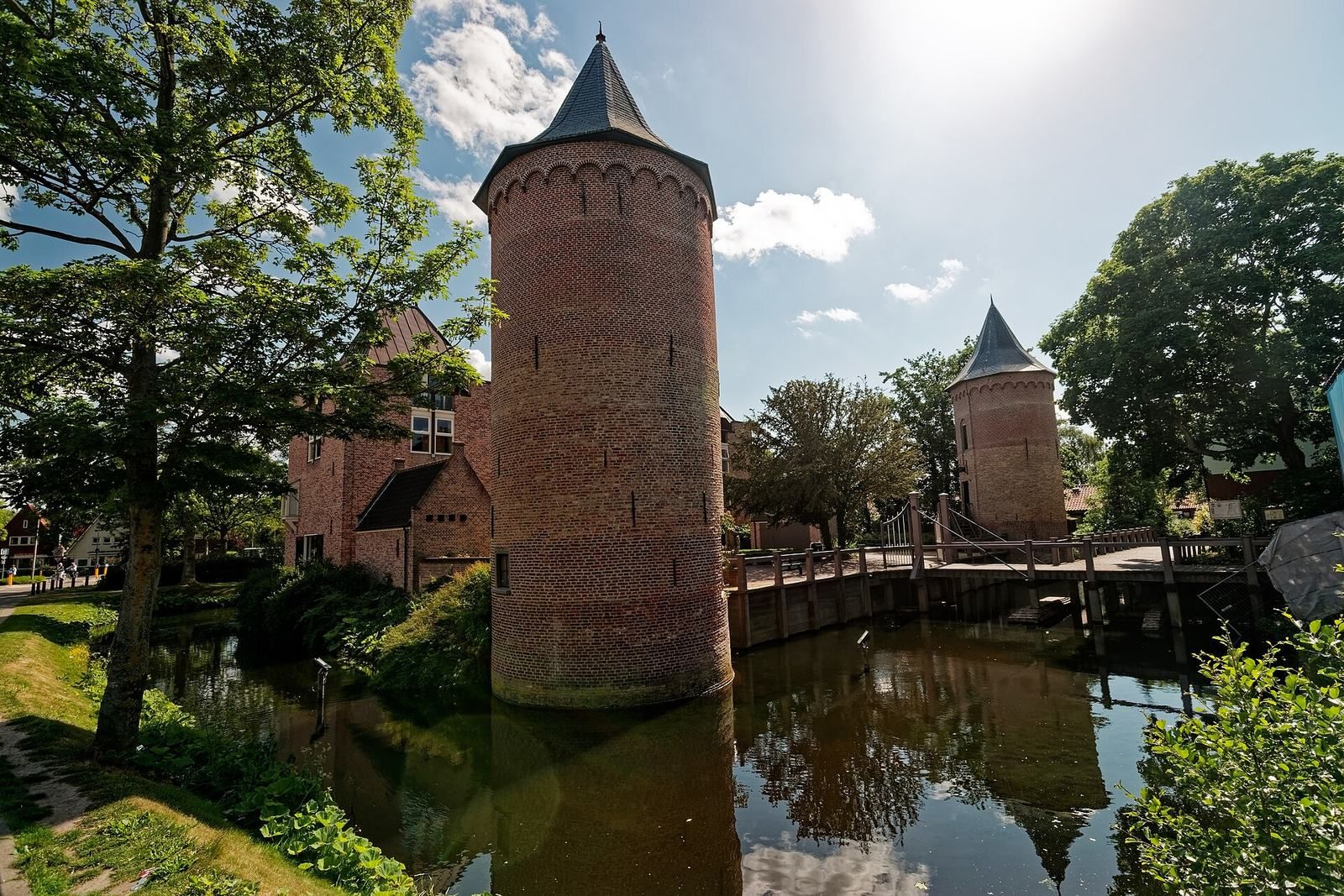
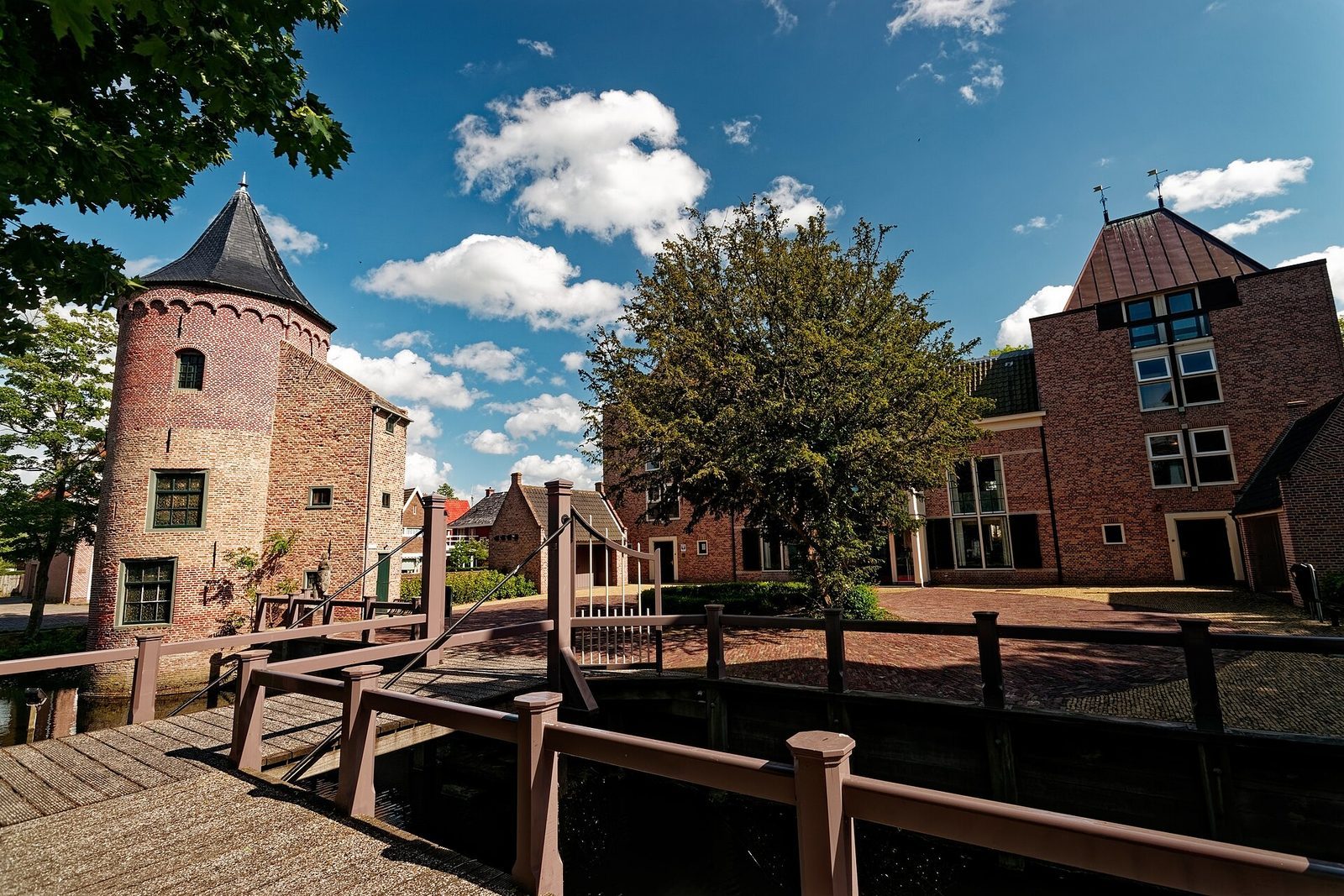
The site is arranged around an island, the setting of the original water castle. Its present fabric brings the surviving historic towers together with a later castle building.
The towers
By 1829, the western and eastern towers were the only parts of the castle still standing. They remain as the historic elements around which the rebuilt castle was designed.
The rebuilt castle
The current castle is a new building on the original island. Its design was intended to harmonize with the surviving towers.