Skovsbo Castle: A Renaissance Manor House in Denmark
Site at a Glance
- Popularity
- Low
- Country
- Denmark
- Primary era
- Early Modern
- Eras represented
- Early Modern, Modern
- Civilizations
- Danish
- Site type
- Domestic
- Remains
- Manor House
On this page5 sections
History
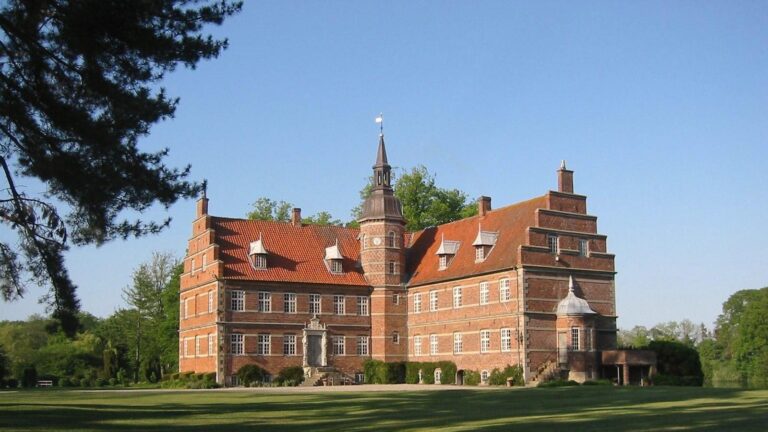
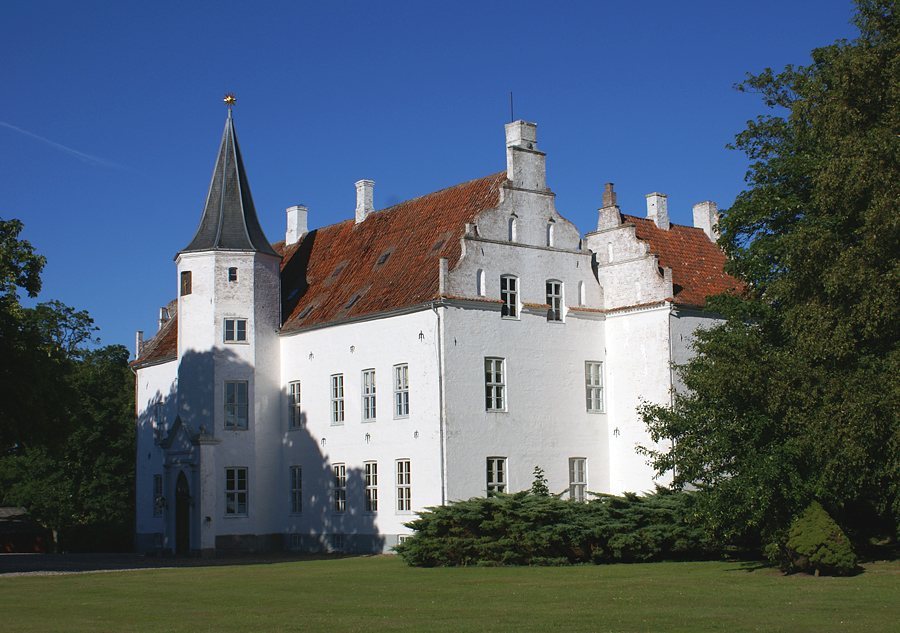
Skovsbo Castle is a Renaissance manor house in Kerteminde Municipality on Funen, Denmark. Its history is traced to the 14th century, while the present house was built from 1572 to 1579 for Erik Hardenberg, a privy councillor, or senior adviser to a ruler.
Anna Rønnow and the estate
Around 1600, Hardenberg’s wife, Anna Rønnow, placed a roadside crucifix across the road from Skovsbo. Anna was Catholic, unlike her husband. A crucifix is a cross bearing a representation of Jesus.
In 1914, parts of the estate were sold in separate lots.
Remains
The 183-hectare estate includes a Renaissance manor house and its annexes. The main building and the annexes at its south-eastern and north-eastern corners form the principal described group of structures.
Main building and annexes
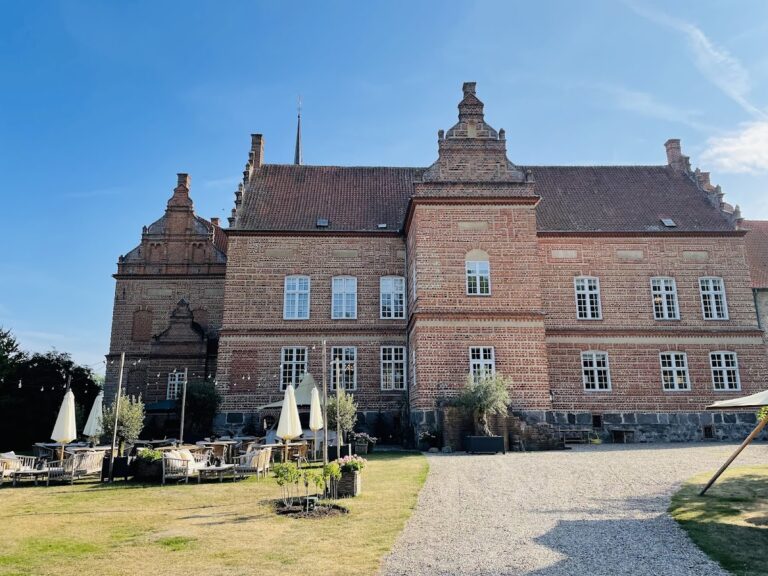
The main building has Dutch gables, shaped gable ends associated with Dutch building traditions, and two storeys above a vaulted basement. An octagonal staircase tower with a spire stands at the west end. The south-eastern annex, which has a second staircase, dates to the original house; a similar annex at the north-eastern corner was added in 1891.
Roadside crucifix
The crucifix stands across the road from the manor. It is Denmark’s second-oldest roadside crucifix, after the Crucifix of Holy Anders near Slagelse, associated with a medieval priest venerated locally as a saint.