Sivaganga Palace: A Royal Residence in Tamil Nadu
Site at a Glance
- Popularity
- Medium
- Country
- India
- Primary era
- Modern
- Eras represented
- Modern
- Civilizations
- British
- Site type
- Domestic
- Remains
- Palace
On this page10 sections
History
Sivaganga Palace is a royal palace complex in Sivaganga district, Tamil Nadu, India. Its original building was erected in 1730, and an early-19th-century replacement became known as Gowri Vilasam. The palace was a setting for political negotiations, royal residence and disputes over succession.
The original palace and 18th-century conflict
The palace hosted secret discussions between Veerapandiya Kattabomman, a regional chieftain who opposed the British East India Company, and the Maruthu brothers, military leaders associated with Sivaganga. They discussed attacking the Company, which had expanded from a British trading enterprise into territorial rule in India. Combatants attacked the palace several times between 1762 and 1789.
Queens Velu Nachiyar and Vellacci Nachiyar lived at the palace from 1780 to 1790 and 1790 to 1793, respectively. The palace is also identified as the residence of Rani Kaathama Nachiar from 1864 to 1877.
Gowri Vilasam and later associations
In the early 19th century, Padamathur Gowry Vallabha Thevar, a member of Sivaganga’s ruling house, built Gowri Vilasam as a replacement palace. After Thevar’s death, his brother Oyya and Oyya’s sons occupied it. Oyya assumed leadership of the kingdom, claiming that the British would otherwise seize it after the king died without a will. He and his sons forged documents bearing the late king’s signature and crowned themselves at the palace.
The palace is identified as a Chettinad heritage site. Chettinad is a historic cultural region of Tamil Nadu, and the palace is also identified as property of Rani Velu Nachiar. The 20th-century Tamil composer and lyricist Papanasam Sivan is said to have composed many popular songs praising the deity of the palace temple.
Remains
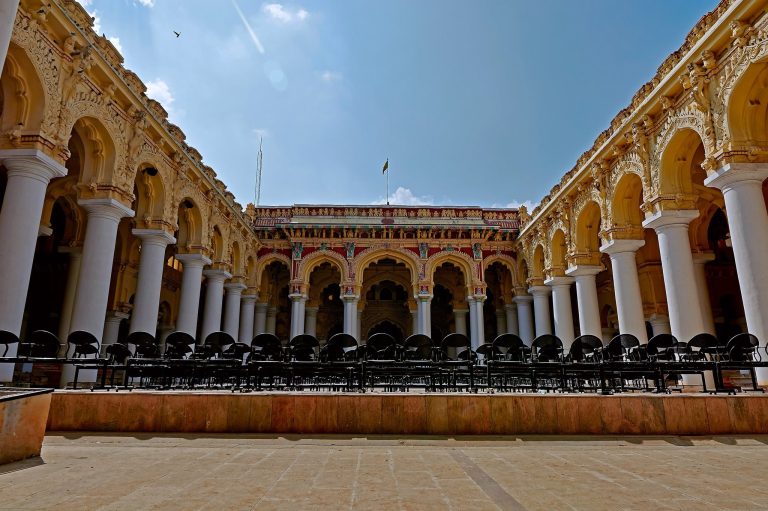
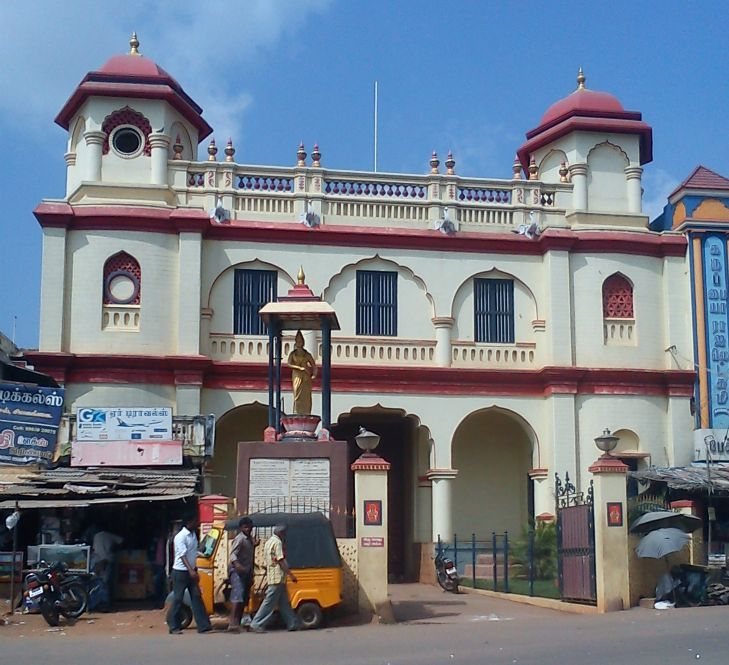
The palace complex includes the replacement residence, a temple within the palace, features in the grounds and a large reservoir in front. Gowri Vilasam is now dilapidated. Its architectural style draws on the tradition of the Tirumala Naikas, Nayaka rulers associated with Madurai, and includes some elements of Rajput art, associated with Rajputana in northwestern India.
Palace buildings and grounds
Gowri Vilasam
The replacement palace is the principal surviving residence in the complex. A clock stands at the front gate on its south-facing facade, though it no longer works.
Temple of Sri Raja Rajeshwari
The temple remains functional and is associated with Raja Rajeswar, the deity of Sivaganga’s royal house. It also contains a statue of Kandumekki Woodaya Taver, identified as a king of Sivaganga.
Royal audience hall
The palace grounds include the former kings’ formal audience hall, which honors notable poets.
Marble court
A black-marble square in the grounds has a carved marble seat. The feature was used for judicial proceedings and for coronations of new kings during the dynastic era.
Front reservoir
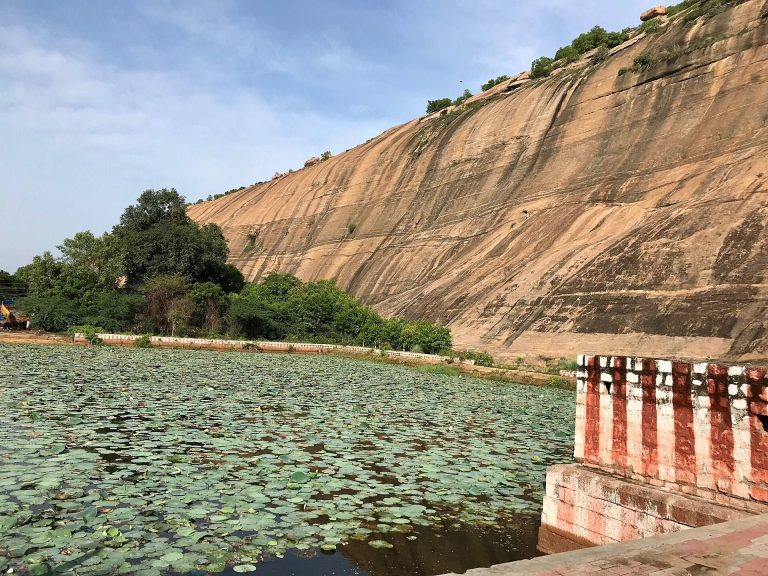
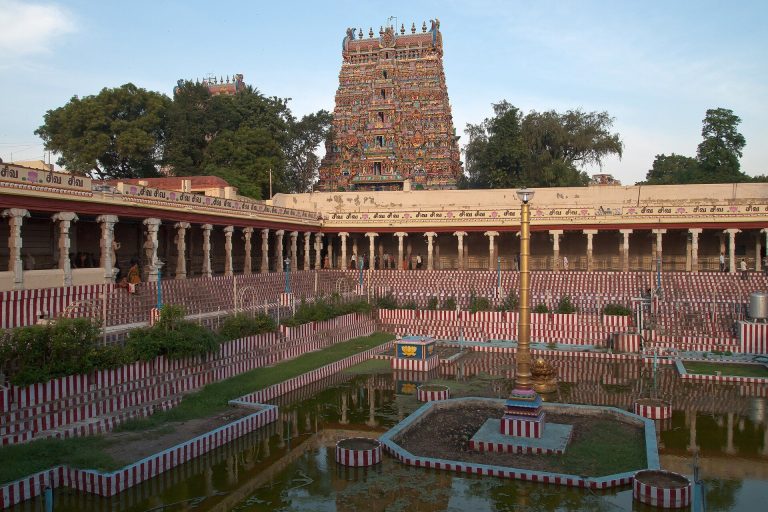
A large masonry tank lies in front of the palace.