Šišatovac Monastery: A Serbian Orthodox Monastery in Fruška Gora
Site at a Glance
- Rating
- 4.7
- Popularity
- Medium
- Country
- Serbia
- Primary era
- Early Modern
- Eras represented
- Early Modern, Modern
- Civilizations
- Habsburg, Habsburg Austria, Serbian
- Site type
- Religious
- Remains
- Monastery
On this page15 sections
History
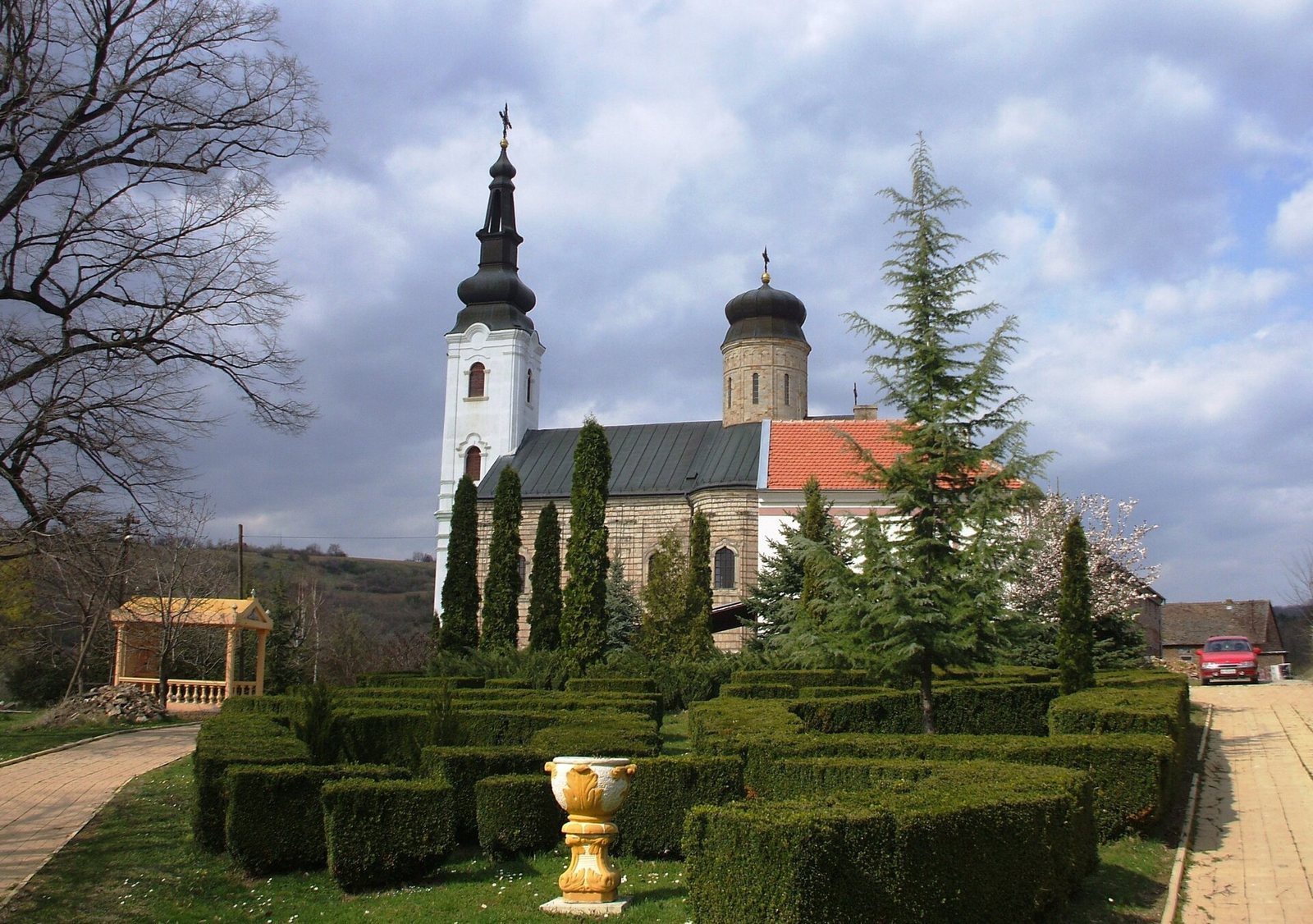
Šišatovac Monastery is a Serbian Orthodox monastery on the southern slopes of western Fruška Gora in Serbia. Its documented monastic life reaches the 16th century, and its present church is an 18th-century Baroque building. The monastery belongs to the Eparchy of Srem, a diocese of the Serbian Orthodox Church, and became known for the veneration of Stefan Štiljanović and, later, for its connections with Serbian literary culture.
Origins and the relic cult
Tradition traces Šišatovac’s foundation to monks who left Žiča, a medieval Serbian Orthodox monastery, while fleeing Ottoman persecution. In the early 16th century, the monks, including Ilarion and Visarion under Abbot Teofan, also called Teofil, settled at an older church on the site. They replaced it with a church dedicated to the Nativity of the Mother of God. Its construction is usually dated to 1520, although historian Ilarion Ruvarac placed it between 1545 and 1550. The monastery was first known as Remetica or the Remeta monastery and was dedicated to Saint Nicholas. It acquired the name Šišatovac during the second half of the 16th century.
A tradition linked to Metropolitan Pajsije of Belgrade and Srem, a senior bishop, credits Stefan Štiljanović and Voivode Teodor with patronage of Šišatovac and Kuveždin. It also names Jovan and Gašpar, builders who came from coastal regions. In 1543, the relics of Stefan Štiljanović, a Serbian nobleman and Orthodox saint, were brought to Šišatovac from Šikloš in Baranja. His veneration attracted visitors and donations. In 1566, the Ottomans demanded 26,000 akçe, an Ottoman silver coin, as a ransom, with a further 1,000 akçe due for that year.
Growth and rebuilding in the seventeenth and eighteenth centuries
Patriarch Pajsije, head of the Serbian Orthodox Church, stayed at Šišatovac in 1643 and wrote a work praising Štiljanović. In 1650, Pajsije learned that the abandoned monasteries of Kuveždin and Petkovica might be dismantled for building materials. He asked Šišatovac’s abbot, Kiril, to arrange their purchase. The monks agreed to pay Sinan-beg 100 groschen each year, and Pajsije secured a written guarantee from him. In 1689, Archimandrite Joanikije, a senior monastic cleric, travelled to Russia to gather donations. He was detained there and given a monastery in the Diocese of Chernigov, where he died in 1725. He continued sending gifts to Šišatovac.
By 1702, Šišatovac was among the larger monasteries in Srem. It had 25 monks living in community, as well as servants and novices, and held an estate of 1,138 jochs, a regional unit of land measurement. A 1753 visitation counted 13 monks, five students, 13 servants and 12 estate workers.
Vićentije Popović entered Šišatovac as a monk in 1718 and later served as its abbot and archimandrite. He initiated construction of the present church, supported by donors including Captain Trifun Isaković, Jovan and Josif Monasterlija, and Sekula and Jeftan Vitković. Sekula Vitković was a particularly important benefactor. Popović became Bishop of Vršac in 1774 but continued to support the monastery until his death in 1785.
Nineteenth-century intellectual life
In 1810, the remains of Bishop Vićentije Petrović, previously buried at Mesić Monastery, were transferred to Šišatovac and reinterred in its church. Archimandrite Petronije Trbojević, who served at Šišatovac, was also buried there.
From 1812 to 1824, Lukijan Mušicki, a Serbian poet and Orthodox cleric, made the monastery a meeting place for Serbian intellectuals. After the First Serbian Uprising, a Serbian rebellion against Ottoman rule from 1804 to 1813, ended unsuccessfully in 1813, the language reformer and collector of oral literature Vuk Karadžić stayed at Šišatovac. Mušicki and Karadžić invited the epic singer Filip Višnjić, whose songs about the uprising Karadžić wrote down. Karadžić also collected songs from Tešan Podrugović at Šišatovac and Karlovci.
War and restoration
In August 1941, Croatian authorities arrested four monks: Abbot Rafailo Momčilović, Dimitrije Božjaković, German Jajić and Teofil Ćurčin. They were sent to a camp near Slavonska Požega, where they were beaten and abused. Momčilović was killed in September 1941 and was canonized in 1999. During the war, Croatian Ustaše, a fascist movement ruling the Independent State of Croatia, Home Guard and police forces, and German troops occupied the monastery. A German commissioner lived in its monastic cells and reported that Croatian authorities removed valuables in the summer of 1941.
In April 1942, historian and theologian Radoslav Grujić and museum curator Miodrag Grbić arranged for Štiljanović’s relics to be transferred to occupied Belgrade. They received help from Major Johann Albrecht Freiherr von Reiswitz, a wartime adviser to the German administrative staff for Serbia. Wartime destruction left the monastery severely damaged. In 1990, it was designated a Monument of Culture of Exceptional Importance in Serbia and placed under state protection. The church and complex were damaged again in the 1999 NATO bombing of Yugoslavia, and were later rebuilt and restored. Šišatovac was an active men’s monastery at the beginning of the 21st century.
Remains
Layout and buildings
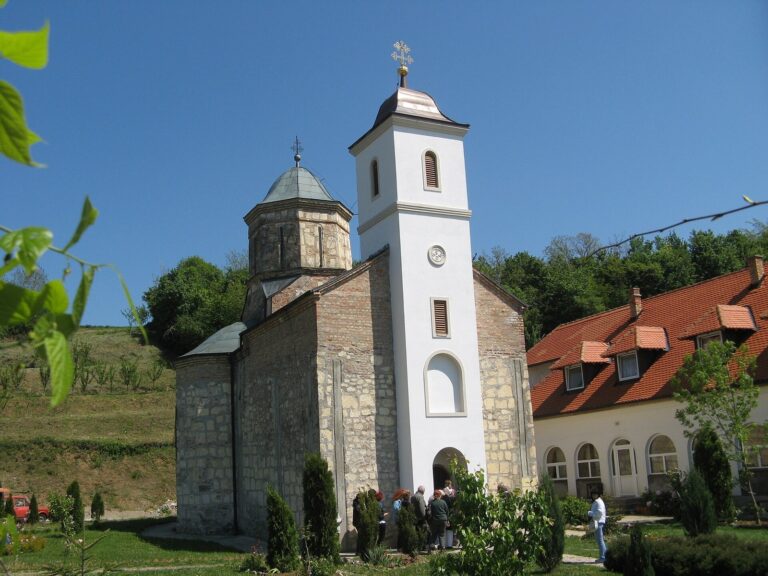
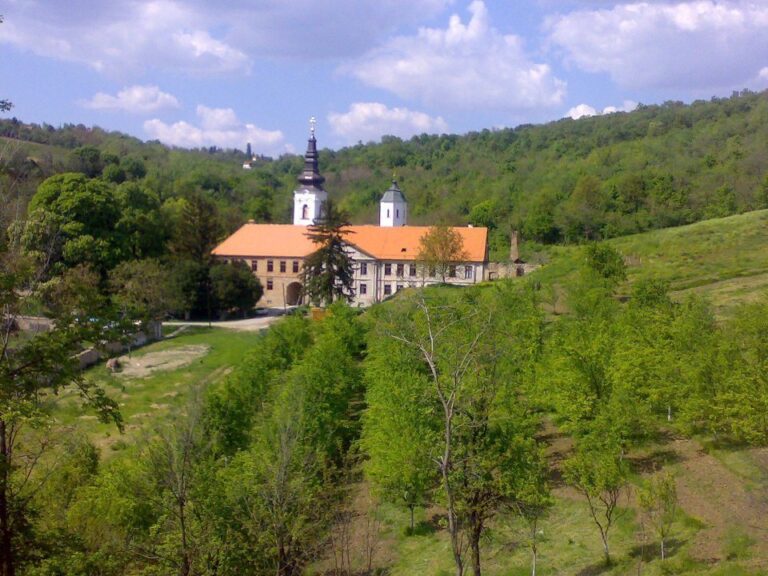
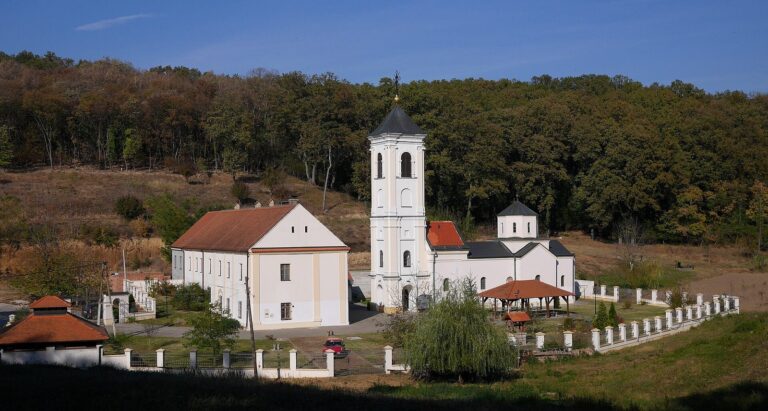
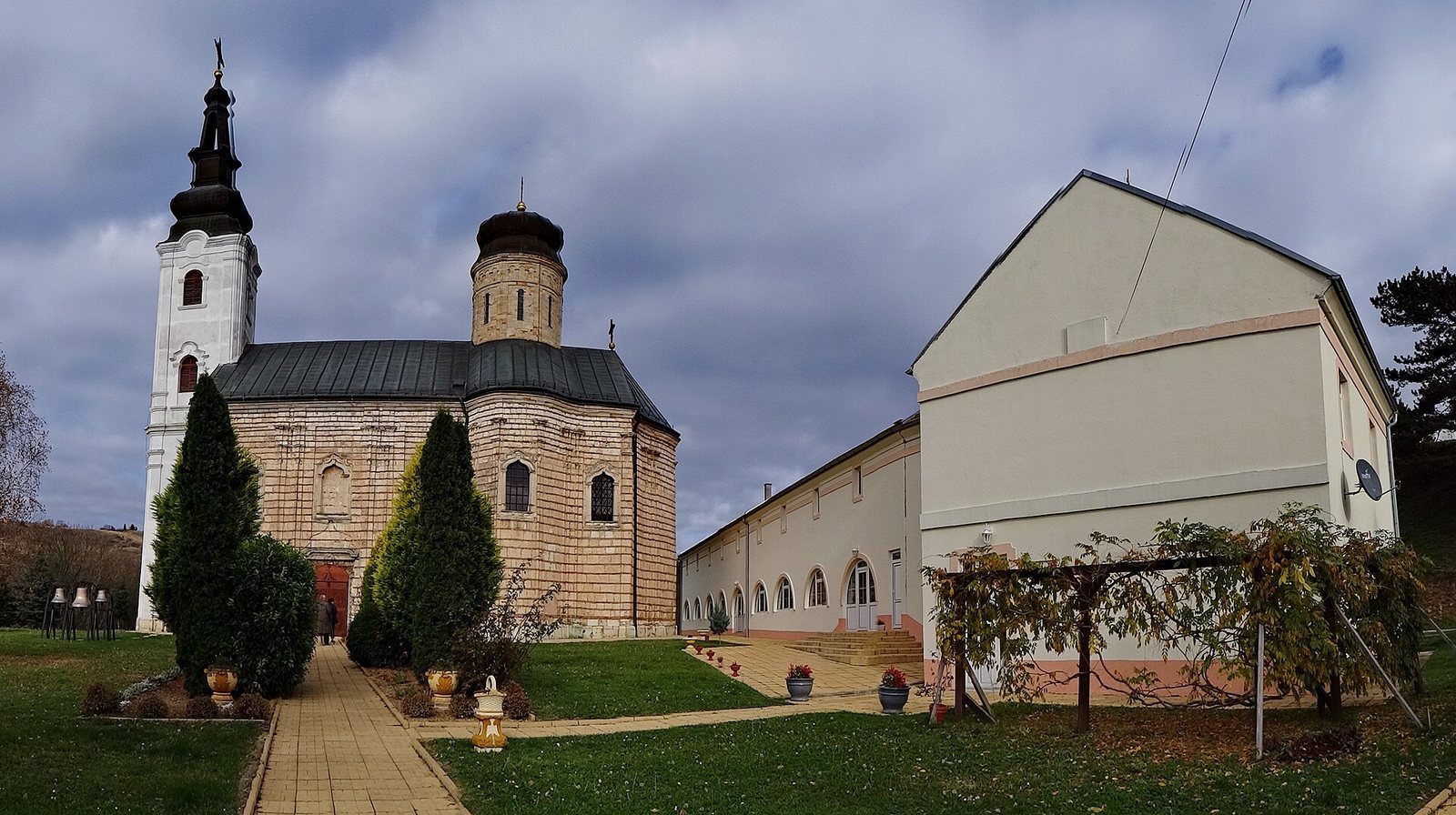
The monastery lies near the village of Šišatovac and the source of the Remeta stream. Its church formed the northern side of the complex, with monastic lodgings originally enclosing it on three sides. The principal buildings reflect several periods of construction, including Baroque work from the 18th century.
The church
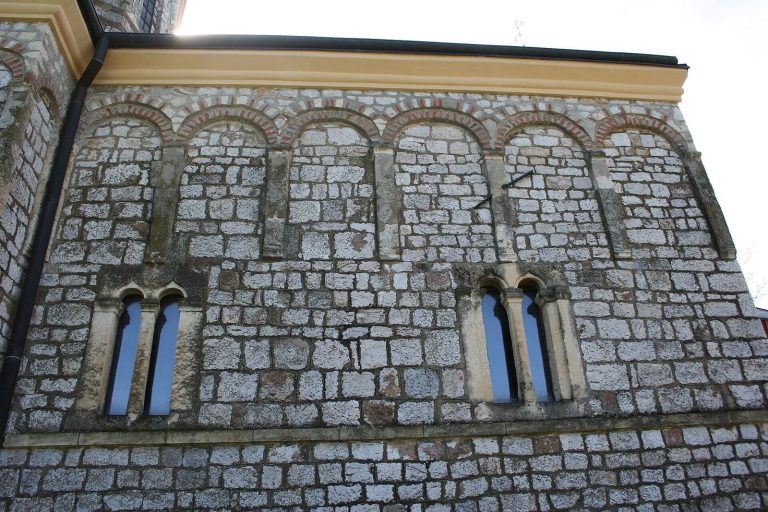
The present church was built from 1758 to 1778. It is a large Baroque building covered with sheet metal, with nine Gothic-style windows, an unusual feature among the monasteries of Fruška Gora. An earlier stone church, erected by Jovan and Gašpar in 1634, had two domes and an oak-shingle roof. It was later demolished during construction of the present church.
The bell tower
A square-plan bell tower of four storeys was added in 1742 and is associated with Vuk Isaković. Explosives partly brought it down during the Second World War. Three replacement bells, weighing 950 kilograms together, were installed in 2016, 72 years after the earlier bells had been removed.
The chapel
The stone chapel of Saints Peter and Paul was built in Baroque style in 1750. It survived the wartime destruction, with old icons remaining inside.
The lodgings and gate
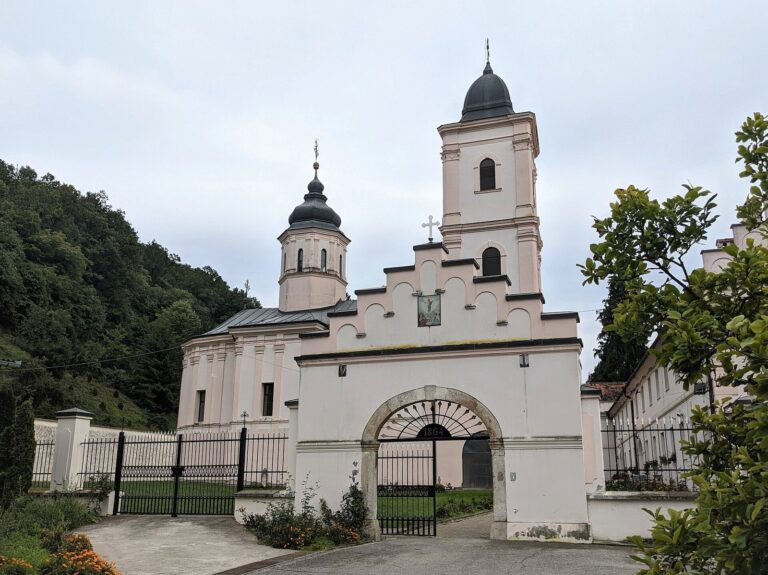
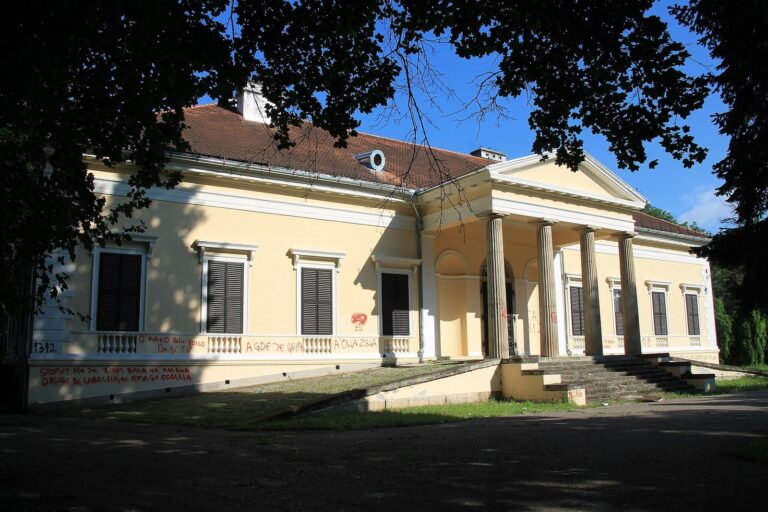
The lodgings reached their final form in the late 18th and early 19th centuries and were renovated after a fire in 1849. The present complex includes a lodging building southeast of the church and a completed eastern lodging. The monumental monastery gate has also been restored.
Paintings, books, and relics
Painted works
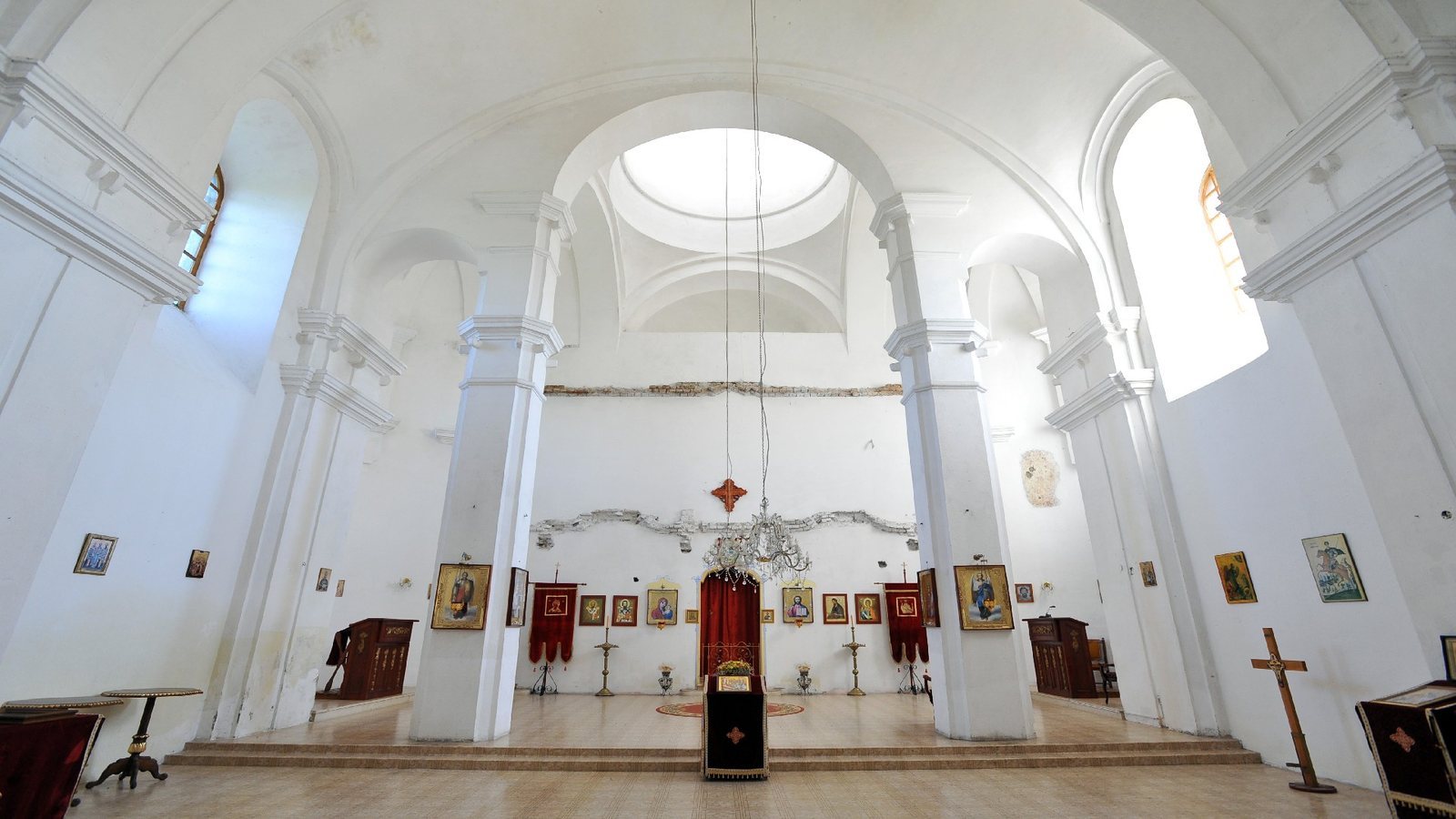
Grigorije Davidović-Obšić painted the church in 1793 and its iconostasis in 1794. An iconostasis is a screen bearing icons that separates the sanctuary from the main body of an Orthodox church. He also painted a portrait of Bishop Vićentije in the church in 1795. In 1821, Arsa Teodorović painted a scene in the monastery dining hall showing Štiljanović giving wheat to hungry people in Šikloš. An engraving made by Hristofor Žefarović in 1753 depicts the monastery with Štiljanović.
The library
The monastery library was known for its manuscripts and printed books. The Šišatovac Apostle, a 235-leaf parchment manuscript of the Acts and Epistles, was copied by the monk Damjan in 1324 at Ždrelo near Peć and was kept at the monastery for a long period. Josef Dobrovský used it while compiling a Church Slavonic grammar, and Franc Miklošič published it in Vienna in 1853.
A Gospel written in 1560 states that it was made at the Remeta monastery, in the church of the Nativity of the Mother of God, where Štiljanović’s relics were kept. The library also held a Gospel with 16th-century miniatures and a menaion written there in 1566, a service book arranged by the days of the year. A bishop’s service book, written at Moldovița Monastery in 1616, was donated to Šišatovac in 1627 by Bishop Josif of Požarevac, who had taken monastic vows there. The library also held letters sent from New York over a period of years by Nikola Tesla to his nephew Petronije Trbojević, who was buried at the monastery.
Štiljanović’s relics and reliquaries
Štiljanović’s relics were first kept in a walnut container decorated with mother-of-pearl. In 1760, Bishop Vićentije Popović paid for a richly ornamented metal reliquary, a container for sacred remains, wrapped in red velvet and fitted with silver. He also gave the relics a pectoral cross with a double gold chain. A 19th-century estimate valued the reliquary and cross together at 20,000 florins. The silver and gilded fittings, enamel medallions, the saint’s silver crown and other ornaments were later plundered. Removing a ring also damaged the saint’s dried skin.