Shizuhatagayama Kofun: A Sixth-Century Burial Mound in Shizuoka, Japan
Site at a Glance
- Popularity
- Medium
- Country
- Japan
- Primary era
- Medieval
- Eras represented
- Medieval
- Civilizations
- Yamato
- Site type
- Burial
- Remains
- Burial Mound
On this page12 sections
History
Construction and burial
Shizuhatagayama Kofun is a circular burial mound in Shizuoka, Japan, built in the later sixth century during the Kofun period, when powerful leaders in ancient Japan were buried in large mounds. Its unusually large burial chamber, stone coffin, and substantial grave goods indicate the tomb of a high-ranking regional leader. It ranks among the highest-status burials in the Tōkai region, and its contents point to close connections with the Yamato polity, the early Japanese political power based in the Yamato region.
High-fired Sue ware pottery of the TK43 type, a category used to date ancient ceramics, supports the mound’s sixth-century date. Further burials are thought to have been added through the early seventh century. The person buried in the coffin has not been identified. The chamber had been plundered before modern investigations.
Discovery and investigation
A large tree fell during the Edo period, exposing the chamber and coffin. Records from 1783 and 1818 describe the tomb, while an entry from 1843 notes the discovery of a mirror with six raised knobs and a sword.
Excavation began in 1949 as part of a survey of important sites around the Toro site. Further investigation took place in 1955, and the findings from the first excavation were published in 1953. The mound was designated a National Historic Site of Japan that same year. A mound survey followed in 1984, and the finds were reorganized in 1986 for work on Shizuoka Prefecture’s history. A site-improvement and preservation project ran from 1989 to 1996, including confirmation excavations in 1991–1995 and repairs in 1993–1996.
Remains
Mound and setting
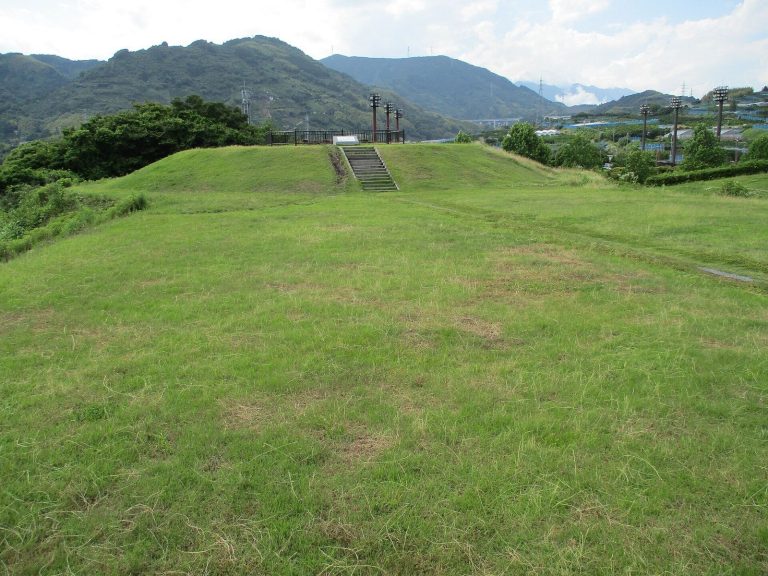
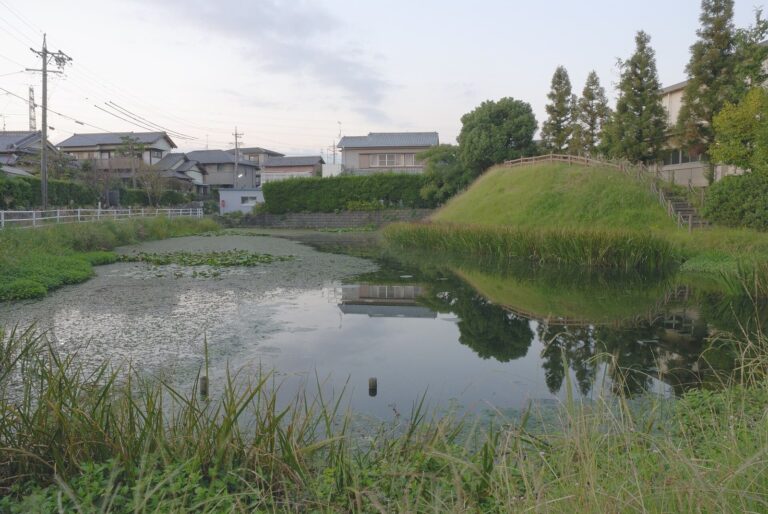
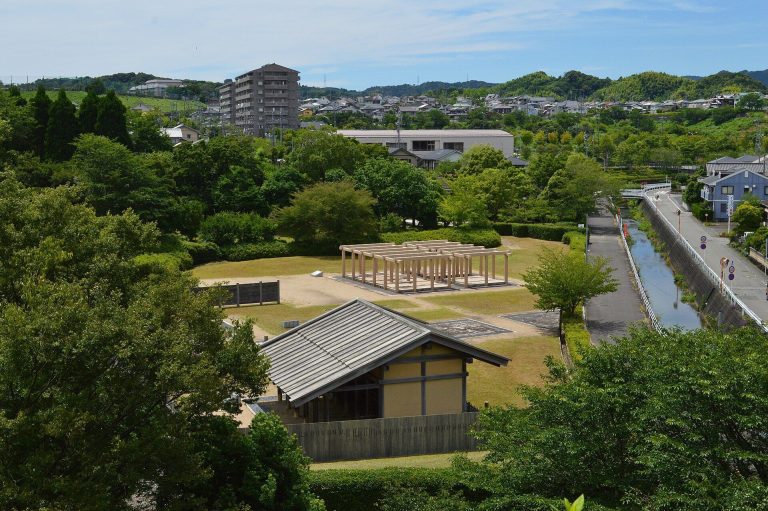
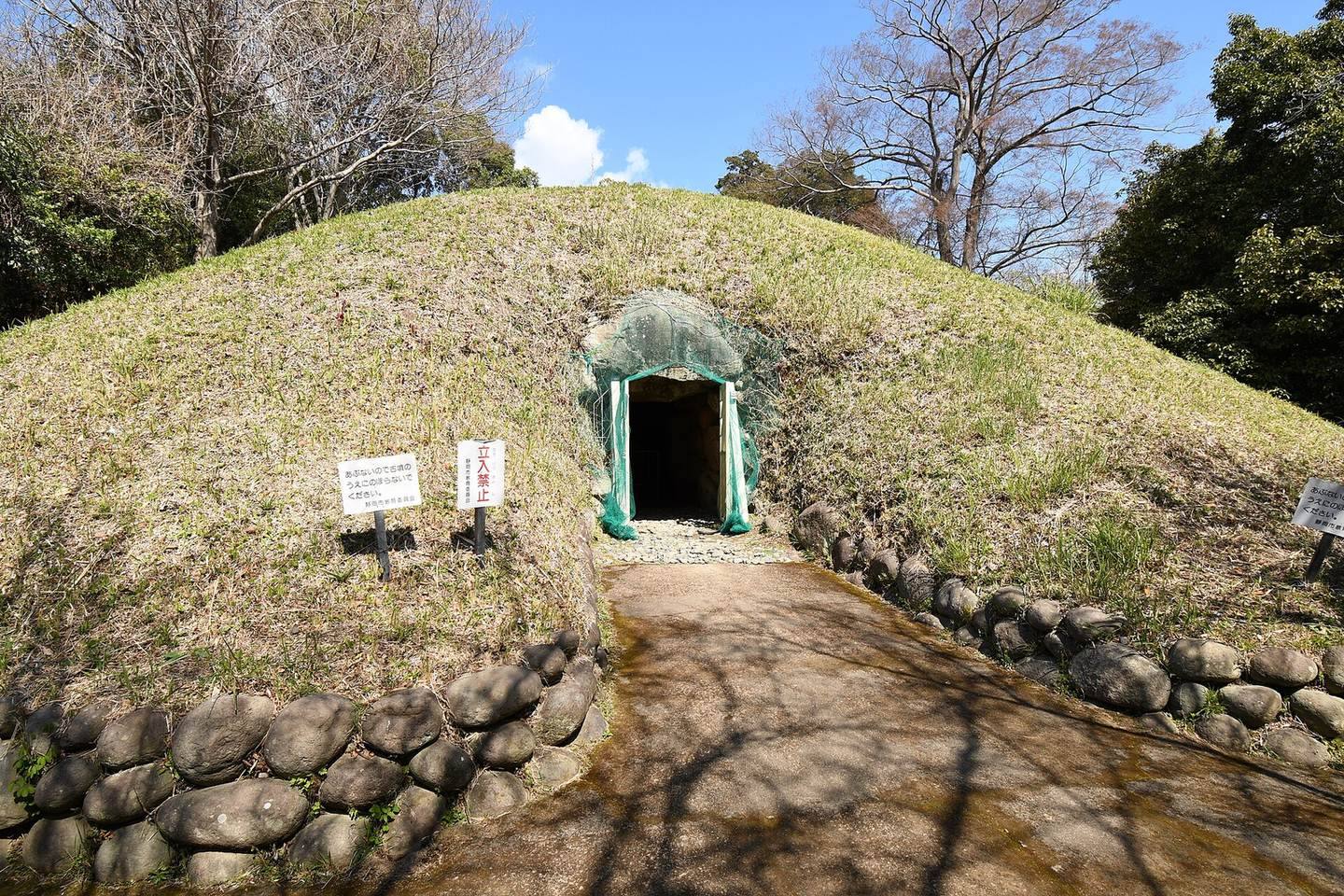
The remains stand at the tip of a tongue-shaped spur of Shizuhata Hill, beside the Abe River on the northeastern edge of the Shizuoka Plain. The hilltop is about 50 metres above sea level and roughly 30 metres above its surroundings. The mound lies within the grounds of Shizuoka Sengen Shrine, behind the main sanctuary of Ohtoshimioya Shrine. It is a separate mound in the Shizuhata Kofun Group, whose other mounds, including Nos. 1 and 2, are distributed along the hill. The circular mound is about 32 metres across and 7 metres high. Before its construction, builders cut and levelled much of the steep southern slope. At the southern foot, a protective line of angular stones about 40 centimetres across survives in three courses; whether it once extended around the full mound is uncertain.
Stone burial chamber
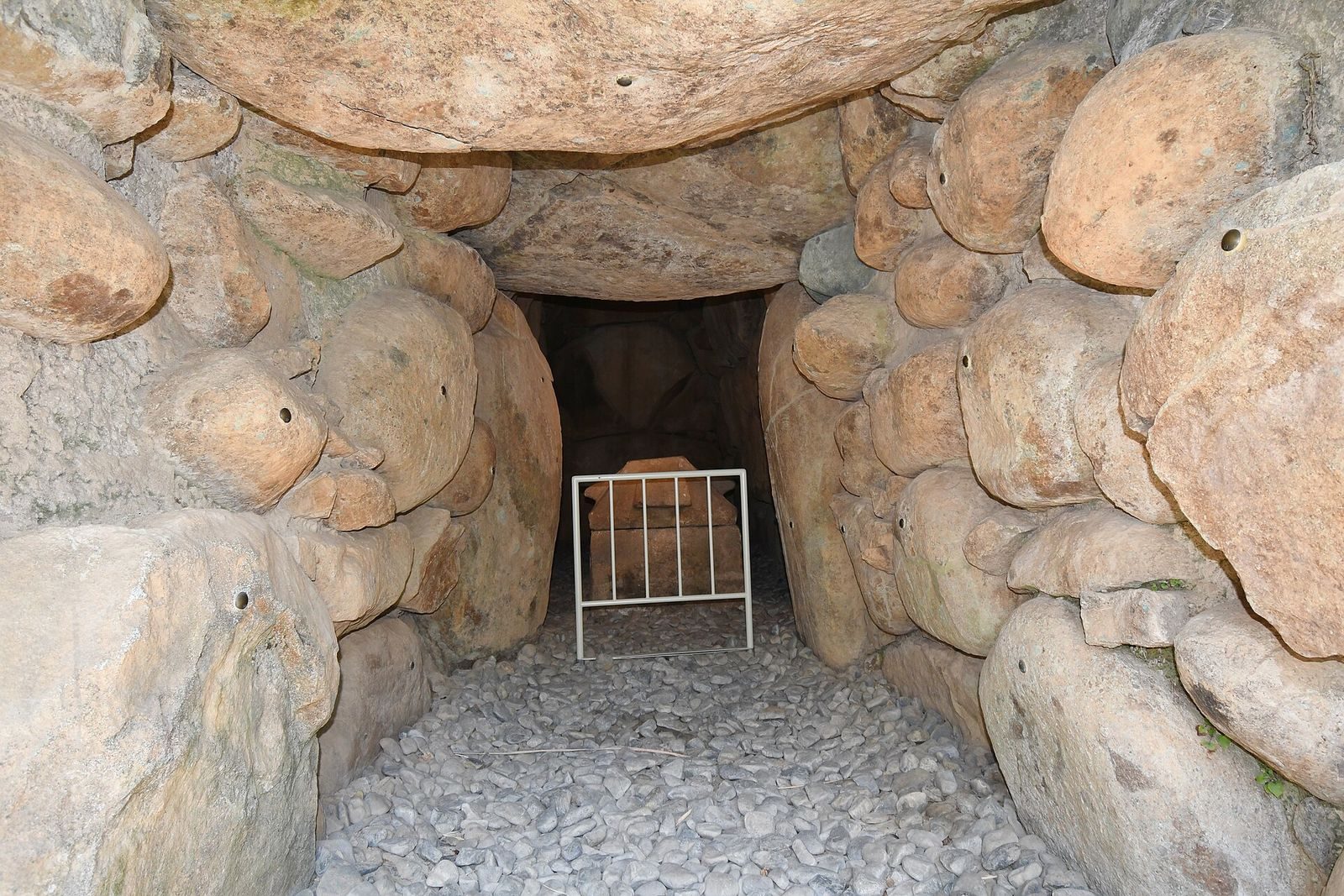
The burial facility is a south-facing chamber entered through a passage, with a forecourt and side extensions beside the passage. Its total length is measured as 11.5 metres to the estimated passage entrance, or 18.2 metres to the ends of the forecourt walls. An earlier measurement to the estimated entrance gave 12.42 metres.
Main chamber
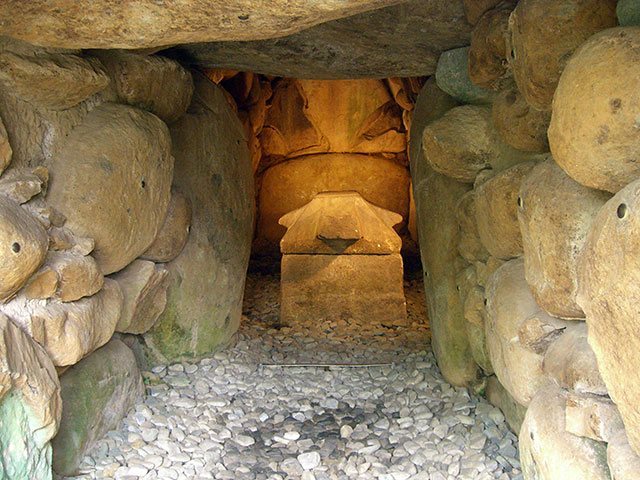
The main chamber measures 6.5 metres long, up to 2.6 metres wide, and 3.2–3.7 metres high. Its entrance to the passage is 1.4 metres wide. The chamber’s natural, unworked stones are thought to be tuff, rock formed from consolidated volcanic material, from a southern coastal source. Three courses of large blocks form the rear wall, while irregular stones create the side walls in four or five courses. Near the opening, the side walls are poorly preserved and join the protective stone line at the mound’s foot. One large upright stone stands on either side of the chamber entrance, supporting a stone roof.
Passage and forecourt
The passage is 1.8 metres wide and 1.9–2.1 metres high, making the chamber about twice its height and wider. Its walls consist of somewhat smaller stones laid horizontally in four or five courses. Fist-sized stones, believed to have come from the middle reaches of the Abe River, cover the chamber and passage floors and slope gently toward the forecourt. Four roof stones cover the chamber and three cover the passage; the original position of one passage roof stone is uncertain. About 500 stones roughly the size of a head once blocked the passage entrance, but this barrier has collapsed.
Stone coffin
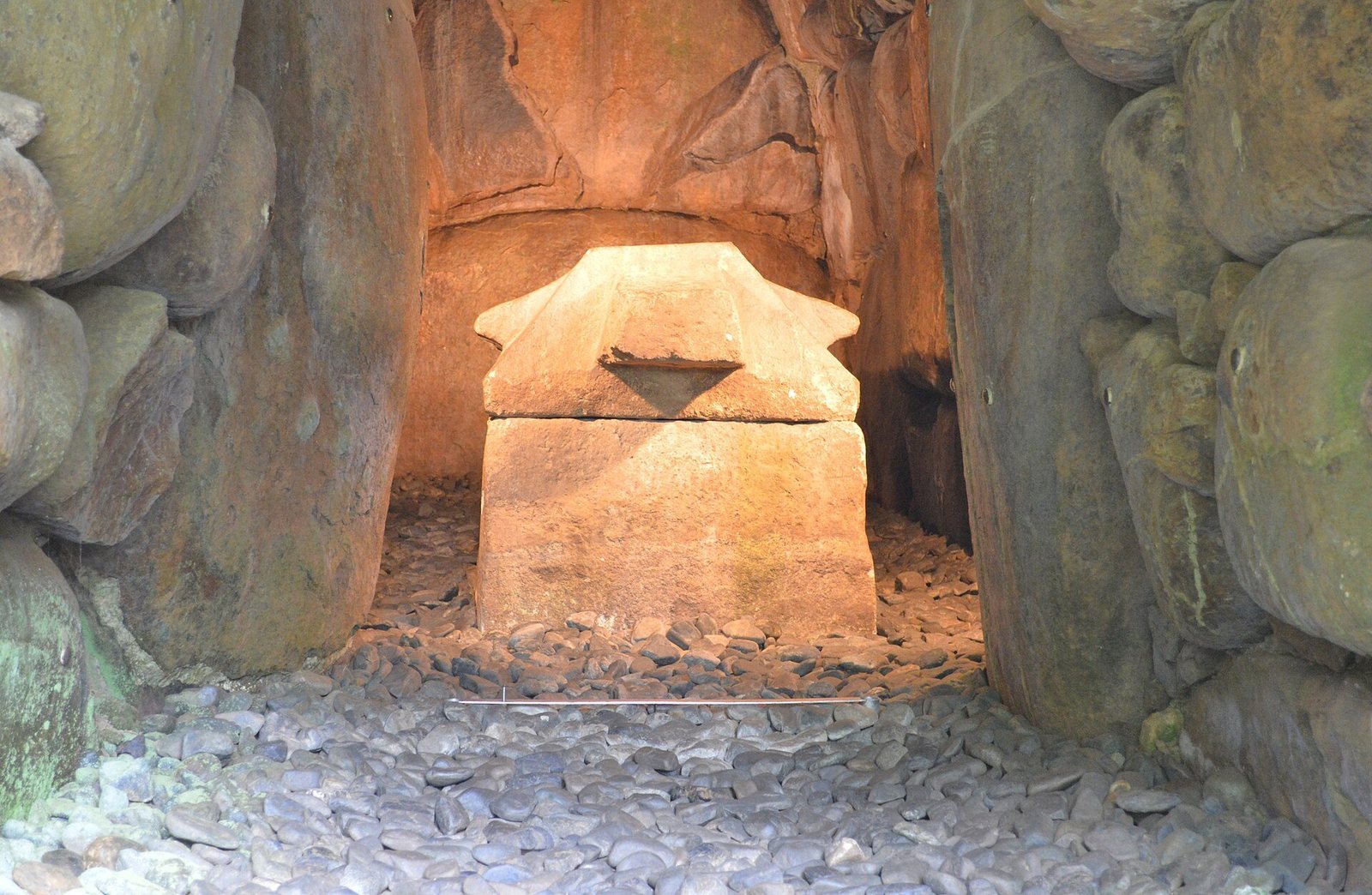
A house-shaped stone coffin stands inside the chamber near the passage. Its body is 2.50 metres long, up to 1.13 metres wide, and 0.64–0.68 metres high, with an interior depth of 0.41 metres. The lid measures 2.91 by 1.08 metres and has an internal depth of 0.23 metres; its flat surface is 2.10 metres long and up to 0.40 metres wide. The body and lid are made from tuff quarried at Shizuura in Numazu, also known as Izu stone. Eight projections for suspending the lid with ropes are arranged along its sides and ends. Red pigment remains visible along the joint between lid and body.
Grave goods and earlier burial
Objects from the chamber
Objects recovered from the chamber include a gilt-bronze crown, hollow gilt-bronze beads, other ornaments, weapons, armour, horse gear, Sue ware, Haji ware, and a bronze bowl. More than 90 Sue ware vessels or fragments were recovered, forming an important reference for dating pottery of this period. The horse equipment represents at least five sets. Four earrings came from the earlier investigations and three from the later excavations; together, the finds indicate at least four additional burials. The coffin’s occupant is thought to have worn the crown but not earrings. The finds are held at Shizuoka City’s buried cultural-property centre, and a replica of the horse gear is exhibited at Shizuoka City Museum of History.
Earlier pit grave
Under the lower mound fill, investigators found a pit grave dating to the middle phase of the late Yayoi period, an era associated with wet-rice agriculture and bronze and iron technologies. The grave contained bone fragments, a jar-shaped vessel, glass, four glass beads, four crystal beads, and six bronze bracelets. It is considered a high-status burial.