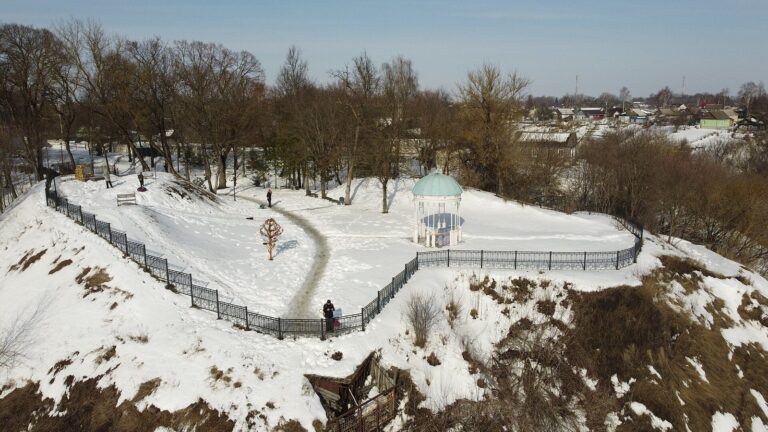
Sevsk Kremlin: The Fortified Core of Sevsk
Site at a Glance
- Popularity
- Medium
- Country
- Russia
- Primary era
- Medieval
- Eras represented
- Medieval, Early Modern
- Civilizations
- Russian
- Site type
- Military
- Remains
- Citadel
On this page7 sections
History
The Sevsk Kremlin was the oldest and most heavily fortified part of Sevsk, in Russia. Archaeological evidence places the fortified settlement’s emergence in the mid-12th century, consistent with Sevsk’s first mention in 1146 in the Hypatian and Resurrection chronicles, medieval collections of historical narratives. The fortress occupied a site where earlier settlements were associated with the Yukhnov and Romny cultures, archaeological groupings identified through characteristic material remains.
From early settlement to frontier fortress
A later phase of construction took place in the 16th century. During Boris Godunov’s reign, from 1598 to 1605, a wooden fort was built on the abandoned settlement. The garrison was reinforced with streltsy, firearm-bearing infantry serving the Russian state, and Cossacks, members of military communities often involved in frontier defense. A Cossack settlement also developed. In 1604, the fortress supported False Dmitry I, a claimant to the throne who briefly ruled as tsar in 1605 and 1606.
The fortifications suffered heavy damage during the Time of Troubles, a period of political and dynastic crisis around the turn of the 17th century. They were rebuilt and strengthened in the 1620s, after the 1618 Truce of Deulino established a border nearby between Russia and the Polish-Lithuanian Commonwealth, a state joining Poland and Lithuania.
Sieges and renewed defenses
In March 1634, during the final stage of the Smolensk War, a conflict between Russia and the Commonwealth fought from 1632 to 1634, a garrison of about 500 held the fortress against a Polish-Lithuanian army for three weeks. The Kremlin later withstood two attacks by Crimean Tatars. In February 1664, a Polish detachment attacked during King Jan II Casimir’s campaign toward Moscow.
Under Peter I, also known as Peter the Great, the Kremlin became the central point in Sevsk’s wider defensive system. Its defenses were strengthened during the Northern War, fought from 1700 to 1721 between Sweden and several opponents, because of the danger of a Swedish attack.
Fire and the end of active defense
A major fire partly destroyed Sevsk’s fortifications in 1718. They were not rebuilt: the Swedish threat had passed, and Russia’s frontier toward Crimea had shifted far to the south. The Sevsk Kremlin is designated a cultural heritage site of federal significance in Russia.
Remains
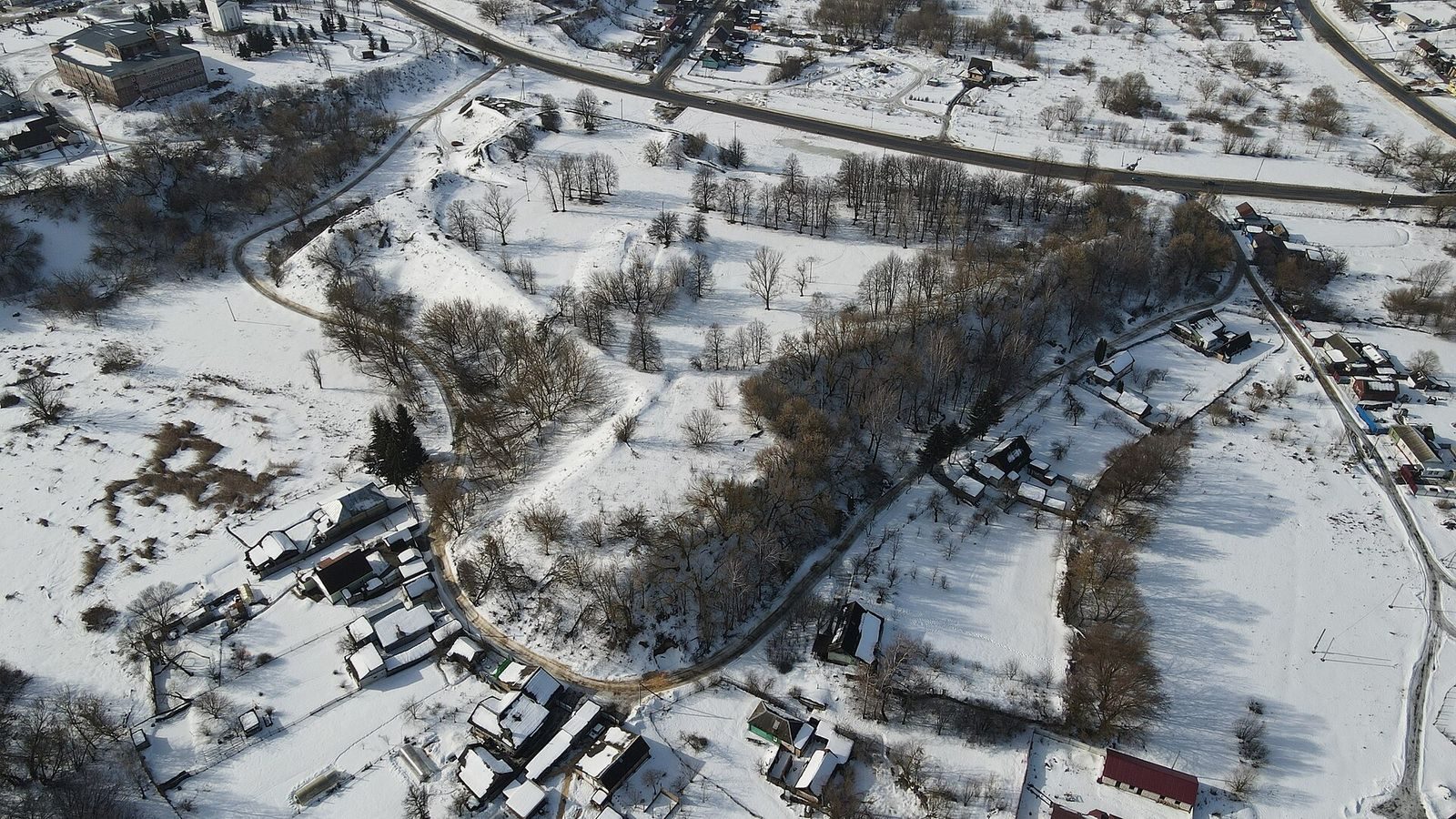
The remains reflect an earth-and-timber defensive system organized around a trapezoidal hilltop fortress and connected to a larger defensive complex to the south.
Hilltop fortress
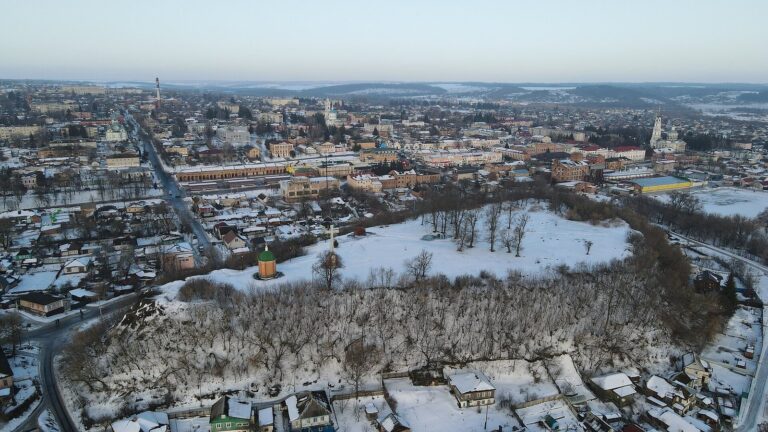
The Kremlin stood on a high remnant hill at the confluence of the Maritsa and Sev rivers. Its surviving earthwork belongs to the Old Rus fortifications, associated with the medieval East Slavic world and its political traditions. Material from both the Yukhnov and Romny cultural periods was found in a cut through the raised bank. Oak walls, about 6 metres high, stood on an earthen rampart, a raised defensive bank; several towers rose above them, with the tallest reaching 40 metres. A ditch ran outside the rampart. Inside the fortress were storehouses and vats for keeping water, and a concealed passage ran for 50 metres to the Sev River.
Connected southern defenses
A covered bridge linked the Small Town, the Kremlin, with the Big Town to its south. The Big Town’s defenses included an earthen rampart topped by a timber palisade, a barrier of upright stakes, and walls extending about 3 kilometres. Farther south, a further defensive line was known as the Third Town.