Seleucia: A Disputed Ancient City in Pamphylia
Site at a Glance
- Rating
- 4.6
- Popularity
- High
- Country
- Turkey
- Primary era
- Classical
- Eras represented
- Classical, Medieval
- Civilizations
- Ancient Greek, Byzantine, Roman
- Site type
- Settlement
- Remains
- City
On this page11 sections
History
Seleucia is the name traditionally given to an ancient Greek city site near Bucakşeyhler in Pamphylia, Turkey, although its identification is disputed. Its foundation is placed broadly between 330 and 30 BCE, during the Hellenistic period, and associated with Seleucus I Nicator or his successors. Seleucus was a general of Alexander the Great and founder of the Seleucid dynasty, a Hellenistic ruling house that governed territories in western Asia.
Roman and early Christian periods
A third-century CE coastal guide placed the city between Side and the Eurymedon estuary, 80 stadia from Side and some distance from the sea. By the early Christian period, the city had a bishop’s seat within the church province centered on Side, indicating that Christianity was established there.
Byzantine and medieval periods
In the eighth or ninth century, Seleucia became the administrative center of a Byzantine theme, a provincial district in Asia Minor. Armenians took control of the city in the 1180s. Medieval portolan charts, nautical maps of coastlines and sea routes, record the name Scandalor.
Excavations and identification
Rescue excavations at the site, carried out in connection with Lyrba, took place from 1972 to 1979 under Turkish archaeologist Jale İnan. German ancient historian Johannes Nollé proposed that the ruins belonged to the Roman town of Lyrba rather than Seleucia. Another proposed location for Pamphylian Seleucia is near Şıhlar, north of the mouth of the Peri Su and west of Side.
Remains
Hilltop setting
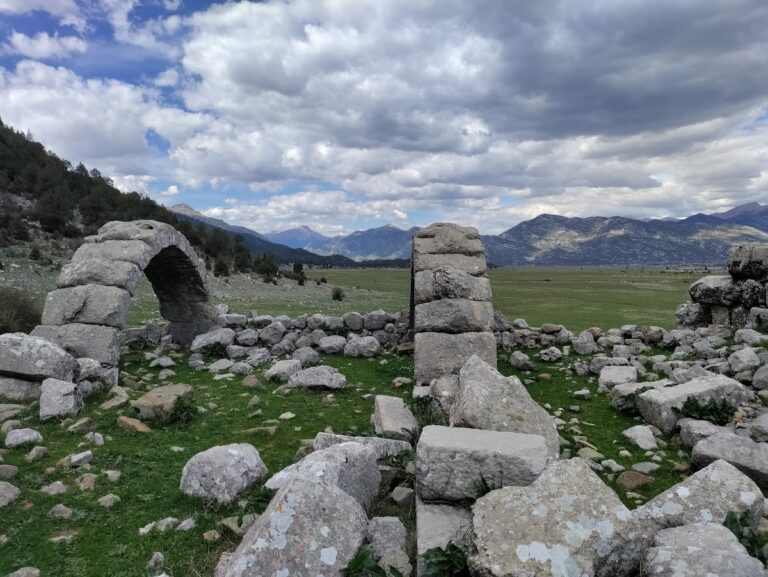
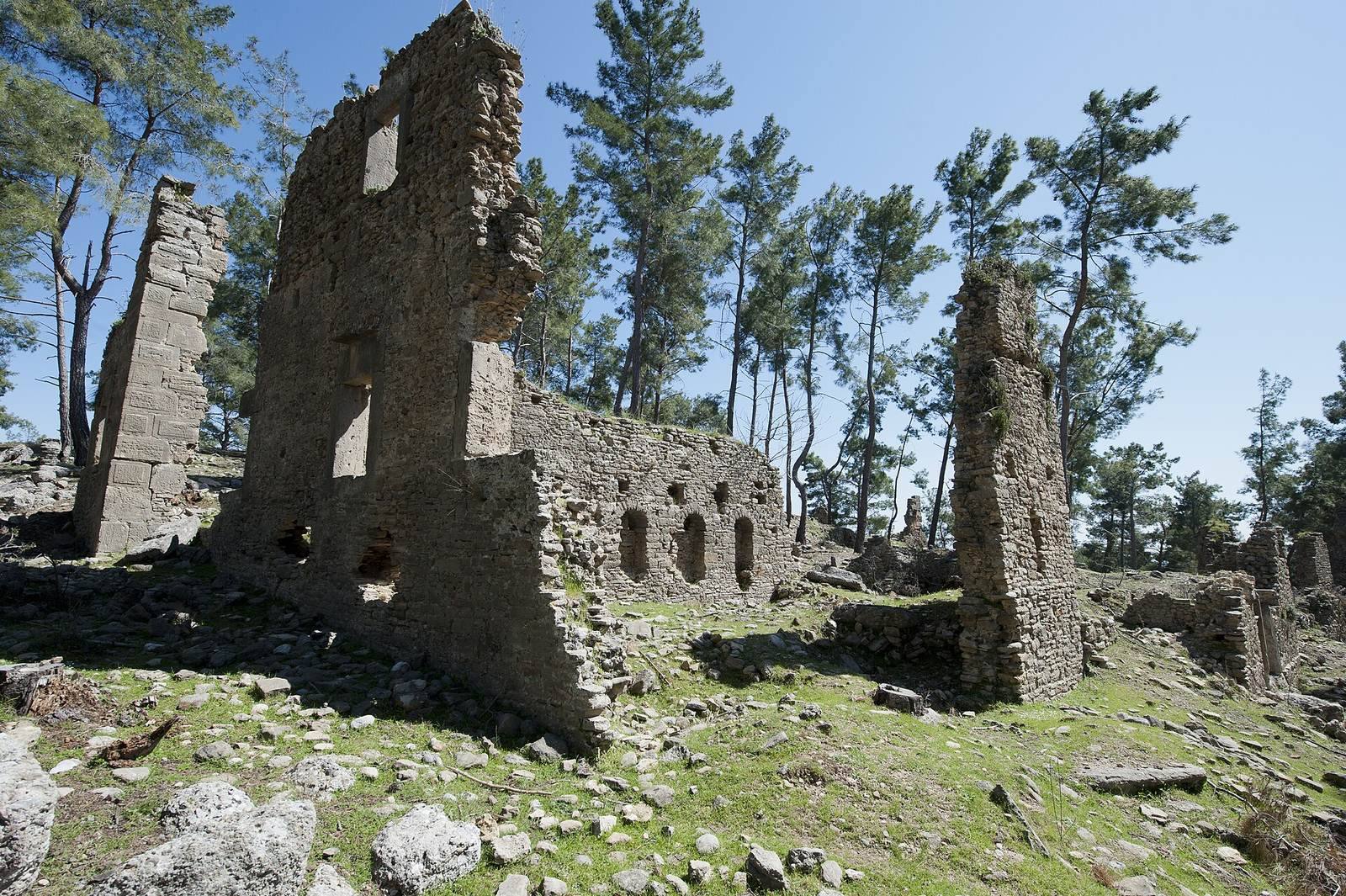
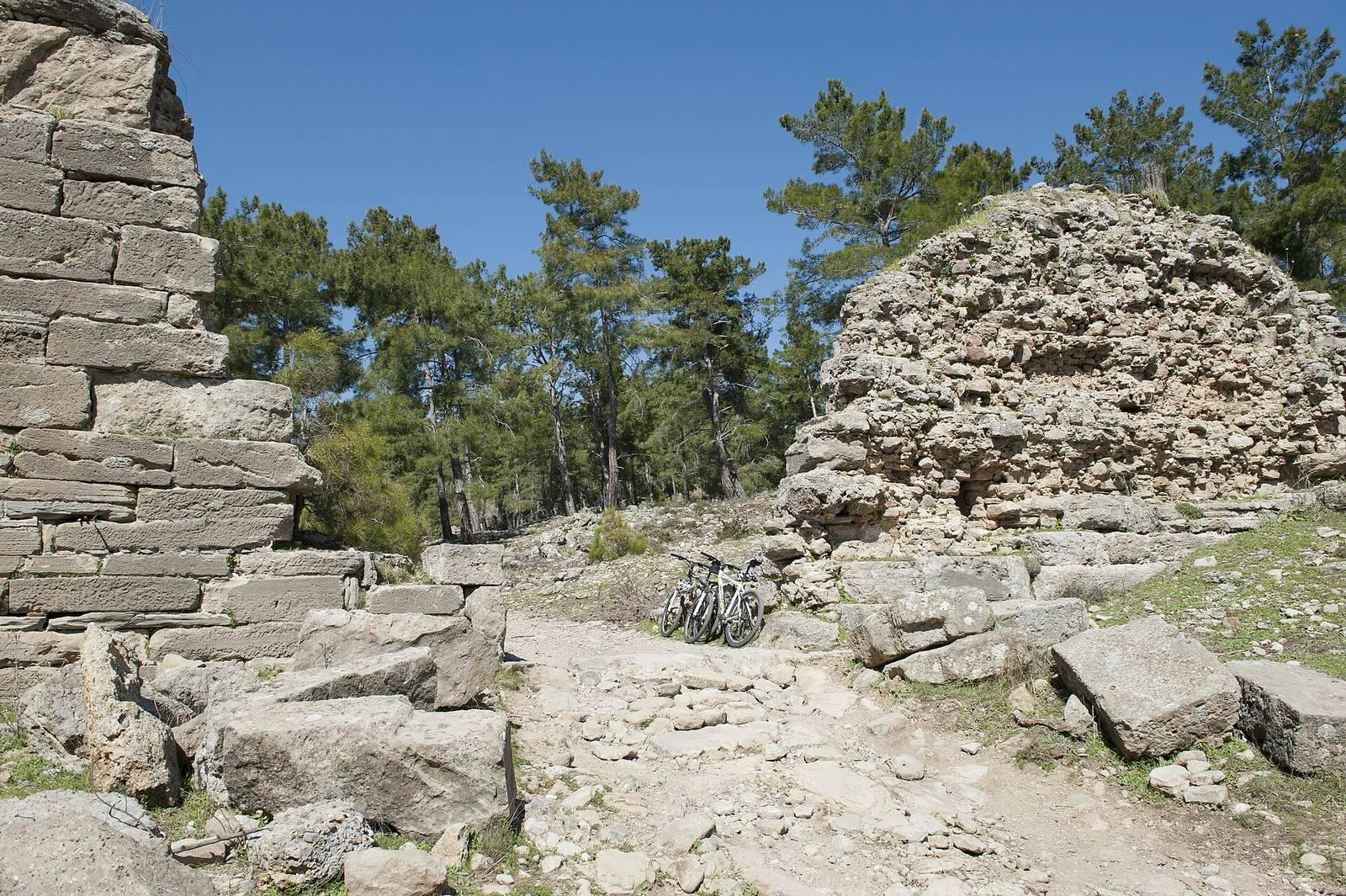
The ruins occupy a hilltop with steep escarpments on several sides, giving the site a naturally defensible position. Its main area lies in pine forest about one kilometre north of Bucakşeyhler and twelve kilometres northeast of Manavgat. The remote, difficult-to-reach location helped protect the ruins from being quarried for building materials.
Buildings and archaeological remains
Agora
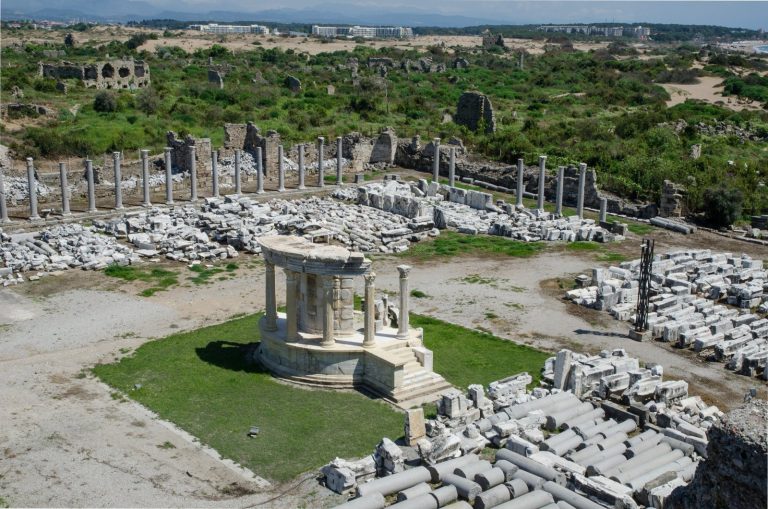
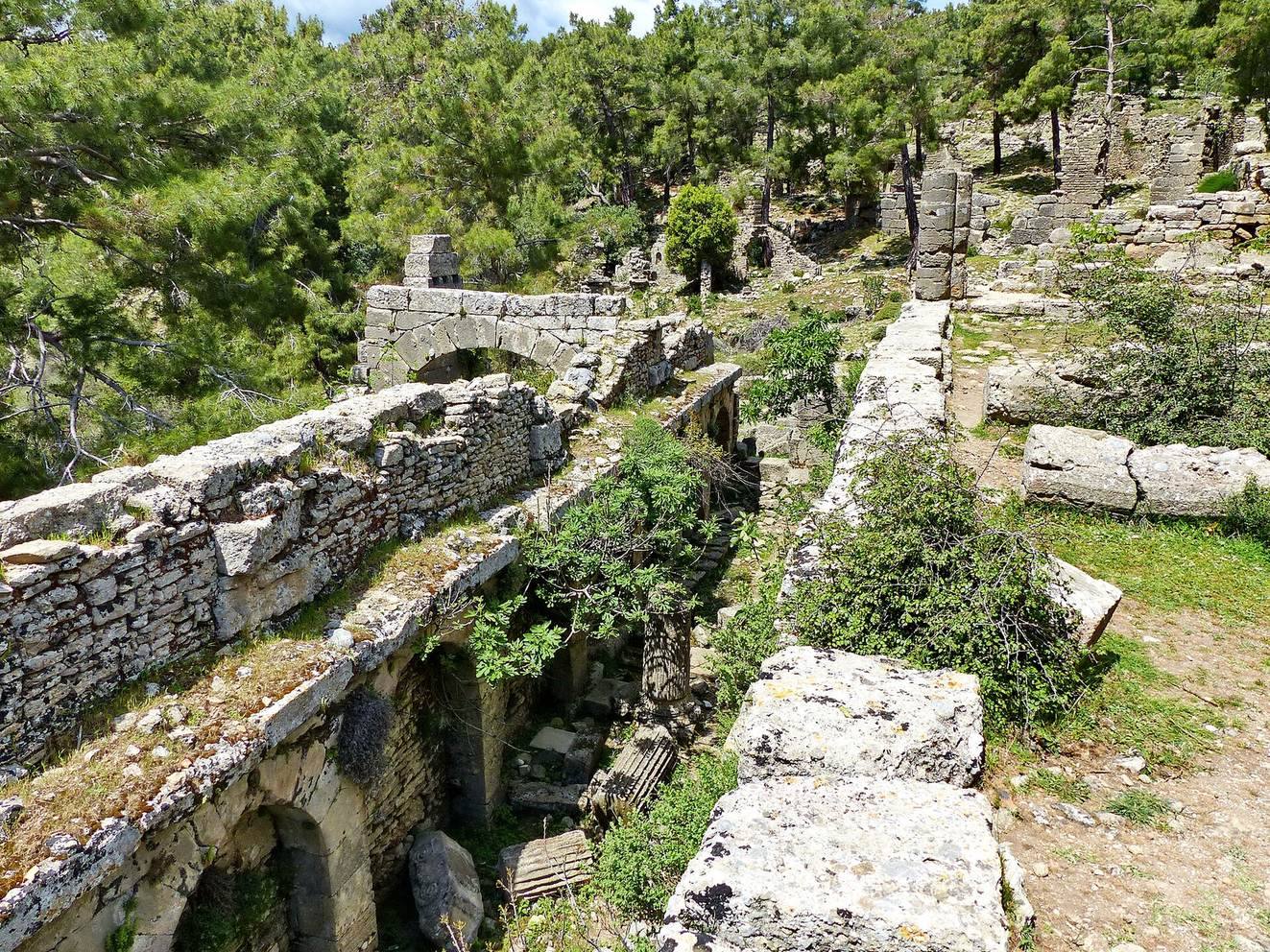
The agora, a public civic space in a Greek city, includes a row of building façades rising two and three storeys. It is regarded as the best-preserved example of its type in Pamphylia.
Other structures
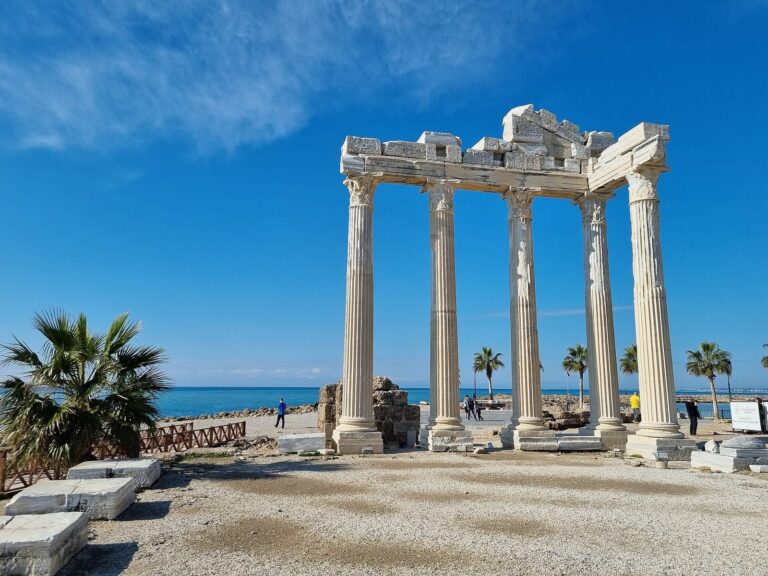
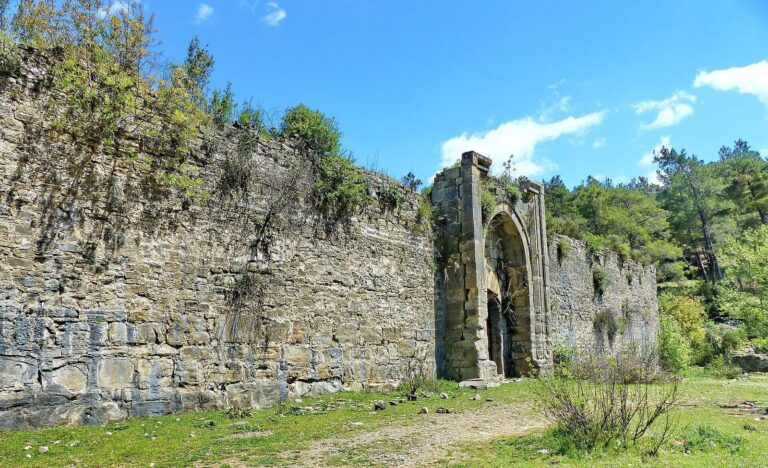
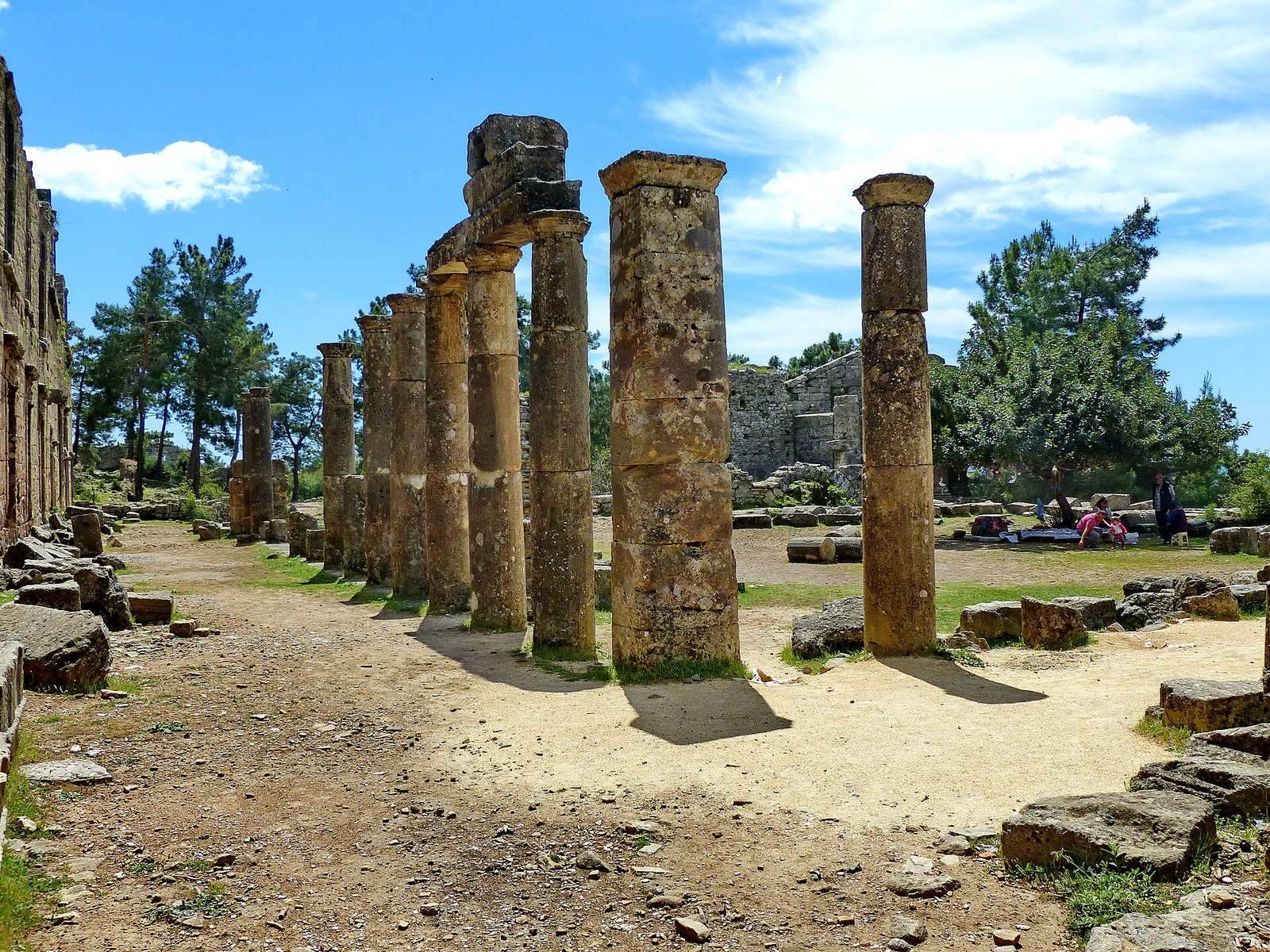
The remains also include a gate, a mausoleum, a Roman bath, several temples, and Byzantine churches. A necropolis, or burial area, forms another part of the site.
Columns and millstones
Columns and other building elements lie in the area alongside large millstones used to grind flour.
Finds
Finds dated to the first and second centuries CE include a bronze statue of Apollo, a Greek god associated with music and prophecy, and mosaics depicting Greek scholars and Orpheus, the legendary musician and poet. These objects were transferred to the Antalya Museum, while other finds are held at the Side Museum.