Schwarzenstein Castle: A Medieval Hill Castle in Switzerland
Site at a Glance
- Popularity
- Low
- Country
- Switzerland
- Primary era
- Medieval
- Eras represented
- Medieval
- Civilizations
- Holy Roman Empire
- Site type
- Military
- Remains
- Castle
On this page7 sections
History
The Obersaxen estate and castle
Schwarzenstein Castle is a medieval hill castle at Obersaxen Mundaun in Switzerland. Built around the middle of the 13th century, it was the last and largest of four castles constructed to control the strategically placed village along the Rhine. Heidenberg may have been built as early as 1000, while Moregg and Saxenstein date to around 1200. The plateau enters historical records in 765, when Bishop Tello transferred farms and meadows there to Disentis Abbey. It became an imperial estate in 806, and in 956 Emperor Otto I returned the village and its church to the Bishop of Chur.
The Barons of Rhäzüns probably established Schwarzenstein as they extended their authority over the plateau. Disputed property rights made local representatives necessary. These included ministeriales, dependent retainers who served their lords in military or administrative roles, and the castle probably housed such representatives.
Rhäzüns authority and abandonment
In 1289, a feud brought the castle into the hands of a member of the Löwenstein family. A peace settlement required its return to Heinrich Brun von Rhäzüns. Schwarzenstein was remodeled and enlarged twice, evidence of continued use over an extended period.
The castle was probably abandoned around the middle of the 14th century. German-speaking Walser communities, originating in the Upper Valais and settling in other Alpine regions, gained authority over minor local legal matters and the right to appoint their own bailiff, a local official with administrative or judicial duties. With these changes, Rhäzüns officials were no longer needed at the castle.
By 1468, Schwarzenstein was described as a farm with a meadow in a gorge. The farm probably occupied cleared land south of the abandoned castle. The name may come from a settler named Schwarz whose land included the ruin, or from the dark rock beneath it. German-speaking settlers had moved into this Romansh-speaking area, where castles may already have stood.
Remains
Ridge setting and enclosure
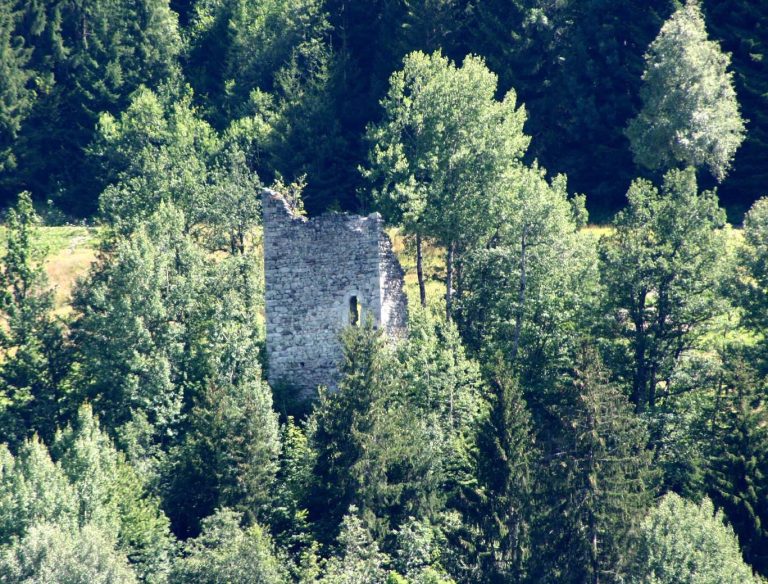
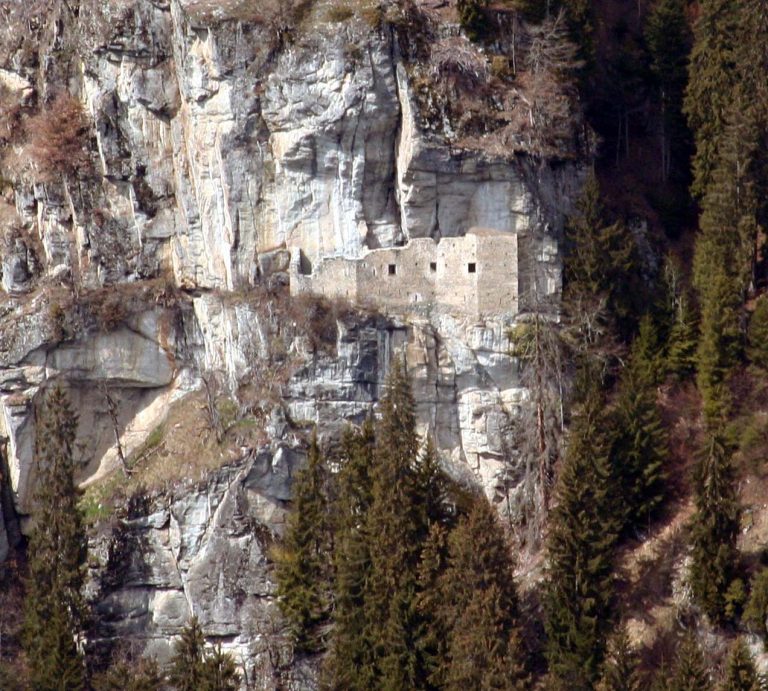
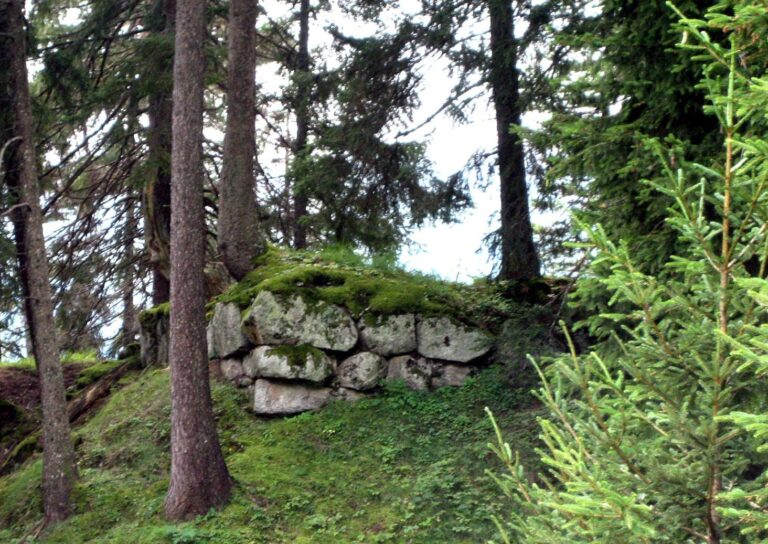
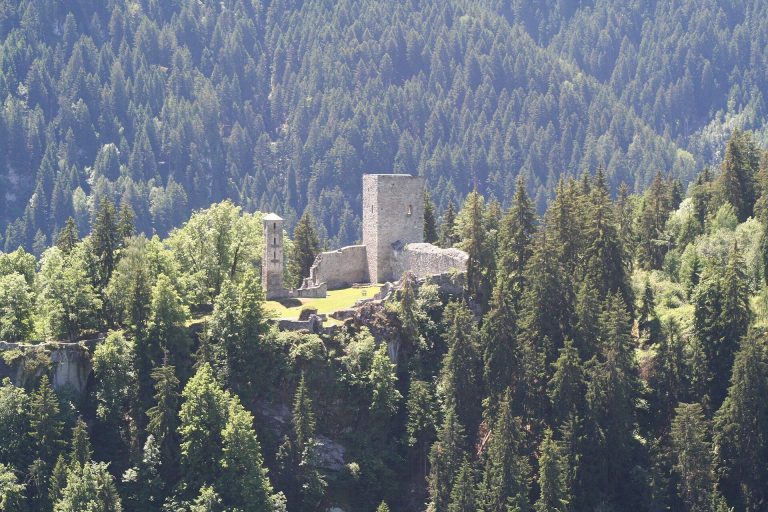
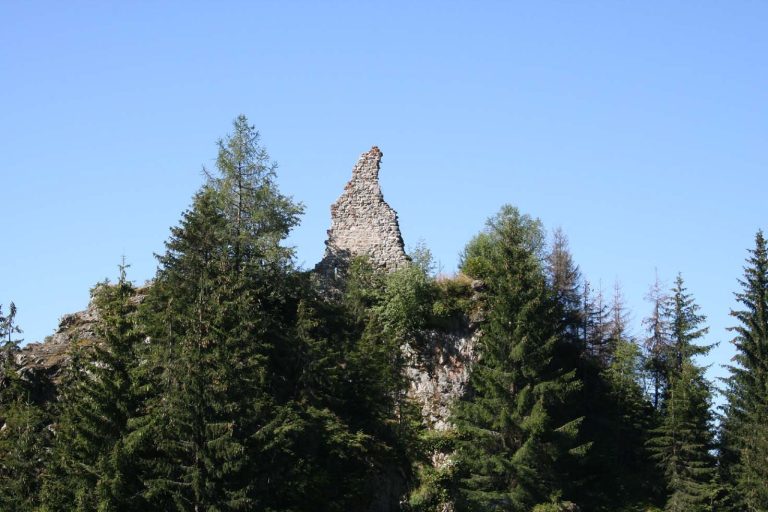
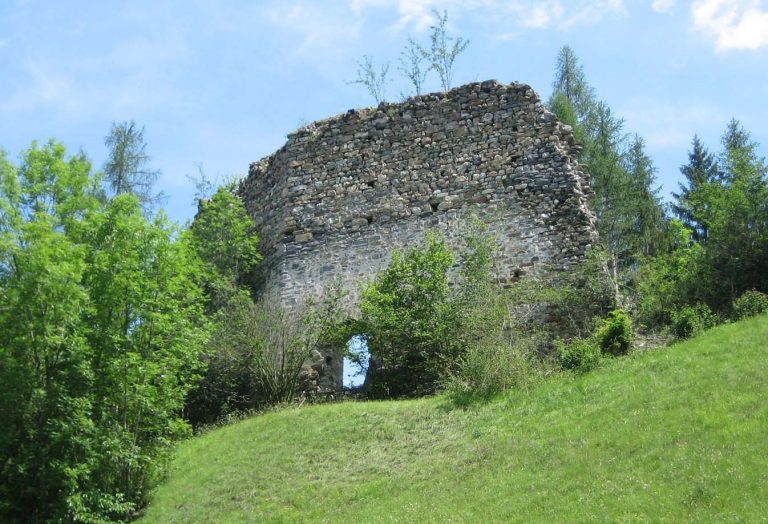
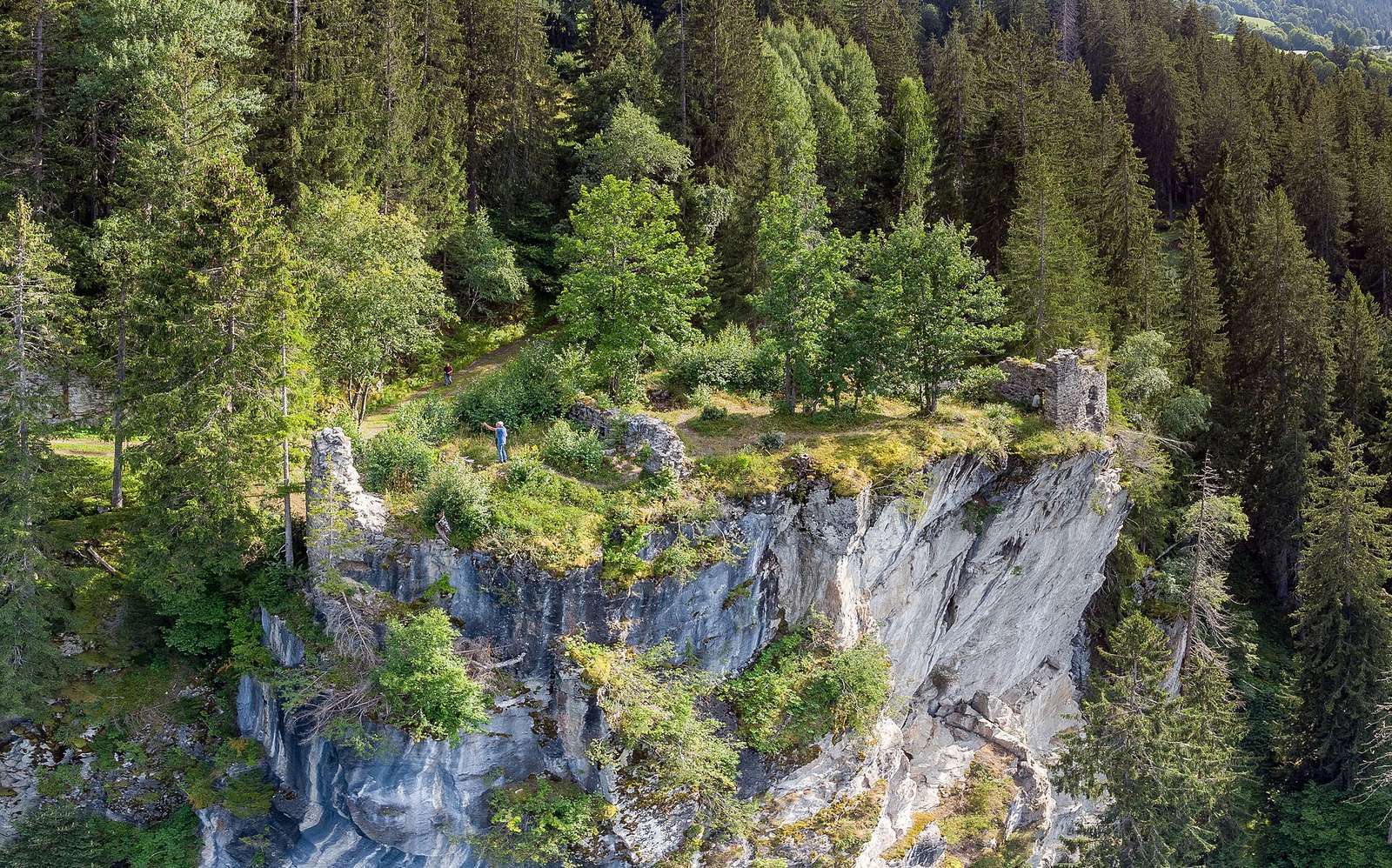
The rubble-stone castle follows an approximately east-west oval plan along a narrow, elongated ridge at 1,173 metres above sea level, between St. Joseph and Tavanasa and northwest of St. Joseph’s church. The ridge is about 50 metres long, while the castle complex extends for roughly 40 metres. Its valley-facing slope is steep, and a trench-like depression lies on the uphill side. A ring wall follows the ridge edge; substantial portions still stand, and its foundations can be traced across much of the site. It encloses a central area between structures at the eastern and western ends.
Western entrance and building
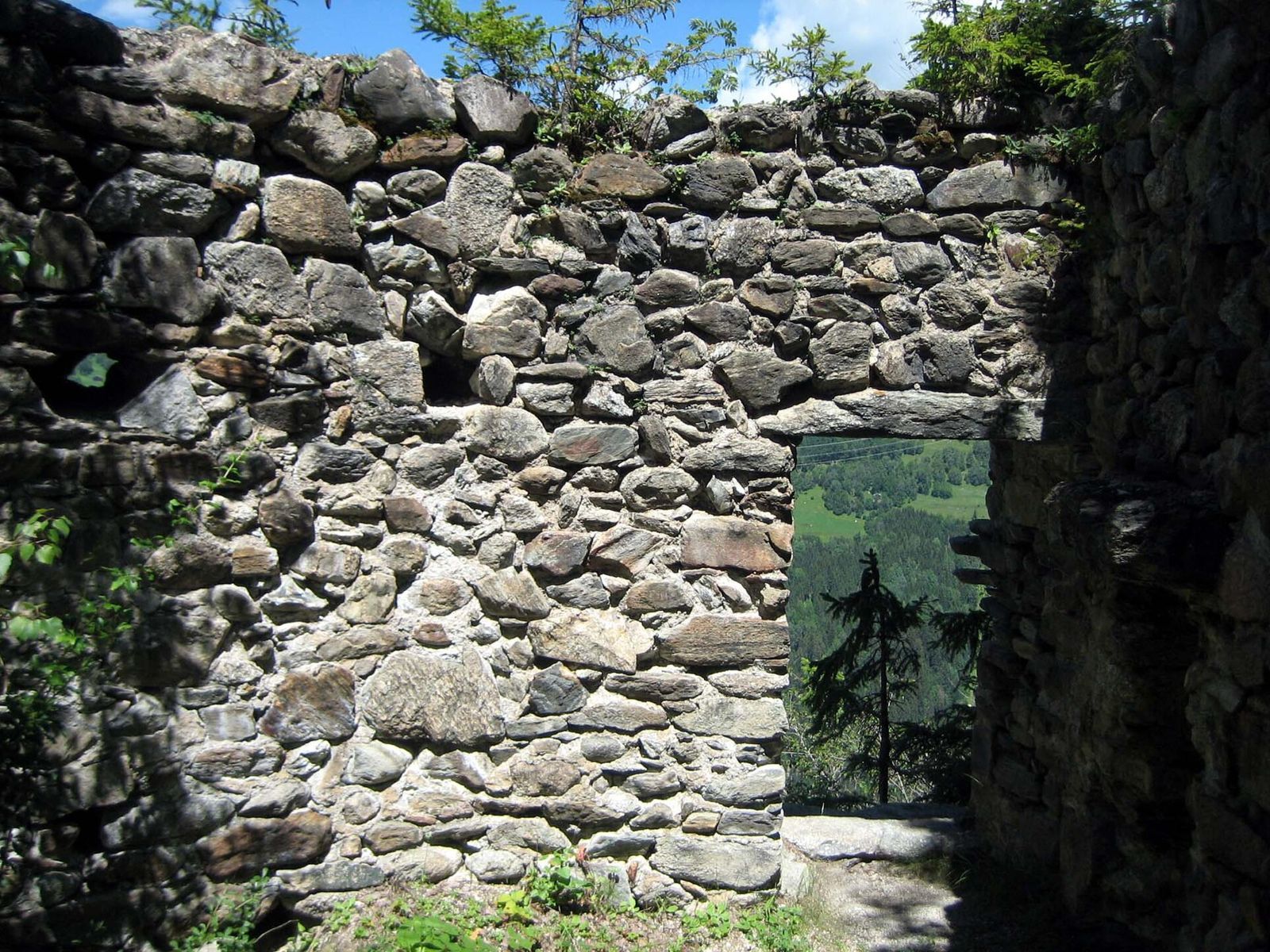
The western structure has a polygonal plan. Its north doorway has a stone-slab lintel, a channel for a sliding bar, and a recess that held a door pivot. A wooden structure over the precipice provided access. The old gate in the western ring wall was approached by a medieval wooden platform, which has decayed. The gatehouse probably had two or three storeys and also provided accommodation. Its walls contain slab-lined niches and narrow loophole windows, with a habitable wooden upper storey probably above them. A double-leaf door connected the building to the central area.
Eastern building and later changes
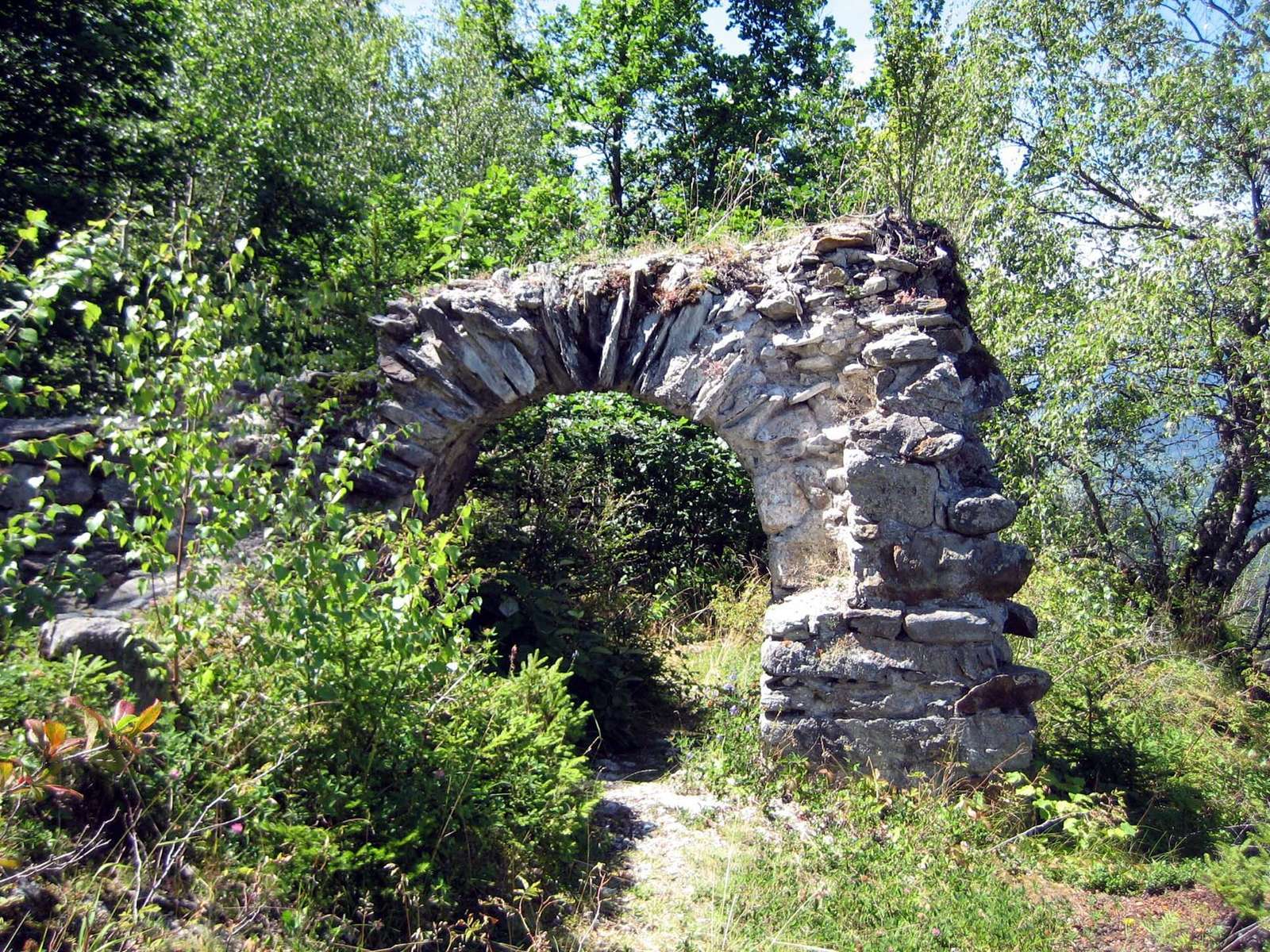
A round-arched doorway connected the central area with the older eastern section, which contained a multi-part residential and administrative building. The building was enlarged at least once, and a doorway on its north side opened onto the central area. A narrow, later entrance was cut into the wall at the foot of this section. The eastern wall retains a projecting fragment at risk of collapse; its uppermost part, including a slab-lined niche, has fallen. The complex is heavily overgrown and deteriorating, and the impression of a tree formerly embedded in the south wall is now barely visible.