Schlossmuseum Quedlinburg: Museum in the Former Castle Complex
Site at a Glance
- Popularity
- Medium
- Country
- Germany
- Primary era
- Early Modern
- Eras represented
- Medieval, Early Modern, Modern
- Civilizations
- Holy Roman Empire
- Site type
- Religious
- Remains
- Palace
On this page12 sections
History
Royal castle and women’s foundation
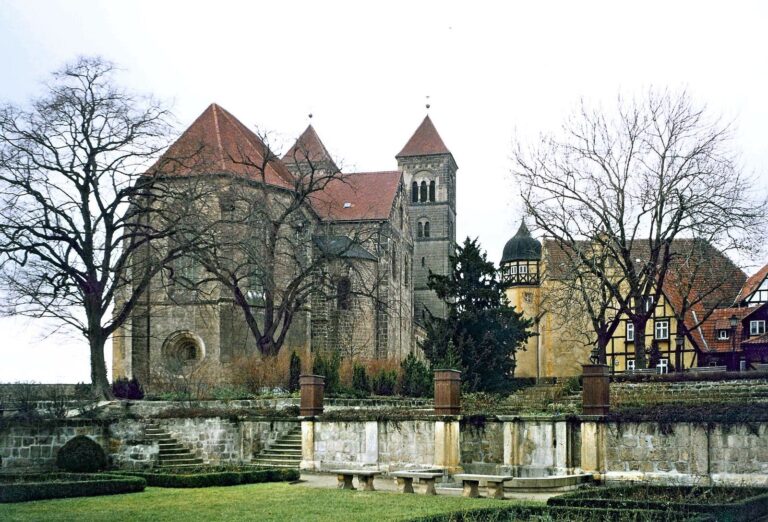
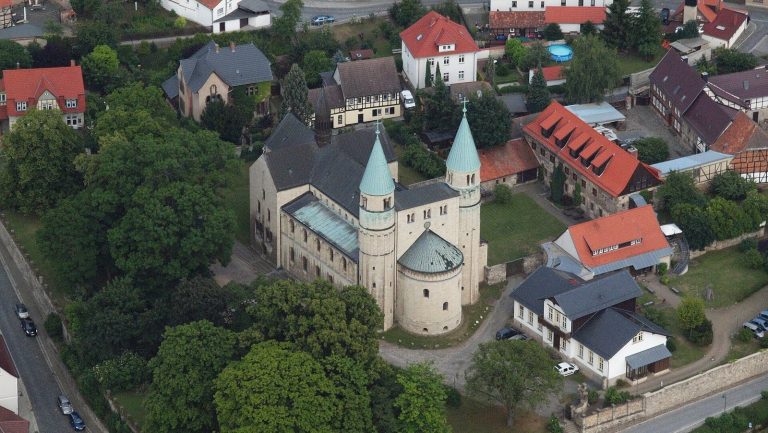
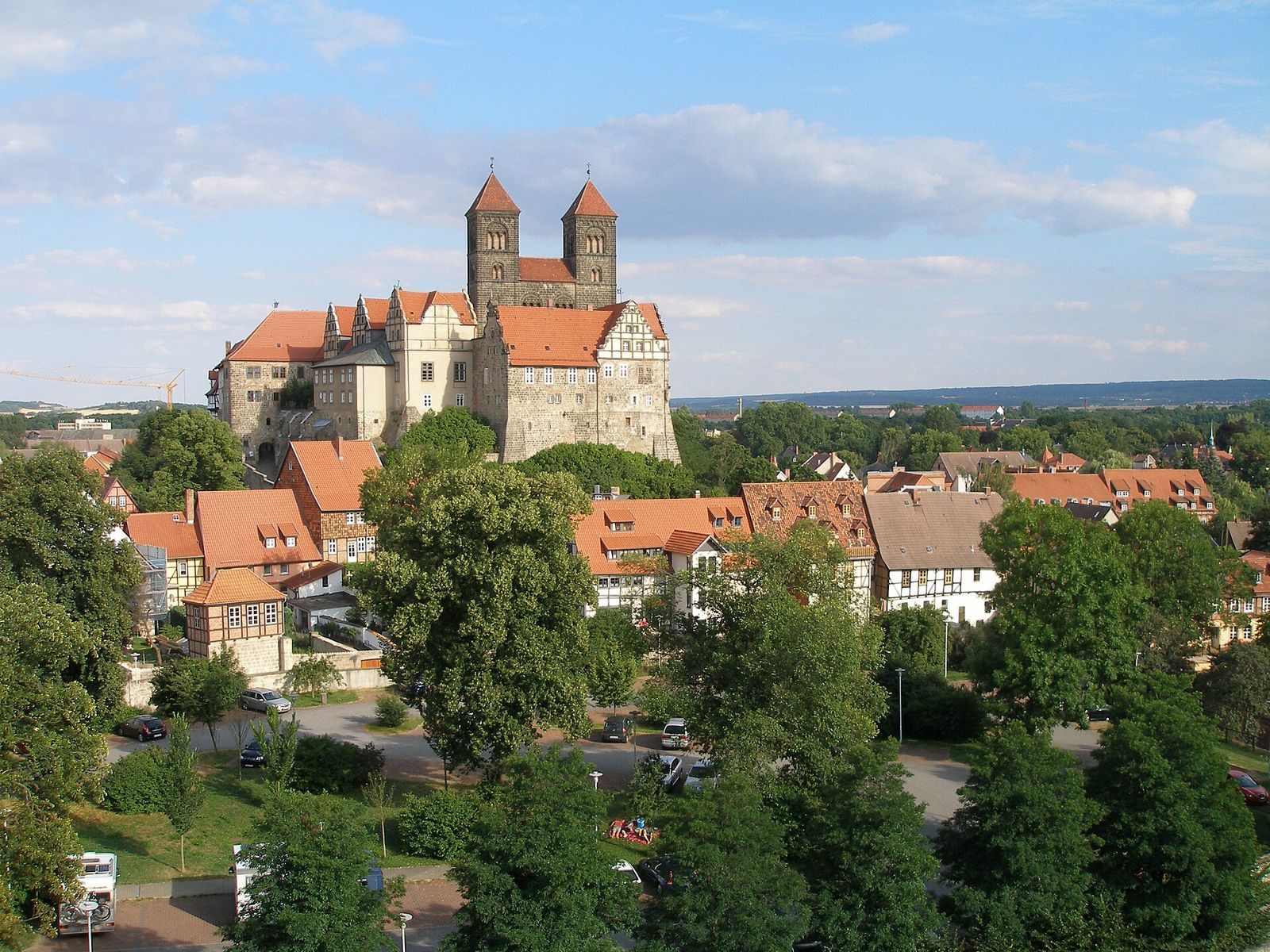
The Schlossmuseum Quedlinburg is a museum in the former castle complex on Castle Hill in Quedlinburg, Germany, beside St. Servatius Collegiate Church. Henry I, the 10th-century East Frankish king known as Henry the Fowler, had the original castle built before 963. After his death in 936, it became part of the property assigned to his widow, Queen Mathilde. She and their son Otto I, later the first Holy Roman emperor of the Ottonian dynasty, established a religious community at Henry’s grave to maintain prayer and remembrance.
During the 10th century, the community developed into a secular collegiate foundation for women, a religious institution led by an abbess whose members were not necessarily cloistered nuns. Donations from Ottonian rulers enriched the foundation. It answered directly to the emperor and pope rather than to a local ruler. Over its 866-year history, 39 abbesses led the foundation, some from high-ranking noble families. It shaped religious, political, and cultural life in the region.
Protestant foundation and dissolution
After the Reformation, the 16th-century movement that divided Western Christianity and established Protestant churches, the foundation became Protestant. It was reorganized as a secular Protestant community where unmarried noblewomen could live according to their rank. The foundation was dissolved in 1802, during the period leading up to the Final Recess of the Imperial Deputation, an early 19th-century reorganization of the Holy Roman Empire. In 1803, King Jérôme Bonaparte of Westphalia sold its furnishings.
Museum and historical interpretation
The museum opened in 1929 following a campaign by Selmar Kleemann, who died three months before its opening. The city operates it as one of Quedlinburg’s municipal museums. Its exhibitions address the foundation, the town, and the surrounding region. An exhibition in the vaulted rooms beneath the castle, established in 2002, considers the Ottonian era and the Nazi appropriation of its history, including the conversion of St. Servatius Collegiate Church into an initiation space for the SS, the Nazi paramilitary and security organization. The reworked permanent exhibition also explores the Reformation, the abbesses’ daily lives, and women’s roles in European history.
In 1994, UNESCO inscribed Quedlinburg’s Collegiate Church, Castle, and Old Town together as a World Heritage property under criterion (iv). The inscription recognized the cultural importance of the close relationship between the town’s history and architecture and the Saxon-Ottonian ruling dynasty. A major restoration and exhibition redesign began in 2020, with work continuing through 2026.
Remains
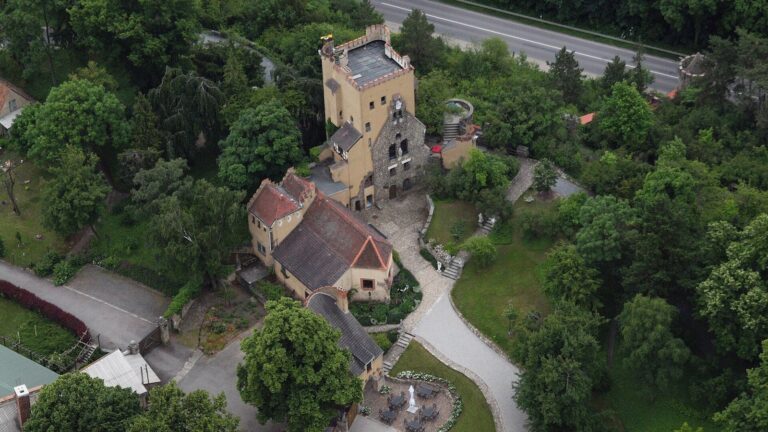
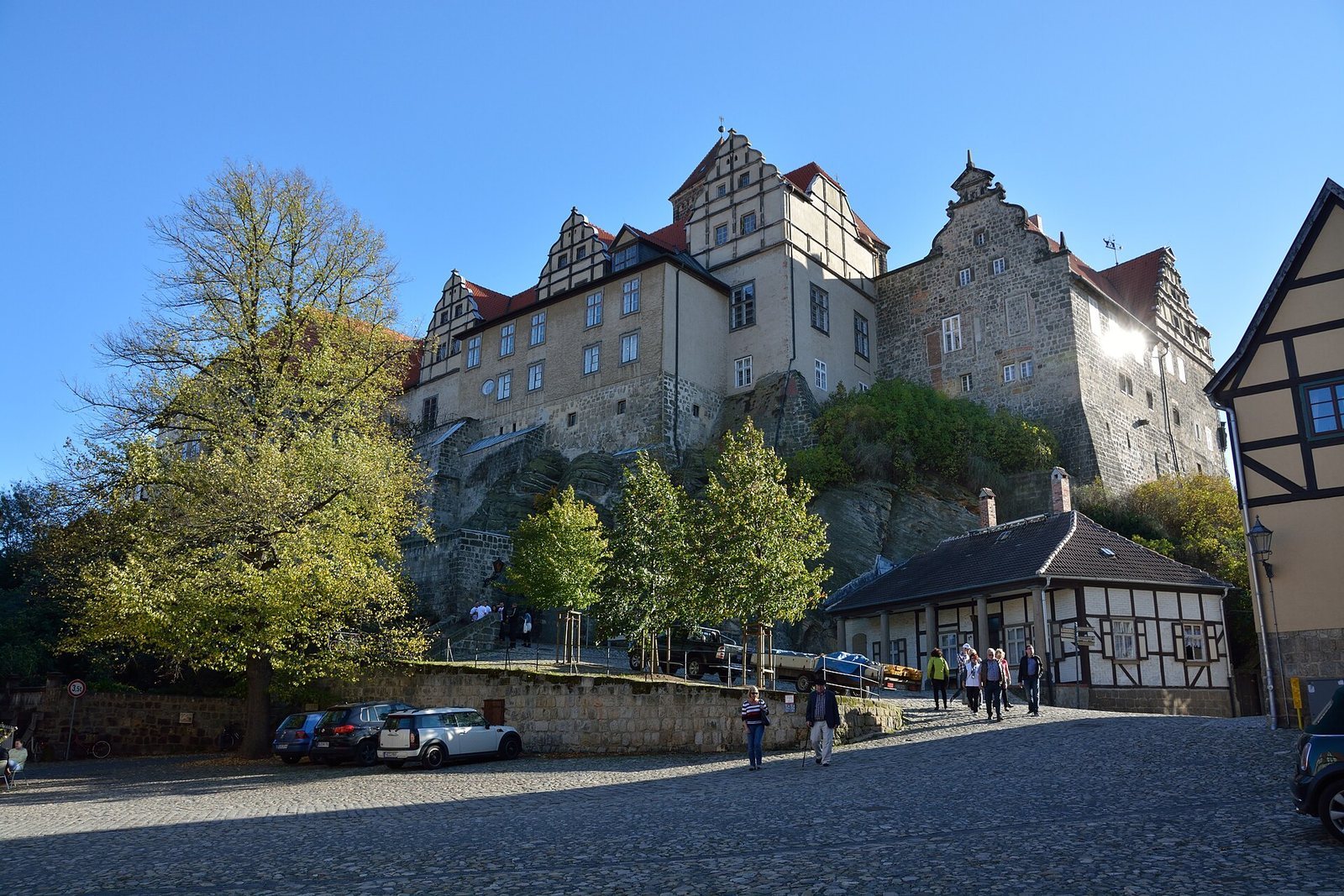
The three-wing castle complex stands above Quedlinburg’s old town on Castle Hill, beside St. Servatius Collegiate Church. Its building fabric preserves phases from the Ottonian, Romanesque, Gothic, Renaissance, Baroque, and 20th-century periods.
Castle architecture
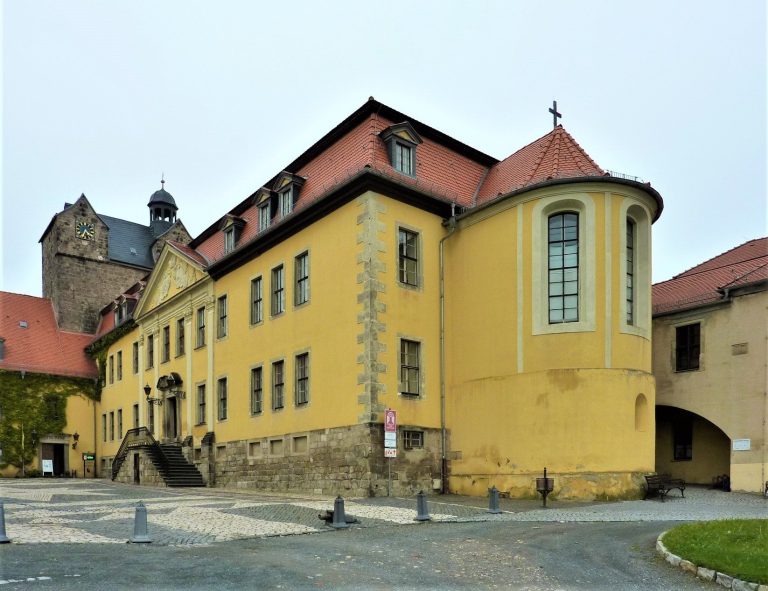
The castle gate dates to the 15th century, while the three wings were built between the 16th and 18th centuries. Renaissance façades from the 16th century strongly shaped the complex’s appearance; the façade later received a bright Baroque finish based on historical evidence. In the basement are remains of a 10th-century Ottonian palace. Part of the original castle’s ground floor also survives, later repurposed as a cellar.
Museum adaptation and grounds
The complex has been restored in accordance with heritage-conservation requirements. The work included reconstructing the Black Kitchen and a garden house in the Baroque garden. Museum exhibition space grew from 1,300 to 2,300 square metres, with another 2,400 square metres of museum-arranged display areas in the collegiate church. The Baroque terrace garden on Castle Hill and the Brühl landscape park are associated with Garden Dreams, an initiative for historic parks in Saxony-Anhalt.
Historic interiors and collections
The permanent exhibition brings together more than 300 original objects from the collections of the World Heritage City of Quedlinburg. It combines historic rooms, including the Ottonian vault and the abbess’s 18th-century state apartments, with multimedia displays.
Abbess’s state apartments
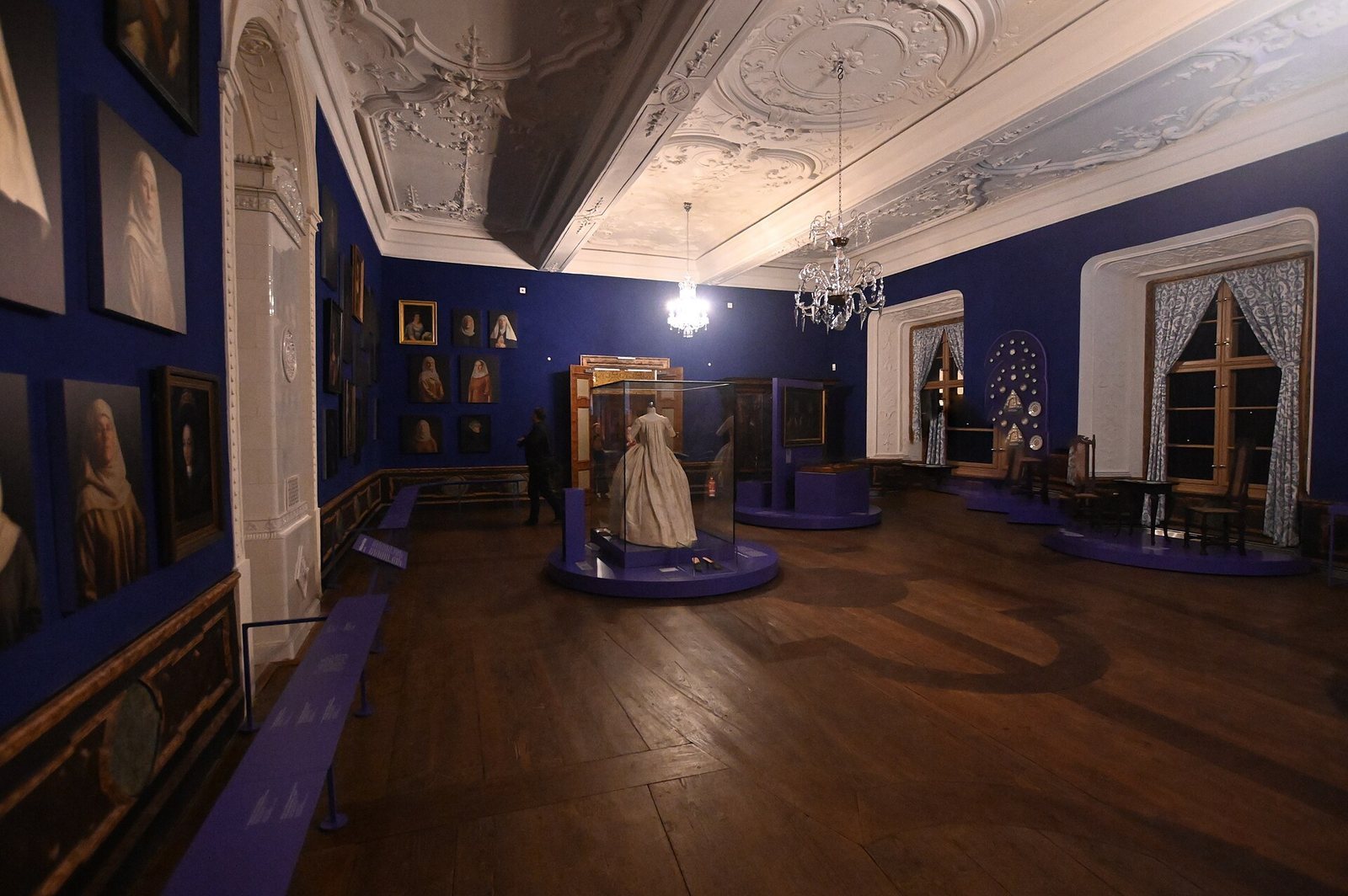
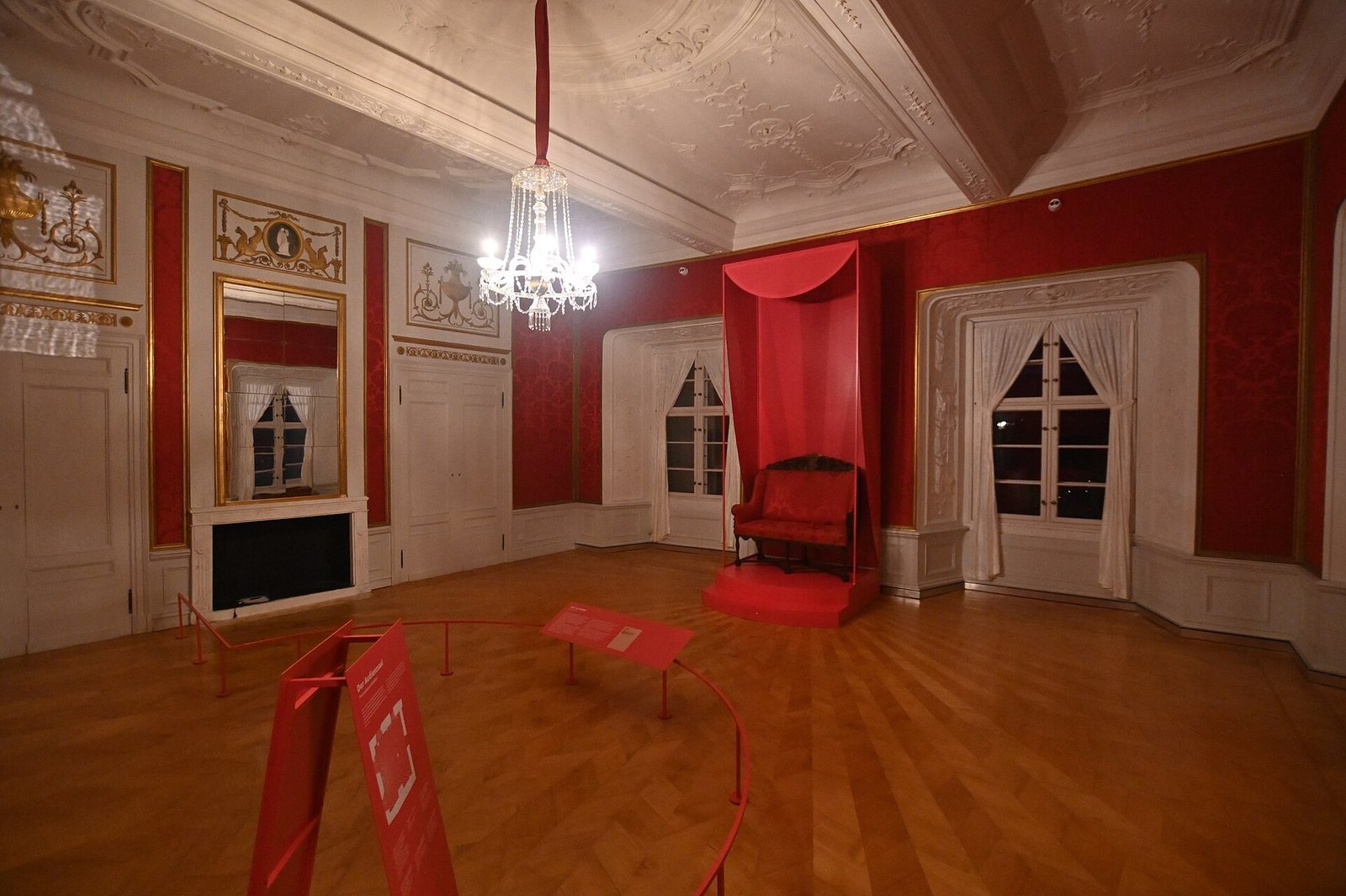
The upper floor contains the abbess’s 18th-century state apartments, including an audience room and the Blue Hall. The Blue Hall served as a sitting room, theatre and celebration hall, as well as a place where the dead were laid out.
Prehistoric and early medieval objects
The prehistoric displays include the Bronze Age Lehof treasure. The collection also holds a gold disc brooch found at Groß Orden in 1878 and dated to the middle of the 7th century.
Medieval objects
The Quedlinburg knotted carpet, made around 1200 and originating in the collegiate church treasury, is among Europe’s oldest surviving textile artworks. The displays also include an original ballista, a large mechanical weapon for launching projectiles, and the Raubgrafenkasten, a wooden display prison from the first half of the 14th century. A later legend claimed that Count Albrecht II of Regenstein was kept inside it for nearly two years in Quedlinburg town hall, from 1336 to 1338, after capture following raids on the surrounding countryside.
Early modern objects and paintings
A gold presentation coin dated 1617 was commissioned by Abbess Dorothea of Saxony for the Reformation jubilee. A fragment of Venetian gold-leather wallpaper from the foundation’s waiting room dates to the early 18th century. White goatskin shoes decorated with green silk are linked to Abbess Sophie Albertine and said to have been given to a collegiate woman in 1803; they are also dated to the second half of the 19th century, leaving their chronology uncertain.
The collection includes an oil painting of Abbess Dorothea of Saxony from the second half of the 17th century. Former representative rooms on the first floor display paintings from Italy and the Netherlands dating to the 16th and 17th centuries.