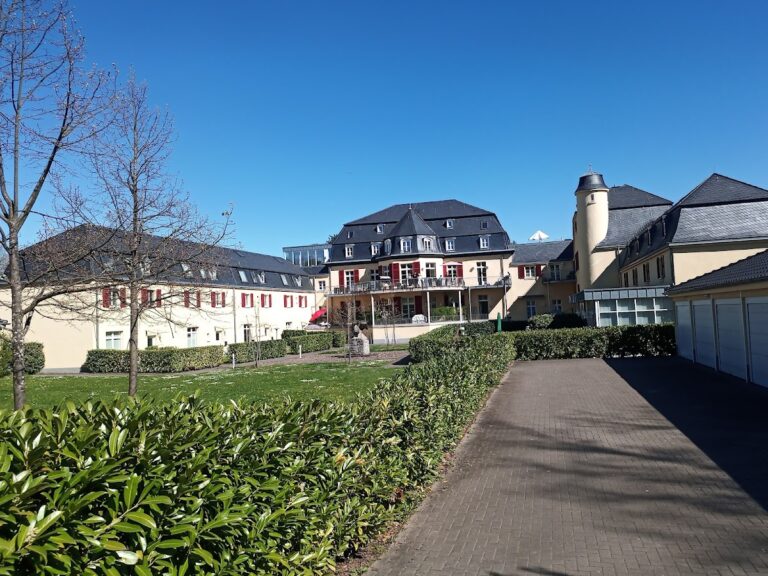
Schloss Wahn: A Late-Baroque Palace and Theatre Studies Collection in Germany


Site at a Glance
- Rating
- 4.3
- Popularity
- Low
- Country
- Germany
- Primary era
- Early Modern
- External website
- Open
- Eras represented
- Early Modern, Modern
- Civilizations
- Duchy of Berg, German, Holy Roman Empire
- Site type
- Domestic
- Remains
- Elite Residence
On this page9 sections
History
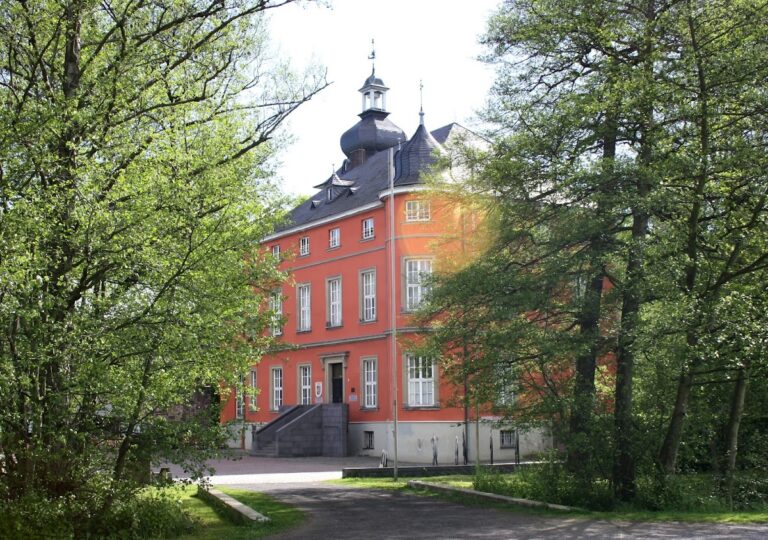
Schloss Wahn is a late-Baroque palace in Cologne, Germany, built between 1753 and 1757 for the aristocratic von Schall family. It developed from a medieval water castle and now houses the University of Cologne’s Theatre Studies Collection, one of the world’s largest collections devoted to theatrical history.
From water castle to aristocratic residence
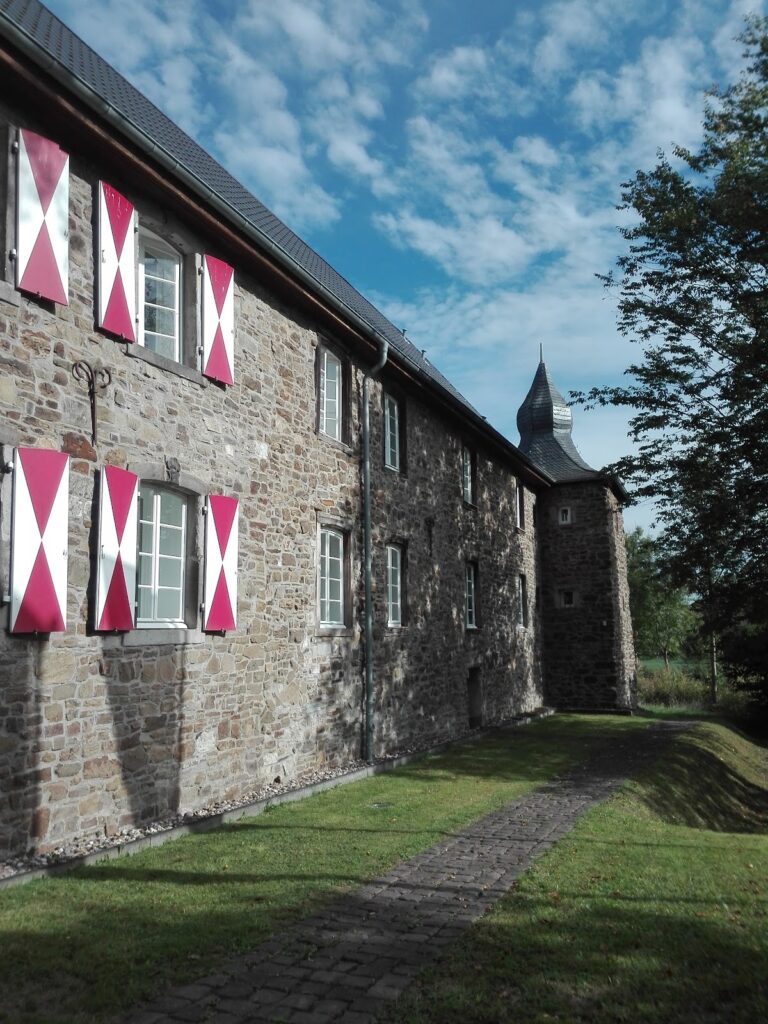
Schloss Wahn was first documented in 1358 as property of the von Revelen family. The medieval complex consisted of a residential tower, a gatehouse, a moat, and an outer courtyard. During the fifteenth century it belonged to the von Loë family, before passing to the von Zweiffel family in 1522.
A mercenary army destroyed and plundered the castle in 1588. The aristocratic von Schall family is recorded as its owner from 1685. In 1753, the Counts Schall commissioned the rebuilding of the castle as a representative late-Baroque palace. The new residence was constructed as a unified four-wing complex between 1753 and 1757, largely following plans by Johann Georg Leydel, an architect associated with Balthasar Neumann, a leading German architect of the late Baroque and Rococo periods.
Family ownership and later transformation
The palace passed to the Heereman von Zuydtwyck family in 1785. Since 1820, it has belonged to the Barons von Eltz-Rübenach, who commissioned alterations to the estate during the nineteenth and early twentieth centuries. The adjoining Eltzhof agricultural complex has also been part of the family property since 1835.
Schloss Wahn suffered serious damage at the end of the Second World War. The main building was comprehensively renovated in 1964, and the coach house and estate office were extended in 1988. The Eltz-Rübenach family leased the palace to the University of Cologne from 1947, and the university established its Theatre Studies Collection there in 1955. The collection includes approximately 100,000 volumes of theatre literature, visual and textual material on European theatre from the sixteenth century to the present, the estates of Karl Valentin and Willy Millowitsch, material from the Hänneschen Theatre, and a wartime theatre archive.
Since 2007, the palace has also served as an external branch of Cologne’s civil registry office, where marriages are conducted in its historic rooms. The university uses the historic ground-floor rooms for concerts and academic events. In 2018, the owners obtained a court order from the Cologne Regional Court preventing the North Rhine-Westphalia state government from holding a protocol reception there for Turkish President Recep Tayyip Erdoğan. The owners opposed the event for political reasons, and the university lease did not provide for that use. Schloss Wahn has been legally protected as a listed monument since 9 November 1982.
Remains
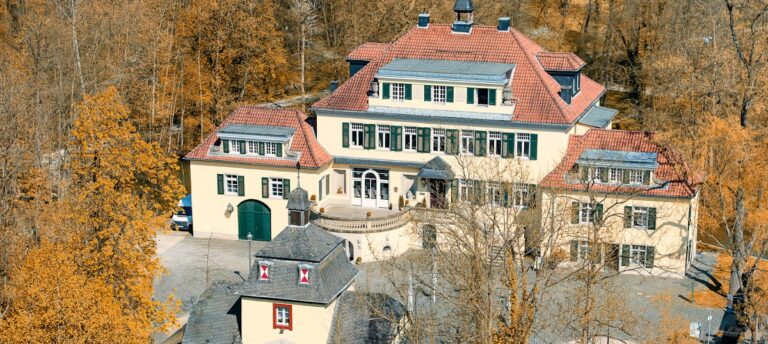
The present palace is a three-wing late-Baroque ensemble conceived as a French maison de plaisance, a country pleasure palace intended for aristocratic residence and recreation, while also serving as the centre of an agricultural estate. The palace faces north and is reached across a masonry bridge and through the historic gate. Its courtyard is enclosed by the palace wings, with the estate office to the east and the cavalier house, a secondary residential or service building, to the west.
Palace grounds and principal interiors
Courtyard and park connection
A large chestnut tree grows on a circular island in the courtyard beside Potential, an iron sculpture by Ansgar Nierhoff on long-term loan from Cologne’s Museum Ludwig. Two curved exterior staircases descend from the palace terrace toward the park, whose grounds contain mature trees. The arrangement links the formal palace ensemble with its landscaped surroundings.
Vestibule and garden hall
The vestibule contains a broad sandstone staircase with an elaborately carved balustrade and an open fireplace. The staircase rises centrally toward the salon rooms. The garden hall is the oldest room in the palace and its artistic centrepiece. It opens toward the park through a terrace and curved exterior staircase, while eighteenth-century oil paintings extend across the full height of its walls.
Decorated salons
The Chinese Room is furnished in the Chinese-style Rococo manner. The refectory is a salon with a marble fireplace and historic oil paintings. Another salon, the Pompeian Room, is decorated in the Neoclassical style. The music room contains historic furniture, and the Vienna Room is a historically furnished hall intended for smaller events.
Family burial chapel
The grounds include the historic burial chapel of the von Eltz-Rübenach family. Its family crypt contains, among other members of the family, Paul von Eltz-Rübenach (1875–1943), who served as German Reich Minister of Transport and Post.