Schloss Rosegg: A Classical Residential Castle in Austria


Site at a Glance
- Rating
- 4.4
- Popularity
- Low
- Country
- Austria
- Primary era
- Early Modern
- External website
- Open
- Eras represented
- Early Modern, Modern
- Civilizations
- Habsburg, Holy Roman Empire
- Site type
- Domestic
- Remains
- Castle
On this page9 sections
History
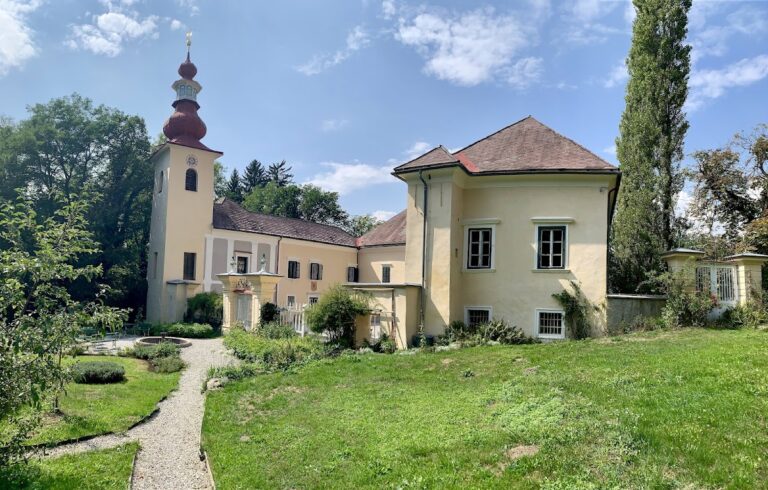
Schloss Rosegg is a Classical residential castle in Rosegg, Austria, built from 1772 in the valley north of the medieval Rosegg castle to replace the older seat of the Rosegg lordship. The lordship had belonged to the Orsini-Rosenberg family since 1686. In September 1772, Count Franz Xaver Wolfgang von Orsini-Rosenberg, chief chamberlain and conference minister, began the building as a residence for Madame Lucrezia, his mistress from Italy. Construction was complete before 1780.
From the medieval castle to the new residence
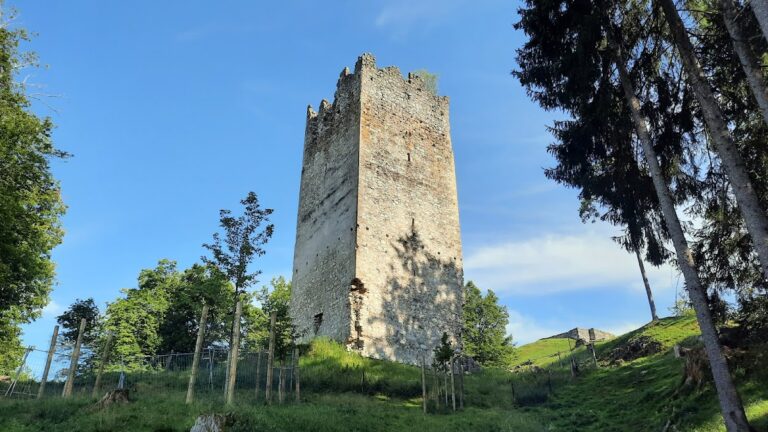
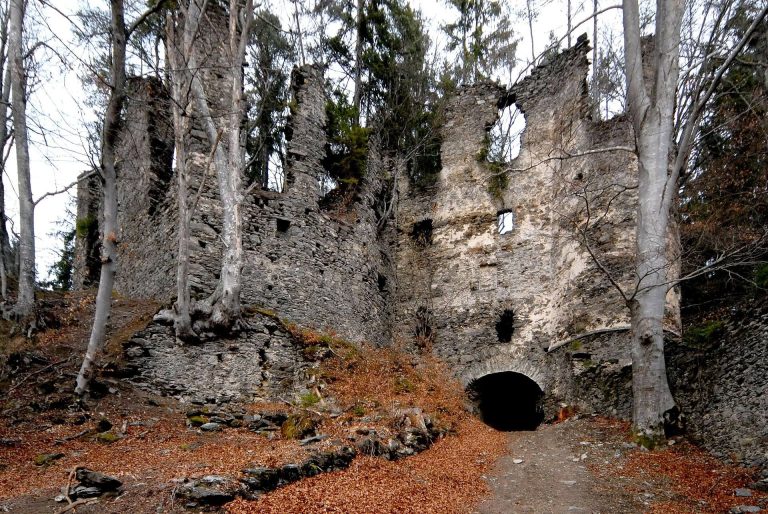
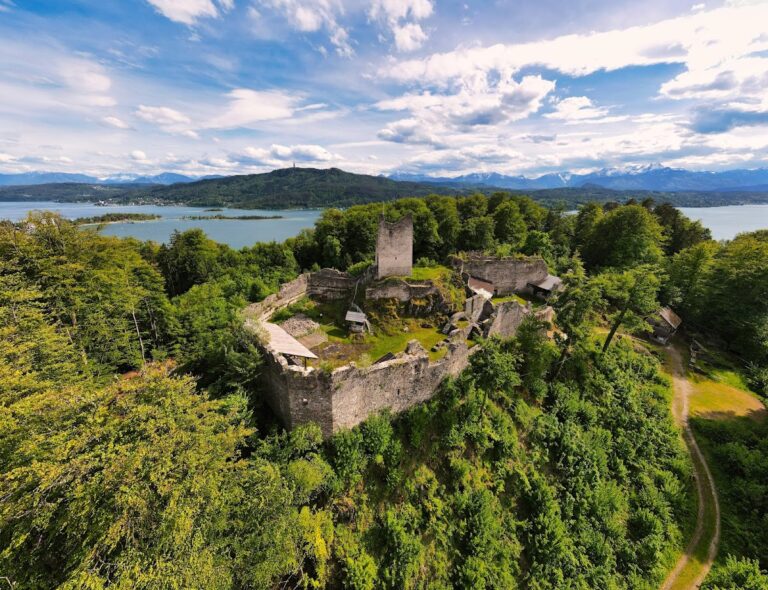
The earlier hilltop castle, known as Altrosegg, dates from the twelfth or thirteenth century. The new residence was placed below it in the valley, creating a new seat for the lordship while the medieval castle remained on the hill. Altrosegg was heavily affected by the French Wars, the early-nineteenth-century conflicts associated with Revolutionary and Napoleonic France.
Flooding destroyed the original garden complex in 1825. Four years later, in 1829, the Orsini-Rosenberg family transferred its Rosegg possessions to Peter Ritter von Bohr, who began establishing a wildlife park around the old castle about 1830. Rosegg changed hands again in 1833, when the estate passed to the House of Liechtenstein, the princely dynasty that still owns it.
Alterations and present use
The exterior has undergone very little change since the castle was built. The interiors were probably modified during the second half of the nineteenth century and were renovated in 1996 and 1997. During that work, late Baroque and Neoclassical finishes were uncovered. The castle now houses Austria’s first wax museum, while the former estate wildlife park operates as Tierpark Rosegg.
The Schlosspark is protected as one of Austria’s significant garden-architectural monuments under the Monument Protection Act. Its linden avenues have a separate natural-monument designation, “Linden Alleys in Rosegg,” covering 2.4 hectares.
Remains
Castle building and interiors
The complex is formed by a two-storey main building in the Classical style, with two lower former service buildings attached to its sides. Its facade has a shallow central projection, projecting corner sections, and a cornice. The design recalls Italian villas of the Brenta Riviera near Padua, while possible models also included buildings in Tuscany and the Venetian Terraferma, the mainland territories once controlled by the Republic of Venice.
Inside, late Baroque and Neoclassical room designs include stucco ceilings and wall decorations with floral patterns. Eighteenth-century furniture is also preserved in the mansion. The castle’s garden wall incorporates two Roman-period funerary inscriptions.
Gardens and wider grounds
Formal and landscape gardens
A small Baroque garden lies beside the castle. In front of the building, a French-style parterre, a formal arrangement of garden beds, is paired with a wooded area behind it. Beyond the castle, an extensive landscape garden occupies a former island of the Drava, now lying within a bend of the river. Its principal axis runs north toward Alt-Rossegg and Neu-Rossegg, the old and new Rosegg areas, and continues through a slightly bent cross-axis toward the Drava and the settlement.
Linden avenues and maze
Strong linden avenues lead toward the Drava and follow the cross-axis, with some trees dating from the construction period. About 90 percent are small-leaved limes (Tilia cordata), while the remainder are large-leaved limes (Tilia platyphyllos). A hedge maze was added on the southern axis in 2001. It contains one kilometre of hedging formed from 3,000 hornbeams and is described as Austria’s largest garden labyrinth.
Wildlife park and surviving service buildings
The former castle hill became a walled wildlife park. Alongside the ruins of Alt-Rosegg, it contains a Gothic service building belonging to Schloss Rosegg and the former administrative or hunting house called the Pfleghaus, or Jägerhaus. The remaining land within the Drava bend is used for agriculture.