Pfaffstätt Castle: A Former Water Castle and Country Residence
Site at a Glance
- Rating
- 4.7
- Popularity
- Very Low
- Country
- Austria
- Primary era
- Medieval
- External website
- Open
- Eras represented
- Medieval, Early Modern
- Civilizations
- Duchy of Bavaria, Electorate of Bavaria, Holy Roman Empire
- Site type
- Domestic
- Remains
- Elite Residence
On this page9 sections
History
Pfaffstätt Castle is a historic residence in Pfaffstätt, Austria, with roots in an early-medieval fortification and a later water castle in the valley.
Early Fortification and Medieval Lords
The site began as an early-medieval fortification. Pfaffstätt first appears in a written record in 1150, in connection with Herrant de Phaphesteti. The Pfaffenstätters were succeeded by the Rewtter family in 1222. Later references name Georg Rewtter in 1422, Martin in 1500, and Rudeprecht in 1505. A water castle, a fortified residence set within water defenses such as a moat, was probably built in the valley during the Rewtters’ tenure.
The Water Castle and Country Residence
The Walch family owned Pfaffstätt from 1503 to 1617. In 1617 Wolf Walch sold the estate to Hans Sigwart von Schwabpach. The Barons von Vieregg lived there from 1630 until 1721, when it passed to Marie Jeanne Baptiste, Countess of Wartenberg, born Princess of Melun and Épinoy.
Marie and her husband, Franz Marquart, Count of Wartenberg, converted the former water castle into a country residence and filled in its moat. Franz was a knight of the Order of the Golden Fleece, a historic chivalric order. The alterations may have followed plans by Johann Bernhard Fischer von Erlach, a prominent Austrian Baroque architect. Franz died in 1730 and Marie in 1754. Their heirs transferred the estate first to the Lerchenfeld family and then, in 1764, to the Counts of Taufkirchen, who retained it until 1800.
Later Owners and Renovation
Martin and Walpurga Sehkührer owned Pfaffstätt from 1800 to 1805, followed by Martin Wührer from 1805 to 1811. The Barons von Peckenzell held the estate until 1868, when Heinrich Klinkosch acquired it. Count Edmond zu Lippe-Weißenfeld bought it in 1895. In 1909 Count Adolf von Peckenzell bought back his birthplace and had it renovated.
The Margrave Pallavicini owned the castle from 1917 to 1920. Adolf von Stifft followed and sold it in 1923 to Prince Albrecht zu Schaumburg-Lippe. After 1942 it belonged to Max zu Schaumburg-Lippe, who died in 1974; his wife, Helga Claire Lee, born Roderbourg, owned it afterward. Manufacturer Heinrich Lohberger of Mattighofen became owner in 1978. Robert and Barbara Jakob acquired the castle in September 2001. Pfaffstätt is protected as a monument.
Remains
The Present Castle
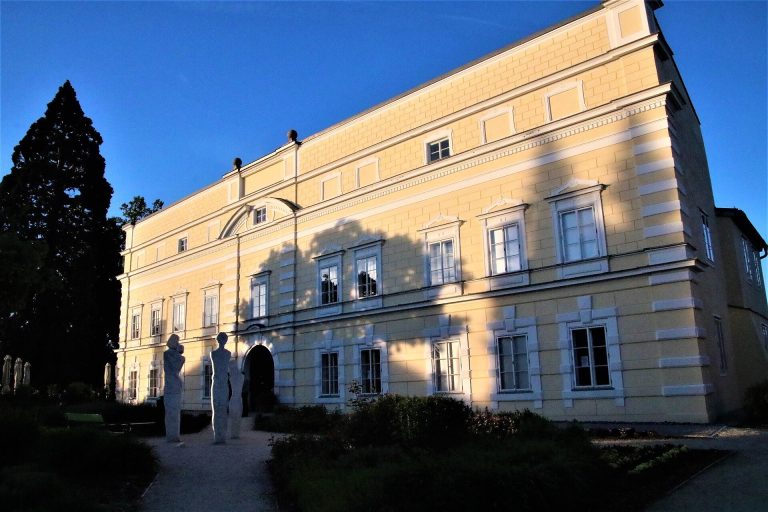
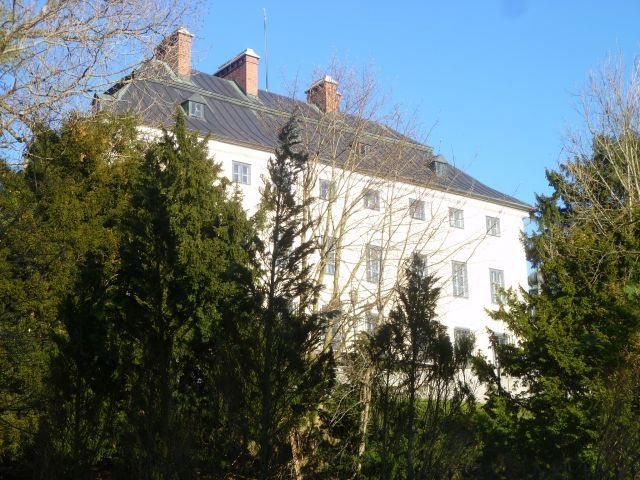
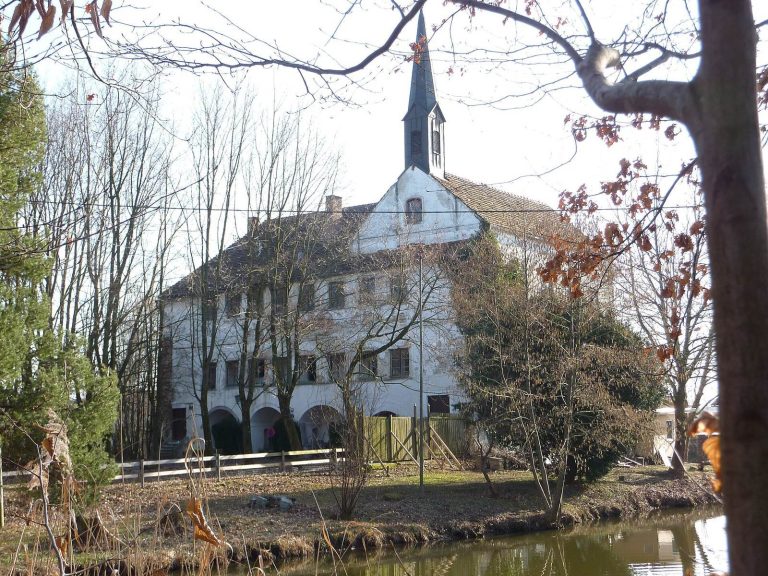
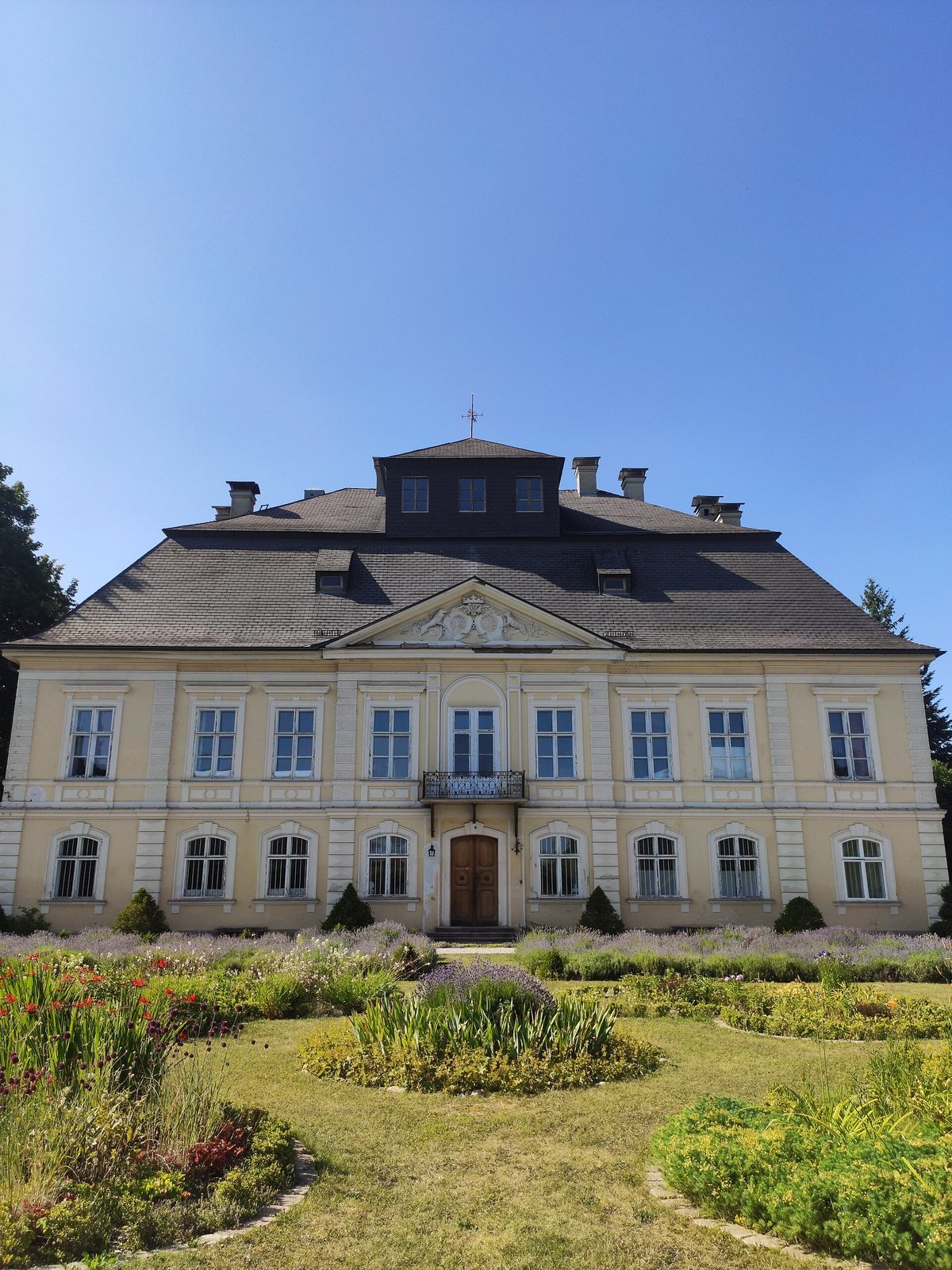
The valley castle is a two-storey building with a hipped mansard roof, whose lower slopes are steeper than the upper ones. Its park-facing front has a shallow triangular pediment, a projecting feature above the facade, with a coat of arms flanked by a lion and a ram. A belvedere, a structure designed to provide a view, rises at the center beneath a pyramidal roof and is divided into three bays. The garden side bears an alliance coat of arms, combining the emblems of the Wartenberg and Melun d’Épinoy families. Another coat of arms on the south side joins the Taufkirchen and Huber von Mauer families.
Courtyard and Outbuildings
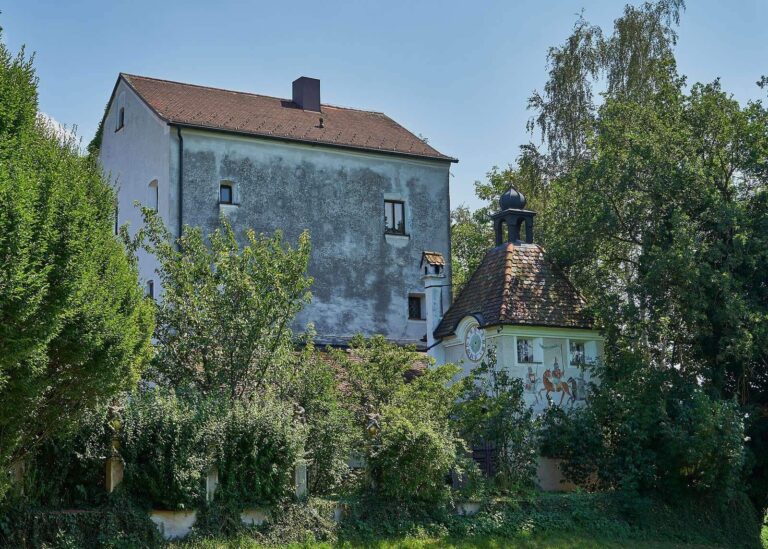
The castle opens onto a courtyard with outbuildings used as riding stables. These buildings are in marked need of renovation.
Siedelberg Fortification
The early fortification stood on Siedelberg, separate from the later castle in the valley. Local field names meaning “castle site” and “treasure pits” refer to the hill’s association with the fort. Ruins, ditch traces, and a forecourt were still present there into the 1830s.
Engraved View of the Water Castle
A copper engraving by Michael Wening, a Bavarian engraver and topographical artist, depicts the valley castle with a double-hipped roof and a chapel.