Burg Polle: A Hill Castle of the Counts of Everstein


Site at a Glance
- Rating
- 4.4
- Popularity
- Low
- Country
- Germany
- Primary era
- Medieval
- Eras represented
- Medieval, Early Modern
- Civilizations
- Holy Roman Empire
- Site type
- Military
- Remains
- Castle
On this page11 sections
History
Burg Polle is a hill castle in Polle, Germany, probably built around 1200 and regarded as one of the ancestral castles of the Counts of Everstein. The oldest pottery recovered there dates from about 1220 to 1230. The castle stood above the Weser and became the seat of the Everstein counts during the later Middle Ages.
The Everstein Counts
The castle first appears in written records in 1285 as “Everstein Castle.” It was also known as Eversteiner Burg bei Polle, a name distinguishing it from Burg Everstein near Amelungsborn Monastery, about 10 kilometers to the south in the Burgberg hills. The Counts of Everstein were supporters and relatives of the Staufers, a major ruling dynasty of the Holy Roman Empire.
In 1284, the Welfs, a powerful princely dynasty whose territories included Brunswick-Lüneburg, took Burg Everstein near Amelungsborn Monastery from the Eversteins. Burg Polle nevertheless remained the counts’ seat until control of their county later passed to the Brunswick dukes.
Transfer to the Welfs
During the Everstein Feud, Heinrich I, Duke of Brunswick-Lüneburg, captured Burg Polle in 1407 with an army of 13,000 men. The following year, Count Hermann VII of Everstein transferred his county to the Brunswick dukes. Burg Polle consequently became a permanent Welf possession.
War and rebuilding
The castle suffered major damage during the Thirty Years’ War, a European conflict fought from 1618 to 1648 amid religious, dynastic, and territorial struggles. In 1623, an army commanded by Johann T’Serclaes von Tilly, a leading Catholic commander, besieged and captured Burg Polle and plundered it. The settlement of Polle was also damaged. Swedish troops shelled the castle in 1641. They did not capture it, but the bombardment caused the castle to burn out.
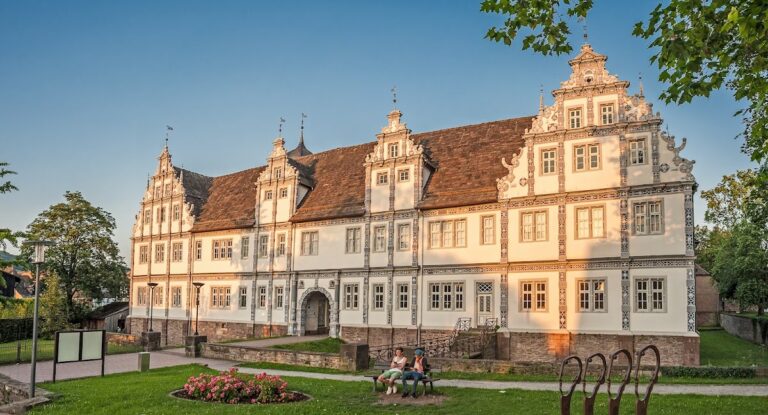
Rebuilding of the Lower Castle began in 1656, while the Upper Castle was left in ruins. A mid-seventeenth-century administrative building was erected in the Lower Castle in the Weser Renaissance style, a regional form of Renaissance architecture found along the Weser. Severe fighting around Polle at the end of the Second World War destroyed that building.
Municipal ownership and archaeological work
The Prussian state transferred the ruin to the municipality of Polle in 1934. In 1956, the municipality purchased the administrative building and castle park from the state of Lower Saxony. Extensive renovation followed between 1984 and 1988. Archaeological excavations carried out from 2007 to 2009 produced finds that are held in the castle museum.
Polle is also linked with the Cinderella tradition. The settlement is regarded as the alleged home assigned to Cinderella, and performances of the tale take place in the castle courtyard several times a year.
Remains
Setting and layout
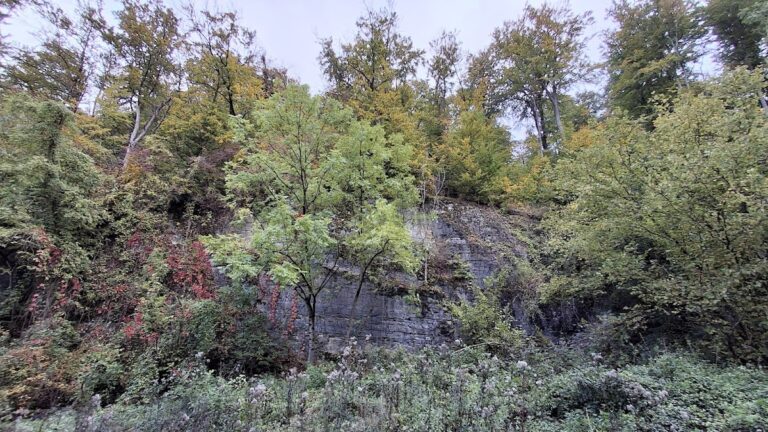
Burg Polle occupies a rocky knoll about 25 meters high directly beside the Weser, above the municipality of Polle in the Holzminden district of Lower Saxony. The site lies east of the river near a prominent bend, and the knoll falls steeply as exposed rock on three sides. The complex was divided into an Upper Castle and a Lower Castle.
Upper Castle
The Upper Castle survives as a ruin. Buildings once bordered both of its long sides, with the northern side partly occupied by the palas, the principal residential and ceremonial building of a medieval castle. The surviving remains preserve the arrangement of this elevated part of the complex.
Lower Castle
The Lower Castle retains mainly sections of its ring wall and a Renaissance portal dated 1613. The former administrative building was a Weser Renaissance structure, and its only surviving element is an arms-decorated Renaissance portal.
Fortifications and tower
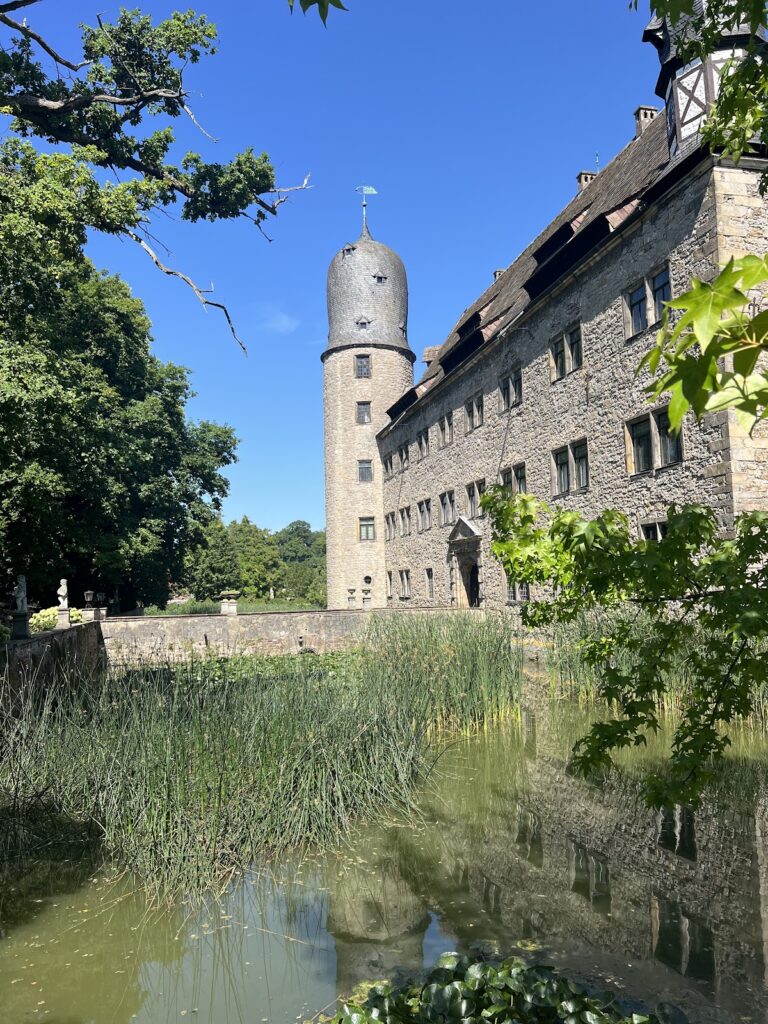
The castle was additionally protected by walls, double ditches in some areas, drawbridges, and ramparts. West of the gate tower, a climbable bergfried, the principal fortified tower used for defense and refuge, is integrated into the wall. It rises about 20 meters and has surviving circular upper masonry set on a polygonal base. An underground passage connects the tower with the castle well.
Archaeological remains
The oldest pottery recovered at Burg Polle dates from around 1220 to 1230. Finds from the excavations of 2007 to 2009 are preserved in the castle museum, adding archaeological evidence to the surviving walls, tower, and portal.
Nearby sites