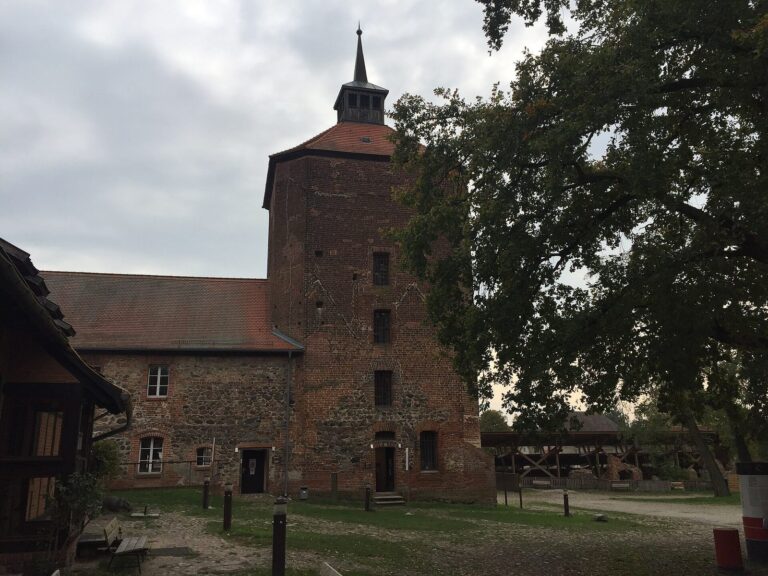
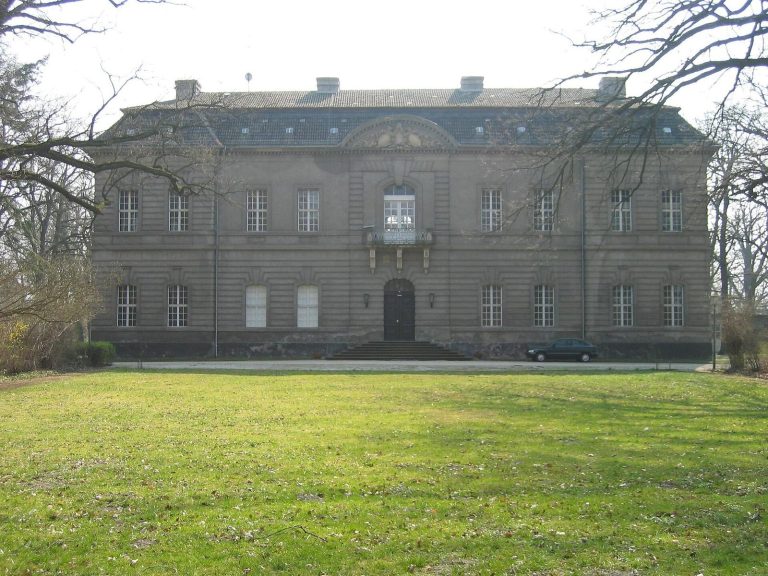
Schloss Lindenberg: A Baroque Manor House in Brandenburg
Site at a Glance
- Rating
- 5
- Popularity
- Very Low
- Country
- Germany
- Primary era
- Early Modern
- Eras represented
- Medieval, Early Modern
- Civilizations
- Holy Roman Empire, Margraviate of Brandenburg
- Site type
- Domestic
- Remains
- Manor House
On this page7 sections
History
Schloss Lindenberg is a Baroque manor house in Lindenberg, a district of Tauche in Brandenburg, Germany. Baroque was a European architectural and artistic style that flourished from the seventeenth century into the early eighteenth, often using elaborate forms and ornament.
Medieval predecessor and family ownership
The manor house was probably built over the remains of a late-medieval building. During the seventeenth and eighteenth centuries, the estate belonged to the von Kracht and von Beeß families. Hildebrand von Kracht (1573–1638), born at Lindenberg, later became chief captain of Küstrin Fortress. Otto Leopold von Beeß (1690–1761), Lindenberg’s hereditary lord, was a minister in Prussia, the historic German kingdom and major European power.
Colsman’s estate
In 1903, Wilhelm Colsman (1877–1929), from a business family in the Bergisches Land, acquired the estate. He introduced innovative agricultural methods and helped with state-organized food provisioning during the First World War. In 1910, he commissioned a redesign of the park. Plans for houses for estate workers were prepared in 1915.
Final ownership and expropriation
Robert Pferdmenges, a Cologne banker and later a politician in the Christian Democratic Union (CDU), a major German political party, was the last owner before the estate’s expropriation. Distantly related to the Colsman family, he received guests at Lindenberg in 1937, including Konrad Adenauer, who later became the first chancellor of the Federal Republic of Germany.
Remains
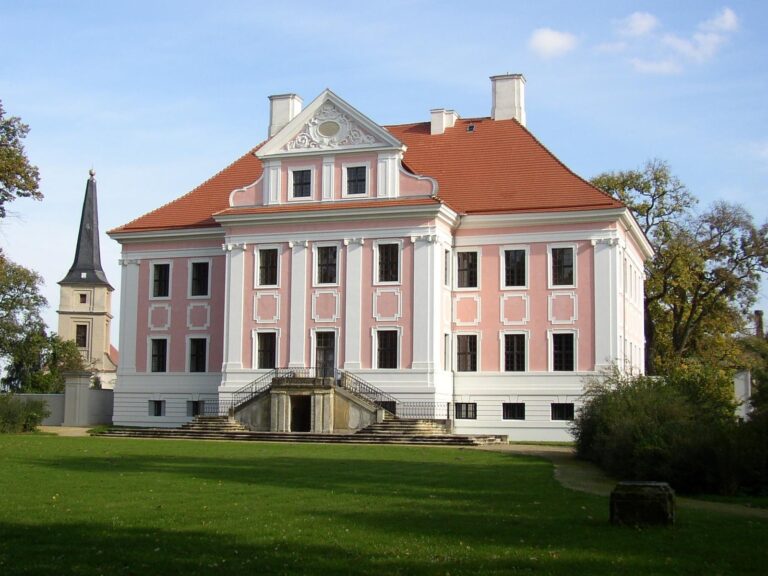
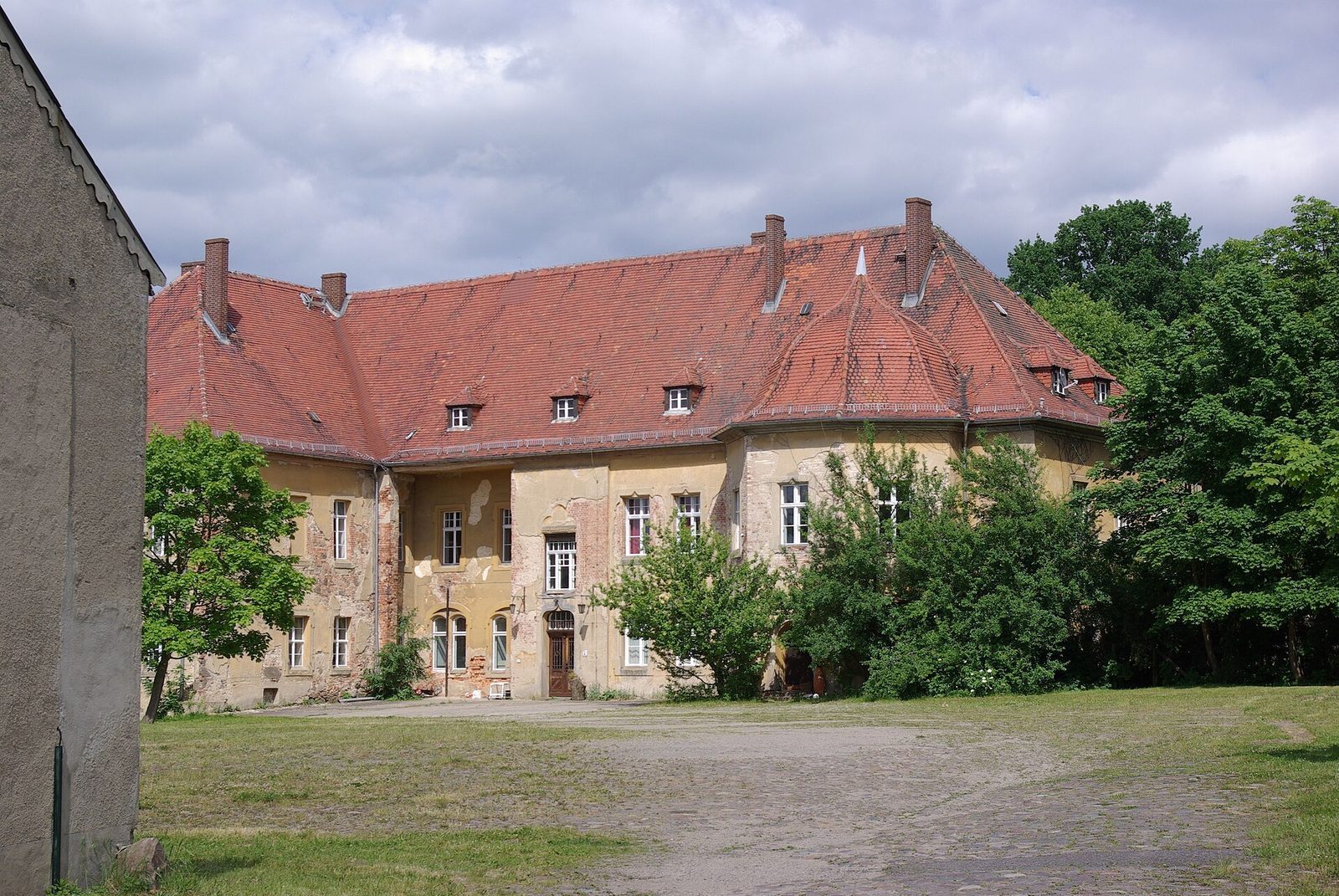
The surviving estate includes a two-wing Baroque manor house and a park.
Manor house
Substantial parts of the manor house survive, and it is partly inhabited. Within the building, a room with central pillars and a staircase dating to the late Middle Ages are preserved.
Park
The estate grounds include the park whose redesign Colsman commissioned in 1910.