Schloss Kaltenstein: A Historic Castle and Palace in Vaihingen an der Enz


Site at a Glance
- Rating
- 3.8
- Popularity
- Very Low
- Country
- Germany
- Primary era
- Early Modern
- External website
- Open
- Eras represented
- Medieval, Early Modern
- Civilizations
- Holy Roman Empire
- Site type
- Domestic
- Remains
- Palace
On this page8 sections
History
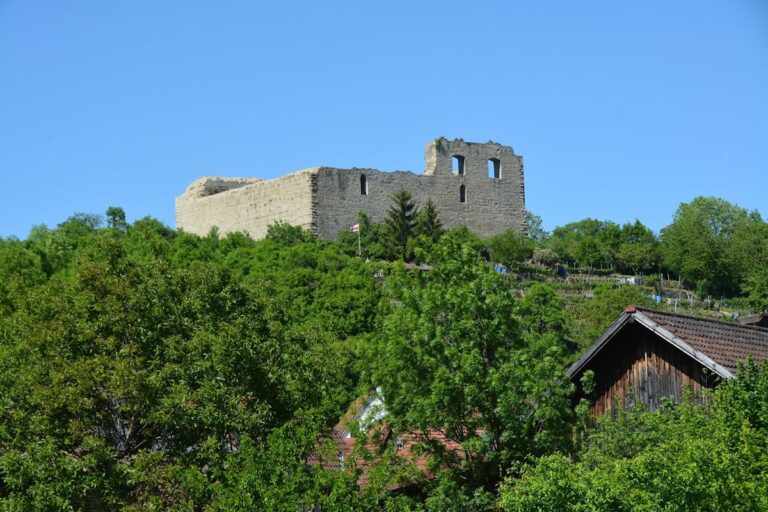
Schloss Kaltenstein is a historic castle and palace in Vaihingen an der Enz, Germany, whose predecessor was first recorded in 1096 as Castrum Vehingen. The medieval fortress became the seat that gave its name to the first line of the Counts of Vaihingen and later developed into a palace overlooking the town.
Medieval Counts and Dynastic Transfers
Until about 1185, Burg Vaihingen was the residence of the first line of the Counts of Vaihingen. Through the marriage of the Vaihingen heiress, the county and castle passed to Count Gottfried of Calw, who established a second line of the dynasty. His indebted descendants sold the castle and town during the fourteenth century.
The property subsequently passed through the Margraves of Baden and the Counts of Oettingen before reaching the House of Württemberg in 1339. This dynasty ruled Württemberg and was an important political power in southwestern Germany. A Württemberg-appointed chief bailiff, or senior territorial official acting for the ruler, was based at the castle, although the officeholder was generally absent.
From Fortress to Palace
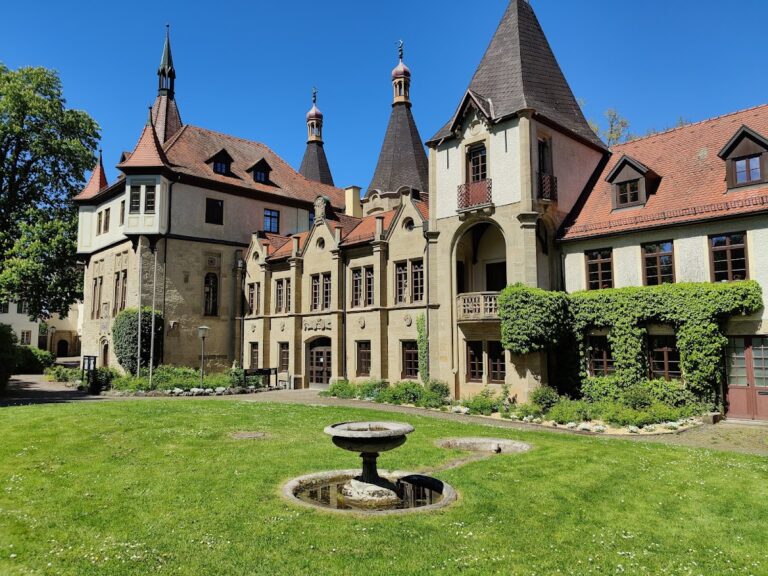
During the sixteenth century, the inner part of the castle was converted into a palace and was probably renamed Schloss Kaltenstein. The palace was remodelled twice by the eighteenth century, while its defensive system was strengthened with newer earthworks, including artificial banks and ditches.
Military, Penal, and Social Uses
Until the end of the nineteenth century, the complex served several institutional purposes. It housed a military garrison and a military hospital, and from 1843 it also operated as a workhouse. In 1933, during the National Socialist period, people held in “protective custody”, detention without normal judicial safeguards, were imprisoned there. During both world wars, the complex housed prisoners of war.
Christian Walther, the director of the workhouse, was sentenced in 1953 to six years and six months in prison, among other charges, for 105 concurrent offenses involving unsuccessful incitement to murder.
Postwar Use and Current Concession
In 1949, the Christian Youth Village Organization of Germany took over the palace as a youth, educational, and social-work facility. The organization ended its use of rented rooms in the palace at the end of 2013, while continuing to operate its own facilities nearby. In 2020, the state of Baden-Württemberg and Wolfgang Scheidtweiler’s Private Schloss-Collection GmbH & Co. KG concluded a 27-year building-concession agreement. The company is required to renovate the palace and may use it commercially for the duration of the agreement.
Remains
Medieval Defensive Structures
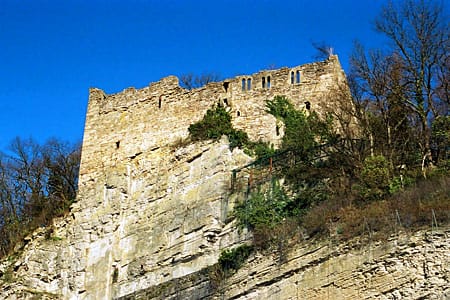
Parts of the medieval castle’s shield wall survive within the palace building. A shield wall was an especially strong defensive wall, normally placed on the side most exposed to attack. The surviving section is constructed from rusticated ashlar masonry, made with stone blocks whose outer faces were deliberately left rough or strongly projecting.
Two surviving side walls extended toward the former town gates in the Enz valley. Their remains preserve part of the medieval relationship between the castle and the town’s former entrances.
Later Fortifications
Portions of the later defensive works also survive. These additions formed part of the modernization of the castle’s defenses, which were reinforced with artificial earthworks during the palace’s later historical development.