Hausen Castle: A Fortified Residence and Administrative Seat in Germany
Site at a Glance
- Rating
- 4
- Popularity
- Very Low
- Country
- Germany
- Primary era
- Early Modern
- Eras represented
- Early Modern
- Civilizations
- Electorate of Mainz, Holy Roman Empire
- Site type
- Civic
- Remains
- Palace
On this page9 sections
History
Hausen Castle is a fortified residence in Bad Soden-Salmünster, Germany, later converted into a palace and used as an administrative seat. The Jazza family, also known as Jossa, is considered to have built it.
Early records and the Hutten family
The settlement is first recorded under the name Husen in 1319. A gift by the abbot, or head, of Fulda to the Salmünster hospital included lands that had reverted from Konrad, a bailiff, a secular official with delegated administrative or legal authority. Friedrich von Hutten acquired estates at Hausen in 1345. Later inheritances, pledges and sales divided the holdings, and their owners repeatedly turned to arbitration courts to settle disputes.
In 1430, Hans von Hutten zum Stolzenberg acquired rights held by cousins from the family’s Frankish branch. He made the castle his residence with his wife, Margarete von Thüngen, and established the line of the lords of Hutten zu Hausen.
Family disputes and conversion into a palace
In 1517, the lords of Hutten zum Stolzenberg and their Hausen cousins agreed on a pact intended to preserve peace at the castle and bring their family holdings together. Frowin von Hutten lost his possessions in 1522 because of his role in the Knights’ War, an early-sixteenth-century conflict involving German imperial knights, but regained them in 1526. Shortly before his death in 1529, he transferred his share at Hausen, provoking the Stolzenberg branch. Disputes between the branches eventually led to the sale of the Frankish family shares in 1540 to Albrecht von Brandenburg, archbishop of Mainz.
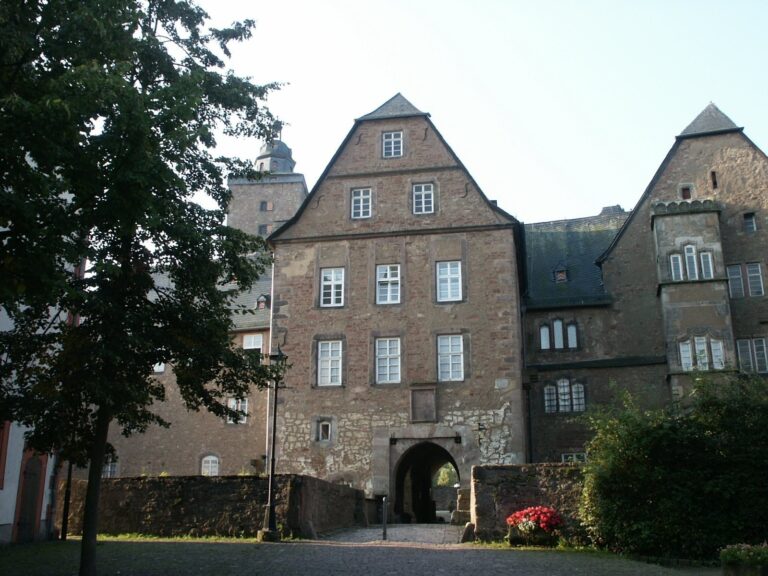
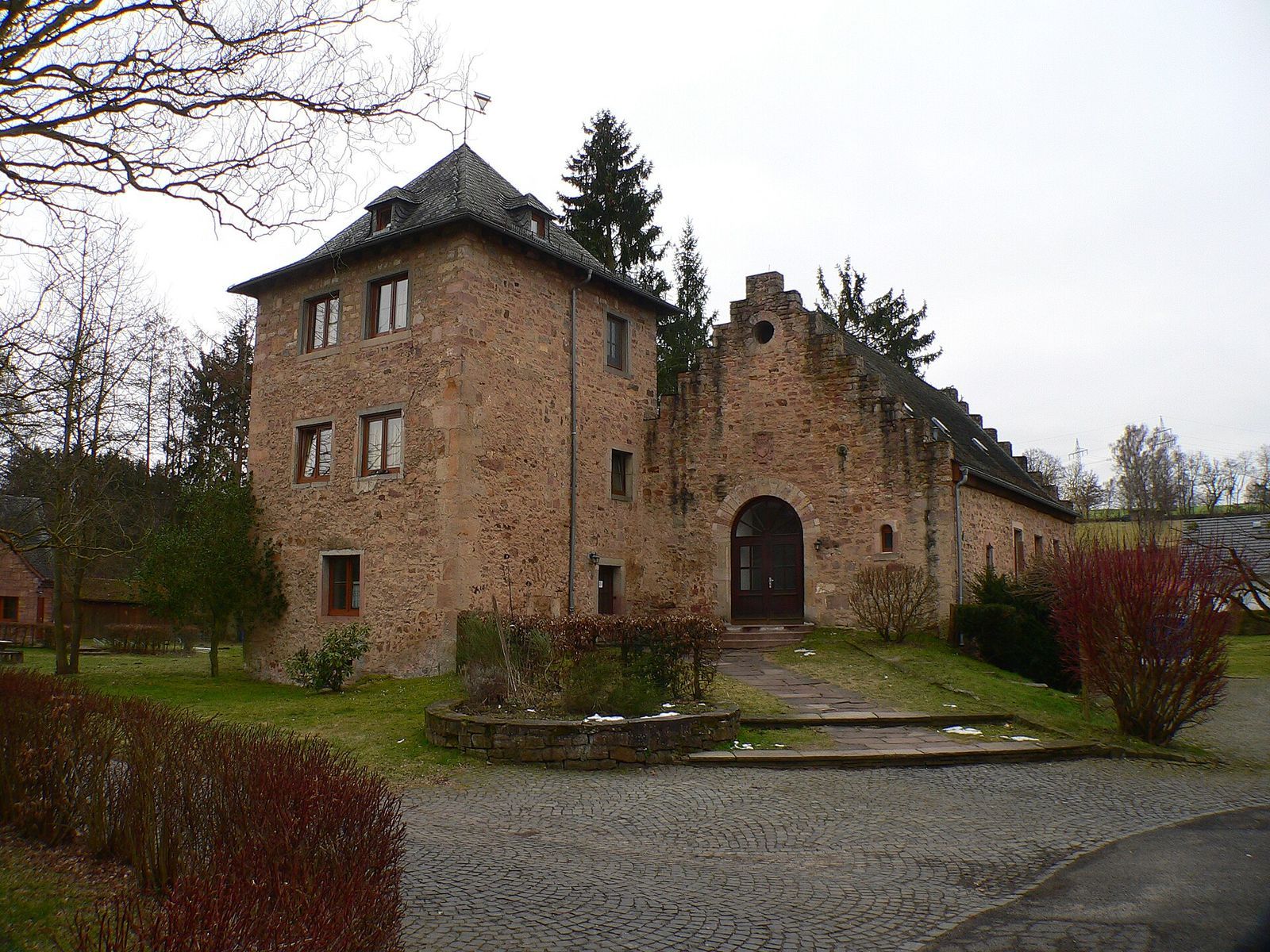
Daniel Brendel von Homburg reached a final settlement with the Hutten neighbors in 1558. Hausen Castle was then extensively converted into a palace and became an administrative seat.
Administrative decline and later use
The Hausen administrative district lost importance during the eighteenth century, and its seat moved to Orb toward the end of the century. In the early 1950s, the European Film Union bought and extensively remodeled the deteriorating complex. A hotel opened there but closed in 1955 after the investor encountered financial difficulties, and the property changed hands. The Christian Youth Village Association of Germany (CJD), a Christian educational and social-service organization, has owned the complex since 1981.
A daycare center began operating in the palace building in 2021, initially with one group of 20 children. An expansion to four groups, with capacity for 74 children, was planned for 2022. The center is operated by the city of Bad Soden-Salmünster in cooperation with the CJD.
Remains
Castle layout and early complex
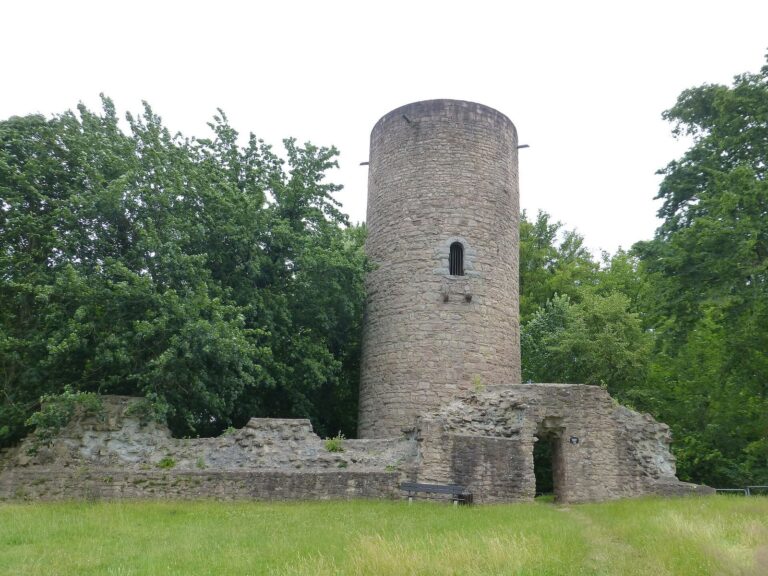
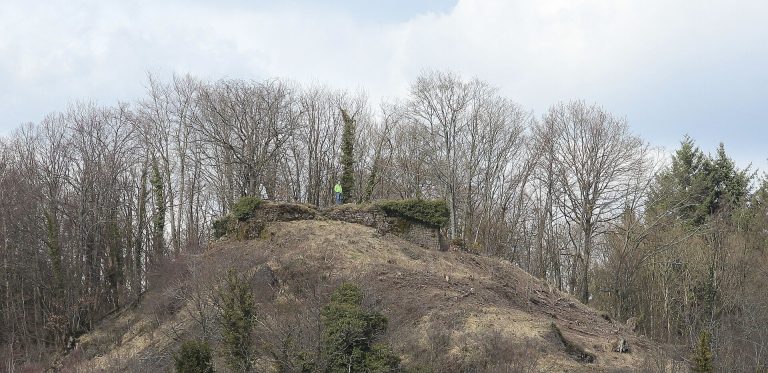
Hausen Castle was originally laid out either as a water castle, a fortified residence using water defenses, or as a castle centered on a raised mound. The place-name Häuser Dick may refer to a defensive boundary formed by a hedge barrier, a ditch, or both. An inventory prepared for the 1540 sale describes a substantial complex with a central tower, a heated residential building and numerous service buildings, including sheepfolds and a mill.
Surviving buildings
Administrative building
The building erected in 1581 for the district’s fiscal administration survives in its original condition.
Tithe barn
The old tithe barn, used for storing payments often made in agricultural produce, dates to around 1530. A private investor renovated and adapted it between 2004 and 2008.