Schloss Hachenburg: A Baroque Palace in Germany
Site at a Glance
- Rating
- 4.4
- Popularity
- Low
- Country
- Germany
- Primary era
- Early Modern
- External website
- Open
- Eras represented
- Medieval, Early Modern
- Civilizations
- Holy Roman Empire
- Site type
- Domestic
- Remains
- Palace
On this page9 sections
History
Medieval origins
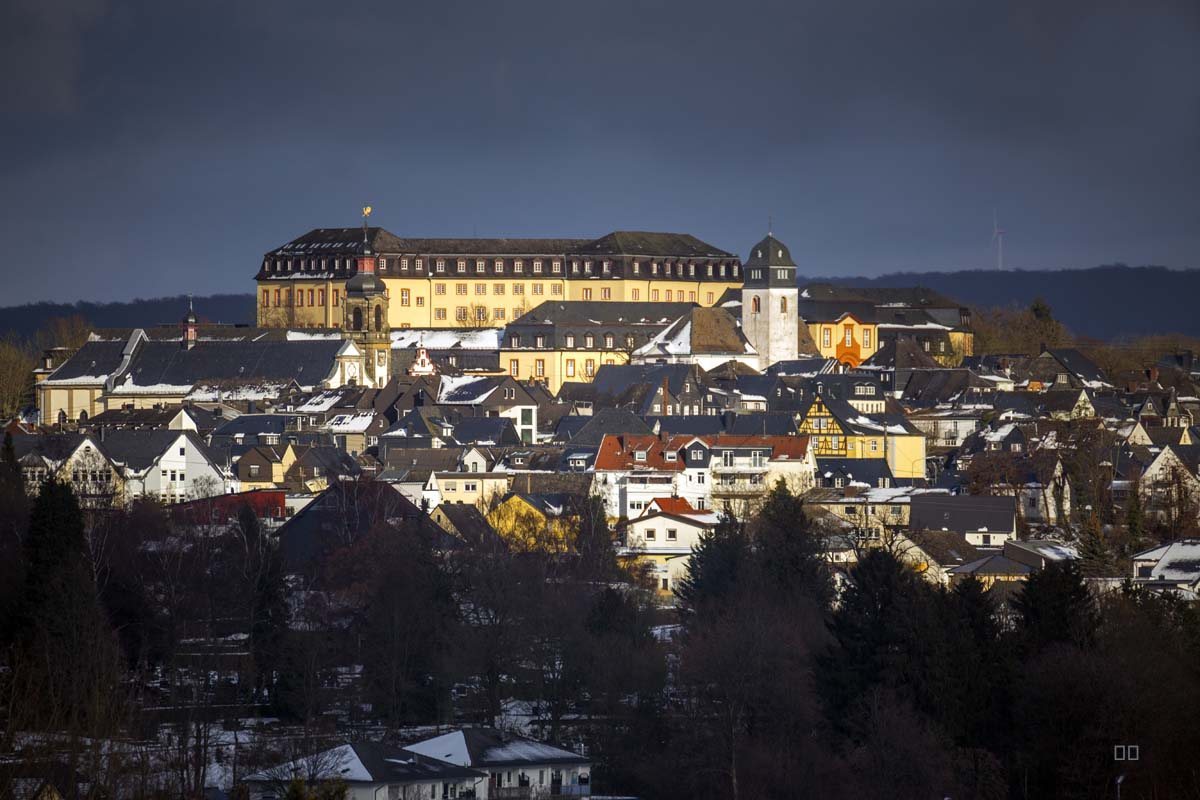
Schloss Hachenburg is a Baroque palace in Germany that developed from a castle founded around 1180 by Count Heinrich II of Sayn. Construction was completed in 1212 under his son, Heinrich III of Sayn, who is recorded as the first owner of Hachenburg and its castle. The fortress then served as the seat of the Counts of Sayn, a medieval and early-modern ruling dynasty whose territories included the county centred on Hachenburg.
Dynastic succession and rebuilding
When the older Sayn line became extinct in 1606, Hachenburg passed to the Counts of Sayn-Wittgenstein-Sayn, a later branch of the Sayn dynasty. After the last count of this branch died in 1636, control of the county was disputed during the Thirty Years’ War, the conflict that divided much of central Europe between 1618 and 1648. The Peace of Westphalia, the settlements that ended the war and reshaped political authority in the Holy Roman Empire, enabled Countess Louise Juliane of Sayn to secure the county in 1649. She divided it between her daughters.
Sayn-Hachenburg passed through Ernestine von Manderscheid-Blankenheim and, through Ernestine’s daughter by marriage, to the Burgraves of Kirchberg in 1714. The title of burgrave originally referred to an official responsible for administering and defending a castle or fortified town. A major fire on 13 October 1654 had already destroyed large parts of the town centre and the castle. Count Salentin Ernst von Manderscheid and Count Georg Friedrich of Sayn-Hachenburg ordered the rebuilding of both, with the castle reconstructed as a Baroque palace.
The Nassau-Weilburg period and later use
Between 1715 and 1746, Julius Ludwig Rothweil, an architect serving Nassau-Weilburg, built the present palace on the site of the medieval castle. Sayn-Hachenburg passed to Nassau-Weilburg in 1799, after which Hachenburg ceased to be a residential town. It remained the seat of the Amt Hachenburg, a historical administrative office distinct from a modern county.
The palace changed ownership several times during the twentieth century. It now houses the University of the Deutsche Bundesbank, the higher-education institution of Germany’s central bank for training and professional development.
Remains
Palace and garden complex
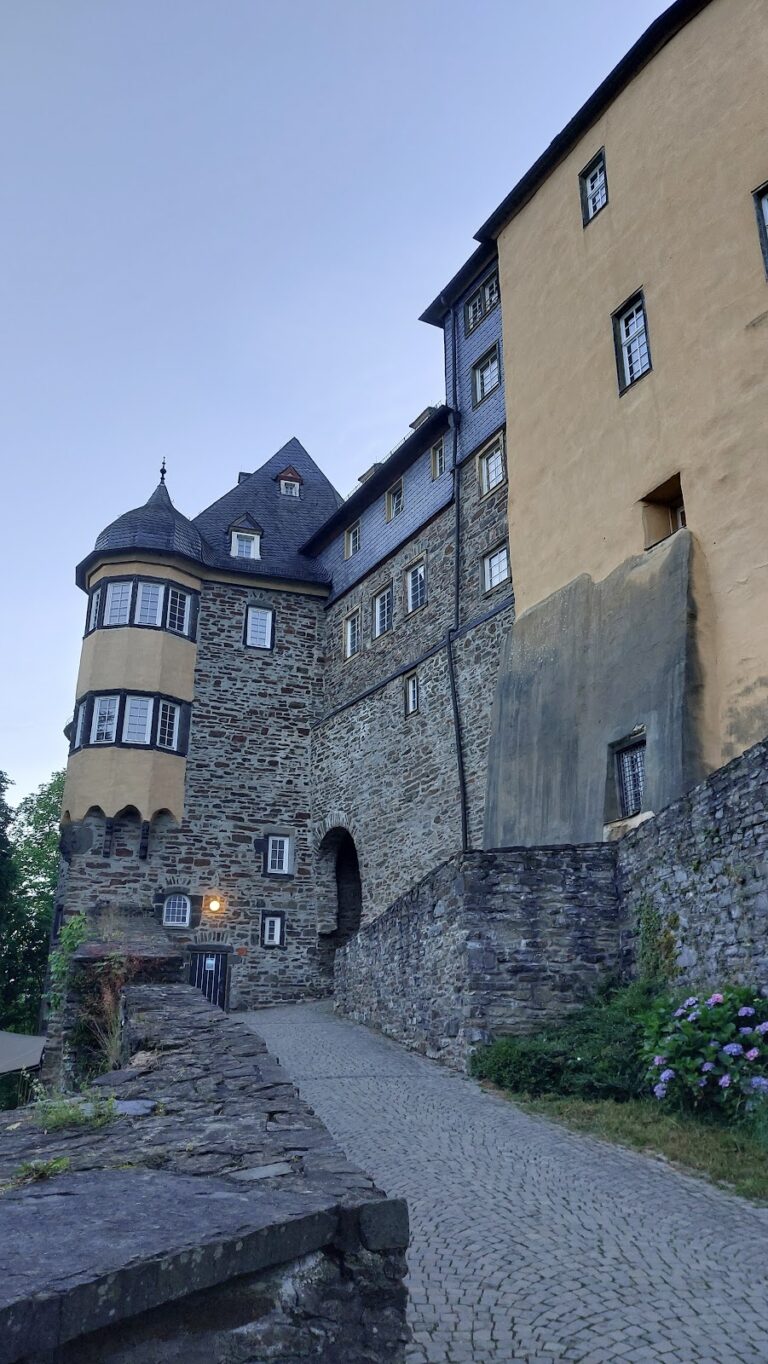
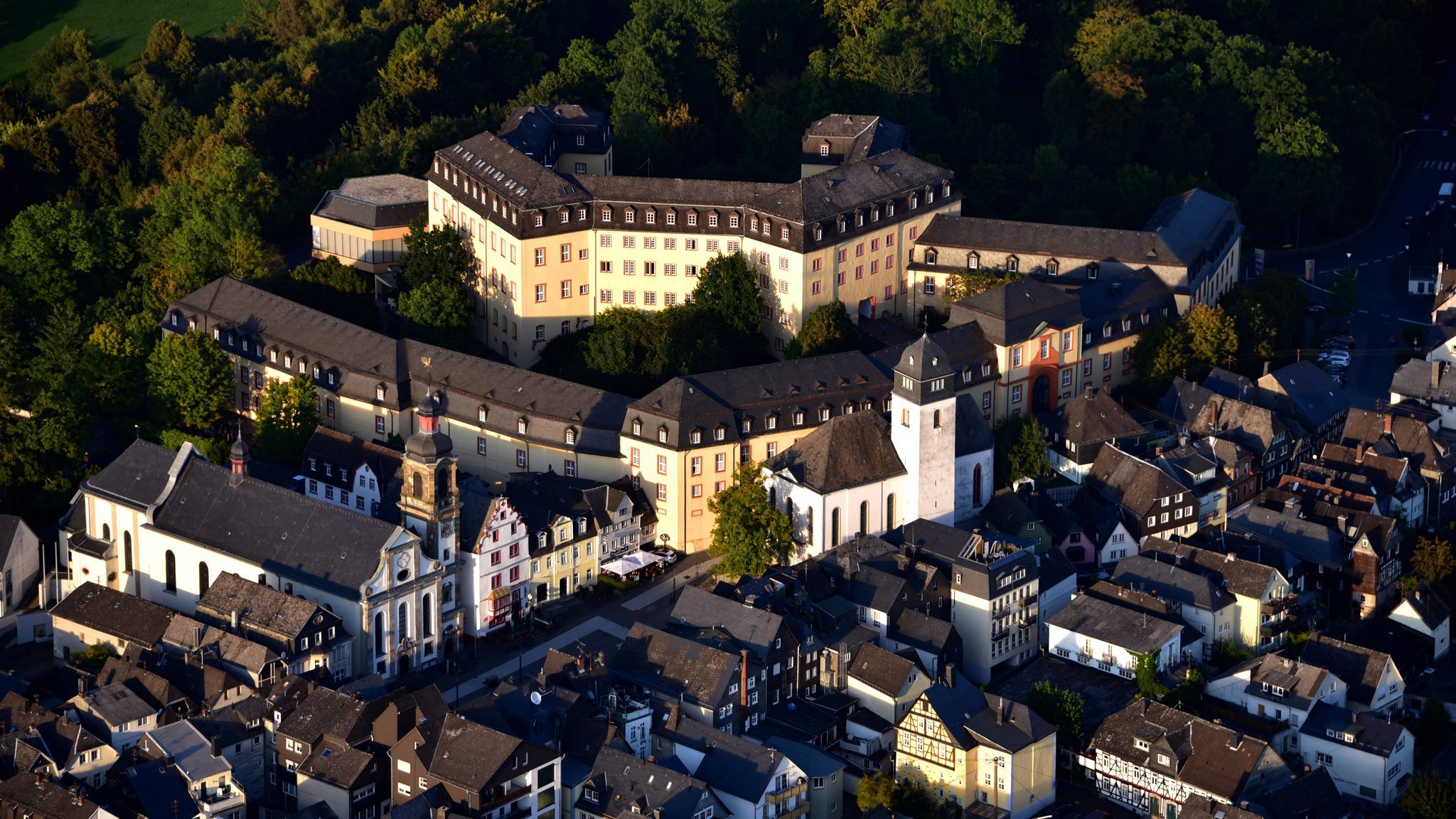
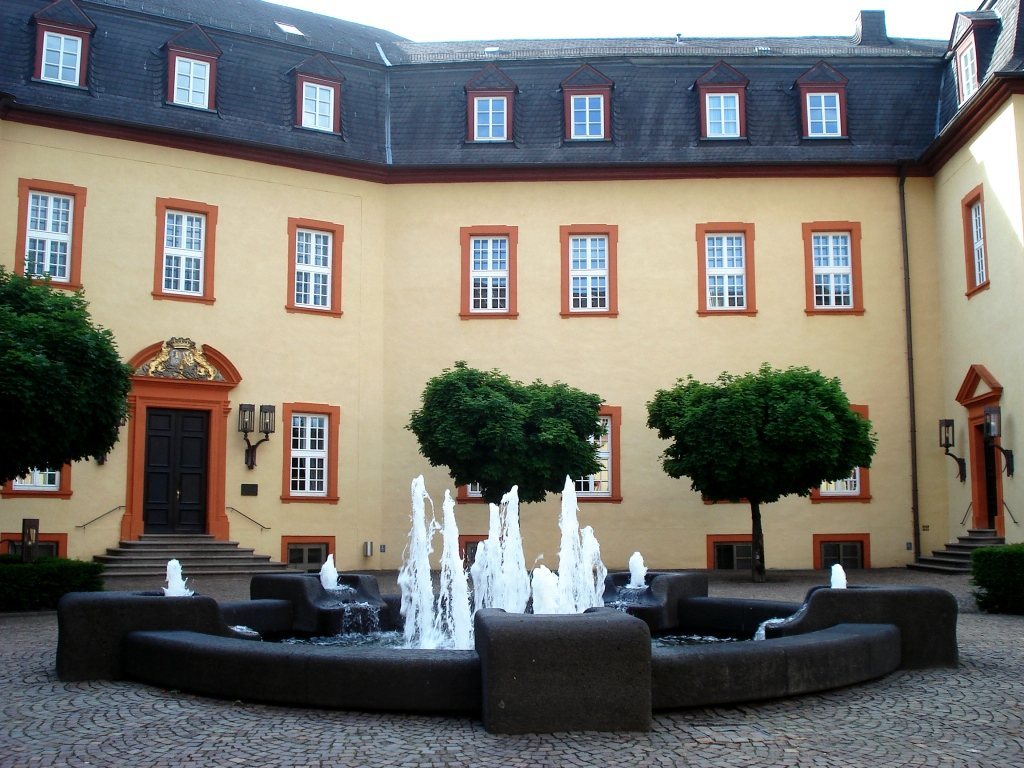
The present complex is an extensive Baroque palace whose buildings form a horseshoe around an inner courtyard. The courtyard opens toward and overlooks the Burggarten, linking the palace buildings with the landscaped grounds.
Baroque palace
Built between 1715 and 1746 on the site of the earlier castle, the palace represents the rebuilding of the Hachenburg residence in the Baroque period. Its horseshoe plan encloses the inner courtyard, while the open side faces the garden. The present structure therefore preserves the location of the medieval stronghold while taking the form of a later princely residence.
Burggarten
The Burggarten was established in the fifteenth century under Gerhard I of Sayn. Salentin Ernst von Manderscheid and Georg Friedrich von Kirchberg later enlarged it in the English style, and it was transformed into a Baroque garden during the early eighteenth-century rebuilding of the palace complex. Its Baroque design included a pond, four garden pavilions, a garden house, and an orangery.
The garden once adjoined the palace directly, but the Alexander-Ring now separates the two. After the palace ceased to be a residence in 1799, the garden became overgrown. From 1926, a forestry school used it as an experimental and teaching site. It is now arranged as a park and contains a historic yew tree.
Palace Church
The late Gothic Palace Church stands beside the palace and is connected to it by an arched passage. Its surviving fabric includes a choir and tower from the mid-fifteenth century, while the tower on the south side dates to 1481. The nave has a mirror vault dating to 1775, and a double-flight staircase leads to the church portal.