Palazzo del Monte di Pietà in Messina: A Charitable Lending Institution
Site at a Glance
- Popularity
- Medium
- Country
- Italy
- Primary era
- Early Modern
- Eras represented
- Early Modern
- Civilizations
- Habsburg, Habsburg Spain, Kingdom of Sicily, Spanish
- Site type
- Economic
On this page10 sections
History
The Palazzo del Monte di Pietà in Messina is a Mannerist palace in Italy, begun in 1616 for a charitable lending institution founded in 1581. A Monte di Pietà provided charitable loans, commonly against goods left as security. The institution was established by the Arciconfraternita degli Azzurri, an elevated-status religious association of laypeople.
Sixteenth-century origins
A small church dedicated to St Basil stood on the site by 1534 and belonged to the Nobile Confraternita degli Azzurri. It was demolished in 1541 to make way for a church of Monte di Pietà. The later palace was built on the site of this earlier church.
Construction and later additions
The Arciconfraternita commissioned the palace in the early seventeenth century. At the death of its first designer, only the ground floor had been completed. Other designers finished the upper level, departing from the original plan.
In 1741, during a commemoration of the Azzurri confraternity, the building was altered with an upper floor, a bell tower, and a monumental staircase. These changes gave the palace a new architectural form.
Earthquakes and restoration
The 1783 earthquake damaged the palace, and rebuilding followed. The 1908 earthquake severely damaged the building and destroyed much of its upper floor. Bombing during the Second World War caused further harm.
Restoration began in 1979. The Arciconfraternita degli Azzurri e della Pace dei Bianchi granted use of the palace to the Regional Province of Messina. It is used for cultural and social events.
Remains
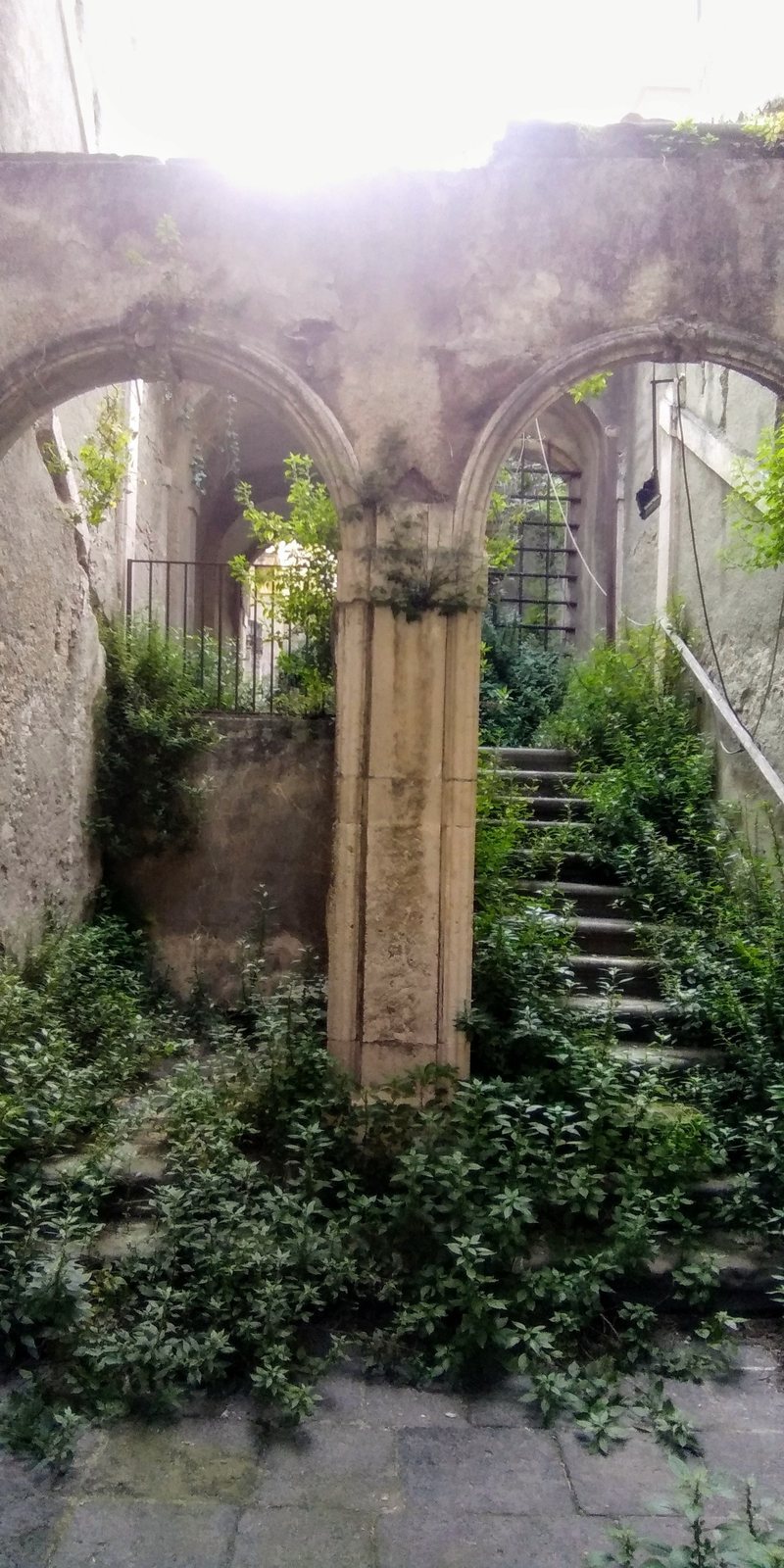
The surviving palace combines a Mannerist street façade with an entrance atrium, a long vaulted passage, a loggia, and a courtyard. A monumental staircase links the courtyard with the remains of the adjoining Church of Santa Maria della Pietà.
Palace and courtyard
Street façade
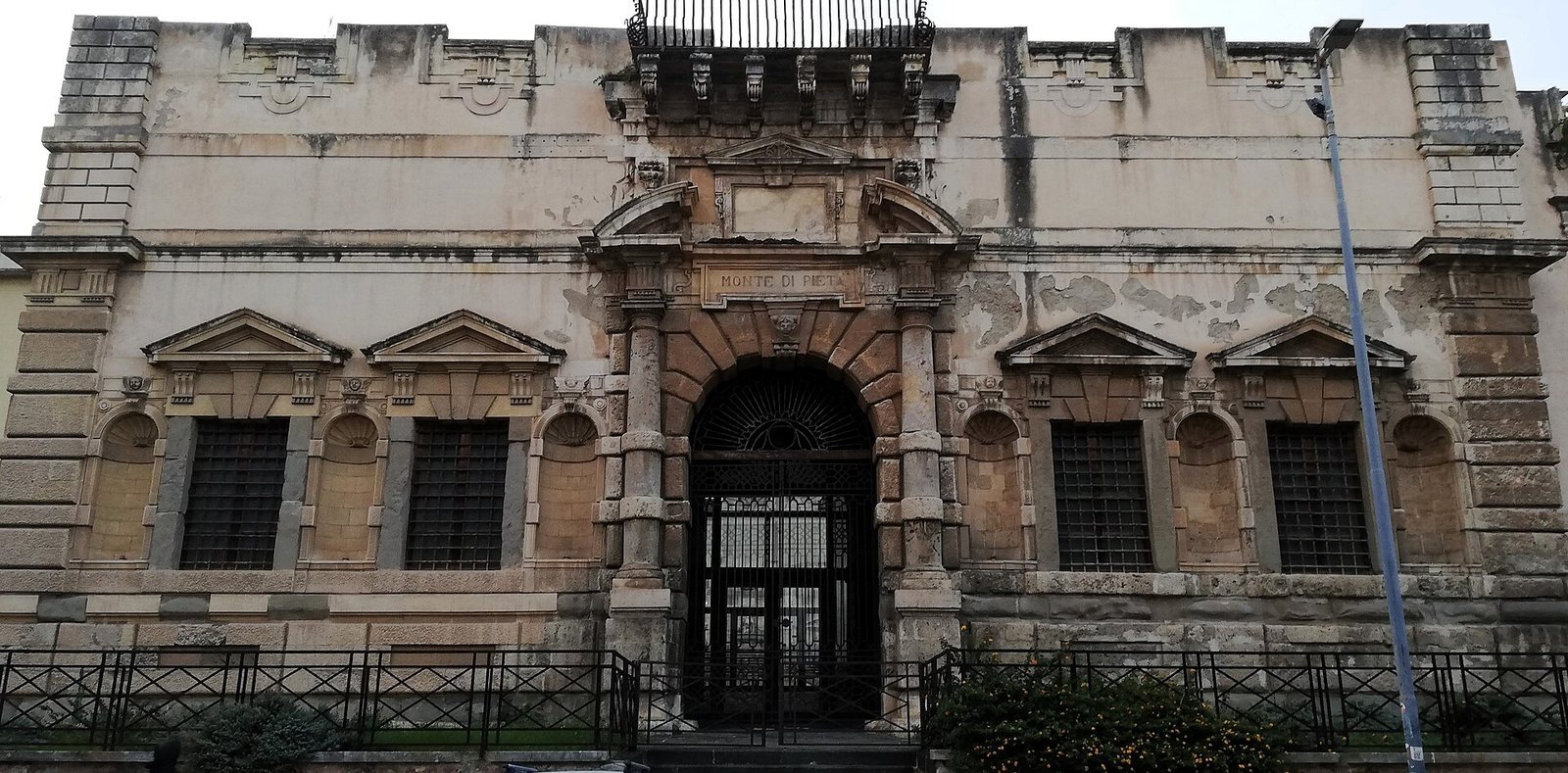
The façade is arranged around a central entrance framed by rusticated masonry, a treatment that emphasizes rough surfaces or joints. Its broken pediment has an interrupted center. Rusticated blocks mark the corners, while two windows on each side of the entrance have triangular pediments. Six recesses sit between the windows. A marble plaque above the entrance names the Monte di Pietà, and a tablet above the arch bears the phrase Maior omnium charitas, meaning “Charity is greater than all,” with the date 1789.
The eighteenth-century upper storey had an open balcony flanked by two windows on either side. The balcony and lower portions of the windows remain visible; the windows have rusticated frames.
Atrium, passage, and loggia
The entrance opens into an atrium with a barrel vault, a continuous semicircular ceiling. A broad vaulted passage runs through the building to a spacious loggia, a gallery open to the courtyard. Three open arches connect the loggia and courtyard. The layout has been compared with Villa Madama, a Renaissance villa in Rome, though the palace’s design does not use that villa’s semicircular elements. Evenly spaced cuts mark the supports and window recesses, and projecting slabs on the attached wall supports extend almost as wide as their tops.
Staircase and fountains
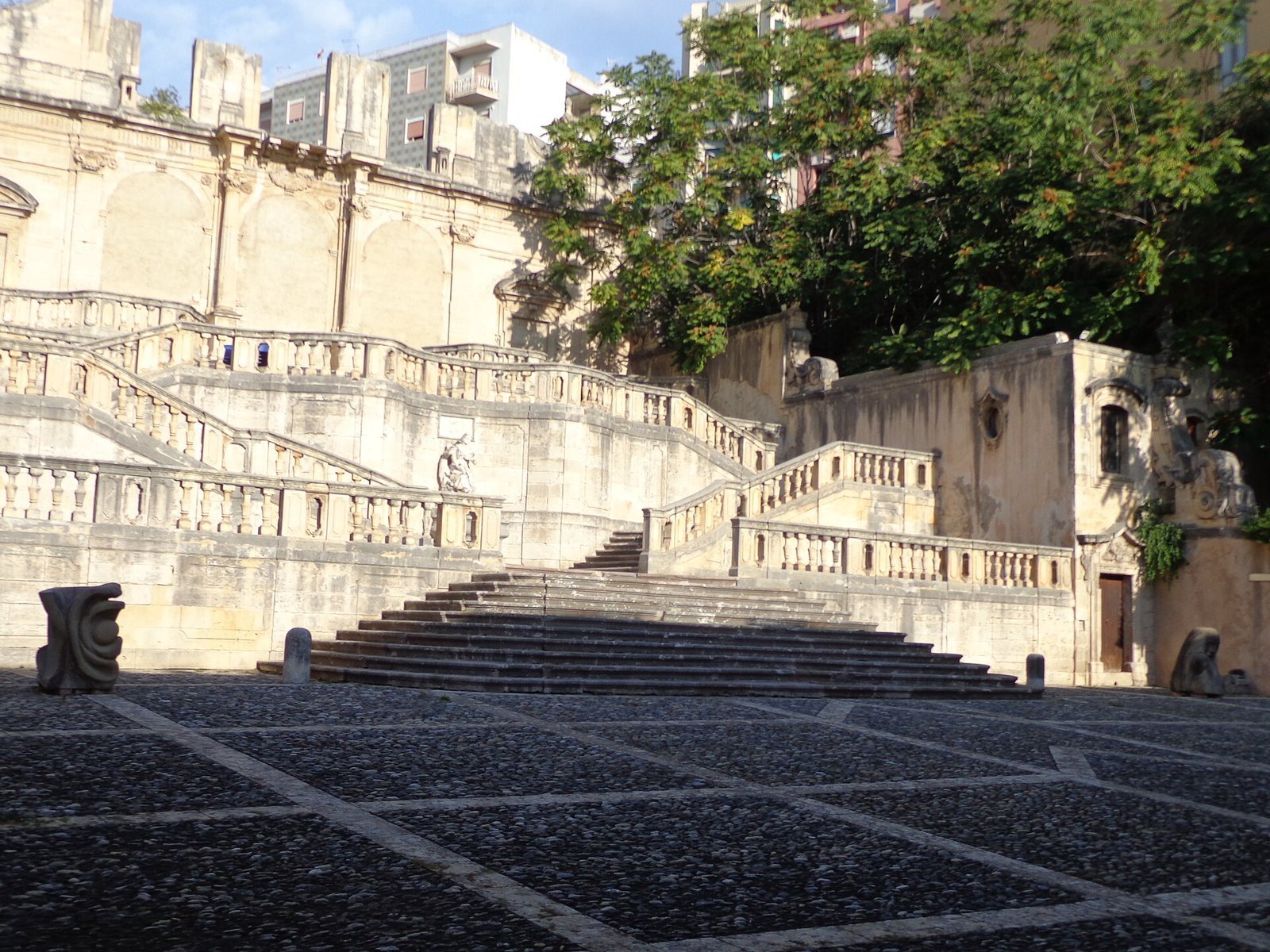
A doorway to the right of the entrance atrium leads to the stairs for the upper floors. Opposite the entrance stood a fountain dated 1732, featuring a winged child riding a dolphin. The monumental staircase from the courtyard toward the church is made of red-veined Taormina marble and remains intact. At its center is the Fountain of Abundance, dated 1741, with a statue by Ignazio Buceti.
Church and artworks
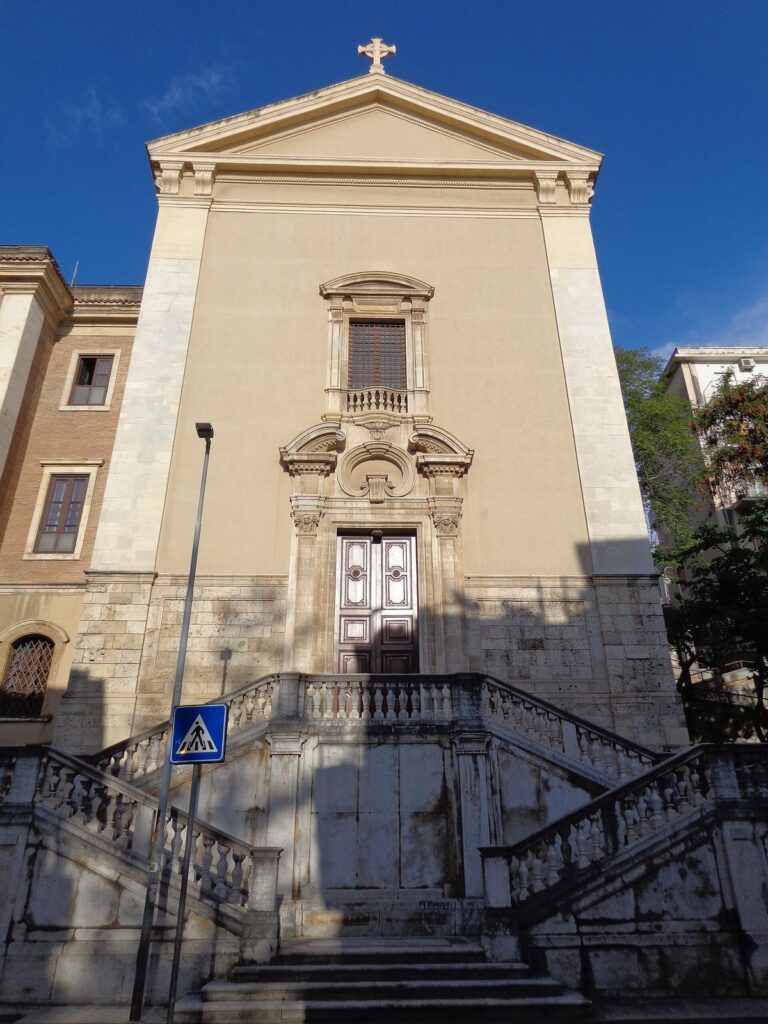
The adjoining Church of Santa Maria della Pietà was destroyed in the 1908 earthquake, but part of its façade survives. Filippo Tancredi painted the church in 1707, and it had an altarpiece by Deodato Guinaccia. A chapel in the palace housed Jacopo Vignerio’s painting Jesus Christ with the Cross.