Săraca Monastery: An Orthodox Monastic Complex in Romania
Site at a Glance
- Rating
- 4.8
- Popularity
- Medium
- Country
- Romania
- Primary era
- Early Modern
- Eras represented
- Early Modern, Modern
- Civilizations
- Habsburg, Habsburg Austria
- Site type
- Religious
- Remains
- Monastery
On this page10 sections
History
Origins and early records
Săraca Monastery is an Eastern Orthodox monastery near Șemlacu Mic in Timiș County, Romania, with origins tied to the Serbian Orthodox tradition. Serbian tradition places its foundation in the 15th century and attributes it to Despot Jovan Branković, a ruler of the medieval Balkans. Another tradition connects the church’s foundation with descendants of Despot George Branković, who donated an icon. The church is also said to have been rebuilt in 1443 by Macarie, a monk from Tismana. The monastery was also known as Šemljug.
The earliest reliable written references come from Ottoman tax registers in the second half of the 16th century. They call the monastery Moravice, after a nearby stream and the settlement associated with it. That settlement was attached to the monastery and was also called Prnjavor or by related names. Mali Šemljug became its established name in the 19th century, distinguishing it from nearby Veliki Šemljug.
Ottoman and 18th-century life
The monastery belonged to the Serbian Patriarchate and was within the Karlovci Metropolitanate, a Serbian Orthodox ecclesiastical province, and the Diocese of Vršac. During Ottoman rule, the church was dedicated to the Dormition of the Virgin Mary, a commemoration of her death. In March 1624, Abbot Pajsije travelled to Putivl in Russia to seek alms for repairs. He returned on another fundraising journey in July 1627 with Deacon Antonije, accompanied by monks from Mileševa Monastery.
In 1730, under Abbot Simeon and during the reign of Habsburg emperor Charles VI, a new church was built with support from patron Đurica Lazarević and his adult sons, Nikola and Živan. Its dedication became the Presentation of the Virgin Mary, which commemorates her presentation at the Temple. The monastery had an icon-painting school in the 18th century. Abbot Filotej also attended the 1749 church-national assembly at Karlovci, a gathering of Orthodox clergy and lay representatives concerned with church and community affairs.
An inventory made in 1771 described the monastery’s estate as large and noted support from Nikola Oberknežević Lučić. Its brotherhood then consisted of a deputy and two other monks. In 1774, imperial inspector Erler placed the monastery in the Žam district of Vršac District and noted that the surrounding population was predominantly Vlach, a historical name for Romance-speaking communities of the Balkans. A Serbian school operated there that year and became a secular school in 1777. In 1775, the brotherhood comprised an abbot, a deputy, four hieromonks (monks ordained as priests), and another monk. One hieromonk served as spiritual father, providing religious counsel to Vlach residents; three members of the brotherhood spoke only Vlach.
Suppression, private ownership, and revival
The settlement associated with the monastery was abandoned during the war of 1738. In 1777, a Habsburg decree aimed at reducing the number of Orthodox monasteries ordered Săraca’s suppression. Opposition from Orthodox clergy and local residents delayed the order until 16 June 1778. The brotherhood then moved to Mesić Monastery, which received Săraca’s land and movable possessions, including books, icons, and liturgical objects. The church became a parish church and was handed over to the village of Bućin in the summer of 1778.
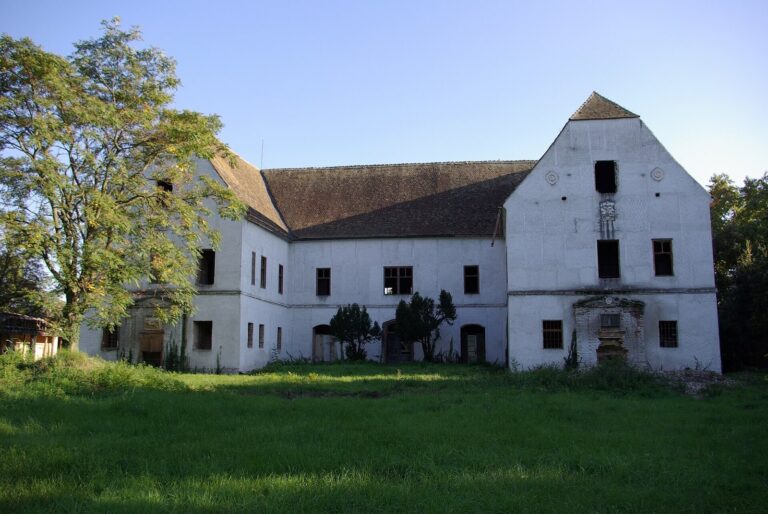
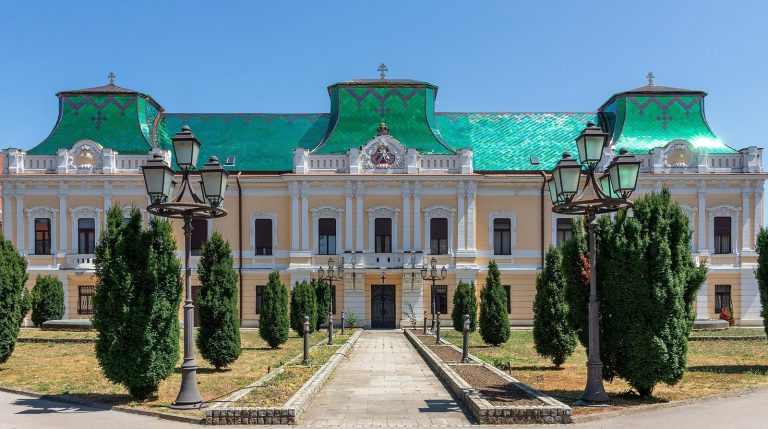
The monastery buildings were auctioned in 1782 and purchased by the family of Jovan Ostojić, a wealthy official from Timișoara. His sons planned to make the complex a family mausoleum. The family held it for about 150 years, during which it fell into disrepair and acquired the name Săraca, meaning “poor.” In the early 1930s, the Caransebeș Diocese reacquired the monastery and monastic life resumed under the Romanian Orthodox Church.
Monastic life was suppressed again from 1959 to 1978, while the church served as a parish church. A major repair campaign begun in 1963 restored the church and its paintings. Monks returned in 1987 at the urging of Metropolitan Nicolae Corneanu, a senior Romanian Orthodox bishop. Săraca is now an active men’s monastery. Its feast is the Transfiguration, celebrated on 6 August, commemorating the revelation of Christ’s divine glory.
Remains
Church buildings and devotional objects
The 1730 church
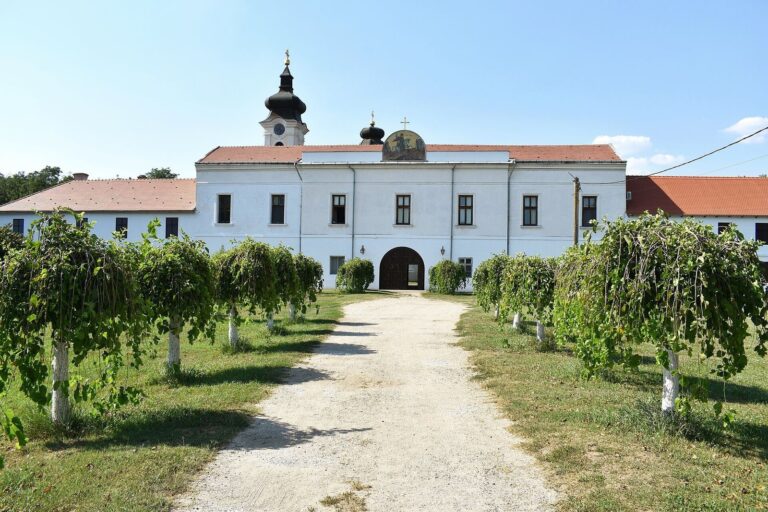
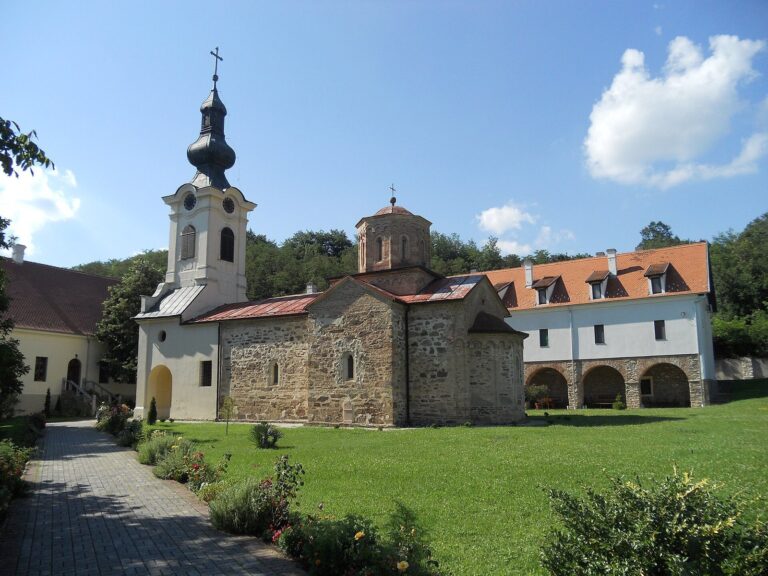
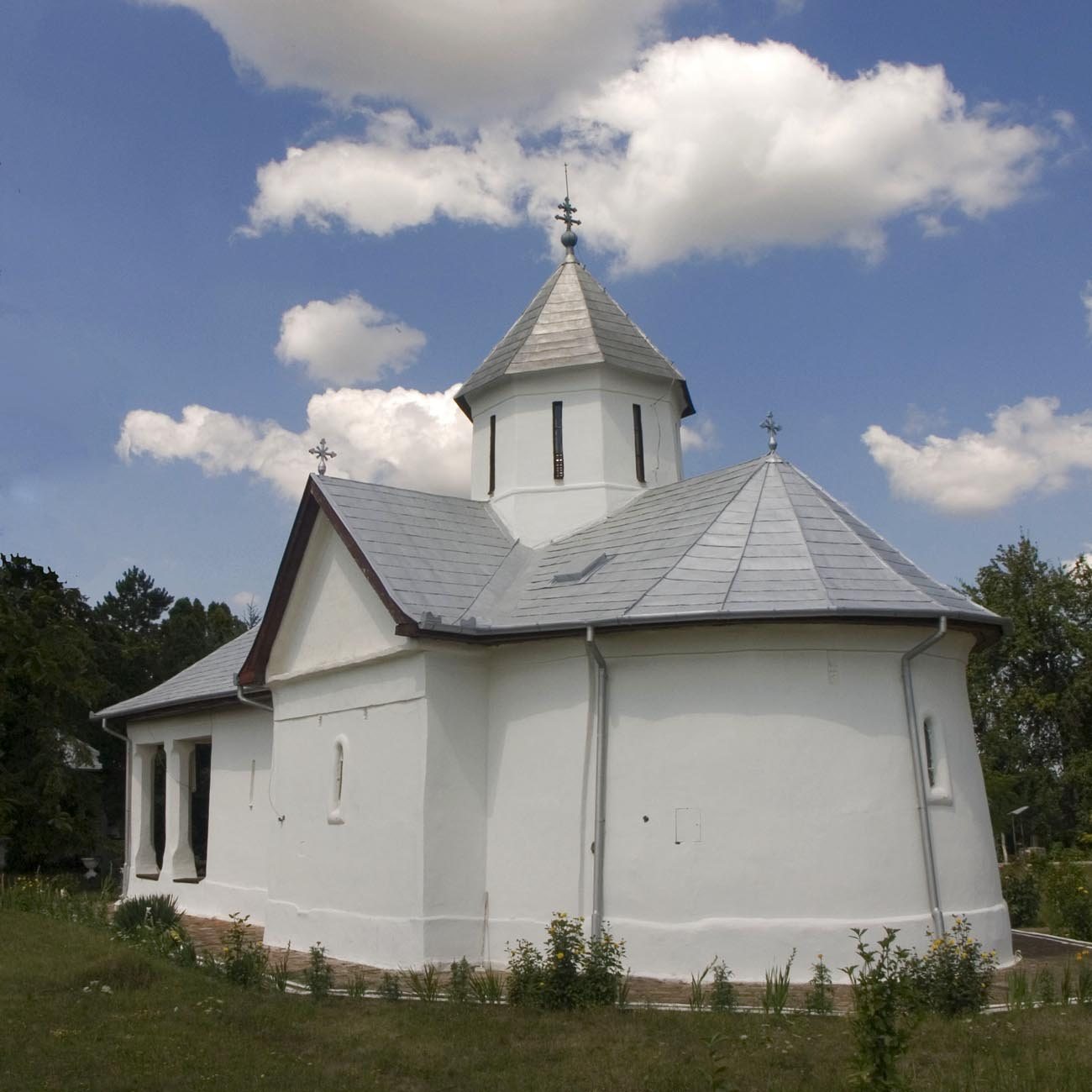
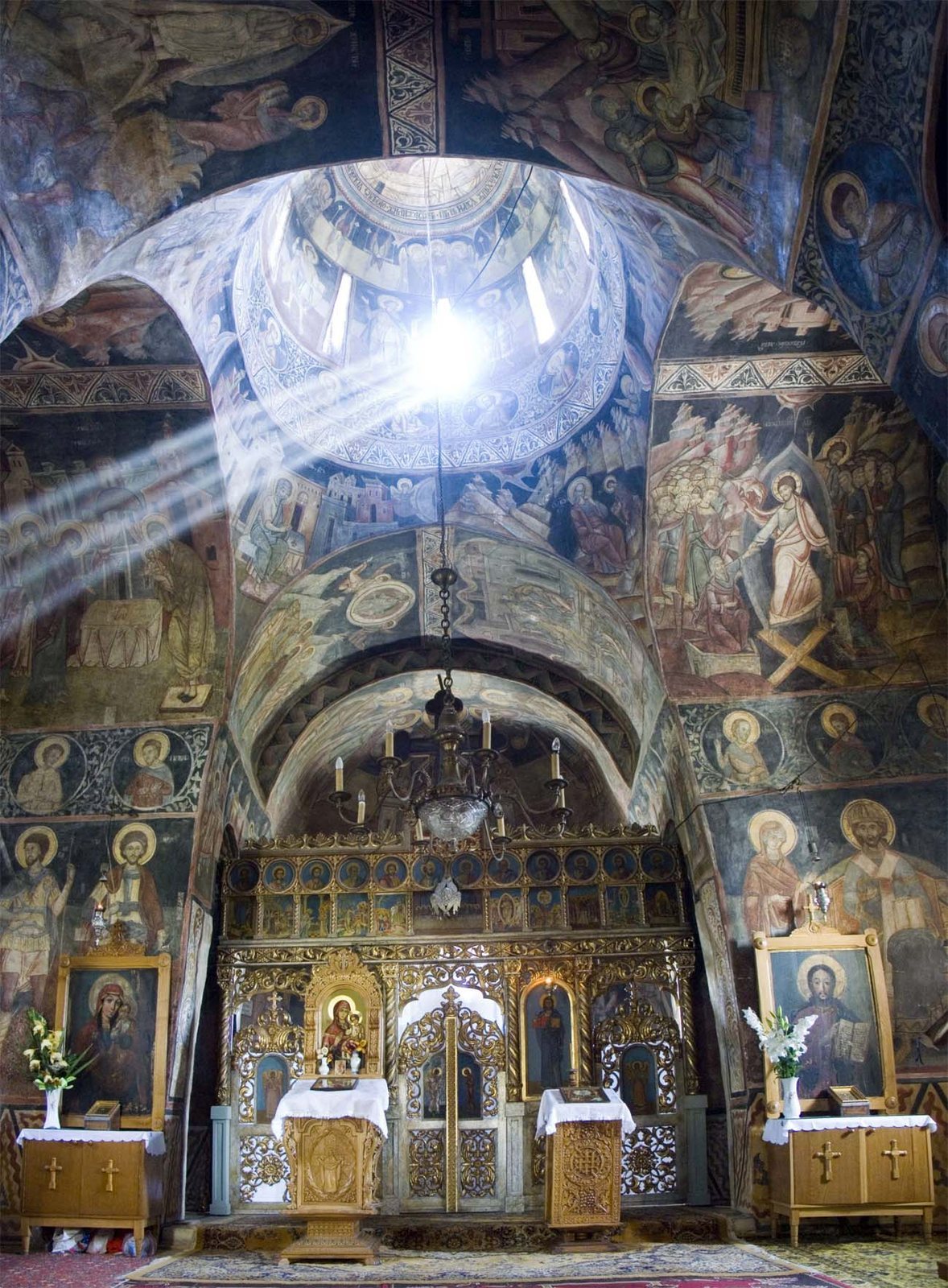
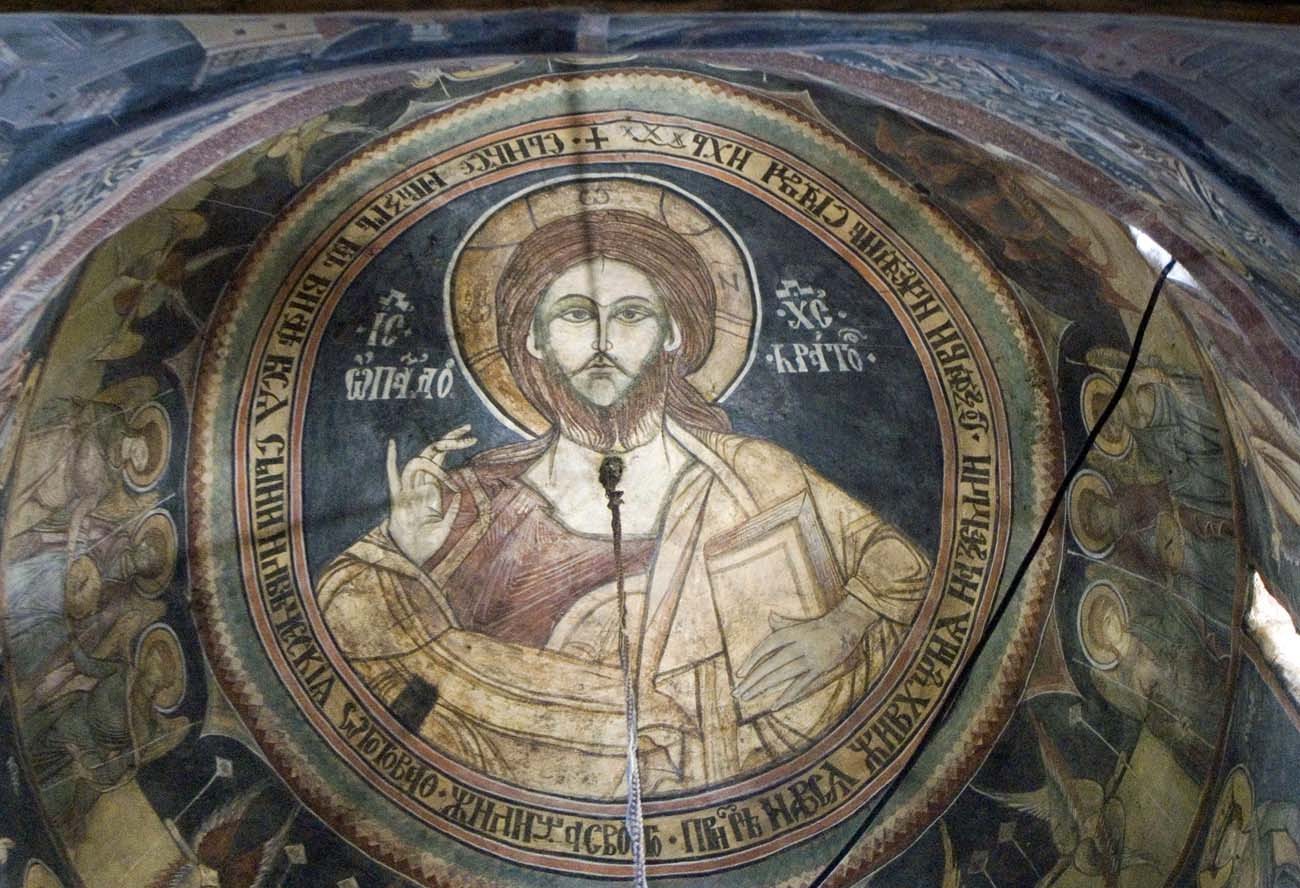
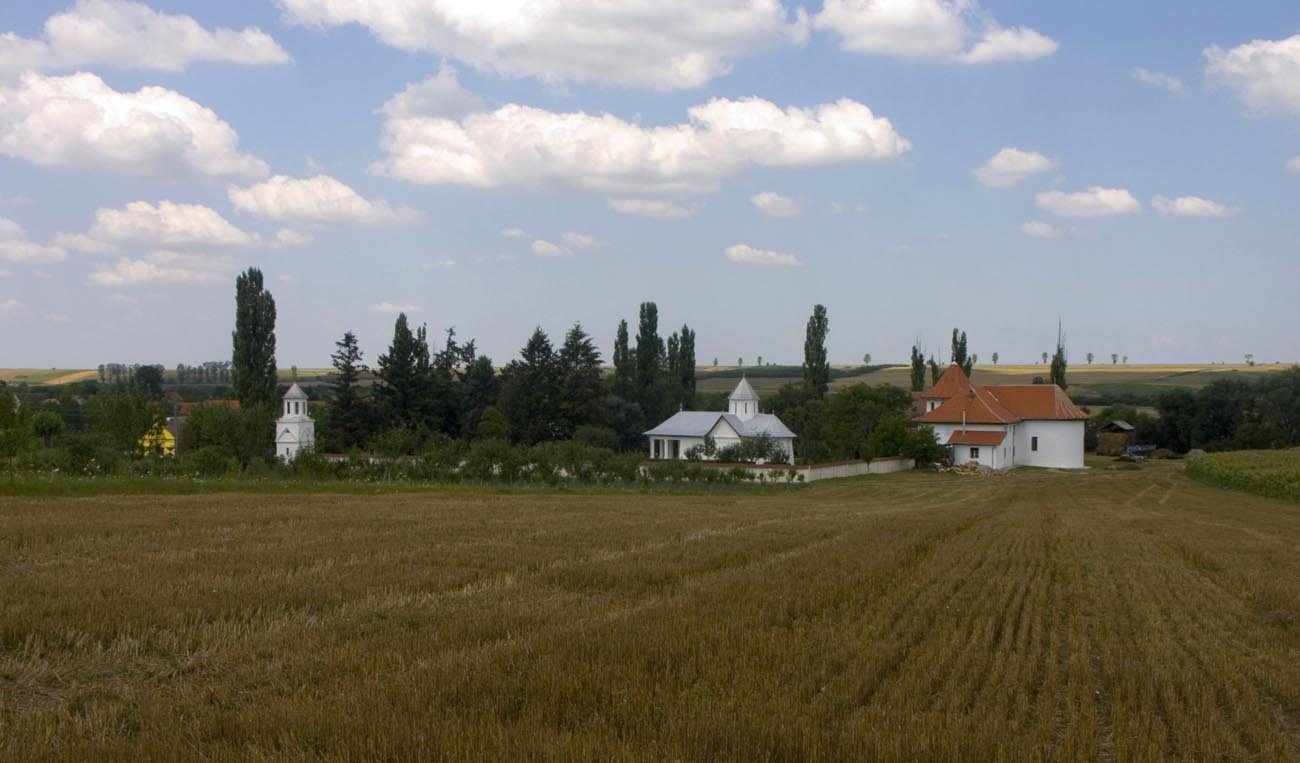
Set in the Banat plain near Șemlacu Mic, the monastery includes the 1730 church and a later monastery church. In the older church, an image of Christ Pantokrator, a traditional depiction of Christ as ruler of all, occupies the dome above the nave. The western wall bears a depiction of the Lazarević patron family. Andrija Raičević, his son Andrej, and assistants Iovan and Chiriac painted the church. An old iconostasis, the screen of icons separating the sanctuary from the main church space, also belongs to the church.
Icons and relics
An icon associated with the monastery was made in 1644 for Krušedol Monastery. It depicts Despot Jovan Branković, his mother Despotess Angelina, a Serbian Orthodox noblewoman, and other members of the Branković family. In 1753, painter Nikola Nešković made a copy at the order of Bishop Jovan of Vršac-Karansebeș. It was Nešković’s first and only signed work; both the original and the copy were intended for Krušedol. The monastery also has an icon of the Virgin Mary regarded as wonderworking, along with relics of Saints Nicholas, Thecla, and Filofteia.
The later monastery church
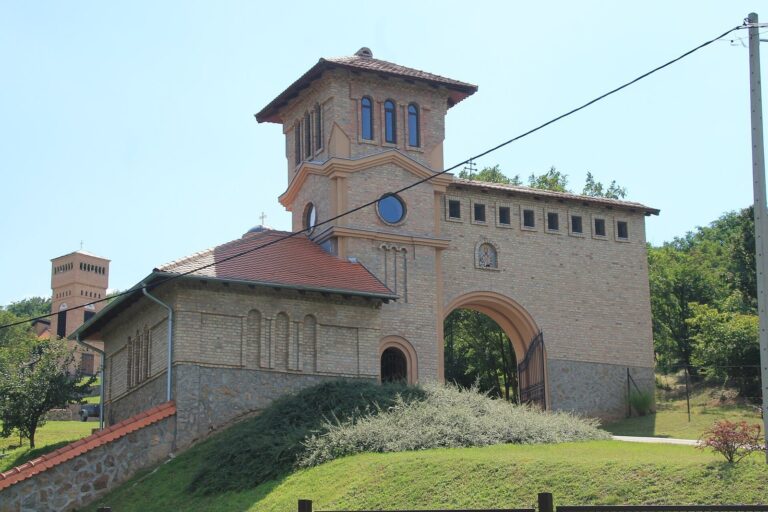
A new monastery church was built between 2001 and 2005. Constantin and Petronia Dumitrescu-Gherghe painted it in 2006–07.
Arboretum
More than 9,000 saplings of different tree species were planted near the monastery in 1999 to form an arboretum, a collection devoted to trees and other woody plants. By 2019, most had grown large.