Santo Spirito alla Ghisolfa Church: A Catholic Church in Milan
Site at a Glance
- Popularity
- Very Low
- Country
- Italy
- Primary era
- Early Modern
- Eras represented
- Early Modern, Modern
- Civilizations
- Austrian Empire, Duchy of Milan, French, Habsburg, Italian, Spanish
- Site type
- Religious
- Remains
- Church
On this page11 sections
History
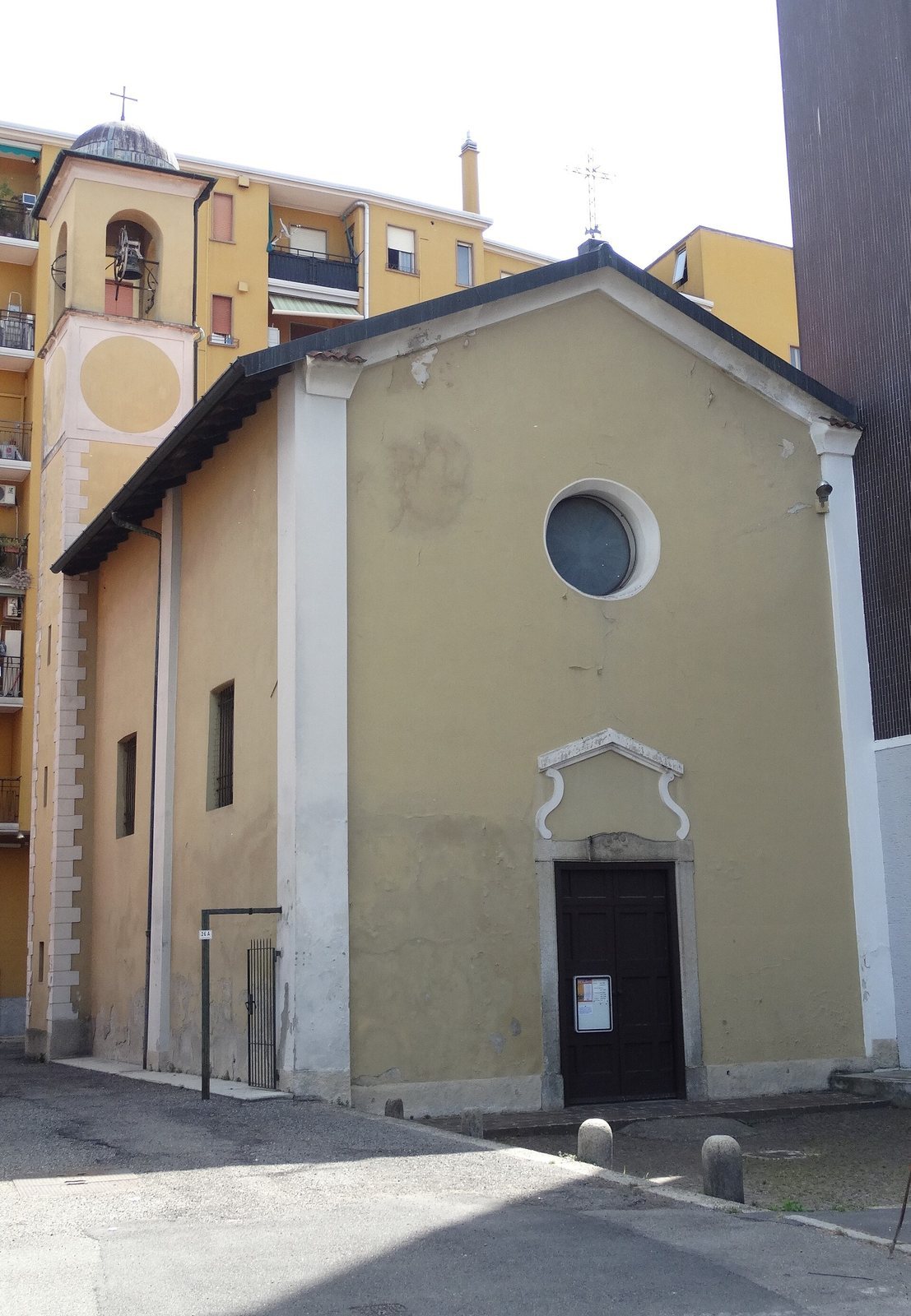
Santo Spirito alla Ghisolfa Church is a Catholic church in the former Ghisolfa district of Milan, Italy. An important remnant of the district’s history, it is dedicated to the Holy Spirit, the third person of the Christian Trinity, and is also described as currently dedicated to Saint Luigi Gonzaga, who used it for spiritual exercises. Construction began in 1573, in the second half of the sixteenth century, under the Somascan Fathers. An inscription in the bell tower gives the church’s foundation date as 1505.
The college and church
In 1566, physician Giovanni Dugnani donated money, furnishings, land, and a house in Ghisolfa to support the literary education of orphans who hoped to enter religious life. The house, known as Casa del Santo Spirito alla Colombara, accommodated the students and their educators. The church was built on adjoining land for the college community and local residents, who lived far from their parish church. The Somascan Fathers, members of a Catholic religious order associated with Saint Jerome Emiliani, retained the original bell tower when the new church was built.
Closure and community rights
In 1785, amid a reduction in religious orders and the French occupation, the Somascan Fathers were forced to close the Colombara college. The land passed to Marquis Francesco Visconti. The Ghisolfa community then pursued legal action and secured the church’s autonomy, citing the date inscribed in the bell tower. Further disputes followed when the property passed to Captain Galliari in 1806, Giuseppe Vallardi in 1837, and later Francesco Turati. In each case, the court affirmed the church’s belonging to the Ghisolfa community.
Parish changes and urban growth
Responsibility for the church passed from the parish of the Holy Trinity to the parish of Bovisa in 1912. Since 1955, the church and Ghisolfa community have been under the nearby parish of San Gaetano. The church is associated with the Servants of Charity, founded by the Italian priest Saint Luigi Guanella, and falls within the Archdiocese of Milan. Once set in open countryside, it became surrounded by houses as the neighborhood expanded during the twentieth century.
Remains
The church has a rectangular plan measuring 15 by 7.3 metres. Its brickwork, once exposed, is now covered with plaster. Inside, a single nave leads through an arch to a polygonal apse, a recessed area at the end of a church.
Exterior
Bell tower
The bell tower is the sole surviving part of the original building. It was underpinned and raised in 1885. Two bells were installed, one in 1816 and the other in 1837.
Façade
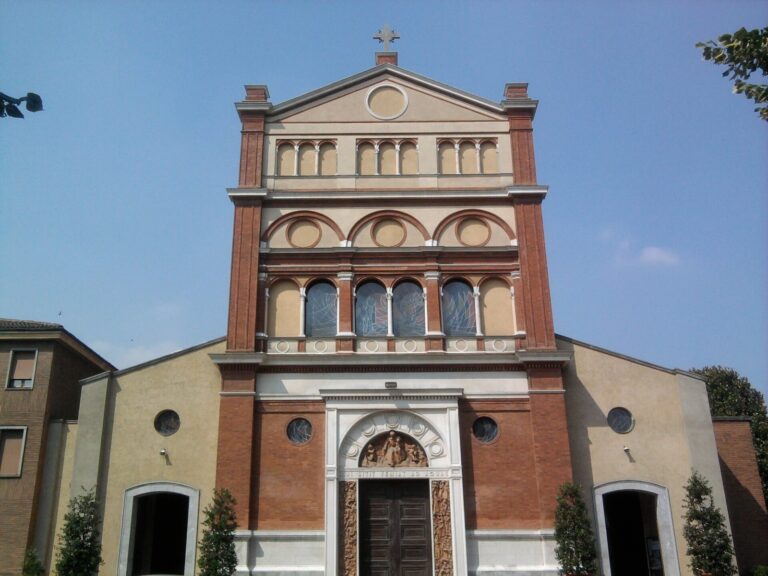
A circular window in the façade has coloured glass depicting a dove, the symbol of the Holy Spirit. Above the entrance, a Baroque-style relief remains visible; a painting once occupied the area within it.
Interior
Nave and apse
The nave is divided into two bays, each covered by a cross vault formed where two barrel-shaped ceilings intersect. An arch marks the transition from the nave to the polygonal apse.
Furnishings and decoration
Much of the sacred furnishing, including the original wooden altar, was looted over time. An eighteenth-century crucifix remains above the tabernacle, the container for the consecrated Eucharist, with a dove representing the Holy Spirit above it. Stained-glass windows made toward the end of the twentieth century depict the Four Evangelists, Matthew, Mark, Luke, and John. A statue of Saint Luigi Gonzaga stands at the rear of the left side wall.