Santa Rita da Cascia alle Vergini Church: A Roman Catholic Church in Rome
Site at a Glance
- Popularity
- Medium
- Country
- Italy
- Primary era
- Early Modern
- Eras represented
- Early Modern, Modern
- Civilizations
- Italian, Papal States
- Site type
- Religious
- Remains
- Church
On this page10 sections
History
Charitable foundation and Augustinian community
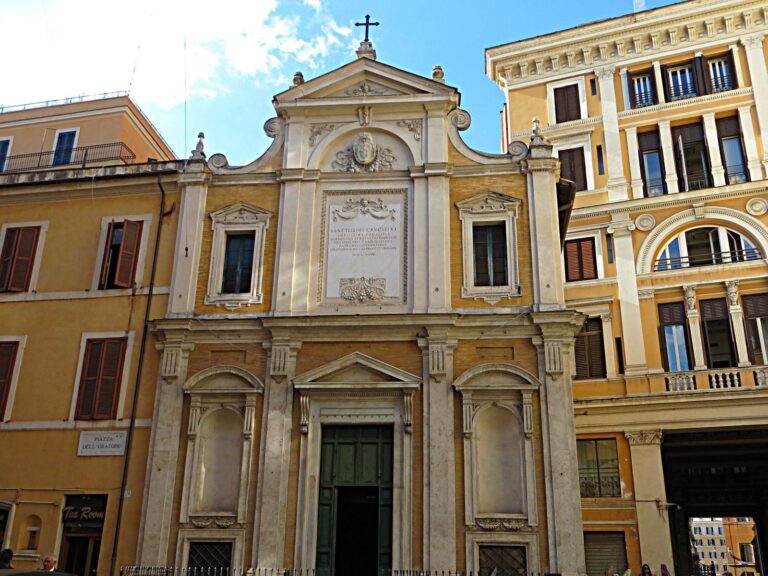
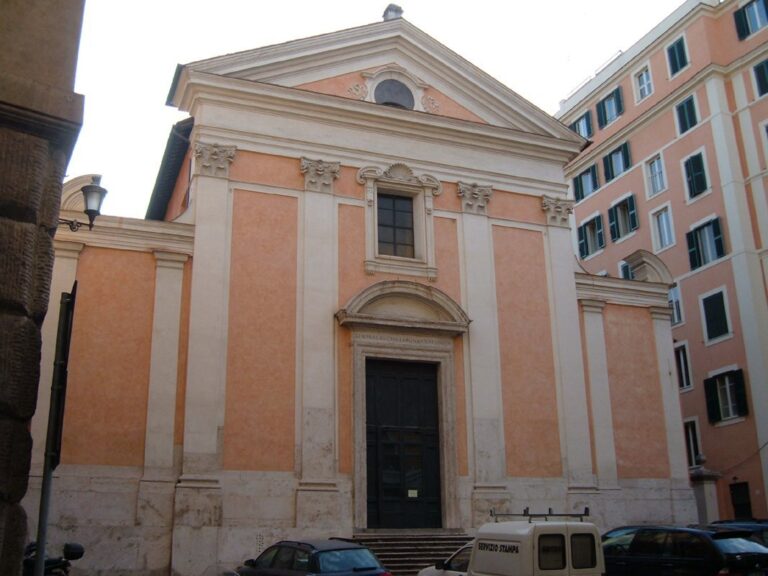
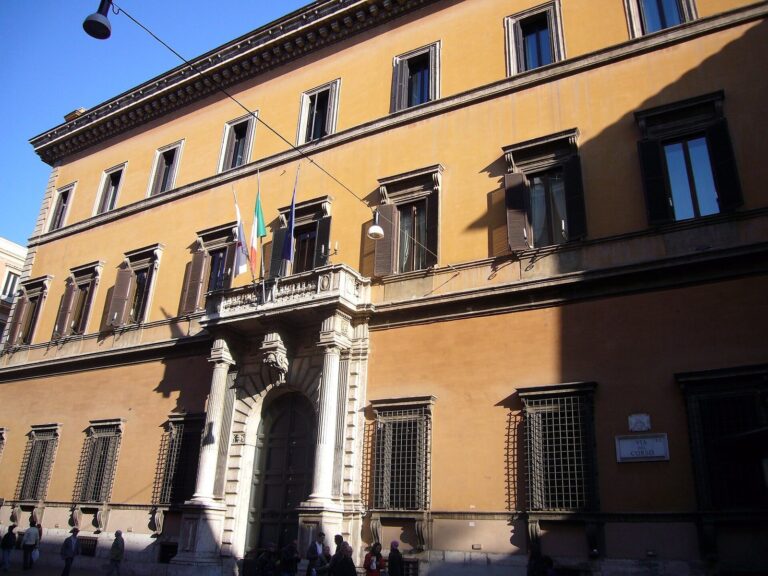
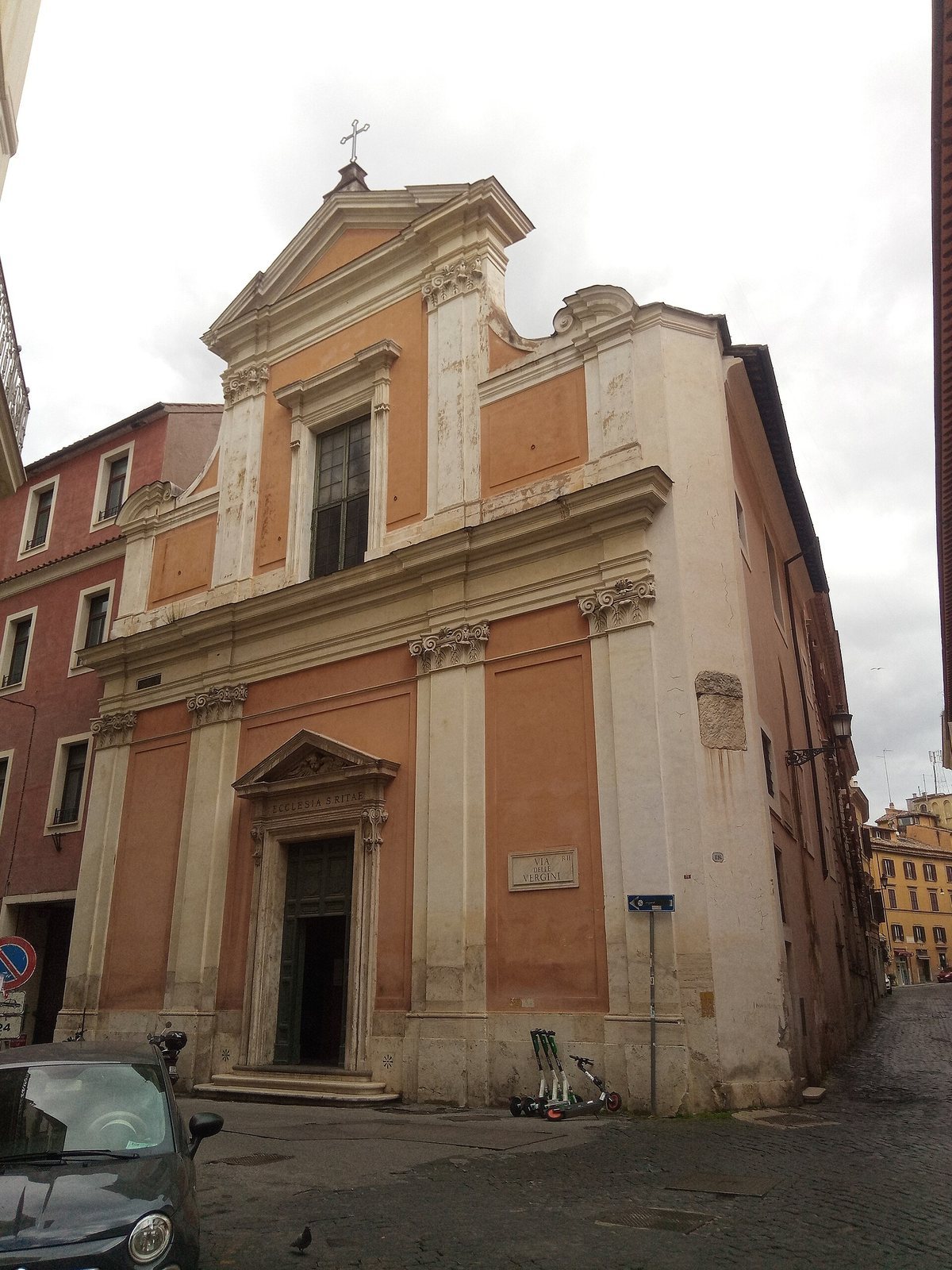
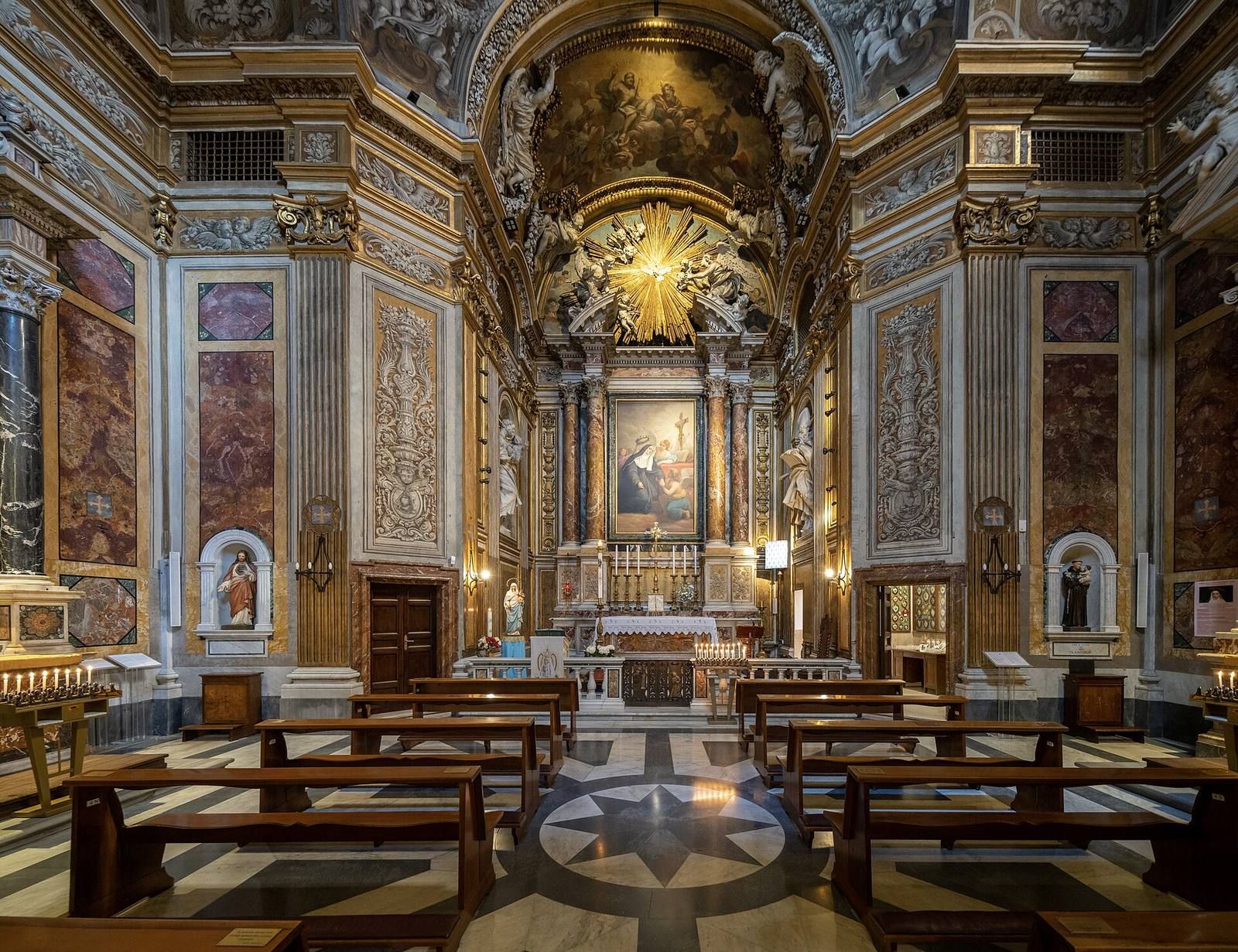
Santa Rita da Cascia alle Vergini Church is a Roman Catholic church at the corner of Via delle Vergini and Via dell’Umiltà in Rome, Italy. Augustinian nuns commissioned its rebuilding in 1634, and it was completed in 1636. Its interior is Baroque, reflecting a European artistic style known for dramatic effects and elaborate ornament.
In 1595, three noblewomen established Santa Maria del Rifugio, a refuge for poor and vulnerable girls. It first operated beside the now-demolished church of San Salvatore de Cornutis. The institution moved to Via delle Vergini in 1613 and became a cloistered Augustinian nunnery, belonging to a Catholic order whose members follow the Rule of Saint Augustine.
By 1615, a church dedicated to Santa Maria delle Vergini had been established on the site of an earlier church with the same dedication, serving the neighboring nuns. The name means Saint Mary of the Virgins and was also associated with an Augustinian convent in Venice, founded in 1177 and closed in 1808. The nuns especially honored the Assumption, the Catholic belief that Mary was taken into heaven body and soul; a convent chapel was consecrated in 1615.
Seventeenth-century rebuilding
Because the existing church was too small for the Augustinian community, the nuns commissioned Francesco Peparelli to design a replacement in 1634. The church was finished two years later. Luigi Arrigucci prepared designs for rebuilding the monastery. After Arrigucci died in 1647, Domenico Castelli took charge of the convent works; Castelli died in 1657, and other architects completed the project in 1660. The church façade, attributed to Mattia de Rossi, dates to 1681, and a bell tower was added in 1689.
The confraternity and rededication
In 1658, a confraternity from Cascia, a religious association organized around shared devotional practices, established itself at San Biagio in Mercatello, near the foot of the Capitoline Hill, one of Rome’s historic civic centers. Carlo Fontana rebuilt the medieval church, whose façade was completed in 1665. It became known as San Biagio e Beata Rita. The confraternity’s devotion centered on Rita of Cascia, an Italian Augustinian nun and Catholic saint who was venerated as a patron of impossible causes and abused wives.
The Italian state confiscated the convent and church in 1870, closed the monastery, and deconsecrated the church. State finance officials used the complex, while its interior remained intact. Rita was canonized in 1900, and the church of San Biagio was renamed Santa Rita da Cascia in Campitelli. That building was demolished in 1904 to make way for a monument to Victor Emmanuel II, the first king of unified Italy. The confraternity, by then an archconfraternity, an association granted special privileges by church authorities, moved to the former Santa Maria delle Vergini. The church reopened, was reconsecrated, and received its dedication to Rita.
The church follows the Roman Rite, the liturgical tradition used by most Catholics in the Latin Church. It belongs to the Diocese of Rome, the territory under the city’s bishop, and the parish of Santa Maria in Via. It is associated with the confraternity of Saint Rita and serves as Rome’s regional church for Umbria, linked to that region’s community in the capital.
Remains
Interior and devotional features
Plan and dome
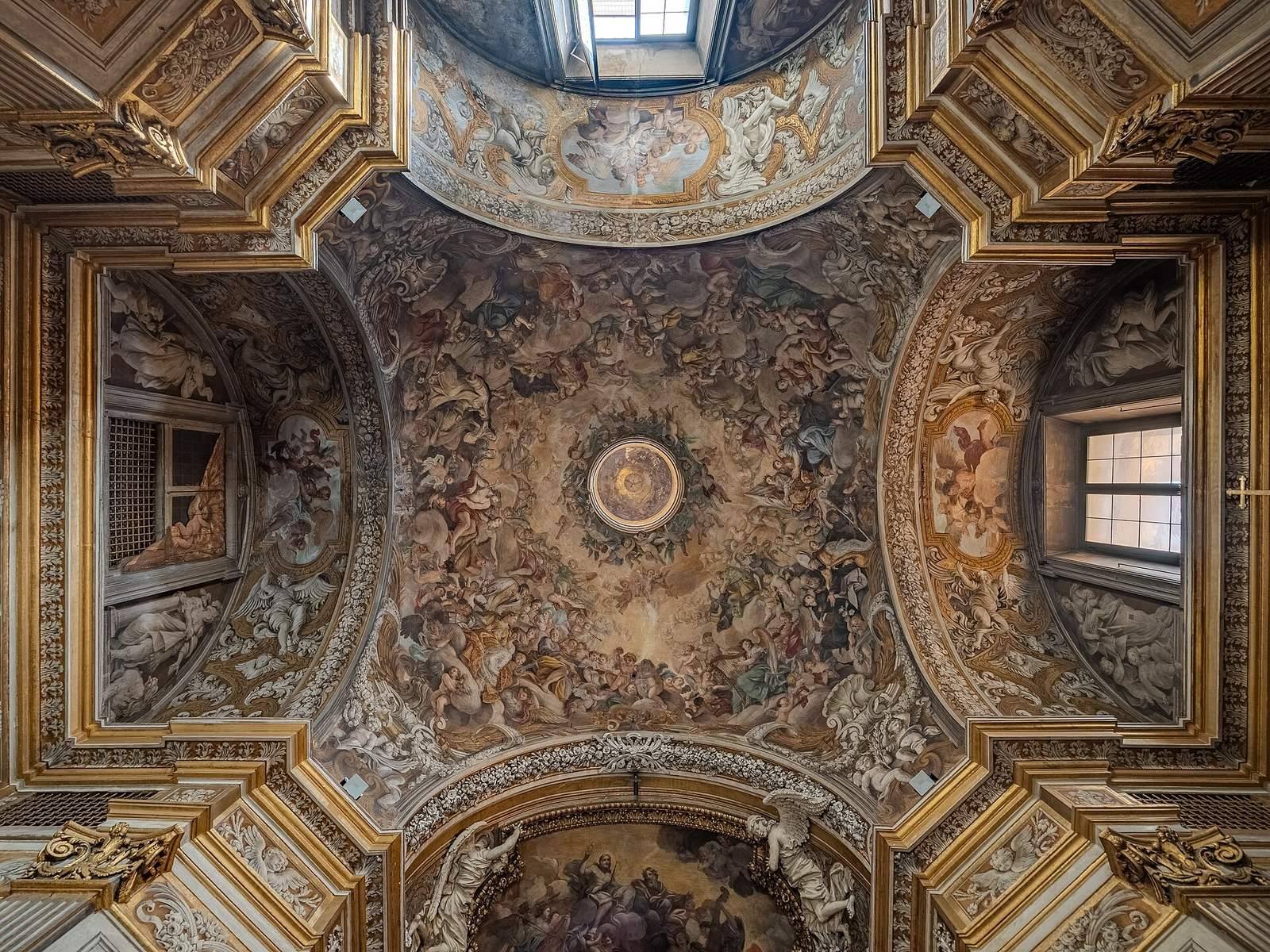
The Baroque interior follows a Greek-cross plan, with four arms of equal length arranged around a central space. A fresco attributed to Michelangelo Ricciolini decorates the dome. Dated to about 1695, it depicts the Glory of Paradise.
Organ
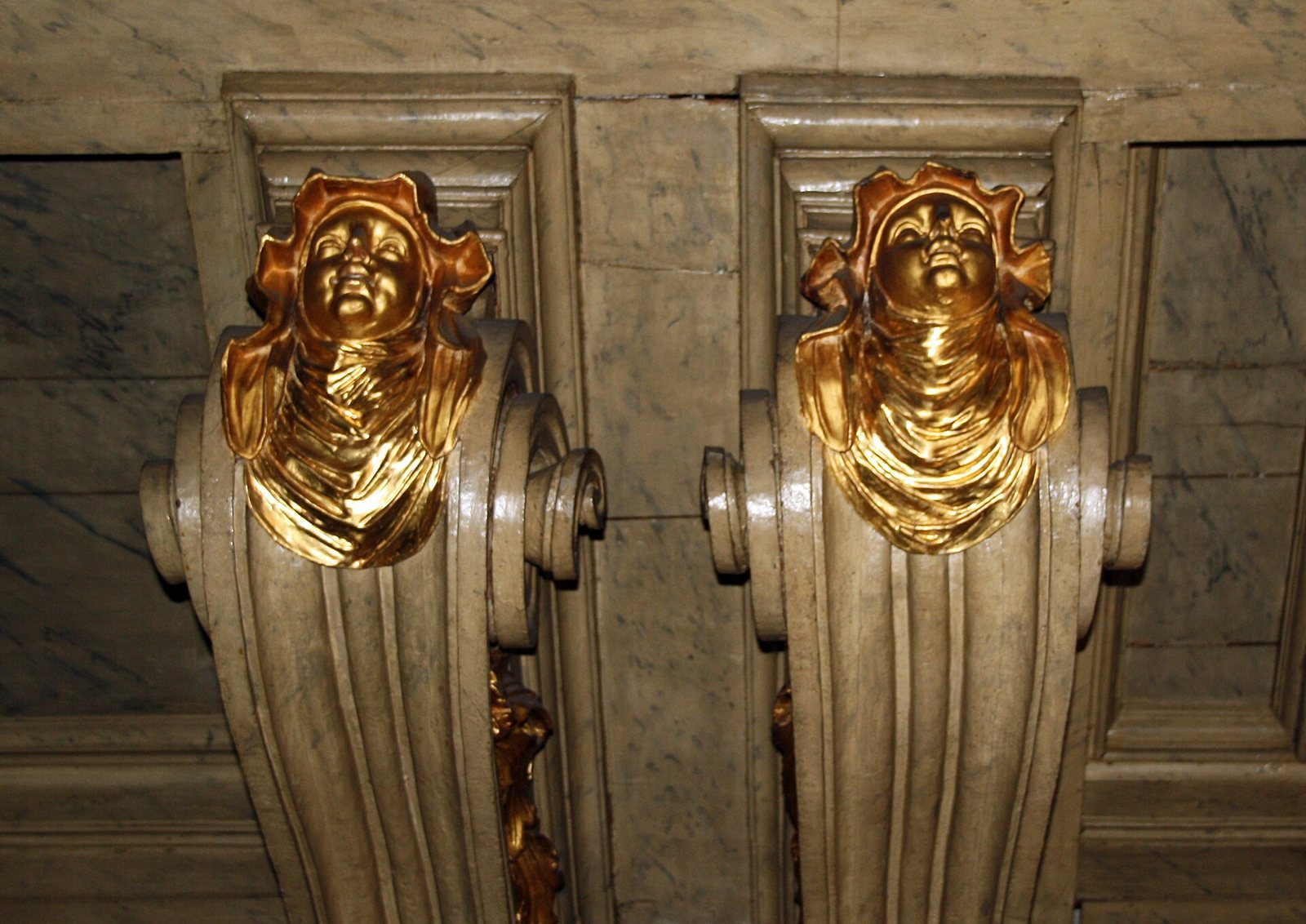
A carved and gilded wooden organ occupies the counter-façade, the interior wall opposite the main entrance. The projecting supports of its loft carry sculpted heads of nuns.
Chapel
To the left of the entrance is a chapel dedicated in 1912. It takes the form of a cave-like shrine modeled on the grotto associated with Our Lady of Lourdes, a title for the Virgin Mary linked to reported apparitions at Lourdes in France.
Paintings and sculptures
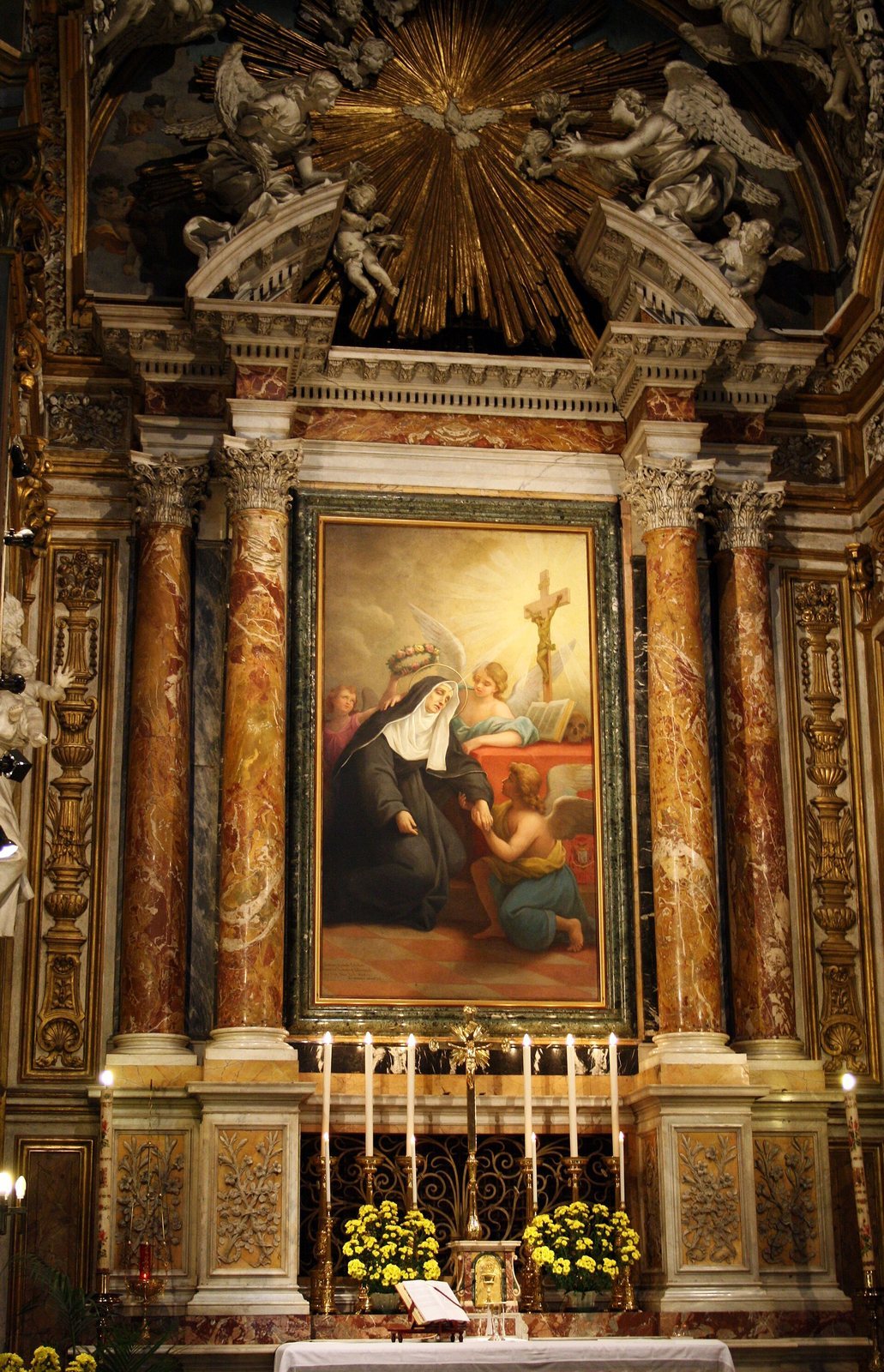
Arturo Ferretti’s painting The Death of Saint Rita, dated 1911, hangs at the high altar. Other works include Pietro Lucatelli’s Saints Augustine and Monica, and molded-plaster sculptures by Filippo Carcani depicting Saint Augustine and Saint Joseph with the Christ Child. Ludovico Gimignani’s The Glory of the Holy Trinity dates to 1682–1683. Giovanni Battista Mercati’s painting of Christ and Mary Magdalene is titled Noli me tangere, meaning Touch me not.