Santa Maria della Pietà in Camposanto dei Teutonici: A German National Church in Vatican City
Site at a Glance
- Rating
- 4.6
- Popularity
- Very Low
- Country
- Italy
- Primary era
- Medieval
- Eras represented
- Medieval, Early Modern, Modern
- Civilizations
- Carolingian, Papal States
- Site type
- Religious
- Remains
- Church
On this page13 sections
History
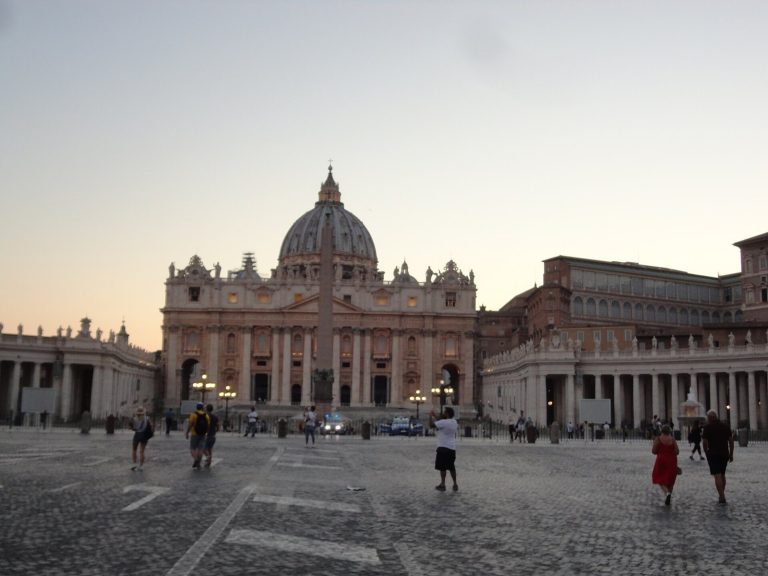
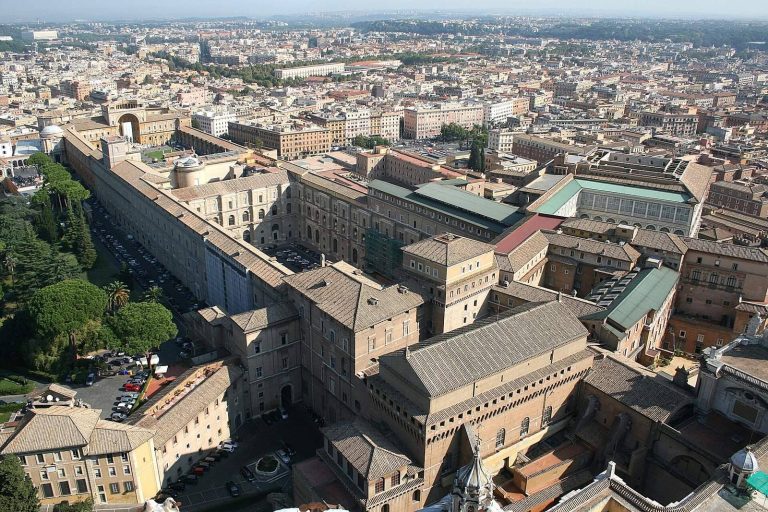
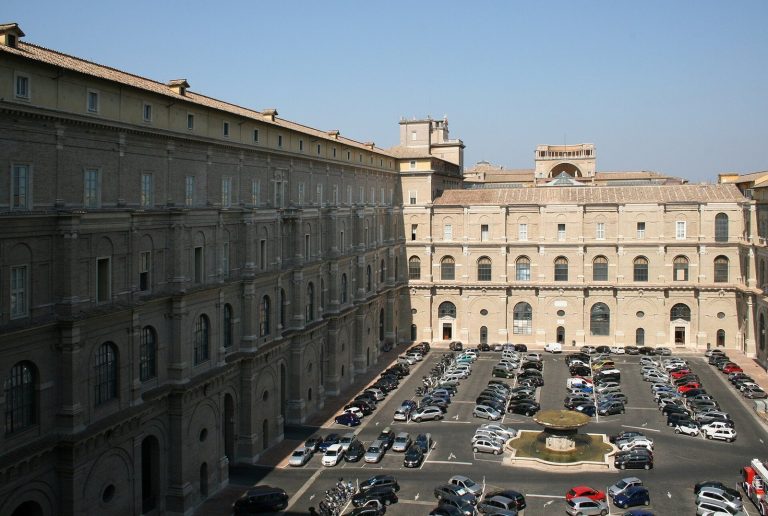
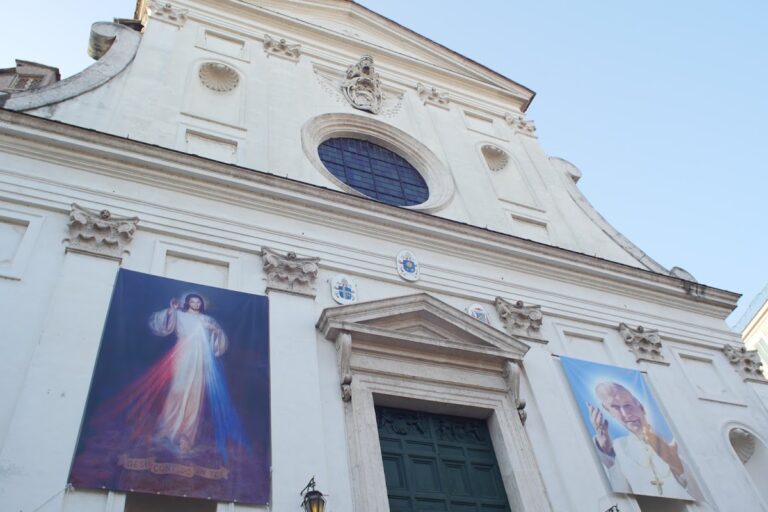
Santa Maria della Pietà in Camposanto dei Teutonici is a Roman Catholic church in Vatican City, Italy, beside the Teutonic Cemetery and Collegio Teutonico near St Peter’s Basilica. Its present building took shape in the late fifteenth century in a Renaissance style associated with contemporary German churches, and it serves as the national church in Rome for Austria, Germany, and the Netherlands.
From Nero’s Circus to the Carolingian foundation
During the Roman imperial period, the site formed part of Nero’s Circus, a large arena that extended across the area now occupied by the southern part of St Peter’s Basilica and its square, as well as the Teutonic Cemetery. The surrounding ground became associated with the martyrdom of numerous Christians, including St Peter. The nearby Piazza Protomartiri Romani preserves the memory of those early Christian martyrs in its name.
In the late eighth century, Charlemagne, the Carolingian emperor who ruled much of western Europe, founded a hospice for Christian pilgrims from his empire with the approval of Pope Leo III, the bishop of Rome. The foundation included a cemetery and a church dedicated to the Saviour. It stood under the ecclesiastical authority of St Peter’s Basilica, while the Schola Francorum, a medieval hospice and charitable institution for German-speaking pilgrims, developed alongside it. Assistance to pilgrims and the poor continued after the Carolingian Empire declined, although the institution remained under the basilica’s jurisdiction.
Renewal after medieval decline
The foundations around St Peter’s suffered severe decline during the Avignon Papacy, the period from 1309 to 1378 when the popes resided mainly in Avignon, and during the later Western Schism, a division in the papacy that further weakened Rome’s ecclesiastical institutions. After the popes returned to Rome, renewed building under Popes Martin V, Eugenius IV, and Nicholas V revived the area. The enlarged cemetery was enclosed by a wall built by Fredericus Alemannus, who also constructed a house for its guardians.
The plague outbreak of 1448 prompted Johannis Assonensis, a German confessor attached to St Peter’s who later became Bishop of Würzburg, to gather German residents in Rome. He founded a brotherhood that arranged proper burials for poor Germans who died in the city. A Teutonic-Flemish charitable brotherhood followed on 8 December 1454. It provided accommodation for poor pilgrims, cared for the sick, and arranged funerals for pilgrims who died during their journeys.
During the Holy Year of 1450, the brotherhood built a church and a new hospice for German pilgrims on adjoining land. This work transformed the Campo Santo into a German national institution. Its early initiators included Petrus Licht, Bartholomäus Dinstman, Johannes Lichtenfelser, and nine other German-speaking members.
A memorandum prepared before construction stated that Friedrich Frid of Magdeburg had earlier financed a small house, hospice, and women’s hospital for female pilgrims on the site. That foundation also included a small church dedicated to the Saviour, parts of which were incorporated into the present building.
The Renaissance church and later religious institutions
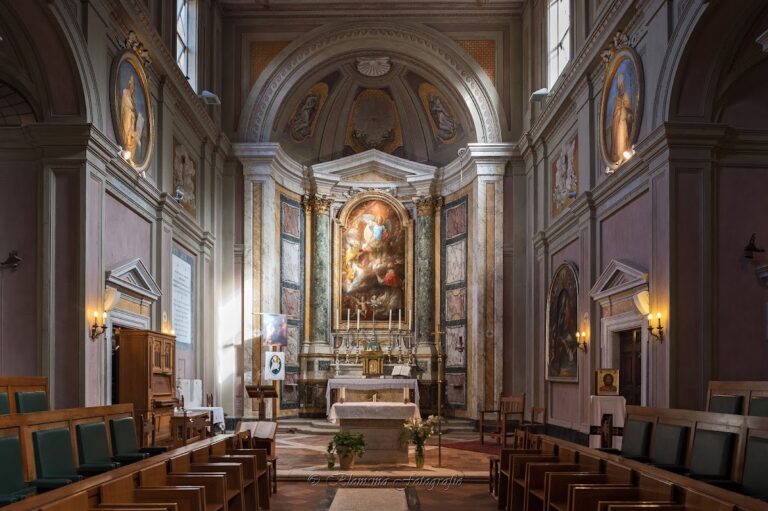
The present church was formed at the end of the fifteenth century, and its exterior was completed for the Jubilee of 1500, when the building was consecrated. Its construction is associated with Giovanni Dolci, who also participated in building the Sistine Chapel. During the sixteenth and seventeenth centuries, the interior acquired Baroque sculptures and frescoes, much of them produced by pupils of major artists involved in decorating the new St Peter’s Basilica.
In 1579, Pope Gregory XIII transformed the brotherhood into the Archconfraternity of Santa Maria della Pietà. An archconfraternity is a formally organized religious brotherhood with charitable and devotional functions. The new organization became the legal owner of the church and continued to exist, with approximately 110 members in 2015.
The church and the Campo Santo declined as Rome’s German population decreased during the seventeenth and eighteenth centuries. Santa Maria della Pietà was increasingly overshadowed by Santa Maria dell’Anima. During the Sack of Rome in 1527, however, the surrounding cemetery became the scene of the Swiss Guard’s last stand. The Swiss Guard, the military corps that protects the pope, delayed the invading troops long enough for Pope Clement VII to escape through the Passetto di Borgo, a fortified passage linking the Vatican area with Castel Sant’Angelo. The Swiss Chapel later became the burial place of the guards who died in the fighting.
A new institutional phase began in 1876, when Pope Pius IX founded a seminary beside the church for German-speaking priests specializing in archaeology and Church history. It revived the educational role formerly associated with the Schola Francorum. The seminary remains open to German-speaking priests and to lay students at pontifical universities, and it serves as an important gathering place for Rome’s German-speaking community. The Roman Institute of the Görres Society was founded in the same building in 1888 and continues to operate there. In 2010, Pope Benedict XVI granted the seminary papal status under the name Pontificio Collegio Teutonico di Santa Maria in Camposanto.
The church has undergone several restorations. The last complete restoration took place between 1971 and 1975.
Remains
Layout and construction
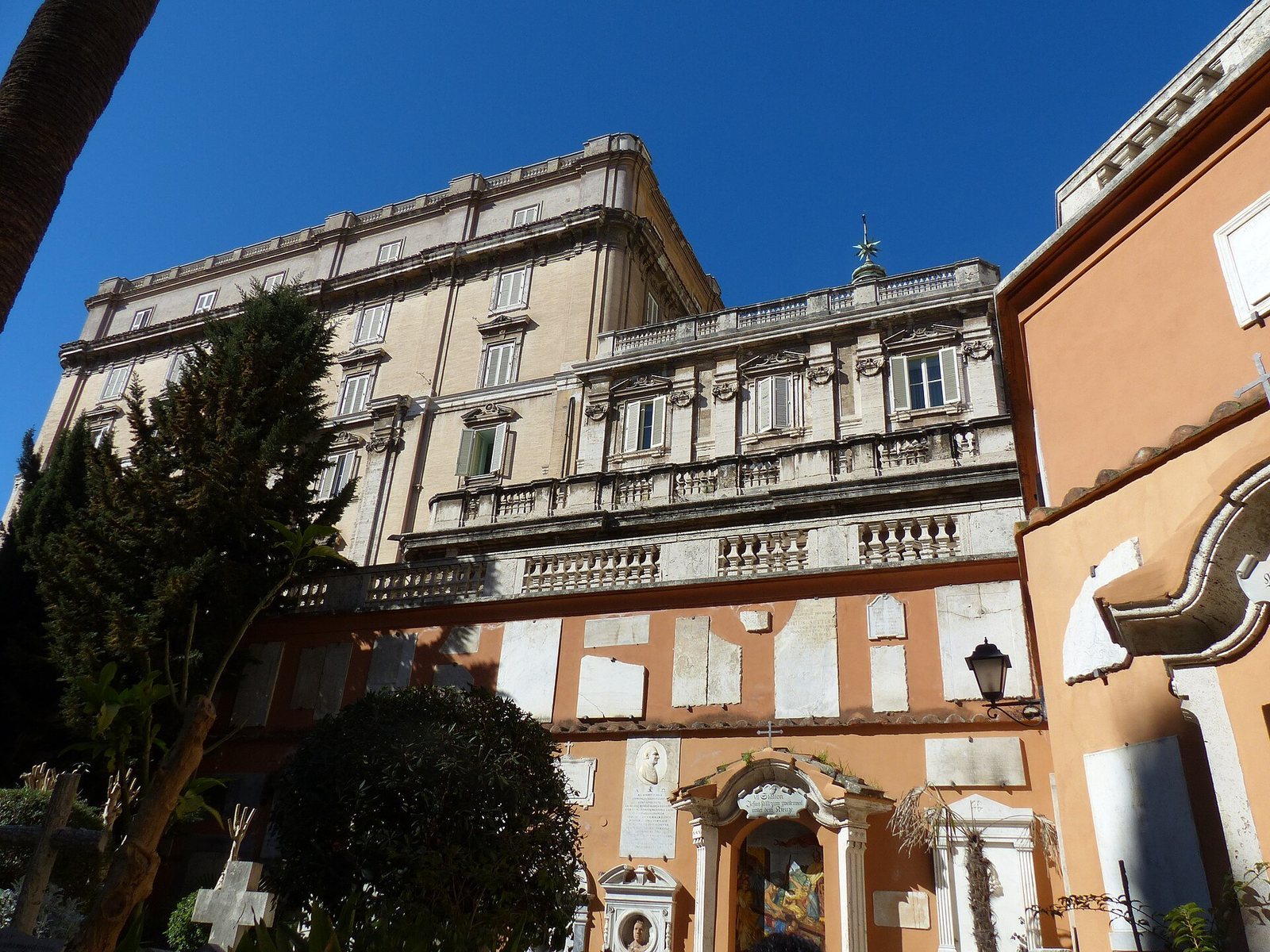
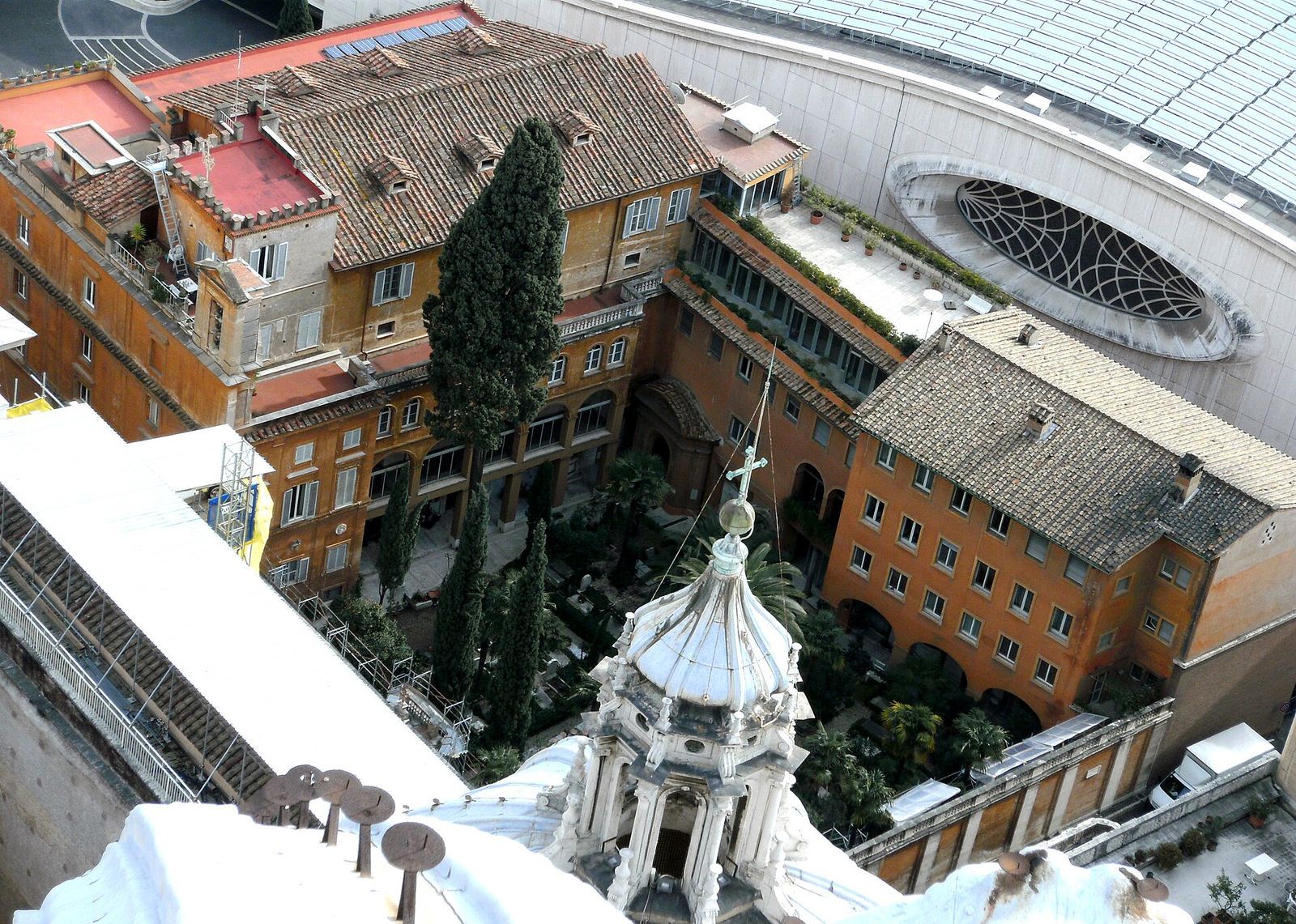
The church stands beside the Collegio Teutonico and the German Teutonic Cemetery in the area of Piazza Protomartiri Romani. It has an approximately rectangular plan measuring about 23.5 by 21.6 metres. Its fabric combines late-fifteenth-century Renaissance construction with later Baroque interior decoration, preserving the layered development of the building. Parts of the earlier Church of the Saviour remain incorporated in the present structure and are still visible.
Chapels and access
Chapel of the Swiss Guard
East of the main altar is the Chapel of the Swiss Guard. It contains the graves of Swiss Guards who died while defending the pope in 1527. Worship in the chapel is now held only for special celebrations, while its surviving burials preserve the connection between the church complex and the fighting during the Sack of Rome.
Western portal
Access from the cemetery is through a western portal created by the Cologne sculptor Elmar Hillebrand. Theodor Heuss, the first president of the Federal Republic of Germany, commissioned and financed the portal in the late 1950s.
Altars, paintings, and the sacristy
Main altarpiece
An early nineteenth-century guide described the main altarpiece as a Deposition by Polidoro di Caravaggio, flanked by a painting by Giacinto d’Hasse. The church also contains a tomb monument for d’Hasse sculpted by François Duquesnoy.
Lateral altars
The same guide described a St Erasmus by Giacinto Gimignani and an Epiphany by Scarsellino on the lateral altars. The altar dedicated to St Charles Borromeo carried an altarpiece of the Flight into Egypt by Arrigo Fiammingo, who was a member of the confraternity.
Sacristy
The sacristy contained an image of St John Nepomuk by Ignazio Stern and an Immaculate Conception by Luigi Garzi.