Santa Maria dei Domenicani: A Fifteenth-Century Church in Soave


Site at a Glance
- Rating
- 4.3
- Popularity
- Very Low
- Country
- Italy
- Primary era
- Medieval
- External website
- Open
- Eras represented
- Medieval, Early Modern
- Civilizations
- Venetian
- Site type
- Religious
- Remains
- Church
On this page13 sections
History
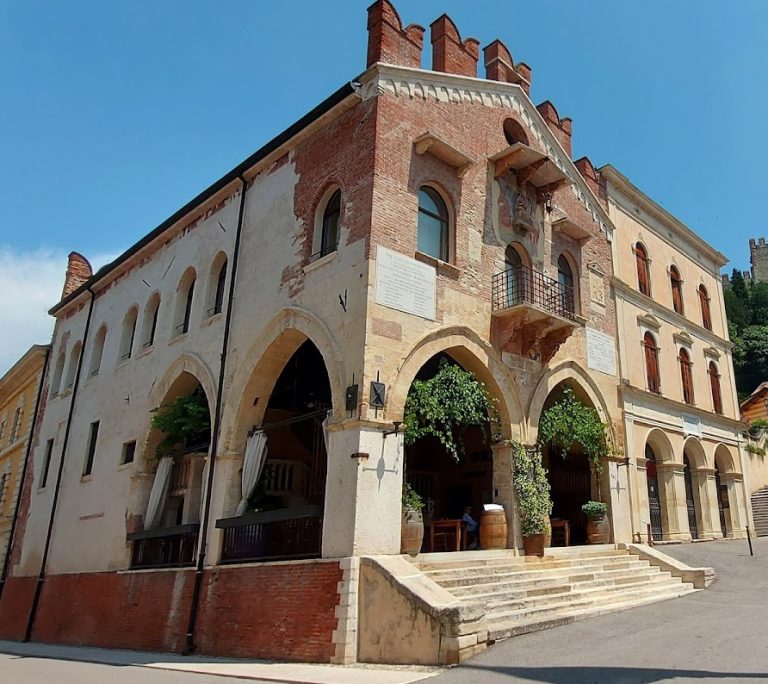
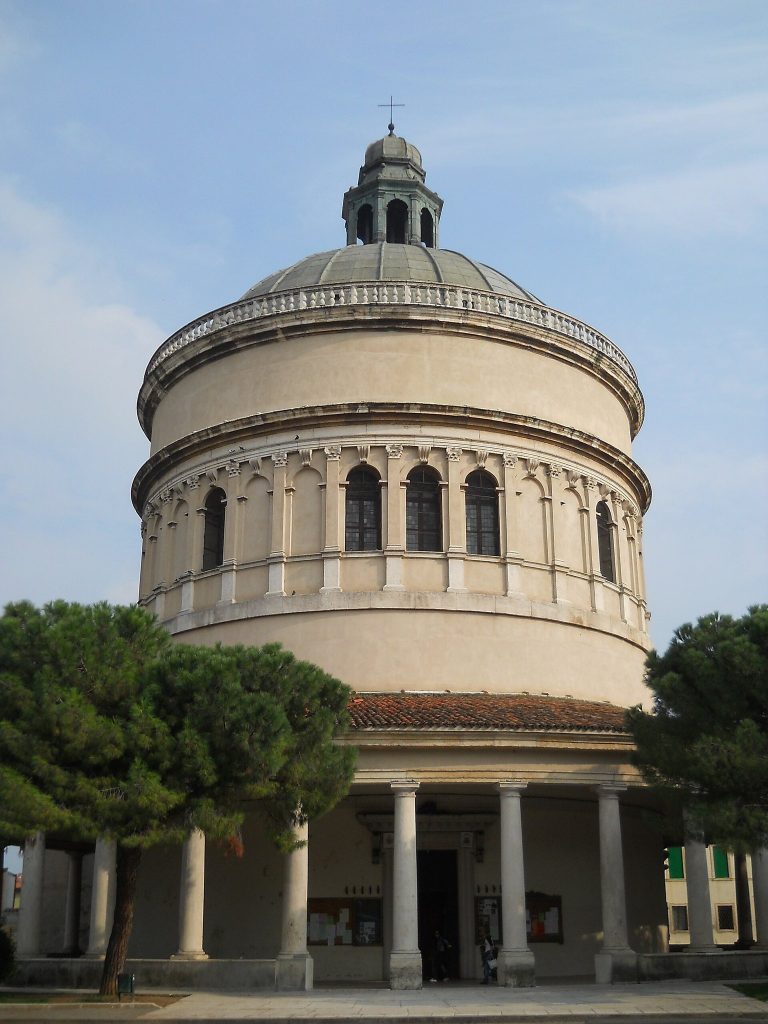
Santa Maria dei Domenicani is a fifteenth-century Roman Catholic church in Soave, Italy, built by Dominican friars in a Romanesque architectural language shaped by the transition from Gothic to Renaissance forms. Situated within the Scaliger walls near Piazza dell’Antenna, the church belongs to the Diocese of Verona and is dedicated to Saint Mary.
Dominican foundation and communal use
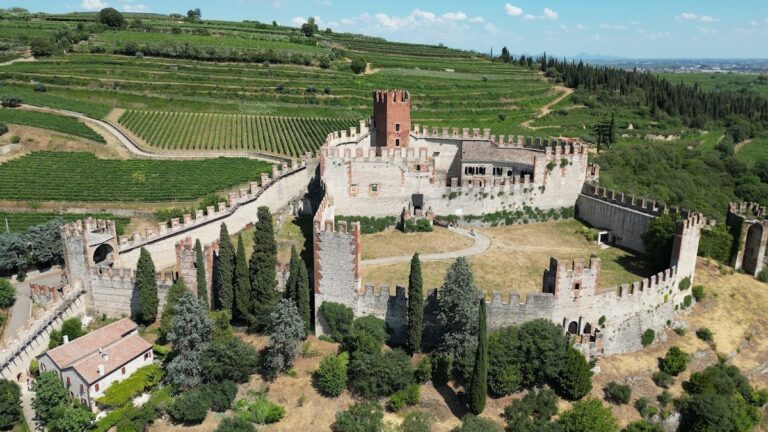
In 1443, the Dominicans, a Catholic mendicant order associated with preaching, teaching, and urban religious ministry, obtained permission from Pope Eugene IV to build the church and an adjoining convent. The friars had appealed to the Holy See before receiving authorization. The church thus formed part of a religious complex within Soave’s medieval fortifications, which were associated with the della Scala, or Scaliger, rulers.
During the mid-seventeenth century, the convent was affected by Pope Innocent X’s suppression of religious houses with few members. In 1659, the inhabitants of Soave received permission from the Venetian authorities to take possession of the small convent and its associated rooms. They agreed to arrange 102 masses each year. The municipality and the Confraternities of the Good Death and the Rosary, lay religious associations organized around shared devotional and charitable activities, also supported the church. These confraternities continued to meet there until Napoleon Bonaparte’s suppression of religious institutions in territories under his control.
Decline, restoration, and new use
The municipality sold the convent in 1871, and the complex was subsequently destroyed. Santa Maria dei Domenicani became a public oratory, a place of prayer and worship serving the community without functioning as a parish church. The parish of Soave maintained it and used the building for catechism and masses for young people.
Without restoration, the church gradually fell into severe disrepair. Two Soave parish priests sought financial assistance for its revival in the mid-twentieth century but received no response. On 5 March 1985, the municipality approved a restoration initiative financed by Banca Popolare di Verona. The work recovered the church’s frescoed walls and other artistic heritage, rescuing the severely degraded building.
Santa Maria dei Domenicani no longer serves its original sacred function. Its restored interior now accommodates art exhibitions, displays, cultural events, and concerts, giving the Soave community a new cultural use for a historically important architectural space.
Remains
Plan, facade, and nave
Santa Maria dei Domenicani is a small, sober fifteenth-century church with a simple, schematic plan. Green, white, and ochre elements alternate across the building. The north-facing facade has a square apse, a projecting porch covered by a round-arched vault, and a rose window contemporary with the porch. Elaborate terracotta cornices along the eaves, characteristic of the second half of the fifteenth century, add a distinctive decorative finish.
The interior consists of a single nave covered by a timber truss roof, whose triangular wooden frames support the roof structure. Tall, slender Gothic windows, including both single-lancet openings and paired openings, illuminate the space. At the high altar, a marble structure is flanked by two small Baroque doors. Its center contains a large support for displaying the Blessed Sacrament, the consecrated Eucharistic elements in Catholic worship. Behind it stands a sixteenth-century white-stone frame with a base, two Tuscan columns, and a triangular pediment.
Devotional chapels
Saints Lucy and Apollonia Chapel
Three chapels open from the left wall of the nave. Created at the end of the fifteenth century for devotional purposes, they have round arches made of tufa, finely carved pilasters, ornamental details, frescoes, and polychrome-marble altars. The first chapel is dedicated to Saints Lucy and Apollonia, a dedication reflecting a widespread local devotion. Its present altar was erected through offerings from the inhabitants of Soave.
Two votive panels depict the chapel’s patron saints. The painting of Saint Apollonia is extremely abraded and unfinished, while the image of Saint Lucy remains clearly legible.
Rosary Chapel
The second chapel is dedicated to the Blessed Virgin of the Rosary. Its richly ornamented altar was made by the same artists who produced the balustrade closing the chapel. A fragmentary fresco cycle devoted to the Mysteries of the Rosary was painted by an unknown artist in 1502.
The surviving scenes begin with the Annunciation and Visitation in the left lunette, a semicircular field within or above an arch. They continue with the Nativity, Presentation in the Temple, and Dispute among the Doctors. The right lunette contains Christ Mocked, followed by the Ascent to Calvary, Crucifixion, Resurrection, and Ascension. During restoration, the date 1502, written in Roman numerals, became visible in the background of the Dispute among the Doctors.
Crucified Christ Chapel
The third chapel was dedicated to the Crucified Christ. Its altar carries a larger-than-life-size wooden crucifix, finely made and marked by a strongly sorrowful expression. The chapel was probably owned by two distinguished families, possibly from Illasi, who held land at Soave. Family coats of arms at the bases of the arches and funerary slabs in front of the chapel support this interpretation.
Restored original wooden elements retain vivid turquoise and satin-gold coloring. The chapel’s low-relief ornament and other decorative details form part of the distinctive architectural harmony shared by the three chapels.
Frescoes and painted decoration
Votive fragments and central altar painting
Between the Rosary Chapel and the chapels dedicated to the Crucified Christ and Saints Lucy and Apollonia, restoration revealed votive fresco fragments made by different hands at different times. They include a Saint Sebastian attributed to the painter known as the Master of Saint Lazarus, a largely unfinished bishop saint, and an unidentified saint partly covered by the surviving outline of another figure.
A small central fresco is positioned high above the high altar. On the rear wall, to the left of the presbytery, the part of the church around the main altar reserved for the clergy, a Lamentation over the Dead Christ appears within a round arch with classical decoration. Its stone-like setting relates to the reliefs in the three left-hand chapels, while the foreshortened arch creates an illusion of space extending beyond the actual wall.
Beside the Lamentation is a small panel showing devotees with an inscription transcribed as “DA BARDI O PECHADORI. MI AFLITA. ET. AMGUSTIO XA. PIANXETI. VOI PUPILI.”
Stories of Saint Lazarus
The entire right wall carries the Stories of Saint Lazarus. An eighteenth-century pulpit with a canopy caused the loss of one episode, so the precise sequence of the cycle is uncertain. The paintings unite two Christian traditions concerning Lazarus: Lazarus of Bethany, whom the Gospels describe as raised by Christ, and the poor Lazarus of the parable of the rich man. In this combined tradition, Lazarus appears as a beggar and leper and becomes a patron saint of gravediggers, beggars, and lepers.
The central scene shows the death of Lazarus the beggar, whose soul is carried toward heaven by angels. Other scenes present Lazarus and Job as models of poverty and patience, taking refuge in the Church of God symbolized by bishops. The cycle also shows Lazarus in the Last Judgment beside Adam, Eve, and Moses, while the Archangel Michael separates the damned as demons seize them. In the lower scenes, devils carry away the rich man, who is condemned among the flames of Hell.
Architectural frames beneath the Lazarus cycle contain a penitent saint at the center, Saint Dominic holding a model of a church on the left, and Saint Francis on the right. These figures symbolize faith, submission, and humility. Above the composition is a partly preserved coat of arms with the recognizable partial shape of a leopard.
Madonna and saints
To the right and left of the Lazarus cycle are two further frescoes by the same hand, each enclosed within classically styled architectural frames. Both depict the Madonna enthroned with the Child among several saints. The better-preserved fresco on the right includes Saint Lucy, Saint Sebastian, and Saint Anthony Abbot and probably bears the date 1474. The damaged fresco on the left survives in fragmentary form. The 1474 date helps place the otherwise unknown painter of the Stories of Saint Lazarus within the history of the church’s decoration.
At the end of the nave on the right, a female martyr holds a small crucifix. Her subject is connected thematically with the Lazarus cycle and with the church’s votive panels.